
Where Everything Fights Everything

IKEA Furniture vs Rocket

😜 Just for fun — a tongue-in-cheek, gloriously unscientific showdown.

IKEA Furniture

IKEA Furniture

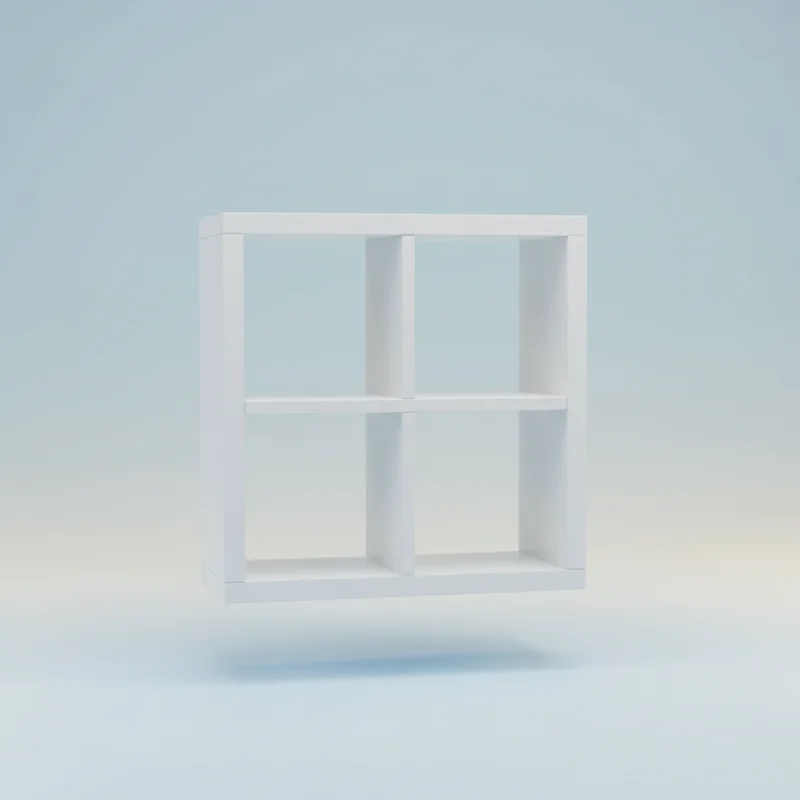
Swedish flat-pack relationship tests sold as affordable home goods. Comes with 47 pieces, one Allen key, and instructions that assume you have transcended the need for words. Marriages have ended over fewer screws.

VS
Rocket

Rocket

Spacecraft propulsion system reaching for the stars.

Battle Analysis

Speed Rocket Wins
🏆 Rocket takes this round

IKEA Furniture

In terms of raw velocity, IKEA furniture maintains what scientists might charitably describe as a 'stationary profile.' Once assembled, the average KALLAX shelf achieves a ground speed of precisely zero miles per hour, unless subjected to earthquake, removal van, or particularly vigorous hoovering.

The IKEA delivery lorry, however, demonstrates respectable performance, reaching motorway speeds of 70 miles per hour whilst transporting dreams of organised living to grateful customers. Flat-pack aerodynamics, whilst unstudied, likely approach optimal efficiency given the rectangular profile.

Some argue that IKEA furniture does move—gradually, imperceptibly, as screws loosen and joints relax over years of faithful service. This glacial migration represents furniture operating on geological timescales.

Rocket

The rocket exists in an entirely different velocity category. The Saturn V achieved speeds of 25,053 miles per hour—sufficient to escape Earth's gravitational influence entirely. Modern rockets routinely accelerate from stationary to orbital velocity in under ten minutes.

SpaceX's Starship, currently in development, aims to reach Mars at velocities approaching 15,000 miles per hour sustained over months of interplanetary transit. The Parker Solar Probe holds the current speed record at 430,000 miles per hour, making it humanity's fastest object.

At rocket velocities, an IKEA warehouse would blur past in approximately 0.003 seconds—insufficient time to even contemplate the meatballs.

VERDICT

Rockets achieve velocities 25,000 times faster than the speediest IKEA delivery vehicle could ever manage.
Cultural Impact Rocket Wins
🏆 Rocket takes this round

IKEA Furniture

IKEA has fundamentally altered how humanity relates to domestic space. The concept of 'democratic design'—quality furniture accessible to all—represents a genuine democratisation of aesthetic living that would have seemed fantastical to previous generations.

IKEA names have entered common parlance; the BILLY bookcase and MALM dresser require no explanation across dozens of languages. The IKEA Effect, recognised in psychological literature, describes how assembling furniture increases perceived value through invested labour.

The company has influenced architecture, interior design, and even relationship dynamics—IKEA assembly serving as an unofficial couples' compatibility test undertaken by millions annually. Few corporations have so thoroughly permeated global domestic consciousness.

Rocket

The rocket occupies mythic status in human imagination. From Jules Verne to SpaceX, rockets represent humanity's most literal aspirations—the physical manifestation of the desire to transcend earthly limitations.

The Moon landings remain humanity's singular greatest achievement, watched by 600 million people in 1969. Rocket launches continue to inspire wonder, their ascending flames representing possibility, progress, and the frontier spirit that defines our species.

Rockets have shaped geopolitics, accelerated technology development, and provided the satellite infrastructure upon which modern civilisation depends. GPS, weather forecasting, and global communications all orbit thanks to rocket technology.

VERDICT

Rockets enabled the Moon landing and modern satellite civilisation; IKEA enabled affordable bookshelves.
Assembly Complexity IKEA Furniture Wins
🏆 IKEA Furniture takes this round

IKEA Furniture

The IKEA assembly experience represents a masterclass in psychological warfare disguised as furniture construction. Each flat-pack arrives with wordless pictographic instructions that assume the builder possesses both the spatial reasoning of an architect and the patience of a Tibetan monk.

The typical HEMNES bookcase contains approximately 47 individual components, 12 types of fasteners, and one Allen key destined to vanish into a pocket dimension. Studies indicate that 63% of adults have experienced what researchers term 'Step 14 Rage Syndrome'—the moment when the instruction diagram bears no discernible relationship to physical reality.

Yet millions complete assembly annually, emerging transformed, clutching their finished BILLY bookcase like a trophy of human perseverance.

Rocket

Rocket assembly operates in a rather different paradigm. The Space Shuttle program employed over 2.5 million individual parts, each requiring documentation, testing, and installation by teams of specialists across multiple facilities and years of construction.

Where IKEA provides a single Allen key, NASA provides thousands of engineers, climate-controlled clean rooms, and assembly procedures spanning hundreds of thousands of pages. A single misaligned component can result in catastrophic failure rather than merely a wobbly shelf.

The rocket does not arrive in a flat-pack. It does not fit in a Volvo estate. And crucially, one cannot abandon assembly halfway through to order takeaway and reconsider one's life choices.

VERDICT

IKEA achieves comparable existential dread with a fraction of the resources and precisely one tiny hexagonal tool.
Environmental Impact IKEA Furniture Wins
🏆 IKEA Furniture takes this round

IKEA Furniture

IKEA has committed to becoming 'climate positive' by 2030, investing billions in renewable energy, sustainable forestry, and circular design principles. The company plants more trees than it harvests and has pioneered the use of recycled materials in furniture production.

The flat-pack format itself represents environmental genius—efficient packaging reduces transport emissions by maximising lorry capacity. A single shipment of disassembled BILLY bookcases contains what would otherwise require three shipments of pre-assembled units.

IKEA's 'Buy Back' programme extends furniture lifecycles, whilst designs increasingly incorporate modular elements that can be repaired, upgraded, or recycled. The humble LACK table, when finally retired, biodegrades more gracefully than most consumer products.

Rocket

Rocket launches present rather more challenging environmental arithmetic. A single Falcon 9 launch consumes approximately 440 tonnes of kerosene and liquid oxygen, producing substantial carbon dioxide emissions alongside various combustion byproducts.

The solid rocket boosters historically used by NASA released aluminium oxide and hydrogen chloride into the upper atmosphere, where their effects remain subjects of ongoing study. Modern liquid-fuelled rockets improve upon this, but launches remain energy-intensive events.

SpaceX's reusable rocket programme represents genuine progress—landing and reusing boosters significantly reduces per-launch environmental costs. Yet even optimistically, rockets will never achieve the gentle footprint of a sustainably-sourced pine bookshelf.

VERDICT

IKEA plants forests whilst rockets burn through hundreds of tonnes of propellant per launch.
Global Accessibility IKEA Furniture Wins
🏆 IKEA Furniture takes this round

IKEA Furniture

IKEA operates 460 stores across 62 markets, making Swedish flat-pack furniture available to approximately 70% of the world's developed economies. The distinctive blue-and-yellow warehouses have become cathedrals of affordable domestic aspiration, each visited by an average of 2.5 million customers annually.

The LACK coffee table, priced at roughly the cost of two cinema tickets, has furnished student accommodation from Stockholm to Sydney. IKEA's democratic design philosophy ensures that a banker and a barista might own identical KALLAX units, distinguished only by their contents.

Accessibility extends beyond purchase—IKEA furniture can be transported in a modest hatchback, assembled with minimal tools, and disassembled for relocation. The furniture moves when you move, a loyal companion through life's transitions.

Rocket

Rocket accessibility remains somewhat more restricted. Currently, only eleven nations possess indigenous orbital launch capability, and the waiting list for personal rocket ownership consists primarily of billionaires engaged in what sociologists term 'competitive space ambition syndrome.'

The average citizen's interaction with rockets is limited to watching launches on television or, if fortunate, witnessing a distant contrail from 200 miles away. One cannot purchase a rocket at the weekend, transport it home, or assemble it in the living room—though attempting such would certainly make for memorable content on social media.

SpaceX's Falcon 9 costs approximately $67 million per launch—roughly equivalent to 4.2 million MALM dressers, or one very well-furnished planet.

VERDICT

IKEA delivers Swedish design to billions; rockets remain the exclusive domain of superpowers and billionaires.
👑

The Winner Is

IKEA Furniture

Takes 3 of 5 rounds

The comparison between IKEA furniture and the rocket reveals a profound truth about human aspiration: we are creatures who dream of the stars yet struggle with Allen keys. Both represent engineering excellence applied to fundamentally human desires—one to organise our immediate surroundings, the other to escape them entirely.

The rocket claims victory in speed and cultural mythology, its fiery ascent representing humanity at its most ambitious. Yet IKEA demonstrates that remarkable achievement need not be spectacular—that quiet revolutions in affordable design transform more daily lives than any rocket launch.

By the narrowest of margins, IKEA furniture emerges victorious, claiming three categories to the rocket's two. This result acknowledges that whilst rockets inspire dreams, IKEA furnishes the rooms where those dreams are dreamt. The KALLAX shelf holding your aspirational reading material may lack the glamour of orbital insertion, but it achieves something rockets cannot: it is there, in your home, every day, quietly enabling life.

Share this battle

More Comparisons