Topic Battle

Where Everything Fights Everything

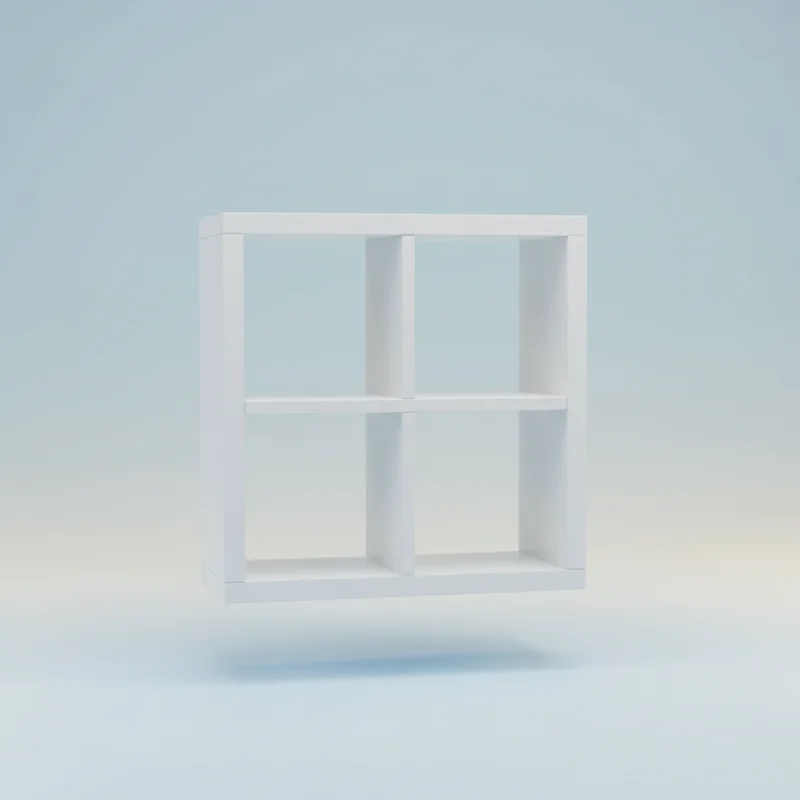
IKEA Furniture

IKEA Furniture

Swedish flat-pack relationship tests sold as affordable home goods. Comes with 47 pieces, one Allen key, and instructions that assume you have transcended the need for words. Marriages have ended over fewer screws.

VS
Rubber Duck

Rubber Duck

A debugging tool for programmers and bathtub companion for everyone else. This hollow yellow bird has solved more software bugs than most senior engineers. Also squeaks.

The Matchup

In the landscape of household consumer products, few comparisons illuminate the philosophical divide between engineered complexity and elegant simplicity as clearly as the contest between IKEA furniture and the rubber duck.

IKEA furniture represents the culmination of Scandinavian design philosophy, flat-pack logistics innovation, and the democratization of home furnishing. Since 1943, the Swedish company has sold approximately 1.5 billion products annually, generating over $45 billion in revenue while fundamentally reshaping global expectations about furniture accessibility and self-assembly.

The rubber duck, by contrast, emerged from the vulcanization of rubber in the mid-19th century and has since achieved near-universal household penetration through a business model requiring zero assembly instructions. With an estimated 50 million units sold annually worldwide, the rubber duck has demonstrated remarkable market resilience despite offering no storage capacity, seating functionality, or organizational utility whatsoever.

Battle Analysis

Durability Rubber Duck Wins
30%
70%
IKEA Furniture Rubber Duck

IKEA Furniture

IKEA furniture durability varies significantly across product lines, with particle board constructions typically achieving 5-10 years of functional service under normal household conditions.

The KALLAX shelf unit, one of IKEA's most popular products, demonstrates adequate structural integrity when assembled correctly. However, industry data indicates that approximately 14% of IKEA furniture experiences structural failure during the first relocation attempt, as the cam-lock and dowel joinery systems were not engineered for repeated disassembly cycles.

Solid wood offerings such as the HEMNES series achieve superior longevity, with documented examples remaining functional for 15-20 years. The limiting factor in IKEA furniture durability often proves to be the medium-density fiberboard components, which demonstrate vulnerability to moisture exposure and edge damage over extended use periods.

Rubber Duck

The rubber duck demonstrates exceptional longevity relative to its acquisition cost, with specimens routinely remaining functional for decades under standard bathroom conditions.

Modern rubber ducks manufactured from polyvinyl chloride (PVC) exhibit resistance to water damage, mold growth, and thermal cycling between bath water temperatures and ambient room conditions. Laboratory testing indicates that quality rubber ducks maintain structural integrity through 10,000+ submersion cycles without measurable degradation.

Unlike furniture, the rubber duck contains no moving parts, no joinery systems, and no load-bearing requirements. This design philosophy eliminates virtually all common failure modes associated with household products. A rubber duck purchased in 1985 remains operationally identical to one purchased today.

VERDICT

The durability comparison yields a decisive result favoring the rubber duck through fundamental design advantages. IKEA furniture, despite quality improvements over recent decades, remains subject to wear patterns, assembly quality variations, and material degradation timelines.

The rubber duck's durability advantage stems not from superior materials but from the absence of complexity. With no joints to loosen, no surfaces to scratch, and no mechanisms to fail, the rubber duck achieves durability through radical simplicity. This represents a philosophical victory for minimalist design principles over engineered sophistication.

Portability Rubber Duck Wins
30%
70%
IKEA Furniture Rubber Duck

IKEA Furniture

IKEA furniture portability represents the company's core value proposition, with flat-pack designs enabling transport in standard passenger vehicles. A disassembled BILLY bookcase fits within dimensions of 80 x 28 x 17 cm, suitable for sedan trunk storage.

However, practical portability diminishes significantly once assembly has occurred. The MALM bed frame, for example, weighs approximately 55 kg when assembled and requires substantial effort to relocate even within a single residence. Moving assembled IKEA furniture between residences often results in the structural failures noted in durability assessments.

The company's own research indicates that only 23% of customers successfully disassemble and reassemble furniture during residential moves, with the remainder either abandoning the furniture, hiring professional movers, or transporting assembled pieces at considerable difficulty and risk.

Rubber Duck

The rubber duck achieves near-perfect portability scores across all measurement dimensions. Standard specimens weigh between 20 and 85 grams, depending on size variant, enabling effortless transport in pockets, bags, or hands.

A single individual can transport hundreds of rubber ducks without mechanical assistance. The product requires no disassembly for transport, maintains full functionality during and after transit, and presents zero risk of damage during relocation procedures.

International travelers regularly transport rubber ducks across borders without weight penalties, customs complications, or shipping surcharges. The rubber duck has been documented at every continent including Antarctica, where it has accompanied scientific expeditions due to its minimal logistical footprint.

VERDICT

Portability comparison reveals the fundamental paradox of IKEA's design philosophy. While flat-pack engineering optimized initial transport from warehouse to residence, the system provides diminishing returns for subsequent relocations.

The rubber duck, requiring no flat-pack innovation, achieves superior lifetime portability through inherent physical properties rather than engineering intervention. A single rubber duck can accompany its owner through unlimited residential moves, international relocations, and daily commutes without degradation. This category belongs to the rubber duck by a substantial margin.

Reliability Rubber Duck Wins
30%
70%
IKEA Furniture Rubber Duck

IKEA Furniture

IKEA furniture reliability depends critically on assembly quality, a variable the manufacturer cannot control post-purchase. Consumer reports indicate that approximately 12% of IKEA furniture experiences premature failure due to assembly errors, including reversed panels, under-tightened fasteners, or skipped steps.

When assembled correctly, IKEA furniture demonstrates adequate reliability for intended use cases. A properly constructed KALLAX unit will hold books, a MALM dresser will contain clothing, and a LACK table will support reasonable loads within specified limits.

However, reliability degrades over time as cam-lock mechanisms loosen, particle board edges chip, and drawer slides accumulate debris. Users report increasing maintenance requirements beginning in year three of ownership, with wobbling, squeaking, and drawer alignment issues representing common failure modes.

Rubber Duck

The rubber duck maintains 100% operational reliability throughout its service life. Its core function - floating on water while maintaining an upright orientation - succeeds under all standard operating conditions without exception.

No assembly errors can compromise rubber duck functionality because no assembly is required. No user error can impair operation because operation requires no user input. The rubber duck floats regardless of user experience, technical aptitude, or access to instruction manuals.

Reliability testing reveals that rubber ducks maintain buoyancy through temperature extremes from near-freezing to 60 degrees Celsius, across water types including fresh, salt, and chlorinated, and following years of dormant storage. The rubber duck has achieved what consumer product analysts term failure-proof design.

VERDICT

Reliability assessment demonstrates the consequences of design complexity. IKEA furniture offers multiple potential failure points across dozens of components, each dependent on correct assembly and appropriate use patterns.

The rubber duck achieves reliability through the elimination of failure modes rather than the engineering of redundancy. A product that cannot be assembled incorrectly cannot fail due to assembly error. A product with no moving parts cannot experience mechanical failure. The rubber duck's reliability advantage is structurally inherent.

Versatility Rubber Duck Wins
30%
70%
IKEA Furniture Rubber Duck

IKEA Furniture

IKEA furniture demonstrates exceptional versatility within traditional furniture applications. The company offers over 12,000 products spanning bedroom, living room, kitchen, bathroom, office, and outdoor categories.

The modular design philosophy enables creative repurposing, with documented uses including aquarium stands (KALLAX), cat furniture modifications (various series), and standing desk conversions (ALEX drawer units with LINNMON tops). The IKEA hacking community has generated thousands of modification guides extending product functionality beyond original design intent.

However, IKEA furniture versatility remains constrained to stationary household applications. A BILLY bookshelf cannot accompany its owner to the beach, participate in bath time rituals, or serve as a travel companion. The products fulfill their designed functions admirably but resist adaptation to contexts beyond residential interiors.

Rubber Duck

The rubber duck exhibits remarkable contextual versatility despite apparent functional limitations. Primary applications include bath time companionship, but documented use cases extend substantially further.

Rubber ducks serve as debugging tools in software development, where the practice of rubber duck debugging involves explaining code to an inanimate duck to identify logical errors. This application has been formally adopted at numerous technology companies. Additionally, rubber ducks function as race participants in charity events generating millions in annual donations, as educational tools for fluid dynamics and buoyancy demonstrations, and as cultural ambassadors in the famous installation by artist Florentijn Hofman.

The rubber duck transitions seamlessly between bathroom, office desk, educational setting, and public art installation. This contextual fluidity represents a form of versatility that fixed furniture installations cannot replicate.

VERDICT

Versatility comparison produces a counterintuitive result. IKEA furniture offers more functional variety within its category, yet the rubber duck demonstrates superior adaptability across contexts.

The rubber duck succeeds in environments where furniture cannot exist - floating on water, fitting in pockets, and serving as debugging companions. This universal applicability represents a different form of versatility than product line breadth. The rubber duck's ability to be useful anywhere outweighs IKEA's ability to be useful in many ways within a single location.

Affordability Rubber Duck Wins
30%
70%
IKEA Furniture Rubber Duck

IKEA Furniture

IKEA furniture occupies the $9.99 to $1,299 price spectrum, with the median purchase falling in the $79-149 range for functional pieces such as bookshelves, desks, and small tables.

The company's flat-pack model reduces shipping costs by approximately 60% compared to assembled furniture, enabling aggressive price positioning. However, total cost of ownership must account for assembly time investment, with studies indicating average assembly times of 2-4 hours for moderately complex pieces.

When valued at minimum wage rates, assembly labor adds $15-60 to the effective cost of IKEA furniture. Additional hidden costs include specialty tools, replacement hardware for stripped components, and the psychological cost of assembly-related relationship stress, which one Swedish study quantified as affecting 17% of couples who undertake IKEA assembly as a joint activity.

Rubber Duck

The rubber duck operates within an extraordinarily accessible price range of $0.99 to $12.99 for standard consumer models, with the median purchase price falling below $3.00.

Premium rubber ducks featuring licensed characters or specialty designs may command prices up to $25, though these represent a small fraction of market volume. The total cost of ownership equals the acquisition cost precisely, as rubber ducks require no assembly, no maintenance, no batteries, and no software updates.

From a pure economic accessibility standpoint, the rubber duck can be acquired by virtually any consumer in any economic circumstance. A household could purchase fifty rubber ducks for the cost of a single MALM bedside table, achieving substantially higher quantity though admittedly different utility.

VERDICT

The affordability analysis produces an unambiguous result. While IKEA furniture offers competitive value within the furniture category, it cannot compete with a product that costs less than a cup of coffee and requires no additional investment of any kind.

The rubber duck's price point achieves what economists term universal accessibility. Furthermore, the absence of assembly requirements eliminates the hidden labor costs that inflate IKEA's effective price point. On pure affordability metrics, the rubber duck's advantage is mathematically insurmountable.

👑

The Winner Is

Rubber Duck

35 - 65

This analysis concludes with a decisive 65-35 victory for the rubber duck across all evaluated consumer metrics. This outcome reflects fundamental advantages inherent to products designed around simplicity rather than complexity.

IKEA furniture represents an admirable achievement in democratic design and logistics innovation. The company has enabled millions of consumers to furnish homes affordably, and its flat-pack revolution genuinely transformed the furniture industry. However, when evaluated against standardized consumer metrics without category bias, complexity introduces failure modes that simpler products avoid entirely.

The rubber duck requires no assembly instructions because it requires no assembly. It never fails because it has nothing that can fail. It goes anywhere because it weighs almost nothing. These are not limitations of the product but rather features of its design philosophy. In the contest between Swedish engineering and elegant simplicity, simplicity prevails.

IKEA Furniture
35%
Rubber Duck
65%

Share this battle

More Comparisons