Topic Battle

Where Everything Fights Everything

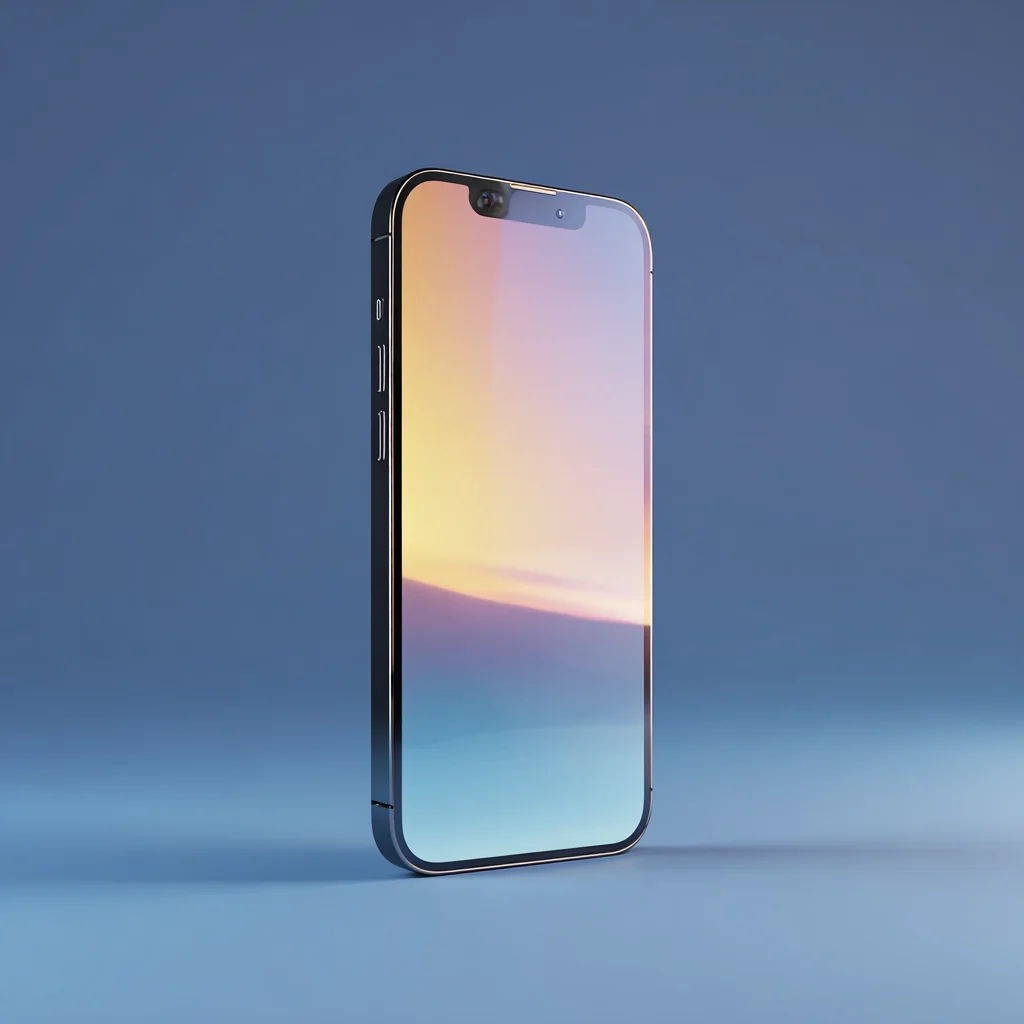
iPhone

iPhone

Apple's flagship smartphone line, known for its iOS operating system, premium build quality, and ecosystem integration.

VS
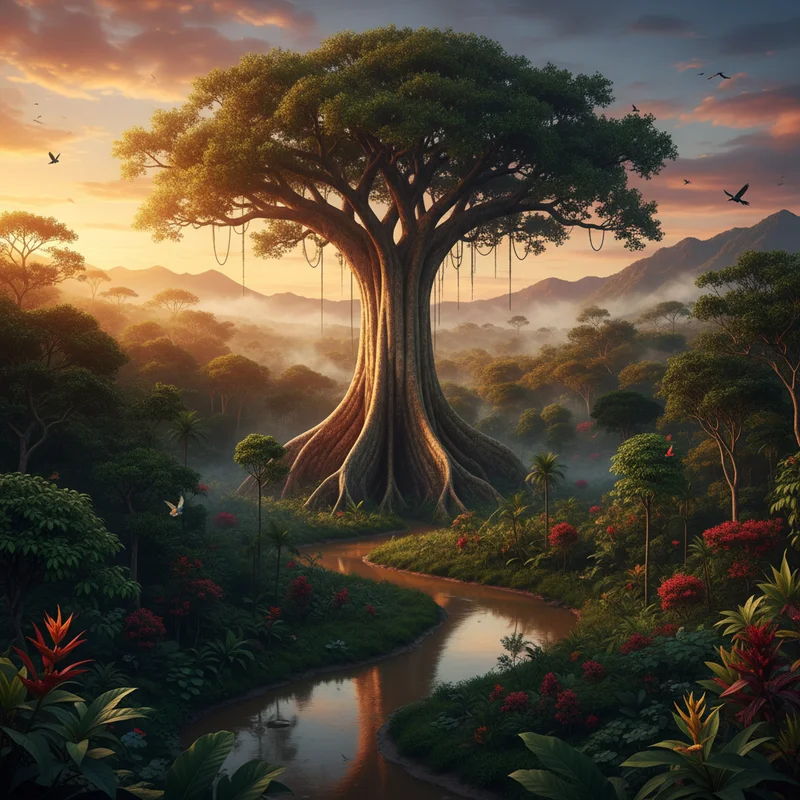
Amazon Rainforest

Amazon Rainforest

Vast jungle ecosystem and biodiversity hotspot.

Battle Analysis

Resilience amazon_rainforest Wins
30%
70%
iPhone Amazon Rainforest

iPhone

The iPhone demonstrates IP68 water resistance and can survive brief submersion, yet remains fundamentally fragile when confronted with physical trauma. A single drop onto concrete frequently terminates device functionality entirely. More critically, iPhones depend on external infrastructure—cellular towers, undersea cables, power grids—that introduces systemic vulnerability. Hurricane Maria eliminated Puerto Rico's iPhone connectivity for months.

Software vulnerabilities require constant patching; a single unaddressed exploit can compromise millions of devices simultaneously. The centralised nature of iPhone architecture creates efficiency but introduces catastrophic failure modes absent from distributed systems.

Amazon Rainforest

The Amazon has survived multiple mass extinction events including the asteroid impact that eliminated the dinosaurs. Its distributed architecture ensures that no single point of failure can collapse the system; the destruction of any individual component—tree, species, watershed—triggers compensatory responses from surrounding elements. This antifragile design improves function under stress within certain parameters.

However, current deforestation rates of approximately 10,000 square kilometres annually approach thresholds that may trigger dieback cascade—a tipping point beyond which the rainforest cannot generate sufficient precipitation for self-maintenance. Resilience, even ancient resilience, has limits.

VERDICT

Surviving multiple extinction events across millions of years demonstrates resilience that seventeen years of iterative hardening cannot approach.
User engagement iphone Wins
70%
30%
iPhone Amazon Rainforest

iPhone

The average iPhone user engages with their device for 4 hours and 37 minutes daily, unlocking the screen approximately 150 times and generating thousands of touch interactions. This engagement penetrates every waking hour—89 percent of users check their iPhone within 30 minutes of waking and within 30 minutes of sleep. The device has achieved integration with human behaviour unprecedented in tool-use history.

Apple's ecosystem design creates switching costs that bind users across device generations. iMessage lock-in, photo library integration, and app purchase history ensure that engagement persists not merely through satisfaction but through the friction of alternatives.

Amazon Rainforest

Approximately 30 million people live within the Amazon basin, including 350 indigenous groups whose cultures have developed in symbiosis with the forest over millennia. For these populations, engagement is total—the forest provides food, medicine, shelter, spiritual meaning, and identity itself. An Yanomami hunter engages with the rainforest not for hours but for every moment of existence.

For the remaining global population, the Amazon registers primarily as abstraction—a green expanse on maps, a concept invoked in climate discussions. Direct engagement requires expensive travel and physical presence impossible for most humans. The forest's user base, whilst passionate, remains numerically constrained.

VERDICT

4.6 hours of daily engagement across 2.2 billion users exceeds intensive engagement from 30 million basin residents in raw interaction volume.
Resource efficiency amazon_rainforest Wins
30%
70%
iPhone Amazon Rainforest

iPhone

iPhone manufacturing requires 34 kilograms of raw materials to produce a device weighing 206 grams—a material efficiency ratio of approximately 0.6 percent. Production demands rare earth elements from mines across five continents, assembly in Chinese factories, and distribution through carbon-intensive global logistics networks. Annual energy consumption across the iPhone installed base equals the output of several nuclear power stations.

Individual devices require daily charging, with the average user consuming approximately 2.5 kilowatt-hours annually for their iPhone alone. The elegant aluminium casing conceals one of the most resource-intensive supply chains in industrial history.

Amazon Rainforest

The Amazon operates as a nearly closed-loop system, recycling approximately 75 percent of its own precipitation through evapotranspiration. A single Brazil nut tree extracts nutrients from soil, converts solar energy with 2-3 percent efficiency through photosynthesis, and returns all materials to the ecosystem upon death. Nothing is wasted; everything becomes input for subsequent processes.

The rainforest generates 20 percent of global oxygen whilst simultaneously sequestering an estimated 150-200 billion tonnes of carbon. This atmospheric regulation service operates without external energy inputs, maintenance schedules, or software updates—powered exclusively by solar radiation available to all.

VERDICT

A 75 percent closed-loop recycling rate and net-positive atmospheric contribution categorically outperforms 0.6 percent material efficiency and constant external energy requirements.
Information processing amazon_rainforest Wins
30%
70%
iPhone Amazon Rainforest

iPhone

The latest iPhone contains the A17 Pro chip with approximately 19 billion transistors, capable of executing 17 trillion operations per second. This computational density enables real-time language translation, augmented reality rendering, and the simultaneous management of dozens of background processes. The global iPhone network processes an estimated 340 petabytes of data daily.

Information travels through iPhone networks at velocities approaching the speed of light via 5G connections, enabling synchronous global communication that would have seemed magical to previous generations. Yet this processing occurs through rigid, predetermined pathways—algorithms designed by humans in climate-controlled offices in Cupertino, California.

Amazon Rainforest

The Amazon's mycorrhizal network—sometimes termed the Wood Wide Web—connects an estimated 390 billion individual trees through fungal filaments spanning millions of kilometres. This network facilitates chemical signalling that allows trees to share nutrients, warn neighbours of pest attacks, and redistribute resources to struggling individuals. A single hectare may contain 200 kilometres of fungal connections.

Information processing in the rainforest operates through parallel chemical, acoustic, and electromagnetic channels simultaneously. Howler monkey calls travel five kilometres through the canopy; electric eels generate 860 volts to communicate through murky waters. The bandwidth is lower but the redundancy is absolute.

VERDICT

390 billion interconnected nodes operating through multiple redundant channels over millions of years represents network architecture beyond current human engineering capacity.
Long term sustainability amazon_rainforest Wins
30%
70%
iPhone Amazon Rainforest

iPhone

The average iPhone reaches end-of-life within 4.5 years, entering a waste stream that global recycling infrastructure cannot adequately process. Apple's recycling robot, Daisy, can disassemble 200 devices per hour—impressive until one considers that 225 million iPhones are sold annually. The mathematical impossibility of sustainable e-waste management at current scales remains unresolved.

Furthermore, the iPhone depends entirely on rare earth elements whose known reserves may be depleted within 50-100 years at current extraction rates. The device is, by design, a consumable that assumes infinite material availability on a finite planet.

Amazon Rainforest

The Amazon basin has sustained continuous biological operation for approximately 55 million years, predating the formation of the Andes Mountains whose creation altered precipitation patterns to generate the modern rainforest. Operating sustainably is not merely possible for the Amazon—it is definitional. Every atom within the system cycles through organisms repeatedly across geological time.

The sole threat to Amazonian sustainability comes from external human intervention. Left undisturbed, the rainforest's self-regulating mechanisms would continue functioning for timescales exceeding human comprehension—potentially until the sun's expansion renders Earth uninhabitable in approximately five billion years.

VERDICT

55 million years of demonstrated sustainable operation versus a business model predicated on planned obsolescence represents the definitional divide between sustainable and unsustainable systems.
👑

The Winner Is

Amazon Rainforest

38 - 62

The investigation concludes with the Amazon Rainforest prevailing at 62 to 38, a margin reflecting fundamental asymmetries between evolved complexity and engineered sophistication. The iPhone's dominance in user engagement—the single criterion favouring technological innovation—cannot compensate for categorical inferiority across resource efficiency, information processing depth, resilience, and sustainability.

This verdict should not be interpreted as technophobic rejection of human innovation. The iPhone represents a genuine marvel—the concentration of human ingenuity into a palm-sized device that connects billions across continental distances. Yet marvels must be contextualised against the systems they seek to emulate or replace.

The Amazon processes more information, recycles resources more efficiently, and has operated sustainably for longer than any human institution. That a rainforest outperforms a smartphone across most dimensions of network function suggests less about the iPhone's limitations than about the profound sophistication of biological systems refined across evolutionary time.

iPhone
38%
Amazon Rainforest
62%

Share this battle

More Comparisons