Topic Battle

Where Everything Fights Everything

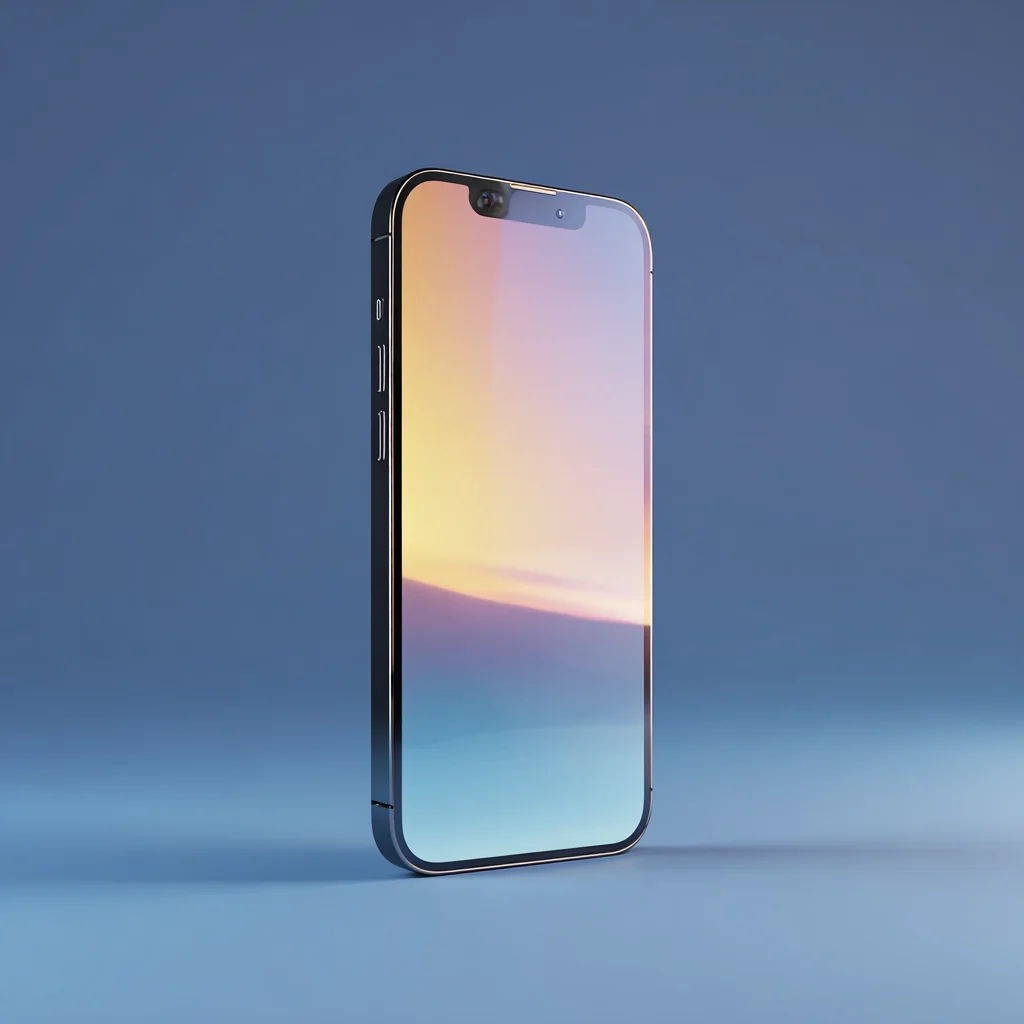
iPhone

iPhone

Apple's flagship smartphone line, known for its iOS operating system, premium build quality, and ecosystem integration.

VS
Firefighter

Firefighter

Emergency responder battling flames.

Battle Analysis

Durability firefighter Wins
30%
70%
iPhone Firefighter

iPhone

Apple's engineering teams have produced devices of considerable structural integrity, capable of surviving drops from reasonable heights, temporary submersion in water, and the constant friction of pocket residence. The iPhone 15 series boasts IP68 water resistance and ceramic shield displays that resist cracking with improved reliability.

However, durability metrics deteriorate rapidly under extreme conditions. Temperatures above 45 degrees Celsius trigger thermal shutdown. Exposure to flame produces immediate and irreversible failure. The iPhone, for all its engineering sophistication, was designed for environments that humans have already made comfortable for electronics—not environments that are actively combusting.

Firefighter

The firefighter operates routinely in conditions that would instantaneously destroy any consumer electronics. Bunker gear provides thermal protection rated to 260 degrees Celsius for limited exposure, whilst self-contained breathing apparatus enables function in atmospheres containing zero breathable oxygen and considerable quantities of toxic combustion products.

The profession maintains a casualty rate that acknowledges the fundamental hostility of working conditions. Approximately 60-80 firefighters die in the line of duty annually in the United States alone—a statistic that speaks to both the danger and the willingness to endure it. Human durability, augmented by specialised equipment, enables function in environments no technology survives.

VERDICT

Operational capacity in environments exceeding 500 degrees Celsius demonstrates durability categories beyond technological comparison.
Versatility iphone Wins
70%
30%
iPhone Firefighter

iPhone

The iPhone's functional range approaches the encyclopaedic. A single device serves as camera, computer, communication hub, entertainment system, navigation tool, payment method, fitness tracker, and general-purpose problem-solving interface. Applications number in the millions, each adding capabilities that previous generations would have considered witchcraft.

This versatility extends across virtually every domain of human activity. The iPhone facilitates commerce, creativity, connection, and considerable time-wasting with equal facility. It adapts to user requirements through software updates and application installation, maintaining relevance across wildly divergent use cases. Its polymorphic utility represents perhaps its most significant competitive advantage.

Firefighter

Modern firefighting has expanded considerably beyond flame suppression. Contemporary departments respond to medical emergencies (comprising the majority of calls), vehicle extrications, hazardous material incidents, water rescues, confined space operations, and the occasional cat-in-tree scenario that validates childhood assumptions about the profession.

Training programmes now encompass emergency medical certification, technical rescue specialisation, and crisis intervention techniques. The firefighter has evolved from single-purpose flame extinguisher to general-purpose emergency responder, capable of addressing whatever crisis the community generates. This versatility, however, remains bounded by physical presence—the firefighter cannot simultaneously attend multiple incidents.

VERDICT

Simultaneous functionality across millions of applications creates versatility that physical presence cannot match.
Availability iphone Wins
70%
30%
iPhone Firefighter

iPhone

The iPhone achieves something approaching omnipresence in developed societies. With 1.2 billion active devices currently in circulation, the probability of locating one within arm's reach approaches statistical certainty in most urban environments. The device requires no scheduling, no appointment, no waiting period—merely sufficient battery charge and cellular signal.

This perpetual availability has fundamentally altered human behaviour. The iPhone stands ready at 3 AM to answer questions no one needs answered, to provide entertainment during moments that once required tolerance of boredom, to document experiences that once existed purely in memory. Its availability is total, immediate, and psychologically transformative.

Firefighter

Firefighter availability operates through institutional structure rather than market distribution. Approximately 1.1 million firefighters serve in the United States, with roughly 30% employed as career professionals and 70% volunteering their services. Fire stations maintain 24-hour coverage through rotating shift patterns designed to ensure perpetual operational readiness.

Yet individual firefighter availability remains constrained by geography, staffing levels, and simultaneous incident demands. Rural areas may experience response times exceeding 15 minutes; multiple simultaneous emergencies can stretch resources beyond comfortable margins. The firefighter cannot be mass-produced, distributed through retail channels, or updated overnight via software patch.

VERDICT

Mass production and personal ownership create availability metrics that emergency services logistics cannot replicate.
Public trust firefighter Wins
30%
70%
iPhone Firefighter

iPhone

Apple has cultivated a customer relationship characterised by remarkable brand loyalty. Surveys indicate 92% of iPhone users intend to purchase another Apple device, suggesting satisfaction levels that transcend rational product evaluation. The iPhone has achieved cultural status as both necessity and identity marker, particularly among younger demographics.

Yet trust in technology companies has experienced notable erosion. Concerns regarding data privacy, planned obsolescence, and environmental impact have introduced scepticism into the customer relationship. The iPhone is trusted to function reliably whilst simultaneously suspected of surveillance, manipulation, and deliberately shortened lifespan. Trust, in this context, has become complicated.

Firefighter

The firefighter consistently ranks among the most trusted professions in public opinion surveys, typically achieving trust ratings above 85%—figures that politicians, journalists, and technology executives regard with undisguised envy. This trust derives from observable behaviour: firefighters demonstrably risk personal safety for the benefit of complete strangers.

The heroic archetype has proven remarkably durable. Children continue to aspire to firefighting careers; communities continue to fund fire services even during budgetary constraints; the firefighter remains a cultural symbol of selfless service. This trust has accumulated across centuries of demonstrated commitment to public welfare.

VERDICT

Centuries of demonstrated self-sacrifice for public welfare generate trust levels no corporation can manufacture.
Emergency response firefighter Wins
30%
70%
iPhone Firefighter

iPhone

The iPhone's emergency capabilities have evolved considerably since its inception. Modern iterations offer Emergency SOS functionality, crash detection algorithms, and the ability to contact emergency services with a few deliberate button presses. The device can transmit precise GPS coordinates, medical identification data, and even detect falls with concerning accuracy.

Yet the iPhone's emergency response remains fundamentally intermediary in nature. It facilitates communication with those who actually respond to emergencies rather than responding itself. When smoke fills your living room, the iPhone can summon help with admirable efficiency, but it cannot carry you down four flights of stairs whilst the ceiling collapses overhead.

Firefighter

The firefighter's emergency response capabilities require no algorithmic mediation. Trained to enter environments where temperatures exceed 1,100 degrees Celsius, the modern firefighter carries approximately 30 kilograms of protective equipment whilst navigating zero-visibility conditions that would render any smartphone's display cheerfully irrelevant.

Response times average 6-8 minutes from dispatch to arrival, after which the firefighter physically intervenes in situations that would immediately destroy any electronic device. The direct application of expertise to crisis situations represents a fundamentally different category of emergency response than notification transmission.

VERDICT

Direct physical intervention in life-threatening situations categorically surpasses the facilitation of such intervention.
👑

The Winner Is

Firefighter

42 - 58

The quantitative analysis reveals a contest with clearer resolution than many in this series. The firefighter claims three criteria—emergency response, durability, and public trust—whilst the iPhone prevails in availability and versatility. Yet this numerical distribution understates the qualitative asymmetry between the domains.

The iPhone has achieved unprecedented utility in addressing the minor inconveniences and moderate challenges of contemporary existence. The firefighter has maintained focus on scenarios where existence itself hangs in the balance. One makes life more convenient; the other makes continued life more probable.

With a final tally of 42-58, the firefighter claims decisive victory—a margin reflecting the categorical difference between facilitating rescue and performing it. Both entities will continue their respective contributions to human survival and comfort.

iPhone
42%
Firefighter
58%

Share this battle

More Comparisons