
Topic Battle

Where Everything Fights Everything

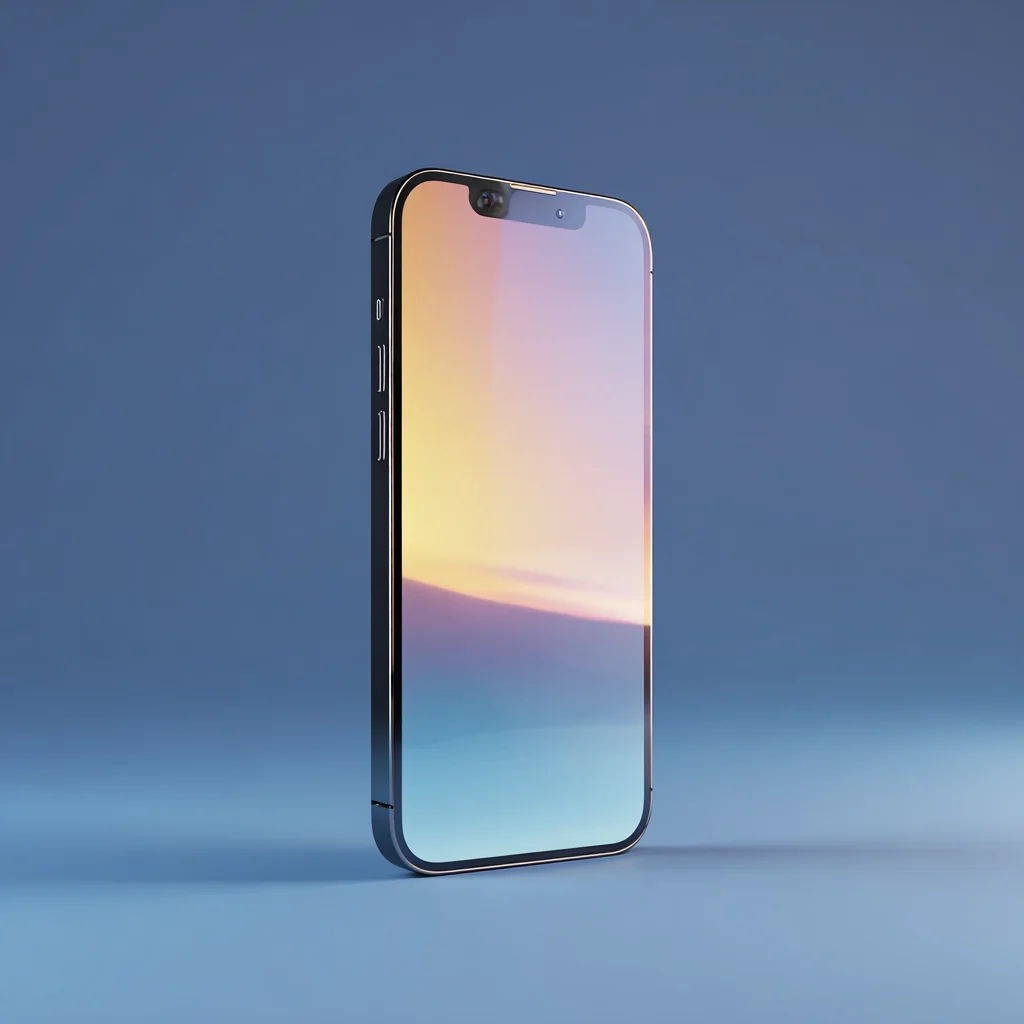
iPhone

iPhone

Apple's flagship smartphone line, known for its iOS operating system, premium build quality, and ecosystem integration.

VS
New York City

New York City

City that never sleeps and never stops honking.

Battle Analysis

Reliability iphone Wins
70%
30%
iPhone New York City

iPhone

Apple's engineering teams have achieved remarkable consistency across device generations. The iPhone maintains 99.9% uptime for most users, requiring only occasional restarts and updates. Battery technology, though still the platform's Achilles heel, now provides full-day operation for typical usage patterns.

The device's reliability, however, remains contingent upon external infrastructure. Without cellular networks, WiFi access, and functioning charging systems, the iPhone transforms from indispensable companion to expensive paperweight within hours. Its operational independence is essentially illusory, masked by the ubiquity of supporting systems in developed regions.

New York City

New York City has operated continuously for four hundred years, surviving fires, epidemics, financial collapses, terrorist attacks, and the occasional hurricane. The city's infrastructure, whilst frequently criticised, manages to transport 5.5 million daily subway riders and process one billion gallons of water with remarkable consistency given the system's complexity.

The city does experience service interruptions, blackouts, and the occasional infrastructure failure that strands millions. Yet it possesses what engineers term redundant resilience: when one system fails, alternatives emerge. Taxis replace subways, bodegas replace supermarkets, and New Yorkers demonstrate their characteristic capacity for adaptation with remarkable equanimity.

VERDICT

The iPhone achieves 99.9% personal uptime; New York's infrastructure regularly tests its residents' patience and flexibility.
Economic gravity new_york_city Wins
30%
70%
iPhone New York City

iPhone

Apple's flagship device has generated cumulative revenues exceeding one trillion dollars since its inception, establishing the iPhone as the most commercially successful consumer product in human history. The device has spawned an ecosystem of 2.2 million applications, each representing economic activity that would not otherwise exist.

The iPhone economy extends far beyond Apple's balance sheets. Entire industries have emerged to protect, accessorise, repair, and eventually recycle these devices. The global smartphone case market alone exceeds 25 billion dollars annually. The iPhone has achieved what economists term platform monopoly over significant portions of human commercial activity.

New York City

New York City's economic output defies casual comprehension. The metropolitan area generates a gross product of approximately 1.7 trillion dollars annually, which would rank it as the world's tenth largest economy if it were an independent nation. Wall Street processes transactions exceeding 40 trillion dollars daily, a figure that renders most comparison attempts mathematically absurd.

The city houses the headquarters of 54 Fortune 500 companies, serves as the global centre for finance, media, fashion, and art markets, and functions as the United Nations' permanent home. Every square metre of Manhattan real estate represents concentrated economic value that accumulates continuously, regardless of product cycles or software updates.

VERDICT

New York generates 1.7 trillion dollars annually as ongoing economic output; the iPhone's trillion represents cumulative lifetime sales.
Cultural influence new_york_city Wins
30%
70%
iPhone New York City

iPhone

The iPhone's cultural penetration operates through what sociologists term technological osmosis. Within fifteen years of its introduction, the device has fundamentally restructured human communication patterns, attention economics, and social interaction protocols. The phrase 'sent from my iPhone' has appeared in billions of email signatures, a subtle status marker that Apple wisely declined to remove.

Hollywood now struggles to craft plots without addressing smartphone presence, as the device's capabilities render traditional narrative obstacles obsolete. Lost in the city? GPS. Need information? Safari. Require evidence of events? Camera. The iPhone has effectively eliminated an entire genre of dramatic conflict whilst creating new anxieties around battery percentage and signal strength.

New York City

New York City has served as humanity's primary stage for four centuries, generating cultural output that defies quantification. The city has birthed or nurtured virtually every significant American artistic movement: Abstract Expressionism, bebop jazz, hip-hop, punk rock, and the Broadway musical all trace their origins to these 783 square kilometres of compressed ambition.

The metropolis appears in over 40,000 films as either setting or character, a frequency unmatched by any location on Earth. To walk through Manhattan is to navigate a landscape of accumulated cultural reference, where every street corner recalls a scene from cinema, literature, or song. The city does not merely host culture; it metabolises human experience into exportable artistic product.

VERDICT

New York City has generated four centuries of continuous cultural output; the iPhone has existed for seventeen years.
Density of experience new_york_city Wins
30%
70%
iPhone New York City

iPhone

Within its compact dimensions, the iPhone contains access to virtually all human knowledge, entertainment, and communication. A single device can store one terabyte of data, equivalent to approximately 500 hours of high-definition video or the complete works of every significant author in human history. The information density approaches the theoretical limits of silicon-based storage.

The experiential throughput proves equally remarkable. Users average four hours daily interacting with their devices, consuming content at rates that would have seemed impossible to previous generations. The iPhone enables its user to witness events on opposite sides of the planet, communicate across language barriers, and access entertainment catalogues that exceed any individual's lifetime viewing capacity.

New York City

New York City offers what urban theorists describe as maximum experiential density: more things happening per square metre than anywhere else on Earth. Within a single Manhattan block, one might encounter fifteen restaurants, three museums, a Broadway theatre, and approximately four thousand individuals pursuing their various dramas. The sensory input rate exceeds any device's capacity to replicate.

The city provides experiences that remain stubbornly analogue: the smell of pretzels from a street vendor, the particular quality of light between skyscrapers at sunset, the acoustic chaos of Times Square. These phenomena resist digitisation, existing only in the physical presence of the city itself. New York offers what no screen can provide: genuine spatial immersion in human density.

VERDICT

The city provides irreducible physical experiences; the iPhone offers exceptional access to mediated representations.
Transformative potential new_york_city Wins
30%
70%
iPhone New York City

iPhone

The iPhone has already transformed human behaviour more rapidly than any technology since the printing press. Attention spans have shortened, social interaction has migrated to digital platforms, and the boundary between public and private existence has effectively dissolved. The device continues to evolve, with each generation introducing capabilities that further integrate technology into human cognition.

Future iterations promise augmented reality, advanced AI assistance, and health monitoring capabilities that blur the distinction between device and user. The iPhone's transformative trajectory remains steep and shows no signs of plateau. Its ultimate impact on human evolution remains genuinely unpredictable.

New York City

New York's capacity for transformation has been demonstrated repeatedly across its history. The city has absorbed waves of immigration, adapted to economic paradigm shifts, and repeatedly reinvented its identity whilst maintaining essential character. The transformation of Times Square from crime-ridden to tourist-saturated represents urban renewal on unprecedented scale.

The city continues to evolve, with former industrial zones becoming luxury residences and new construction constantly reshaping its skyline. Yet New York's transformative power extends beyond self-modification: the city transforms its inhabitants. Millions arrive seeking reinvention and find, for better or worse, that the city changes those who enter it. This bidirectional transformation distinguishes living systems from mere devices.

VERDICT

New York transforms both itself and its inhabitants reciprocally; the iPhone transforms users but remains fundamentally unchanged by them.
👑

The Winner Is

New York City

44 - 56

The quantitative assessment yields a result that, upon reflection, feels intuitively correct. New York City prevails with a 56-44 margin, securing victories in cultural influence, economic gravity, density of experience, and transformative potential. The iPhone's sole categorical victory in reliability speaks to its engineering excellence but cannot overcome the accumulated weight of four centuries of human achievement.

This outcome should surprise no one who has visited both subjects. The iPhone represents humanity's most successful attempt to compress the world into a portable rectangle. New York City represents the world itself, or at least a concentrated sample of its maximum possible intensity. One is a window; the other is the view.

Yet the comparison reveals unexpected complementarity. The modern New York experience increasingly flows through iPhone screens, whilst the iPhone's cultural significance partially derives from its presence in New York-set media. They have become symbiotic entities, each amplifying the other's reach.

iPhone
44%
New York City
56%

Share this battle

More Comparisons