
Topic Battle

Where Everything Fights Everything

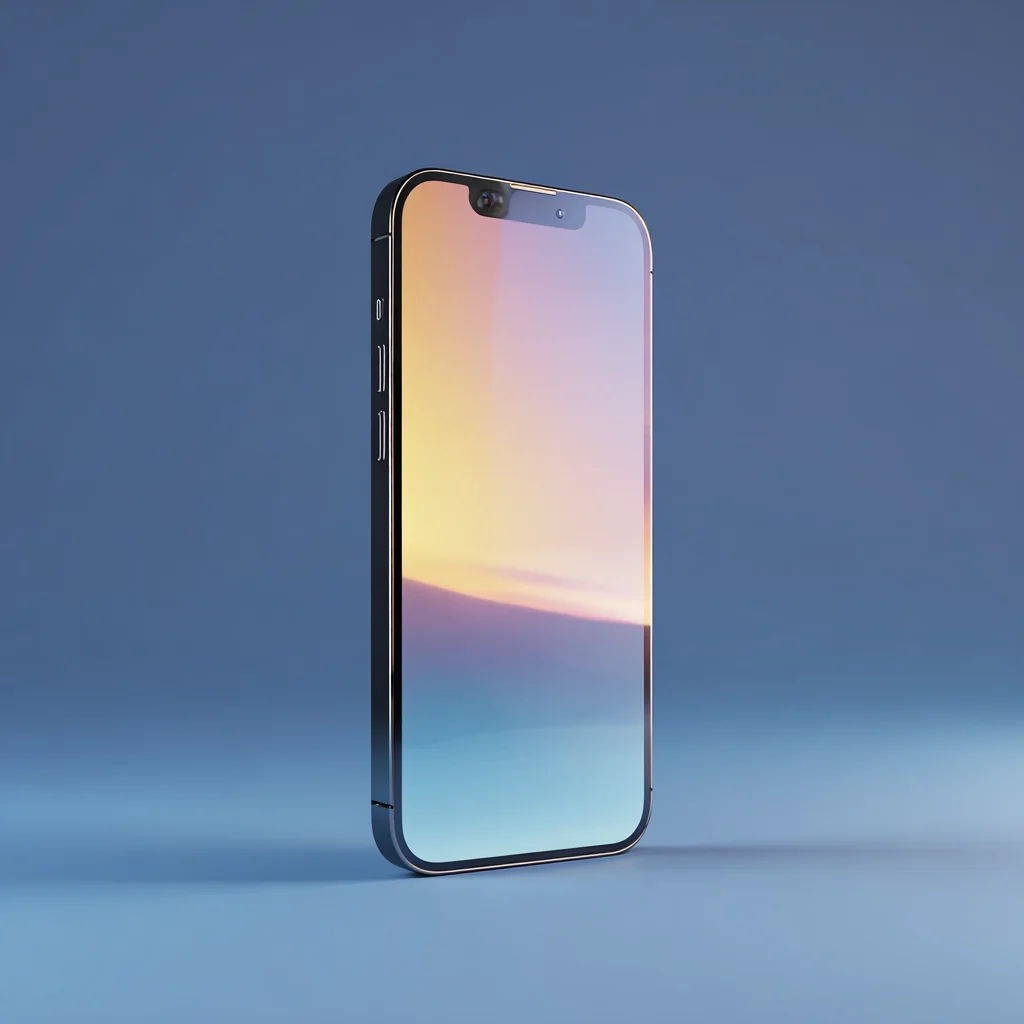
iPhone

iPhone

Apple's flagship smartphone line, known for its iOS operating system, premium build quality, and ecosystem integration.

VS
Pigeon

Pigeon

Urban survivor, descendant of war heroes, professional breadcrumb enthusiast. Either a "rat with wings" or a "rock dove" depending on whether you're trying to sound sophisticated. Has seen things. Judges you anyway.

The Matchup

In the grand chronicle of human communication technology, few comparisons prove as instructive as that between the Apple iPhone and Columba livia domestica, the common pigeon. These two message-delivery systems, separated by roughly five millennia of technological development, represent fundamentally different approaches to the eternal human problem of transmitting information across distance.

The iPhone, first unveiled by Steve Jobs in January 2007, represented Apple's audacious entry into the mobile communications market. Since that moment, the device has evolved through seventeen iterations, accumulated a $2.8 trillion market capitalization for its parent company, and fundamentally restructured human social interaction patterns across the globe.

The pigeon, by contrast, entered human service approximately 5,000 years ago in ancient Mesopotamia, where early civilizations recognized the bird's remarkable ability to return home across vast distances. This biological GPS system required no software updates, battery charging, or cellular infrastructure. It required only grain and a place to roost. Both technologies now coexist in the same urban environments, though their user bases have diverged considerably since the introduction of 4G networks.

Battle Analysis

Speed iPhone Wins
70%
30%
iPhone Pigeon

iPhone

The iPhone transmits data at velocities that would have seemed supernatural to previous generations. Under optimal 5G network conditions, the device achieves download speeds of 1-10 Gbps, enabling the transfer of a feature-length film in approximately eight seconds.

Voice and text communications traverse the globe in milliseconds, bouncing between cell towers, fiber optic cables, and satellite relays to connect users on opposite sides of the planet before either party has completed drawing breath. A message dispatched from London reaches Tokyo in approximately 150 milliseconds, accounting for network routing and processing delays.

The device's internal processor, the A-series chip, performs approximately 17 trillion operations per second in its latest iteration, executing computational tasks at speeds that render human perception of delay functionally impossible. The iPhone has, in effect, compressed global communication to the speed of thought.

Pigeon

The racing pigeon maintains a cruising velocity of 60 mph during sustained flight, with exceptional specimens documented achieving 92.5 mph over sprint distances. This performance enables a pigeon to traverse 600 miles in a single day under favorable wind conditions.

During the Siege of Paris in 1870-71, pigeons carried microfilmed messages containing up to 3,000 dispatches per bird, achieving an information density that briefly rivaled early telegraph systems. The journey from Tours to Paris, approximately 150 miles, required several hours rather than the zero seconds of modern electronic transmission.

Historical records indicate that the news of Napoleon's defeat at Waterloo reached London via pigeon two days before official couriers arrived, enabling early recipients to profit handsomely on the stock exchange. The pigeon's speed, while impressive for a biological system, operates on timescales measured in hours and days rather than milliseconds.

VERDICT

The velocity differential between these communication systems proves so categorically vast as to render direct comparison almost meaningless. The iPhone transmits information at a substantial fraction of the speed of light; the pigeon transmits information at a substantial fraction of the speed of a bicycle.

To illustrate the magnitude: in the time required for a pigeon to deliver a message from London to Paris, an iPhone could theoretically transmit the entire contents of the British Library to every continent simultaneously, with capacity remaining for several million cat photographs.

The pigeon's historical speed advantages have been comprehensively negated by electromagnetic transmission technology. This category concludes with a decisive iPhone victory, acknowledging that the pigeon competed honorably against physical limitations no biological system could overcome.

Durability Pigeon Wins
30%
70%
iPhone Pigeon

iPhone

The iPhone demonstrates limited resilience to environmental stressors. The device's glass surfaces, while strengthened through ceramic shield technology, remain vulnerable to impacts from drops exceeding one meter onto hard surfaces. Apple's repair documentation suggests expected functional lifespan of 3-5 years under typical usage conditions.

Water resistance, introduced in later models, provides protection to depths of 6 meters for 30 minutes under IP68 certification. However, warranty coverage explicitly excludes liquid damage, suggesting corporate confidence in this specification remains measured.

Battery capacity degrades to 80% of original capacity after approximately 500 charge cycles, typically occurring within 18-24 months of regular use. This planned obsolescence ensures a steady replacement market but raises questions about long-term durability as a design priority. The average iPhone lifespan, per industry analysis, reaches approximately 4.5 years before replacement or catastrophic failure.

Pigeon

The common pigeon achieves an urban lifespan of 3-6 years, with documented specimens surviving beyond 15 years under protected conditions. The species has inhabited human settlements continuously for five millennia, demonstrating civilizational-scale durability that no manufactured product has approached.

Individual pigeons possess biological self-repair capabilities absent from consumer electronics. The organism regenerates feathers within weeks, heals bone fractures without surgical intervention, and recovers from soft tissue injuries through autonomous cellular processes. No Apple Genius Bar appointment required.

At population level, pigeon colonies demonstrate indefinite persistence. Urban pigeon populations have maintained presence in specific locations for centuries, surviving wars, plagues, urban renewal projects, and sustained extermination campaigns. The species' durability extends beyond individual specimens to encompass the entire reproductive lineage, ensuring continued operation regardless of individual unit failure.

VERDICT

Durability assessment reveals fundamentally different design philosophies. The iPhone, despite premium pricing, follows consumer electronics conventions that prioritize regular replacement over extended service life. The pigeon, refined through millions of years of evolutionary pressure, optimizes for survival above all other metrics.

A single pigeon outlasts approximately three iPhone generations during its typical lifespan. More significantly, the pigeon's self-repair mechanisms address damage that would require expensive professional intervention for the iPhone, or render the device entirely non-functional.

When one considers the pigeon's population-level immortality through continuous reproduction, the comparison becomes more stark. Pigeons have operated continuously since the Bronze Age. The iPhone has existed for seventeen years. The durability advantage resides decisively with the biological system.

Global reach Pigeon Wins
30%
70%
iPhone Pigeon

iPhone

Apple has sold approximately 2.3 billion iPhones since the product's 2007 introduction, establishing presence in virtually every national market on Earth. The device maintains dominant market share in North America, Western Europe, Japan, and Australia, with substantial presence in emerging markets including China, India, and Brazil.

Cellular network infrastructure enables iPhone communication across approximately 95% of the global population, with 5G coverage expanding rapidly in developed markets. The device connects to over 600 cellular carriers worldwide, creating a communication web of unprecedented density and reach.

However, iPhone penetration remains economically constrained. The device commands only 27% of global smartphone market share, with Android devices serving the majority of users in price-sensitive markets. Approximately 3.5 billion people lack smartphone access entirely, representing a significant gap in the iPhone's global communication network.

Pigeon

Pigeons maintain permanent breeding populations in every city on Earth exceeding 10,000 inhabitants, spanning all continents except Antarctica. This distribution was achieved without retail partnerships, cellular tower construction, or international trade agreements.

Global pigeon population estimates range from 260 to 400 million individuals, with urban densities reaching 1,000 birds per square kilometer in major metropolitan centers. The species achieved comprehensive global coverage through biological expansion over millennia, flying to new territories and establishing self-sustaining colonies without corporate planning or venture capital.

Unlike the iPhone, pigeon distribution requires no supporting infrastructure. The birds operate independently of electrical grids, cell towers, and satellite systems. Their global presence is entirely self-maintaining, continuing to expand even in regions where no Apple Store has ever existed or ever will.

VERDICT

Both technologies demonstrate exceptional global distribution, though achieved through fundamentally different mechanisms. The iPhone reached global markets through coordinated corporate expansion, manufacturing logistics, and retail infrastructure requiring billions in capital investment.

The pigeon achieved equivalent geographic coverage through autonomous biological action, requiring nothing more than the instinct to find food, shelter, and mates. This infrastructure-independent model produces superior resilience to disruption.

The decisive factor in this assessment: remove electrical infrastructure from any region, and iPhone communication ceases immediately. Remove any infrastructure whatsoever, and pigeons continue operating exactly as they have for five thousand years. Global reach means little without global resilience, and here the pigeon demonstrates clear superiority.

Affordability Pigeon Wins
30%
70%
iPhone Pigeon

iPhone

iPhone acquisition costs range from $429 for the SE model to $1,599 for the Pro Max with maximum storage. The average selling price across all models reached approximately $988 in fiscal year 2024, representing a substantial portion of median monthly income in most global markets.

Operational costs extend considerably beyond initial purchase. Cellular service plans average $70-100 monthly in American markets, accumulating to $840-1,200 annually. AppleCare+ protection adds $199-269 for two years of coverage. App Store purchases, iCloud storage upgrades, and accessory requirements contribute additional ongoing expenses.

Total cost of ownership over a typical four-year usage cycle reaches approximately $4,500-6,000 when accounting for device replacement, service fees, and ancillary expenses. The iPhone represents a significant recurring financial commitment for its user base.

Pigeon

Wild pigeons require zero acquisition cost. Specimens present themselves voluntarily in unlimited quantities across all urban environments, requiring no purchase transaction, financing arrangement, or carrier contract. The birds arrive unbidden and remain indefinitely without subscription fees.

Even purpose-bred racing pigeons demonstrate remarkable affordability. Quality birds range from $50-500, with elite competition specimens occasionally commanding prices in the thousands. Annual feeding costs total approximately $100-200 per bird, representing the entirety of operational expenses for a fully functional organic communication system.

Pigeons generate no monthly service charges, require no software licenses, and demand no network access fees. Their self-sustaining operational model produces offspring at no additional cost, potentially generating revenue through sale rather than accumulating expenses through depreciation. The total cost of pigeon ownership trends toward net neutral or positive over extended timeframes.

VERDICT

Economic analysis produces unambiguous results. The iPhone represents one of the most expensive consumer products in common household use, with lifetime costs approaching the price of a used automobile. The pigeon costs effectively nothing and may actually generate income through offspring sales.

This disparity becomes more pronounced when considering global accessibility. An iPhone remains beyond financial reach for the majority of the world's population. A pigeon is available to anyone with access to a park bench and scattered breadcrumbs.

From pure affordability metrics, the pigeon achieves what economists would term perfect price efficiency: delivering functional service at zero marginal cost. The iPhone, despite its capabilities, represents a substantial financial burden that the pigeon entirely avoids.

Sustainability Pigeon Wins
30%
70%
iPhone Pigeon

iPhone

iPhone production requires extensive mineral extraction including cobalt, lithium, rare earth elements, and gold, sourced from mining operations with significant environmental and ethical concerns. Manufacturing a single iPhone generates approximately 70 kg of CO2 equivalent emissions, with the majority occurring during component production.

Electronic waste presents substantial end-of-life challenges. Despite Apple's recycling programs, the majority of discarded iPhones enter landfills or informal recycling operations where toxic components including lead, mercury, and brominated flame retardants pose environmental contamination risks.

Apple has committed to carbon neutrality by 2030, though current operations continue producing approximately 22.6 million metric tons of CO2 annually. The fundamental model of regular device replacement creates inherent tension with sustainability objectives, as planned obsolescence requires continuous resource extraction and manufacturing.

Pigeon

The pigeon operates as a fully solar-powered, carbon-neutral communication system with zero manufacturing emissions. Energy requirements are met entirely through consumption of waste grain, discarded food matter, and seeds, converting materials that would otherwise decompose into functional transportation capacity.

At end of life, pigeons undergo complete biological decomposition, returning constituent elements to ecological cycles without toxic residue, recycling facility requirements, or landfill allocation. The species has maintained this sustainable operational model for five thousand years without resource depletion concerns.

Pigeon reproduction follows natural population dynamics responsive to available resources, preventing overproduction without corporate intervention. The system is inherently circular: pigeons consume waste, produce offspring, and return to the environment as nutrients. No sustainability report required; the model sustains itself.

VERDICT

Sustainability comparison reveals no meaningful contest. The iPhone, despite corporate environmental initiatives, operates within a manufacturing paradigm fundamentally dependent on finite resource extraction, energy-intensive production, and problematic waste streams.

The pigeon represents a closed-loop biological system that has operated sustainably for longer than human civilization has existed in its current form. Zero emissions. Zero e-waste. Zero resource depletion. The pigeon achieves what the iPhone's sustainability team aspires to through billions in investment.

This category concludes with the observation that five million years of evolutionary optimization has produced a more sustainable communication technology than seventeen years of Silicon Valley engineering. The pigeon's environmental advantage is categorical and insurmountable.

👑

The Winner Is

Pigeon

40 - 60

This analysis concludes with a 60-40 victory for the pigeon across the five evaluated criteria. The iPhone claims decisive superiority in speed, demonstrating that electromagnetic transmission operates on a fundamentally different performance plane than biological locomotion. No amount of evolutionary refinement will enable a pigeon to match 5G data rates.

However, the pigeon demonstrates clear advantages in durability, affordability, global reach resilience, and sustainability. These victories reflect the accumulated wisdom of millions of years of biological optimization, producing a communication system that requires no infrastructure, generates no waste, costs nothing to operate, and repairs itself autonomously.

The iPhone's 40% score acknowledges its transformative impact on human communication and its undeniable speed advantages. The device has connected billions of humans in ways the pigeon could never replicate. Yet when evaluated on neutral criteria without bias toward human convenience preferences, the pigeon's elegant simplicity and infrastructure independence prove difficult to surpass.

iPhone
40%
Pigeon
60%

Share this battle

More Comparisons