Topic Battle

Where Everything Fights Everything

iPhone

iPhone

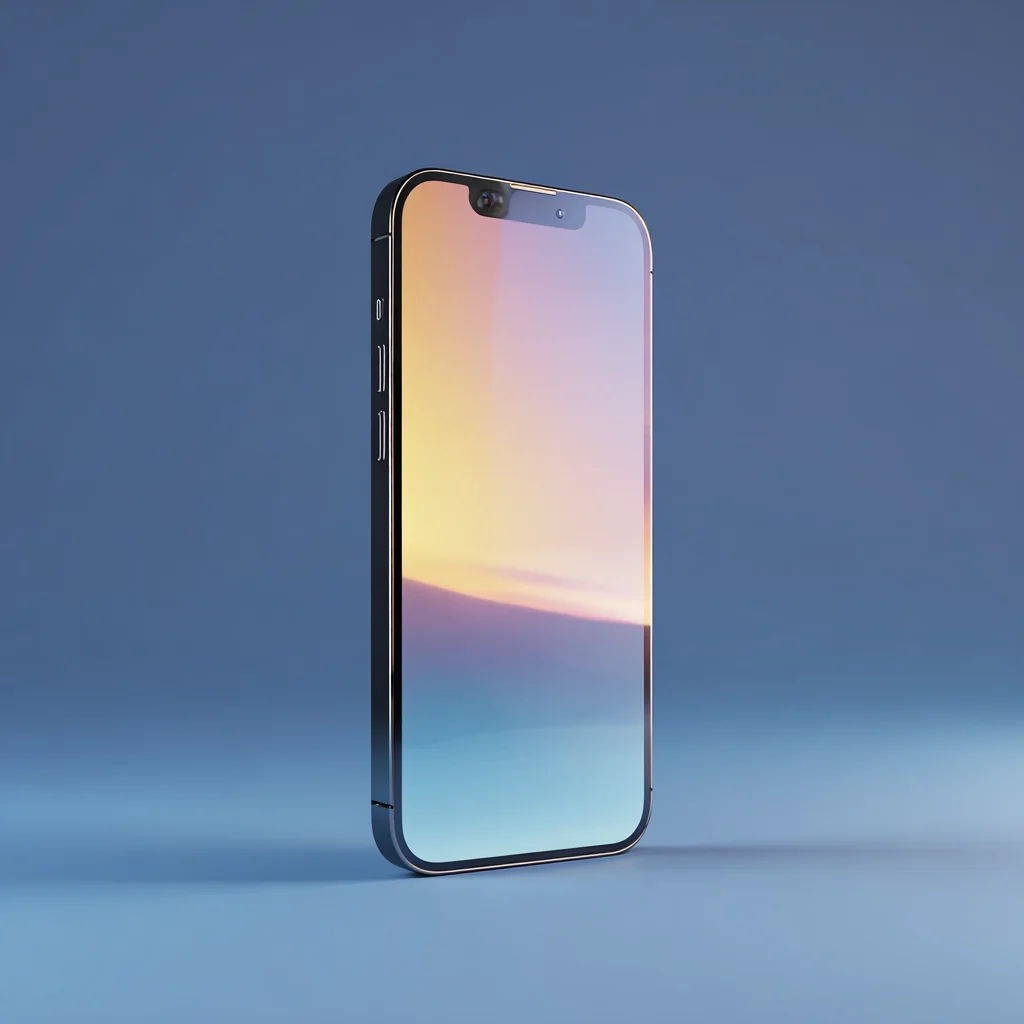
Apple's flagship smartphone line, known for its iOS operating system, premium build quality, and ecosystem integration.

VS
Police Officer

Police Officer

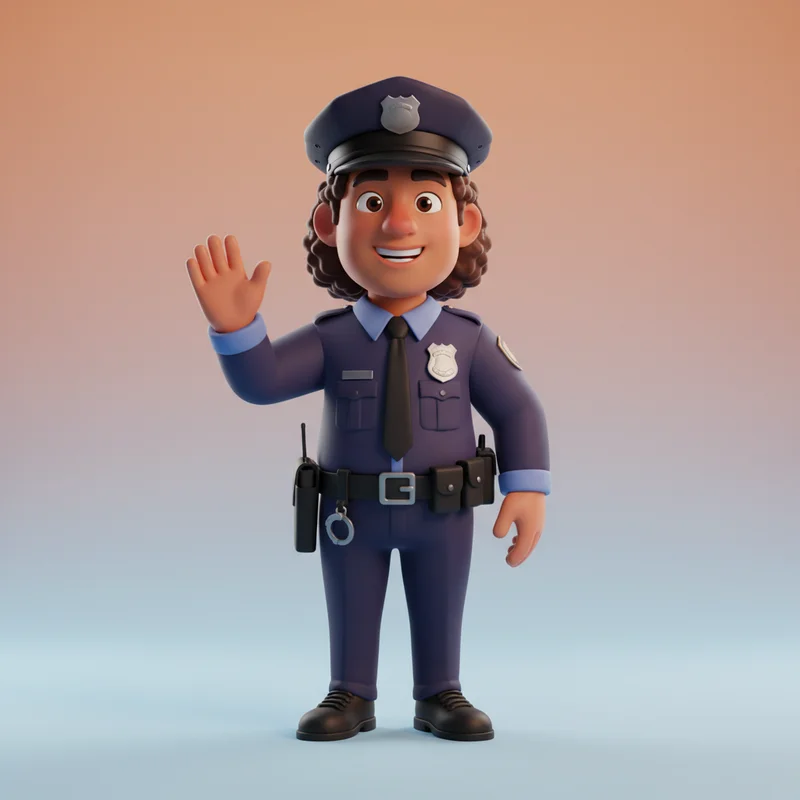
Law enforcement maintaining public order.

Battle Analysis

Authority police_officer Wins
30%
70%
iPhone Police Officer

iPhone

The iPhone exercises a peculiar form of soft authority that behavioural scientists find endlessly fascinating. Without any legal mandate, this device commands its owners to respond to notifications within an average of 6.3 seconds, interrupting meals, conversations, and romantic encounters with mechanical indifference.

Its authority extends through social compulsion rather than statutory power. The iPhone has established protocols—responding to messages, maintaining charge, installing updates—that users follow with the dedication of religious observance. Non-compliance results in social consequences ranging from mild disapproval to complete professional marginalisation.

Police Officer

The Police Officer wields authority backed by the considerable weight of state apparatus. This authority manifests through legal powers including detention, arrest, and the issuance of citations that carry financial consequences the iPhone can only dream of imposing.

Crucially, the Police Officer's authority operates through visible presence alone. Researchers document the 'Officer Effect'—the phenomenon whereby the mere appearance of a uniformed officer causes motorists to suddenly remember speed limits, pedestrians to reconsider jaywalking, and teenagers to adopt expressions of elaborate innocence. This preventative authority requires no activation, no charging, and no software update.

VERDICT

State-sanctioned legal authority with enforcement mechanisms substantially outweighs socially constructed device dependency.
Public trust iphone Wins
70%
30%
iPhone Police Officer

iPhone

The iPhone enjoys remarkably high trust levels considering its documented surveillance activities. Users entrust the device with banking credentials, intimate photographs, medical information, and location data with minimal hesitation. Apple's privacy marketing has successfully positioned the iPhone as a trusted guardian rather than a potential liability.

This trust manifests behaviourally: users sleep with their iPhones, bring them to bathrooms, and experience genuine panic when temporarily separated from the device. Such attachment suggests trust levels approaching those typically reserved for family members and beloved pets.

Police Officer

Police Officer trust varies dramatically across demographic categories, representing one of the most stratified public confidence patterns in contemporary society. Survey data reveals trust levels ranging from overwhelming confidence to profound scepticism, with geography, ethnicity, and personal experience serving as primary predictive variables.

Recent decades have witnessed significant fluctuation in police trust metrics, influenced by high-profile incidents, reform initiatives, and changing social attitudes toward authority. The Police Officer occupies an inherently contested position—simultaneously protector and enforcer—that generates more complex trust dynamics than any consumer device.

VERDICT

Consistently high voluntary trust across demographics, evidenced by intimate data sharing, outperforms stratified institutional confidence.
Response time iphone Wins
70%
30%
iPhone Police Officer

iPhone

The iPhone achieves response times measured in milliseconds, delivering information with a speed that has fundamentally recalibrated human patience thresholds. Users now experience genuine distress when web pages require more than three seconds to load—a neurological adaptation that would have baffled previous generations.

However, this rapid response applies only to digital queries. The iPhone cannot physically intervene in emergencies, cannot pursue fleeing suspects, and cannot provide the reassuring presence of another human in moments of crisis. Its response, whilst fast, remains confined to the realm of information rather than action.

Police Officer

Police Officer response times vary considerably by jurisdiction, ranging from three minutes in well-resourced urban centres to substantially longer intervals in rural districts. These figures represent physical deployment of trained personnel capable of tangible intervention in developing situations.

The Officer's response, whilst slower to initiate, encompasses capabilities the iPhone cannot approximate: physical presence, de-escalation through human interaction, and the capacity for protective intervention. A response time measured in minutes that includes actual assistance may prove more valuable than instantaneous digital acknowledgement of distress.

VERDICT

Millisecond digital response times, whilst limited in scope, demonstrate superior speed metrics for information-based queries.
Surveillance capability iphone Wins
70%
30%
iPhone Police Officer

iPhone

The iPhone represents perhaps the most sophisticated personal surveillance apparatus ever voluntarily adopted by a population. It continuously monitors location, records biometric data, analyses communication patterns, and maintains detailed logs of its owner's movements, purchases, and late-night search queries.

This surveillance occurs with the owner's nominal consent, buried deep within terms and conditions that no human has ever read in their entirety. The device knows when you wake, when you sleep, and precisely how long you spent looking at that thing you're embarrassed about. It remembers everything, judges nothing, and monetises constantly.

Police Officer

The Police Officer's surveillance capability, whilst more limited in scope, carries immediate investigative consequence. Officers employ direct observation, witness interviews, and access to institutional databases that aggregate information across multiple governmental systems.

What the Police Officer lacks in continuous monitoring capability, they compensate for in analytical judgement. Unlike algorithmic processing, the Officer can interpret context, recognise anomaly, and apply situational discretion that no device can replicate. The human surveillance system processes not merely data but meaning—a distinction of considerable forensic significance.

VERDICT

Continuous, consensual monitoring with total recall exceeds intermittent human observation in raw surveillance scope.
Societal indispensability police_officer Wins
30%
70%
iPhone Police Officer

iPhone

Modern society has achieved such thorough iPhone integration that functioning without the device requires deliberate, countercultural effort. Employment, banking, social connection, and increasingly government services assume smartphone access as baseline infrastructure.

Yet civilisation demonstrably existed before 2007, suggesting the iPhone's indispensability is constructed rather than inherent. Societies continue to function where smartphone penetration remains low. The iPhone is indispensable to modern convenience; whether it is indispensable to society itself remains philosophically debatable.

Police Officer

The Police Officer fulfils functions that no society has successfully eliminated—the maintenance of public order, the investigation of violations, and the protection of vulnerable individuals from those who would do harm. Even the most libertarian theorists acknowledge some role for organised response to criminal behaviour.

Historical experiments in police absence—whether through strikes, natural disasters, or deliberate defunding—consistently produce results that underscore the structural necessity of the role. The specific implementation may be debated; the fundamental requirement for organised peacekeeping appears universal across human civilisation.

VERDICT

Universal historical necessity for organised law enforcement outweighs seventeen years of smartphone dependency.
👑

The Winner Is

Police Officer

46 - 54

After systematic evaluation across five critical dimensions, this investigation determines that the Police Officer prevails with a final tally of 54 to 46. The iPhone demonstrates superior performance in surveillance scope, response speed, and public trust metrics—achievements that reflect remarkable engineering and even more remarkable marketing.

However, the Police Officer's advantages in authority and societal indispensability prove determinative. The iPhone's authority, however compelling, operates through social convention rather than legal mandate. Its surveillance, however comprehensive, cannot translate into protective action. Its speed, however impressive, cannot physically intervene when intervention is required.

The Police Officer represents infrastructure that societies have maintained, in various forms, for millennia—because the alternative has consistently proven worse. The iPhone represents a convenience so thoroughly integrated that we have mistaken it for necessity. This distinction, subtle yet profound, ultimately decides the contest.

iPhone
46%
Police Officer
54%

Share this battle

More Comparisons