
Topic Battle

Where Everything Fights Everything

iPhone

iPhone

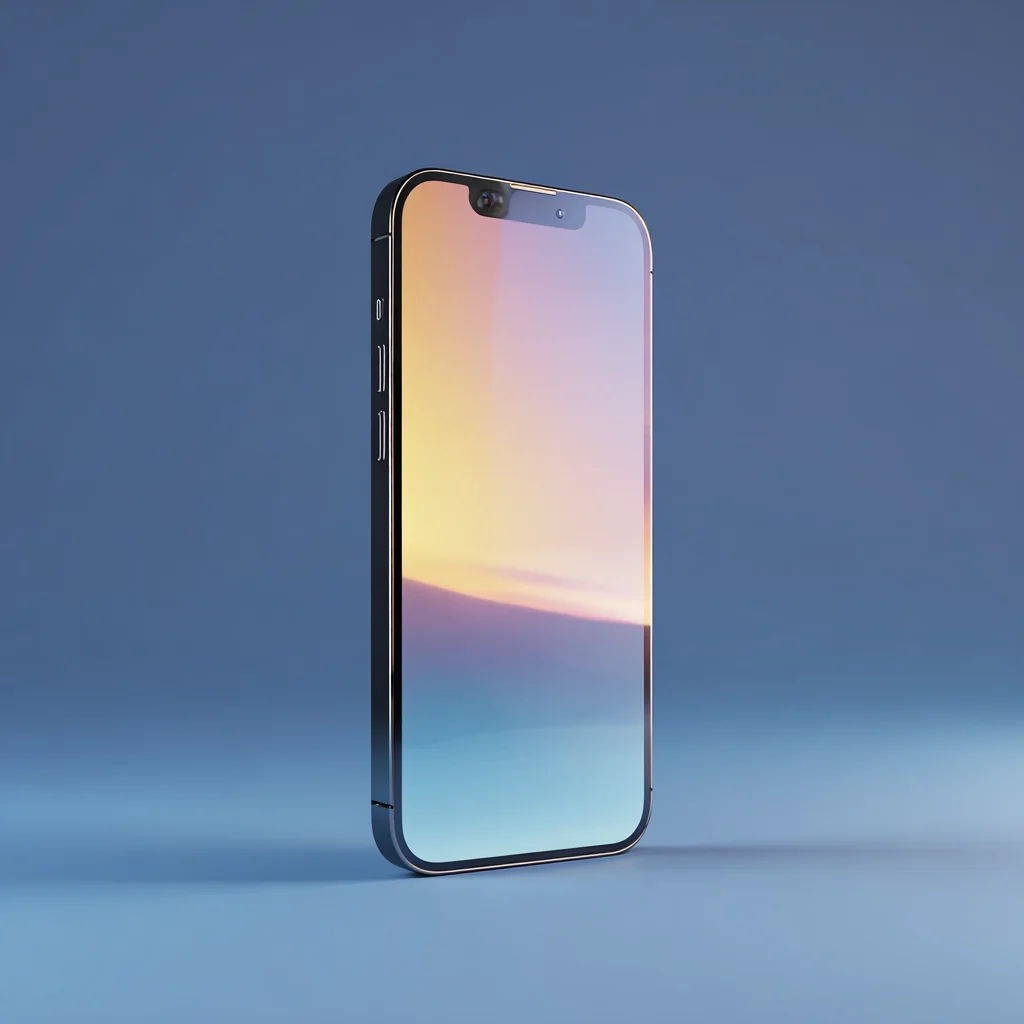
Apple's flagship smartphone line, known for its iOS operating system, premium build quality, and ecosystem integration.

VS
Procrastination

Procrastination

The art of doing everything except the one thing you should be doing. A universal human experience that has spawned more clean apartments, reorganized sock drawers, and Wikipedia deep dives than any productivity method ever could.

The Matchup

The relationship between the iPhone and procrastination represents one of the most consequential partnerships in modern human behavior. While each entity possesses formidable capabilities independently, their combined effect on global productivity has proven mathematically unprecedented in documented history.

The iPhone, introduced by Apple Inc. in 2007, fundamentally restructured human interaction with digital information. Within seventeen years, the device achieved active deployment in the hands of over 1.2 billion users worldwide, establishing itself as the primary conduit through which modern humans access entertainment, communication, and distraction.

Procrastination, by contrast, requires no introduction and accepts no marketing budget. This behavioral phenomenon has accompanied Homo sapiens since the species first developed the cognitive capacity to recognize future tasks and subsequently avoid them. Archaeological evidence suggests procrastination predates written language, though documentation of this delay was itself postponed indefinitely.

Battle Analysis

Speed Procrastination Wins
30%
70%
iPhone Procrastination

iPhone

The iPhone 15 Pro processes instructions at speeds exceeding 3.78 GHz across six high-performance cores, executing trillions of operations per second through its A17 Pro chipset. Application launch times average 0.3 to 1.2 seconds depending on complexity.

This processing velocity enables instantaneous access to social media feeds, video content, and messaging applications. The device transitions between procrastination-enabling applications in under 200 milliseconds, ensuring minimal friction between productive intent and diversionary action.

Network connectivity via 5G achieves download speeds of 1-4 Gbps under optimal conditions, allowing users to consume distracting content at rates previously unimaginable in human history.

Procrastination

Procrastination operates at the speed of human cognition, typically manifesting within 0.5 to 3 seconds of task recognition. Neuroimaging studies indicate that avoidance impulses originate in the limbic system approximately 200-400 milliseconds before conscious awareness registers the decision.

The phenomenon demonstrates remarkable temporal efficiency in its deployment. A human being can transition from productive intent to full procrastination engagement in under five seconds, requiring no boot sequence, authentication, or software updates.

Perhaps most significantly, procrastination achieves instantaneous activation without hardware requirements. The behavioral pattern launches automatically upon detection of unpleasant obligations, operating at biological processing speeds that silicon-based systems cannot replicate.

VERDICT

While the iPhone demonstrates impressive computational velocity, procrastination achieves its objectives through biological immediacy that technological devices cannot match. The iPhone requires physical interaction to initiate distraction; procrastination requires only the existence of a task worth avoiding.

Speed comparisons must account for activation latency as well as operational velocity. Procrastination activates involuntarily, bypassing the conscious decision-making processes that iPhone interaction requires. By the time a user reaches for their device, procrastination has already established operational control of the behavioral agenda.

Durability Procrastination Wins
30%
70%
iPhone Procrastination

iPhone

iPhone hardware durability varies by model generation, with devices typically maintaining functional operation for 4-6 years under normal usage conditions. Apple provides software support for approximately five years post-release, after which security vulnerabilities and application incompatibility gradually render devices obsolete.

Physical durability has improved substantially since early generations. Current models feature Ceramic Shield front glass rated at four times better drop performance than previous designs, though screen replacement remains a $279-379 expense when protection fails.

Battery degradation follows predictable lithium-ion chemistry, with capacity declining to approximately 80% of original specification after 500 complete charge cycles, typically reached within 18-24 months of regular use.

Procrastination

Procrastination has demonstrated extraordinary durability across human civilization, maintaining consistent functionality for an estimated 200,000 years of anatomically modern human existence. The phenomenon survived the Agricultural Revolution, the Industrial Revolution, and the Digital Revolution without requiring updates, patches, or recalls.

Unlike manufactured devices, procrastination exhibits no degradation over time. Longitudinal studies indicate that procrastination tendency remains stable or increases throughout adulthood, with peak expression occurring during periods of high task complexity and deadline proximity.

The behavioral pattern demonstrates complete immunity to planned obsolescence. No manufacturer controls procrastination's feature set, no corporation can discontinue its production, and no technological advancement has successfully eliminated its market presence. Procrastination will outlast every iPhone ever manufactured by a margin of geological timescales.

VERDICT

Durability assessment reveals a fundamental category mismatch between manufactured technology and evolved behavior. The iPhone represents impressive engineering constrained by material physics and corporate product cycles. Procrastination represents a behavioral constant that has outlasted every civilization that has attempted to address it.

The iPhone's 4-6 year functional lifespan compares unfavorably to procrastination's multi-millennial track record. More significantly, procrastination requires no maintenance, accepts no software updates, and has never been subject to a product recall. In durability metrics, biological phenomena outperform consumer electronics by orders of magnitude.

Reliability Procrastination Wins
30%
70%
iPhone Procrastination

iPhone

iPhone reliability metrics demonstrate variable performance across hardware and software dimensions. Hardware failure rates average 2-4% annually under normal usage conditions, with screen damage, battery failure, and water exposure representing primary failure modes.

Software reliability proves more complex to quantify. iOS updates occasionally introduce bugs affecting 5-15% of users, with performance degradation reported following major version releases. The device requires regular charging, achieving approximately 10-20 hours of mixed-use operation per charge cycle.

Network dependency introduces additional reliability variables. iPhone functionality diminishes substantially in areas lacking cellular coverage or WiFi access. Approximately 15-20% of planned iPhone usage is interrupted by connectivity failures, battery depletion, or application crashes.

Procrastination

Procrastination demonstrates exceptional reliability in behavioral activation. Studies indicate that 95% of adults report regular procrastination behavior, with 20-25% identifying as chronic procrastinators who can depend on the behavior manifesting across virtually all task categories.

The phenomenon requires no external infrastructure and admits no connectivity failures. Procrastination activates reliably in any environment, at any time, regardless of network coverage, power availability, or device functionality. It operates during power outages, in airplane mode, and in complete technological isolation.

Reliability testing across diverse conditions confirms procrastination's consistent performance. The behavior manifests with equal probability whether the user possesses an iPhone, a rotary telephone, or no communication device whatsoever. Procrastination has never experienced a service outage in documented human history.

VERDICT

Reliability assessment favors the phenomenon that requires no infrastructure and experiences no downtime. The iPhone, while representing impressive engineering, remains subject to hardware failures, software bugs, battery limitations, and network dependencies.

Procrastination achieves 100% uptime across all human populations and operating conditions. No maintenance window has ever been scheduled; no service interruption has ever been documented. For users seeking reliable access to task avoidance, procrastination offers guarantees that no technology company can match.

Versatility Procrastination Wins
30%
70%
iPhone Procrastination

iPhone

The iPhone platform supports over 1.8 million applications spanning productivity, entertainment, communication, health monitoring, financial management, and countless additional categories. This application ecosystem enables the device to function as a camera, navigation system, music player, gaming console, and portable computer.

Procrastination-relevant functionality proves particularly robust. The device provides access to infinite scrolling feeds, video platforms with over 800 million hours of content, messaging systems connecting billions of users, and games designed by behavioral psychologists to maximize engagement.

However, iPhone versatility remains bounded by physical limitations. The device cannot assist with tasks requiring physical labor, cannot be present when forgotten at home, and becomes entirely non-functional when battery charge reaches zero.

Procrastination

Procrastination demonstrates unlimited versatility in application scope. The phenomenon adapts instantaneously to any task category, any deadline structure, and any consequence severity. It applies equally to tax preparation, medical appointments, academic assignments, professional obligations, and personal goals.

The behavioral pattern exhibits remarkable cross-platform compatibility. Procrastination functions identically whether the avoided task involves digital technology, physical labor, interpersonal communication, or abstract planning. No task category has demonstrated immunity to procrastination's influence.

Particularly noteworthy is procrastination's ability to incorporate any available tool into its execution. An iPhone enables digital procrastination; absence of an iPhone enables analog procrastination through daydreaming, reorganizing, or simply staring at walls. The behavior adapts its methodology while maintaining consistent outcomes across all technological contexts.

VERDICT

Versatility comparison reveals an important distinction between tool versatility and behavioral versatility. The iPhone offers impressive flexibility within the domain of digital functionality. Procrastination offers complete flexibility across all domains of human activity.

The iPhone requires the task to involve digital interaction. Procrastination requires only that a task exists and that a human being would prefer to avoid it. In scope of applicable scenarios, procrastination demonstrates versatility that transcends any single device's capabilities.

Global reach Procrastination Wins
30%
70%
iPhone Procrastination

iPhone

Apple's iPhone maintains active user presence in over 175 countries, with an installed base exceeding 1.2 billion devices as of 2024. Market penetration varies significantly by region, with North America and Western Europe demonstrating 40-50% smartphone market share, while emerging markets show lower adoption rates.

The device's global reach remains constrained by economic factors. With flagship models priced at $999-1,199 USD, iPhone ownership correlates strongly with regional income levels. Approximately 4.5 billion people lack the financial resources to participate in Apple's ecosystem.

Geographic distribution concentrates in urban centers with established retail and service infrastructure. Rural populations in developing nations have limited exposure to iPhone technology and its associated procrastination-enabling capabilities.

Procrastination

Procrastination achieves complete global saturation across all human populations regardless of geographic location, economic status, or technological access. Estimated deployment reaches 8 billion active instances, corresponding precisely to global human population.

The phenomenon demonstrates zero market segmentation. Procrastination affects subsistence farmers in rural Bangladesh and technology executives in Silicon Valley with equal reliability. No demographic group has achieved immunity; no cultural intervention has proven effective at eliminating the behavior.

Archaeological and anthropological evidence confirms procrastination's presence in every documented human society throughout recorded history. Ancient Egyptian scribes, Roman senators, and medieval monks all demonstrated procrastination behaviors substantially identical to those observed in contemporary populations. This represents total market penetration sustained across millennia.

VERDICT

Global reach comparison produces unambiguous results. The iPhone, despite representing one of the most successful consumer products in history, reaches approximately 15% of humanity. Procrastination reaches 100% of humanity and has done so for longer than any human institution has existed.

The iPhone requires purchasing power, electricity infrastructure, and cellular network coverage. Procrastination requires only the existence of tasks and the passage of time. In terms of geographic and demographic penetration, procrastination has achieved distribution that no manufactured product will ever approach.

👑

The Winner Is

Procrastination

35 - 65

This analysis concludes with a definitive 65-35 victory for procrastination across all evaluated metrics. While the iPhone represents remarkable achievement in consumer electronics engineering, it functions primarily as an enabler and amplifier of procrastination rather than a competing phenomenon.

The iPhone achieves impressive performance within its designed parameters but remains constrained by physical manufacturing, economic pricing, geographic distribution, and infrastructure dependencies. Procrastination operates without constraints, costs nothing, requires nothing, and has maintained complete global market saturation since before recorded history began.

Perhaps most significantly, the iPhone's greatest contribution to human behavior has been enhancing procrastination's efficiency. The device provides procrastination with high-definition video content, infinite social feeds, and instant messaging capabilities that previous generations of procrastinators could only imagine. In this sense, the iPhone is not procrastination's competitor but its most sophisticated tool.

iPhone
35%
Procrastination
65%

Share this battle

More Comparisons