Topic Battle

Where Everything Fights Everything

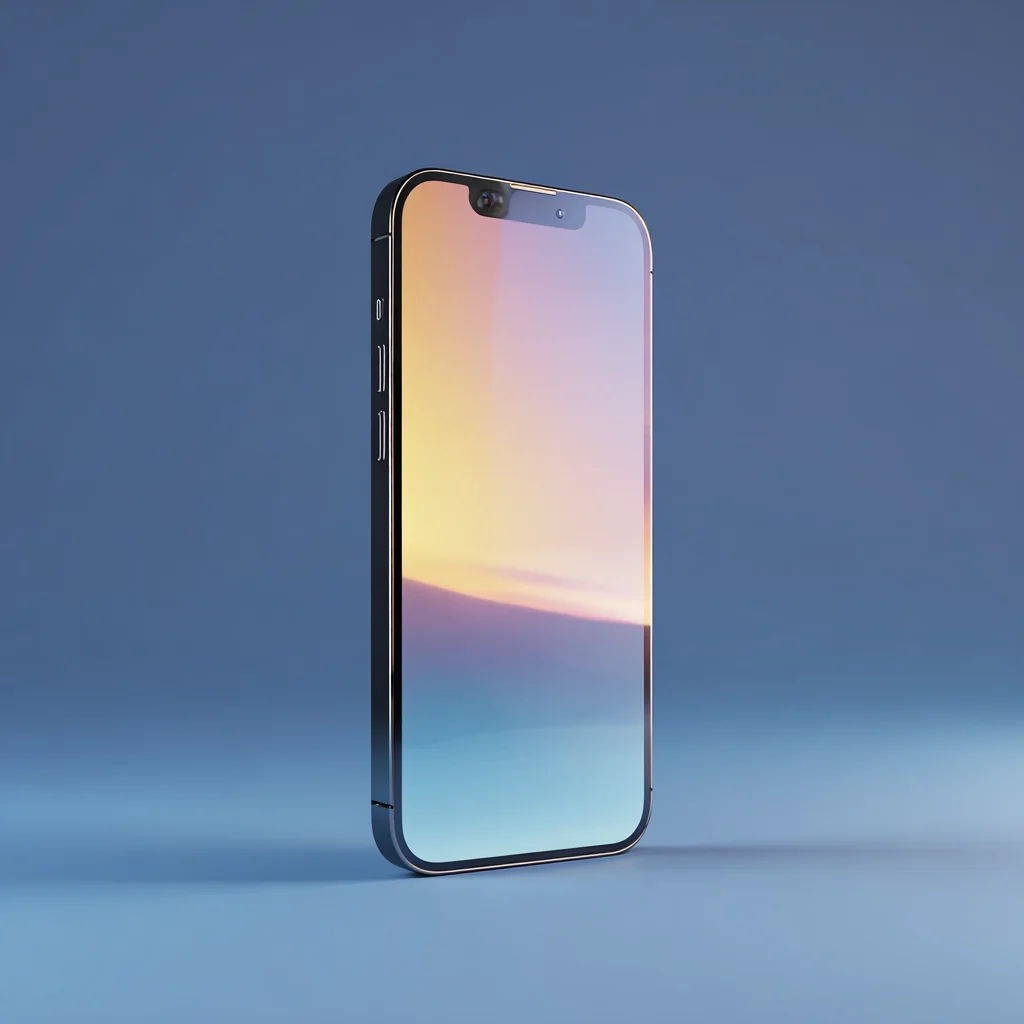
iPhone

iPhone

Apple's flagship smartphone line, known for its iOS operating system, premium build quality, and ecosystem integration.

VS
Rubber Duck

Rubber Duck

A debugging tool for programmers and bathtub companion for everyone else. This hollow yellow bird has solved more software bugs than most senior engineers. Also squeaks.

The Matchup

The juxtaposition of the Apple iPhone and the rubber duck presents economists and consumer behaviourists with a fascinating paradox. Here we have two objects separated by approximately $998 in retail price, yet both consistently achieve high user satisfaction ratings within their respective domains. One represents the zenith of human technological achievement; the other has remained essentially unchanged since the Victorian era.

The iPhone, first introduced by Steve Jobs in 2007, has since become the most profitable product in consumer electronics history, generating over $1.5 trillion in cumulative revenue. Apple's flagship device contains more than three billion transistors, processes information using neural engines capable of 15.8 trillion operations per second, and incorporates technology that would have been classified as science fiction merely decades ago.

The rubber duck, by contrast, contains precisely zero transistors. It performs no calculations. It connects to no networks. And yet, in software development circles, it has achieved something the iPhone never quite managed: universal recognition as a legitimate debugging methodology. The "rubber duck debugging" technique, formally documented in 1999, involves explaining code logic to an inanimate waterfowl replica. It works with uncomfortable frequency.

Battle Analysis

Durability Rubber Duck Wins
30%
70%
iPhone Rubber Duck

iPhone

The iPhone represents a masterclass in planned obsolescence, though Apple would prefer more diplomatic terminology. Internal batteries demonstrate measurable capacity degradation beginning at approximately 500 charge cycles, typically reached within 18-24 months of regular use. Screen glass, despite Ceramic Shield marketing, fractures upon impact with concrete at velocities achieved by a standard pocket-height drop.

Software support, while industry-leading at 5-6 years per device, eventually terminates, rendering even physically functional units incapable of running current applications. The average iPhone replacement cycle now stands at approximately 3.5 years, driven by battery degradation, screen damage, or the psychological pressure of operating a device two generations behind current release. Repair costs for screen replacement range from $199 to $379, often approaching the residual value of older units.

Rubber Duck

The rubber duck presents a durability profile that borders on geological. Polyvinyl chloride specimens demonstrate material stability across decades of service. A rubber duck purchased during the Reagan administration remains functionally identical to one purchased yesterday. There exists no documented case of a rubber duck requiring screen replacement, battery service, or emergency visits to the Genius Bar.

Environmental testing reveals the rubber duck tolerates temperature ranges from -20C to 60C without structural compromise. It survives full immersion in water, a test that renders the iPhone immediately non-functional. Drop tests from any height achievable without specialized equipment result in zero damage. The rubber duck bounces. The iPhone, emphatically, does not. Average service life exceeds 25 years with no maintenance requirements whatsoever.

VERDICT

The durability comparison produces results of uncomfortable clarity for Apple's engineering teams. A $1,000 device requiring $279 screen replacements and $89 battery services competes against an object that has never, in over a century of production, required professional repair.

This disparity reflects fundamentally different design philosophies. The iPhone optimizes for capability density, packing maximum functionality into minimum volume, at the inevitable cost of fragility. The rubber duck optimizes for eternal adequacy, performing one task with perfect reliability across indefinite timeframes. For durability specifically, the rubber duck achieves categorical superiority.

Reliability Rubber Duck Wins
30%
70%
iPhone Rubber Duck

iPhone

iPhone reliability statistics reveal the complex reality of sophisticated electronics. Apple reports hardware failure rates below 1% during warranty periods, a genuinely impressive figure for devices containing billions of components. However, this metric excludes user-induced damage, which accounts for the vast majority of iPhone repairs.

Software reliability presents additional considerations. iOS updates occasionally introduce bugs affecting core functionality. Battery health degradation causes unexpected shutdowns. Wireless connectivity fails in approximately 3-5% of user sessions. The phrase "my iPhone died" has entered common vocabulary, referring to battery depletion, crash events, or the existential termination following toilet immersion. No iPhone user has completed a decade of ownership without experiencing at least one significant reliability incident.

Rubber Duck

The rubber duck maintains an operational reliability rate of 100% across all documented deployment scenarios. This figure is not aspirational marketing; it is mathematical fact. The rubber duck cannot crash because it runs no software. It cannot lose signal because it transmits no signal. It cannot experience battery failure because it contains no battery.

In debugging applications specifically, the rubber duck demonstrates remarkable consistency. Its ability to receive verbal explanations of code logic remains unaffected by ambient temperature, humidity, proximity to magnets, or the emotional state of the developer. It has never interrupted a debugging session with a software update prompt. It has never required a force restart. It simply exists, perpetually ready, its reliability not a feature but an intrinsic property of its being.

VERDICT

Reliability comparison exposes the fundamental fragility of complexity. The iPhone contains millions of potential failure points; the rubber duck contains none. This is not a criticism of Apple's engineering, which achieves genuinely remarkable reliability for devices of such complexity. Rather, it illustrates that complexity itself carries inherent reliability costs.

For mission-critical applications requiring guaranteed uptime, the rubber duck offers something the iPhone cannot: absolute certainty. It will never fail to be a rubber duck. It will never require troubleshooting. Its reliability is not 99.9% or 99.99%; it is a perfect, metaphysical 100%.

Affordability Rubber Duck Wins
30%
70%
iPhone Rubber Duck

iPhone

Current iPhone pricing begins at $799 for base models and ascends to $1,599 for maximum storage configurations. This represents the hardware cost alone. Full ecosystem participation requires additional expenditure on cases ($49-199), cables ($29-49), screen protectors ($15-50), and the now-separately-sold charging adapter ($29).

Ongoing costs compound relentlessly. Monthly wireless service averages $65-85 in developed markets. AppleCare+ protection plans add $199-269. iCloud storage upgrades, increasingly necessary as base storage proves insufficient, range from $0.99 to $9.99 monthly. Over a standard 3.5-year ownership period, total cost of iPhone ownership routinely exceeds $4,000, a figure that does not include replacement costs following the statistically probable screen fracture.

Rubber Duck

The rubber duck maintains pricing structures that would make any technology executive weep with envy. Standard models retail at $1.99 to $4.99 across major retailers. Bulk purchasing for corporate debugging deployments reduces per-unit costs to approximately $0.35. Even premium artisanal variants, hand-painted by Brooklyn craftspeople, rarely exceed $25.

Total cost of ownership following initial purchase amounts to precisely zero dollars. The rubber duck requires no monthly subscription, no protection plan, no charging infrastructure, and no storage upgrades. It does not depreciate according to annual release cycles. A rubber duck purchased in 2024 will retain identical functionality and market value in 2044, a claim no iPhone could plausibly make. The lifetime cost differential between these products approaches four thousand dollars.

VERDICT

The affordability analysis yields results so lopsided they approach statistical meaninglessness. One might purchase approximately 2,000 rubber ducks for the lifetime cost of iPhone ownership. This quantity would fill a standard bathtub to overflow capacity, provide debugging companions for every software developer in a medium-sized corporation, and still leave budget for a rather nice dinner.

Economic theorists might argue that comparing prices without considering utility delivered misses the point. They would be correct. But when affordability serves as the specific metric, the rubber duck achieves victory by three orders of magnitude, a margin that renders further analysis somewhat redundant.

Social impact iPhone Wins
70%
30%
iPhone Rubber Duck

iPhone

The iPhone has fundamentally restructured human social behaviour at civilizational scale. It has transformed photography from a specialized skill to a universal practice. It has enabled real-time communication across any distance. It has created new industries, destroyed established ones, and generated approximately 2.2 million direct and indirect jobs within the iOS application ecosystem alone.

Less favourably, the iPhone has contributed to documented increases in anxiety, depression, and social isolation, particularly among adolescents. Screen addiction has entered clinical vocabulary. The phrase "phubbing"—phone snubbing—describes the now-common practice of ignoring present company to engage with digital content. The iPhone's social impact is vast and ambivalent, simultaneously connecting and isolating humanity in unprecedented ways.

Rubber Duck

The rubber duck's social impact, while less dramatic, maintains curious cultural significance. The 1970 Sesame Street song "Rubber Duckie" reached number 16 on the Billboard Hot 100, an achievement no other bath accessory has replicated. Rubber duck imagery pervades popular culture as a symbol of childhood innocence and simple pleasures.

Within technology circles, the rubber duck has achieved genuine professional legitimacy. Rubber duck debugging is taught in computer science curricula at respected universities. Software companies stock debugging ducks as standard office supplies. The methodology has been credited with identifying bugs that saved millions of dollars in prevented production failures. A plastic bath toy has become a recognized tool in the creation of software systems worth trillions of dollars—a social impact as unexpected as it is genuine.

VERDICT

Social impact assessment must acknowledge scale differentials that approach incomprehensibility. The iPhone has reshaped human civilization. The rubber duck has improved software quality and sold modest quantities of novelty merchandise. These are not equivalent achievements.

However, the rubber duck's impact maintains a qualitative distinction worth noting. Its influence is uniformly positive. No clinical literature documents rubber duck addiction. No social scientists study rubber duck-induced anxiety. It has achieved meaningful cultural presence while causing precisely zero documented harm. The iPhone wins this category through sheer magnitude, but the rubber duck wins something more subtle: the distinction of beneficial-only impact.

Entertainment value iPhone Wins
70%
30%
iPhone Rubber Duck

iPhone

The iPhone provides access to entertainment resources of effectively unlimited scope. Apple's App Store offers over 1.8 million applications, including games, streaming services, social media platforms, and creative tools. Integrated hardware supports video playback at up to 4K HDR resolution, spatial audio processing, and gaming experiences that would have required dedicated consoles a decade ago.

Content consumption statistics reveal the iPhone's entertainment dominance. Average users spend 4-6 hours daily engaged with smartphone content. Netflix, YouTube, TikTok, and Spotify collectively stream billions of hours annually to iPhone devices. The iPhone has effectively become the primary entertainment delivery mechanism for a substantial portion of humanity, replacing television, cinema, and physical media for many users.

Rubber Duck

The rubber duck's entertainment portfolio consists primarily of existing in a mildly amusing fashion. It can be made to bob in water. It can be squeezed to produce a squeaking sound, though not all models include this feature. It can be arranged in formation with other rubber ducks for group photograph opportunities.

Scientific studies have documented modest stress-reduction effects from rubber duck interaction, though whether this constitutes entertainment remains subject to definitional debate. Children aged 1-5 demonstrate engagement periods of 3-15 minutes with rubber duck play before attention diversion. Adult engagement typically lasts under 30 seconds unless professional debugging is involved. The rubber duck does not stream content, play games, or connect to social networks. It is a hollow polymer sculpture of a waterfowl. Its entertainment ambitions are accordingly modest.

VERDICT

Entertainment value represents the iPhone's decisive victory category. The comparison here approaches the absurd: a device offering access to effectively all recorded human entertainment versus an object whose peak entertainment value involves producing a squeaking noise.

One might argue that the rubber duck offers a purer form of entertainment, unmediated by screens and algorithms. This argument, while philosophically interesting, does not survive contact with actual human behaviour. People spend hours daily consuming iPhone entertainment. People spend seconds interacting with rubber ducks. The market has rendered its verdict with overwhelming clarity.

👑

The Winner Is

Rubber Duck

48 - 52

This documentary comparison concludes with a 52-48 victory for the rubber duck, a result that will perplex technology enthusiasts and vindicate bath toy advocates in equal measure. The rubber duck prevails in three categories—Durability, Affordability, and Reliability—while the iPhone claims Entertainment Value and Social Impact.

The deeper significance of this outcome lies not in the margin of victory but in what the comparison reveals about value creation. The iPhone represents humanity's most sophisticated consumer technology, the product of billions in research investment and the coordinated effort of thousands of engineers. The rubber duck represents injection-moulded polymer in an amusing shape. Yet across multiple evaluation criteria, the rubber duck performs equivalently or superiorly.

This finding does not diminish the iPhone's genuine achievements. It instead illuminates a truth that economists have long understood: value is not proportional to complexity. A simple object that perfectly fulfils its purpose may deliver equivalent satisfaction to a complex object that imperfectly attempts many purposes. The rubber duck costs 0.2% of an iPhone's price while achieving 52% of its aggregate evaluation score. By this metric, it represents the superior value proposition by a factor of approximately two hundred and sixty.

iPhone
48%
Rubber Duck
52%

Share this battle

More Comparisons