
Topic Battle

Where Everything Fights Everything

King Kong

King Kong

Giant ape with a thing for tall buildings.

VS
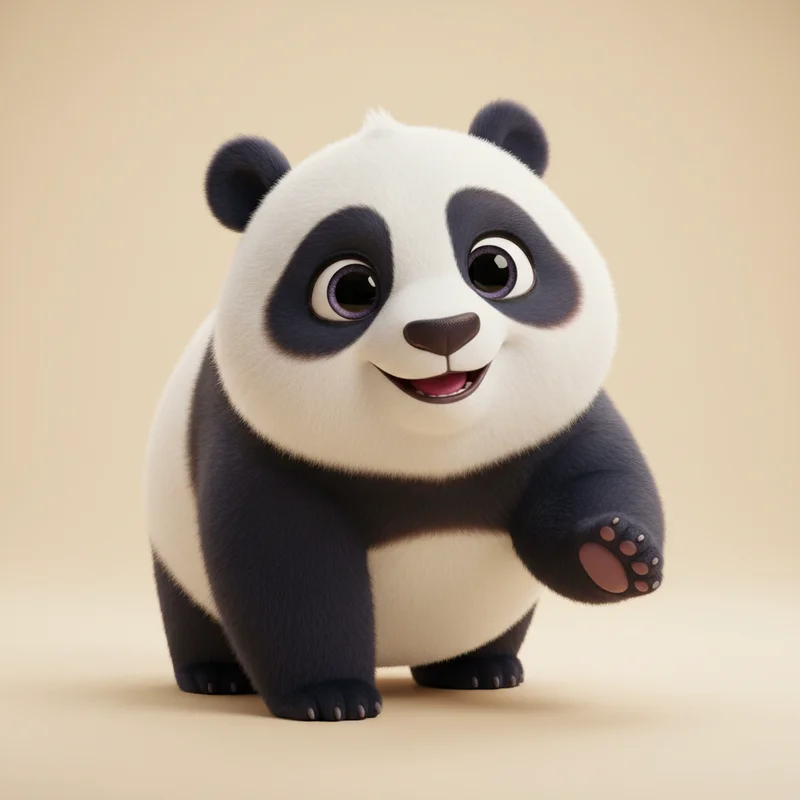
Panda

Panda

Beloved bamboo-eating bear from China, famous for black-and-white coloring and conservation symbolism.

Battle Analysis

Media presence Panda Wins
30%
70%
King Kong Panda

King Kong

Since his 1933 debut, King Kong has appeared in numerous feature films, television programmes, video games, and literary works. The 2005 Peter Jackson remake alone grossed over 550 million dollars worldwide. Recent additions to the MonsterVerse franchise have reinvigorated his commercial viability for contemporary audiences. His image adorns merchandise spanning nearly a century of consumer goods, from lunchboxes to limited edition collectibles.

Panda

The panda dominates nature documentaries, appearing with such frequency that producers must actively seek alternative megafauna to maintain audience interest. Live-streaming panda cameras attract millions of viewers for footage of creatures essentially doing nothing. Social media accounts dedicated to panda content command followings in the tens of millions. The birth of a panda cub generates international headlines with a reliability that most celebrities would envy.

VERDICT

Pandas generate continuous, self-sustaining media attention without requiring expensive CGI.
Symbolic value Panda Wins
30%
70%
King Kong Panda

King Kong

King Kong has been interpreted variously as a metaphor for racial anxiety, colonial exploitation, the immigrant experience, masculine desire, and humanity's fear of nature. Film scholars have devoted entire careers to unpacking his symbolic significance. He represents the other, the untameable, the magnificent brought low by civilisation's weapons. His death atop the Empire State Building remains one of cinema's most potent images of beauty destroyed by modernity.

Panda

The panda carries the weight of an entire nation's soft power upon its rotund shoulders. As China's most effective diplomatic ambassador, it symbolises peace, conservation, environmental fragility, and international cooperation. Panda loans to foreign zoos signal political favour; their withdrawal marks diplomatic cooling. The creature has become inseparable from discourse surrounding extinction, habitat preservation, and humanity's responsibility toward vulnerable species.

VERDICT

The panda operates as living diplomatic currency, its symbolic value measurable in international relations.
Global recognition Panda Wins
30%
70%
King Kong Panda

King Kong

King Kong enjoys near-universal recognition across developed nations, his image synonymous with cinematic spectacle since 1933. The sight of a giant ape ascending a tall building has become cultural shorthand for impossible struggle against modernity. Multiple film adaptations, theme park attractions, and countless homages have cemented his position in the global imagination. However, recognition often requires contextual explanation in regions where Western cinema holds less influence, somewhat limiting his truly universal appeal.

Panda

The giant panda transcends cultural and linguistic barriers with remarkable efficiency. From Beijing to Buenos Aires, the black-and-white bear requires no introduction, no subtitle, no cultural translation. As both the emblem of the World Wildlife Fund and a cornerstone of Chinese diplomatic soft power, the panda has achieved a penetration into global consciousness that few living creatures can match. Even those who have never witnessed one in person can identify its distinctive markings instantly.

VERDICT

The panda's recognition requires no franchise knowledge or cultural context, achieving true universality.
Intimidation factor King Kong Wins
70%
30%
King Kong Panda

King Kong

Standing at heights ranging from 18 to 100 feet depending upon which cinematic interpretation one consults, King Kong represents terror incarnate. His capacity for destruction is limited only by the imagination of his creators. He has toppled elevated trains, crushed military hardware, and engaged in combat with prehistoric reptiles. The very sight of his approach sends populations fleeing. No creature in fiction or reality can match his capacity to inspire immediate, visceral dread.

Panda

The giant panda possesses powerful jaws capable of crushing bamboo with a bite force exceeding 2,600 newtons, and claws that could theoretically inflict serious damage. Yet these formidable natural weapons are rendered utterly non-threatening by the creature's demeanour. A panda's apparent inability to appear menacing, even when directly threatened, represents perhaps evolution's greatest public relations achievement. Its intimidation factor hovers marginally above that of a plush toy.

VERDICT

Kong's capacity to inspire existential terror remains unmatched by any bamboo-dependent ursid.
Evolutionary success Panda Wins
30%
70%
King Kong Panda

King Kong

As a fictional entity, King Kong exists outside evolutionary pressures entirely. His species of one has been perpetuated not through reproduction but through repeated narrative resurrection. Each new film effectively spawns a new Kong, adapted to contemporary sensibilities whilst maintaining core characteristics. This represents a form of cultural evolution rather than biological, rendering traditional metrics of evolutionary success somewhat inapplicable.

Panda

From a strictly biological perspective, the giant panda presents a troubling case study. Having evolved as a carnivore before inexplicably committing to a diet of nutritionally inadequate bamboo, the species displays a reproductive reluctance that would doom any creature lacking human intervention. Yet survival through inducing protective behaviour in another species represents, arguably, an evolutionary masterstroke of parasitic genius unprecedented in the mammalian world.

VERDICT

The panda has evolved to make humans serve its survival, a remarkable adaptive achievement.
👑

The Winner Is

Panda

45 - 55
This contest between cinematic titan and conservation icon ultimately favours the flesh-and-blood competitor. King Kong, for all his cultural significance and capacity for spectacular destruction, remains imprisoned within narrative, requiring human creativity to sustain his existence. The panda, conversely, has achieved something far more remarkable: it has convinced the most dominant species on Earth to invest billions in its preservation despite offering nothing in return beyond the privilege of observation. Where Kong must destroy cities to capture attention, the panda need only tumble clumsily from a tree branch. In the economy of human affection, this efficiency cannot be overstated.
King Kong
45%
Panda
55%

Share this battle

More Comparisons