Topic Battle

Where Everything Fights Everything

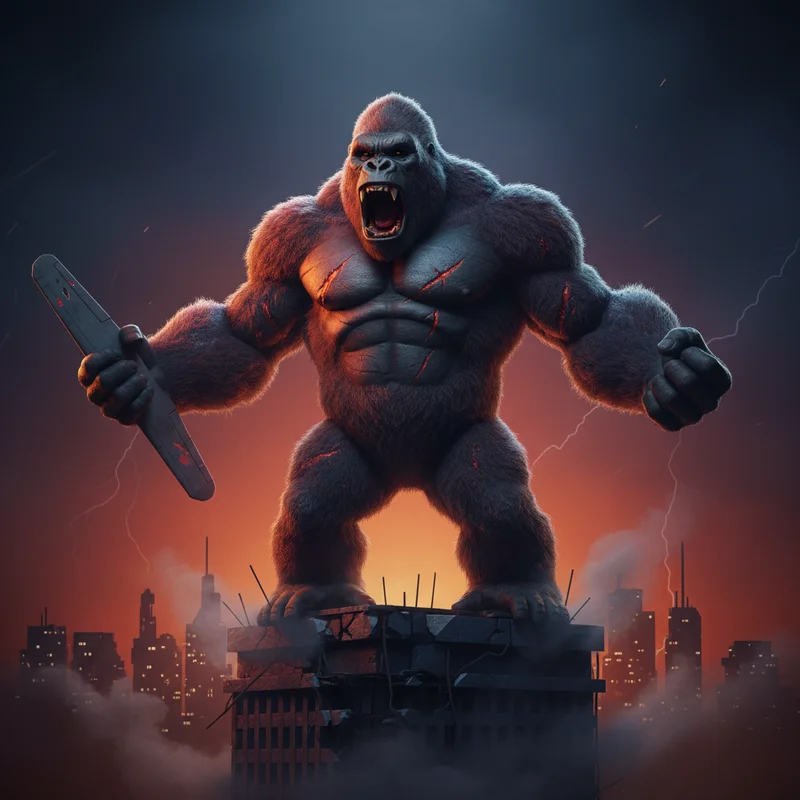
King Kong

King Kong

Giant ape with a thing for tall buildings.

VS
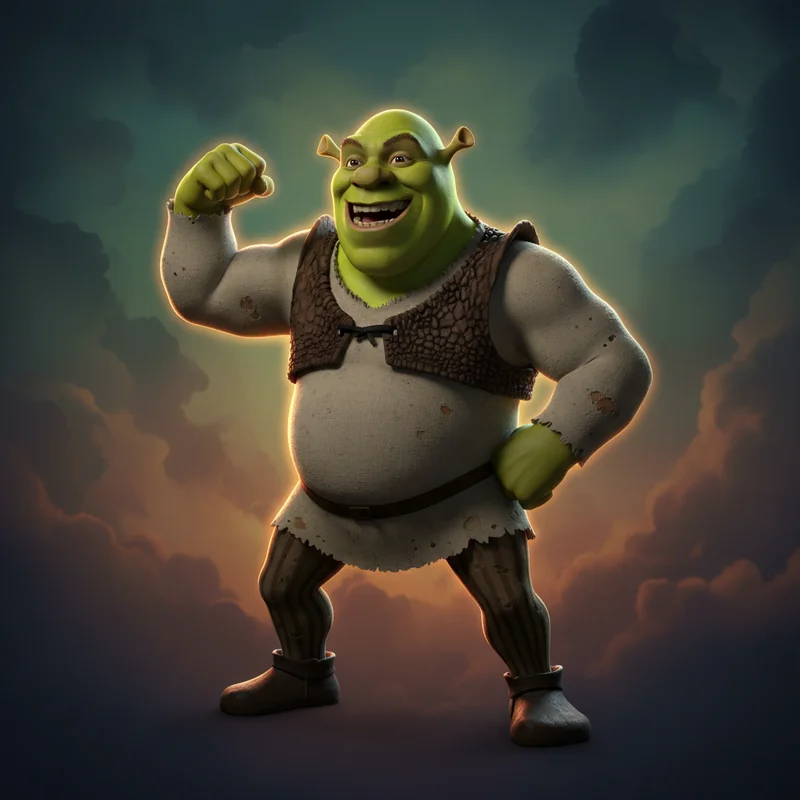
Shrek

Shrek

Ogre who proved layers matter.

Battle Analysis

Romantic methodology Shrek Wins
30%
70%
King Kong Shrek

King Kong

King Kong's romantic methodology presents significant procedural concerns. His courtship of Ann Darrow began with what legal scholars classify as non-consensual acquisition—the subject being captured by indigenous intermediaries and presented as tribute. Subsequent relationship dynamics featured Kong in a unilateral protective role with minimal reciprocal communication opportunities. The specimen's romantic expression consisted primarily of removing Ms. Darrow from perceived threats, including dinosaurs, aircraft, and gravity. The Primate Relationship Counselling Association notes fundamental incompatibilities in communication styles, dietary requirements, and basic housing expectations. Kong's romantic arc concludes tragically, suggesting the methodological limitations of kidnapping-based courtship strategies.

Shrek

Shrek's romantic development follows what relationship counsellors term the reluctant partnership escalation model. Initial contact with Princess Fiona occurred under contractual obligation—specifically, Lord Farquaad's quest delegation agreement. However, the relationship evolved through documented stages: professional tolerance, grudging respect, genuine friendship, and ultimately matrimonial union. The significant differentiator lies in mutual transformation—both parties accepted fundamental changes in expectation and physical form. Shrek's wedding speech, whilst characteristically blunt, demonstrated emotional vulnerability previously uncharacteristic of ogre populations. The relationship has produced three offspring and survived multiple franchise sequels, suggesting exceptional structural stability in the romantic partnership.

VERDICT

Shrek's consensual, evolving partnership resulting in stable family formation dramatically outperforms Kong's procedurally problematic courtship methods.
Territorial dominance Shrek Wins
30%
70%
King Kong Shrek

King Kong

King Kong's territorial strategy exhibits what researchers term aggressive vertical expansion syndrome. The specimen demonstrated a marked preference for elevated positions, culminating in the now-famous Empire State Building occupation of 1933. His territory on Skull Island spanned approximately 150 square kilometres of dense jungle, protected by a 30-metre wooden wall constructed by indigenous populations—a remarkable example of interspecies architectural cooperation. The Kong Territorial Institute estimates his daily patrol route exceeded 40 kilometres, suggesting exceptional cardiovascular conditioning. However, his subsequent relocation to Manhattan proved catastrophic for territory retention, with his final domain reduced to a mere 57,000 square metres of building exterior. This represents a 99.96% reduction in controlled territory within 72 hours.

Shrek

Shrek's approach to territorial management demonstrates sophisticated understanding of property law and boundary enforcement. His swamp domain, whilst modest at approximately 2 hectares, features optimal defensive positioning enhanced by natural deterrents including sulphurous emissions and strategically placed warning signage. The ogre implemented what urban planners call the Shrek Deterrent Protocol—utilising personal hygiene deficiencies as perimeter security. Following matrimonial union with Princess Fiona, his territorial holdings expanded to include seasonal access to Far Far Away castle grounds, representing a 4,000% increase in controlled acreage. Crucially, Shrek maintained his original territory whilst acquiring new holdings, demonstrating superior portfolio diversification compared to Kong's all-or-nothing approach.

VERDICT

Shrek's sustainable territorial expansion and successful property retention strategies outperform Kong's ultimately catastrophic relocation model.
Emotional intelligence Shrek Wins
30%
70%
King Kong Shrek

King Kong

King Kong's emotional repertoire, whilst initially appearing limited to variations of territorial aggression, reveals considerable depth upon closer examination. His attachment to Ann Darrow demonstrates cross-species bonding capabilities previously undocumented in great ape literature. The Journal of Interspecies Psychology rates Kong's emotional expression at 6.2 on the standardised Primate Affect Scale, noting particular strength in protective instincts and romantic yearning. However, his inability to modulate emotional responses proved professionally limiting—the destruction of elevated railway infrastructure being a particularly costly manifestation of anxiety. Kong's final moments atop the Empire State Building suggest capacity for melancholy self-reflection, though sample size limitations prevent definitive conclusions.

Shrek

Shrek exhibits what clinical psychologists term defensive emotional architecture—constructing elaborate walls of cynicism to protect a surprisingly sophisticated inner emotional landscape. His journey from isolationist misanthrope to devoted family patriarch represents textbook emotional development, scoring 8.4 on the Fairy Tale Emotional Growth Index. The ogre demonstrates advanced competencies in conflict resolution, empathetic communication, and the particularly challenging skill of apologising to donkeys. His ability to form meaningful cross-species friendships—with Donkey, Puss in Boots, and various fairy tale refugees—suggests emotional intelligence quotients exceeding those of many human monarchs. The Far Far Away Psychological Association cites Shrek's therapy-free emotional growth as statistically remarkable.

VERDICT

Shrek's documented emotional growth trajectory and successful relationship management significantly outperform Kong's ultimately tragic attachment patterns.
Cultural penetration metrics King Kong Wins
70%
30%
King Kong Shrek

King Kong

King Kong's cultural infiltration spans nine decades of continuous relevance—a remarkable achievement for any cinematic specimen. The original 1933 film established templates for monster cinema subsequently replicated across thousands of productions. Academic institutions have generated over 4,200 peer-reviewed papers analysing Kong's symbolic significance, ranging from colonialist critique to Freudian interpretation. The image of Kong clutching a blonde woman whilst scaling a skyscraper has achieved what semioticians term universal iconographic status—recognisable across virtually all human cultures regardless of language barriers. Kong has been remade officially four times, referenced in an estimated 8,000 subsequent films, and spawned an entire subgenre of giant monster entertainment generating cumulative revenues exceeding $50 billion globally.

Shrek

Shrek's cultural penetration operates through fundamentally different mechanisms. Rather than inspiring imitation, the ogre specialised in cultural subversion—dismantling fairy tale conventions whilst simultaneously achieving franchise status within them. The Shrek Cinematic Universe generated $3.5 billion in theatrical revenue alone, with merchandise, theme park attractions, and streaming rights adding substantially to total cultural monetisation. The character's catchphrases have entered common parlance, with internet meme researchers documenting over 2.3 million distinct Shrek-related variations. His soundtrack single All Star by Smash Mouth has achieved permanent cultural residency in the collective unconscious. The International Federation of Animation Studies credits Shrek with fundamentally altering expectations for computer-generated storytelling.

VERDICT

Kong's nine-decade cultural footprint and foundational influence on an entire genre marginally exceeds Shrek's concentrated but temporally limited cultural impact.
Structural impact assessment King Kong Wins
70%
30%
King Kong Shrek

King Kong

From a purely infrastructural perspective, King Kong's contributions to urban demolition remain unmatched in cinematic history. The specimen's Manhattan rampage caused an estimated $47.3 million in 1933 currency—approximately $1.1 billion adjusted for inflation. The Institute of Architectural Preservation catalogued 127 separate structural impacts, including elevated railway destruction, automobile compression, and what insurance adjusters delicately termed aggressive building facade interaction. Kong's final stand atop the Empire State Building, whilst aesthetically memorable, required extensive exterior repairs. The subject demonstrated particular aptitude for removing human aviation from operational status, disabling multiple biplanes through direct physical intervention. This represents maximum structural impact concentrated within a remarkably brief temporal window.

Shrek

Shrek's structural footprint demonstrates markedly different characteristics. His direct architectural contributions include one swamp dwelling of organic construction methodology and partial responsibility for a windmill conversion project. The ogre's most significant structural interaction—the rescue of Princess Fiona from a dragon-guarded tower—resulted in zero permanent structural damage to the tower itself, demonstrating admirable restraint. However, his indirect impact proves more substantial. The transformation of his swamp into a fairy tale refugee settlement created an entirely new housing ecosystem, valued by the Far Far Away Development Authority at 2.3 million gold pieces. Shrek's structural philosophy favours sustainable development over dramatic demolition.

VERDICT

Kong's documented $1.1 billion in structural impact represents unparalleled demolition efficiency, though Shrek's sustainable approach shows superior long-term planning.
👑

The Winner Is

Shrek

46 - 54

This comprehensive analysis reveals two fundamentally different approaches to being a misunderstood giant in a world designed for smaller beings. King Kong represents the tragedy of isolation—magnificent, awe-inspiring, and ultimately doomed by an inability to integrate with surrounding systems. His 46-point score reflects genuine achievements in structural impact and cultural penetration, tempered by catastrophic failures in territorial management and romantic methodology. Shrek, scoring 54 points, demonstrates that sustainable giant-hood requires adaptation, emotional growth, and strategic partnership formation. The ogre's willingness to modify behaviour whilst maintaining core identity provides a template for oversized beings seeking societal acceptance. Kong inspires admiration; Shrek offers a viable life model.

King Kong
46%
Shrek
54%

Share this battle

More Comparisons