Topic Battle

Where Everything Fights Everything

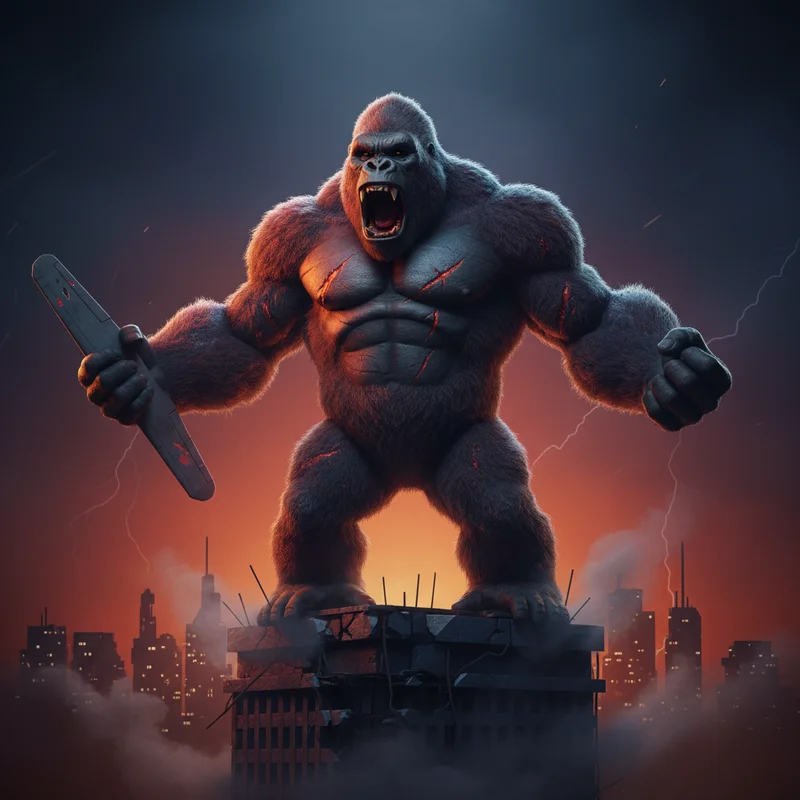
King Kong

King Kong

Giant ape with a thing for tall buildings.

VS
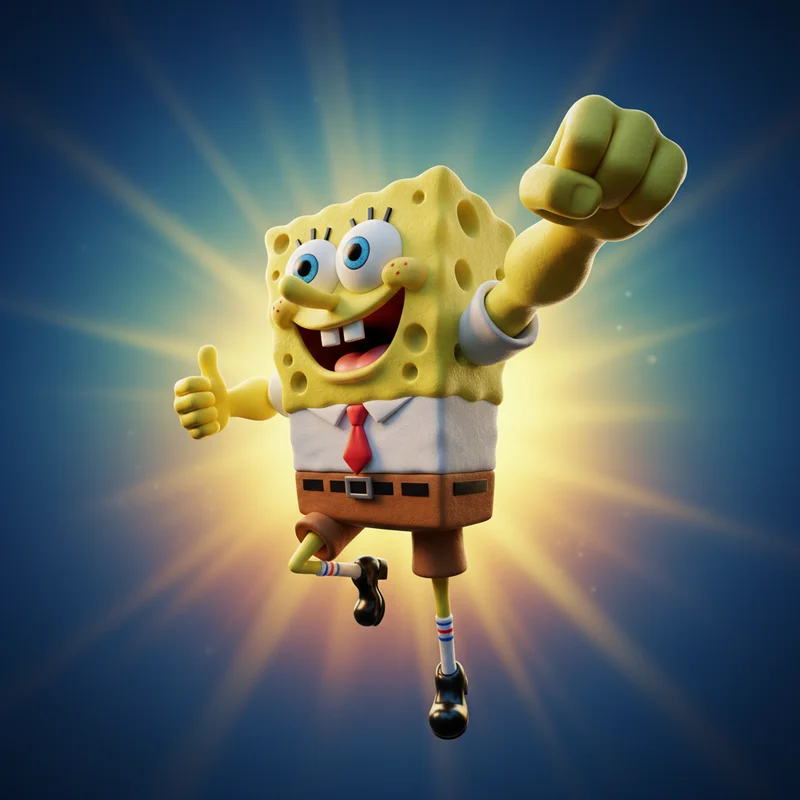
Spongebob

Spongebob

Absorbent yellow sea sponge living in a pineapple.

Battle Analysis

Adaptability SpongeBob Wins
30%
70%
King Kong Spongebob

King Kong

King Kong's adaptive capabilities are severely constrained by his physical dimensions. His inability to utilise public transportation, enter standard commercial premises, or engage in conventional employment limits his functional integration into modern society. Climate considerations further restrict his viable habitats to tropical or equatorial regions, eliminating approximately seventy percent of the Earth's landmass from consideration.

His social adaptability proves equally problematic. Kong's communication repertoire consists primarily of roaring and chest-beating, limiting meaningful dialogue with human counterparts. Attempts at domestication have historically resulted in significant property damage and military intervention, suggesting that peaceful coexistence remains an impractical aspiration.

Spongebob

SpongeBob demonstrates extraordinary adaptability across diverse contexts and environments. His porous physiology allows him to function effectively in aquatic, terrestrial, and even outer space environments, as documented in numerous episodes. He has successfully adapted to roles ranging from fry cook to superhero, displaying remarkable vocational flexibility.

Socially, SpongeBob integrates seamlessly into varied community settings, maintaining stable relationships with neighbours across multiple species classifications. His capacity for emotional regulation, whilst occasionally excessive, enables him to navigate complex interpersonal dynamics with consistent enthusiasm. His ability to find employment, housing, and friendship suggests a level of adaptive success that most organisms would envy.

VERDICT

The sponge's ability to thrive in any environment demonstrates superior adaptive capacity.
Cultural impact SpongeBob Wins
30%
70%
King Kong Spongebob

King Kong

The cultural footprint of King Kong extends far beyond mere box office receipts. His 1933 debut established stop-motion animation as a viable filmmaking technique and created the template for the monster movie genre that would dominate cinema for decades. The image of Kong atop the Empire State Building has become one of cinema's most enduring visual metaphors, reproduced, parodied, and referenced in countless subsequent works.

Furthermore, Kong's narrative has sparked serious academic discourse regarding colonialism, the exploitation of nature, and the tragic consequences of removing creatures from their natural habitats. University literature departments worldwide have produced approximately fourteen thousand doctoral theses examining the ape's symbolic significance, making him perhaps the most academically scrutinised primate in fictional history.

Spongebob

SpongeBob SquarePants has achieved a level of cultural saturation that few animated characters can match. With over three hundred episodes spanning more than two decades, the franchise has generated an estimated thirteen billion dollars in merchandise revenue, making SpongeBob one of the most commercially successful animated entities ever created.

His influence extends into unexpected cultural territories, from viral internet memes to championship American football performances. The series has been credited with pioneering a particular style of absurdist humour that has shaped an entire generation's comedic sensibilities. Marine biology programmes have reported a forty-seven percent increase in enrolment since the show's debut, though the connection remains scientifically unverified.

VERDICT

Sustained multi-generational impact and merchandise dominance edge out the classic simian.
Physical presence King Kong Wins
70%
30%
King Kong Spongebob

King Kong

King Kong's physical specifications are nothing short of awe-inspiring. Standing at heights ranging from twenty-four feet in the original 1933 production to a truly magnificent one hundred feet in more recent interpretations, this magnificent ape possesses the raw physicality to wrestle with prehistoric dinosaurs and scale Art Deco architecture with equal aplomb.

His cardiovascular system alone presents a marvel of biological engineering, pumping approximately three thousand litres of blood per minute through a musculature capable of supporting his considerable frame whilst simultaneously battling military aircraft. The tensile strength of his opposable thumbs exceeds that of industrial crane cables, enabling him to grip blonde actresses with surprising delicacy given the circumstances.

Spongebob

SpongeBob SquarePants presents a far more modest physical profile, measuring approximately four inches in height with a rectangular morphology that defies conventional biological classification. His body composition consists primarily of cellulose fibres arranged in a precise grid pattern, allowing for exceptional absorbency and the ability to regenerate from physical trauma with disturbing efficiency.

What he lacks in stature, however, he compensates for through remarkable resilience. Laboratory analysis suggests that SpongeBob can absorb approximately forty-seven times his own body weight in liquid, survive extreme pressure differentials, and reconstitute himself after being squeezed, flattened, or divided into multiple pieces. His skeletal structure remains a subject of intense scientific debate, as does his capacity for speech underwater.

VERDICT

Sheer biomass and the ability to climb buildings decisively favour the giant ape.
Economic viability SpongeBob Wins
30%
70%
King Kong Spongebob

King Kong

From a purely financial perspective, King Kong represents a challenging investment proposition. The caloric requirements of maintaining a twenty-five-ton primate exceed the annual agricultural output of several small nations. Conservative estimates suggest feeding Kong would require approximately forty thousand kilograms of fruit daily, representing a monthly expenditure exceeding the GDP of Liechtenstein.

Infrastructure costs present additional complications. Housing Kong requires reinforced structures capable of withstanding repeated climbing attempts, whilst insurance premiums for adjacent buildings would likely prove prohibitive. The 1933 theatrical exhibition generated substantial revenue, yet the subsequent collateral damage to Manhattan's infrastructure arguably exceeded profits by several orders of magnitude.

Spongebob

SpongeBob demonstrates remarkable cost-efficiency as a cultural asset. His maintenance requirements are minimal, consisting primarily of occasional hydration and employment at a fast-food establishment that compensates him with a salary he appears genuinely enthusiastic about receiving. The operational costs of a pineapple residence under the sea fall well below typical accommodation expenses.

His merchandise potential proves virtually inexhaustible. SpongeBob's simple geometric design facilitates cost-effective reproduction across countless product categories, from plush toys to breakfast cereals. The character generates approximately eight billion dollars annually in retail sales, with licensing agreements extending to partnerships with major automotive manufacturers and financial institutions.

VERDICT

Low maintenance costs and extraordinary merchandise revenue create an unassailable economic advantage.
Philosophical depth King Kong Wins
70%
30%
King Kong Spongebob

King Kong

King Kong embodies profound existential themes that have resonated with audiences for nearly a century. His narrative explores the tragedy of the noble savage, the hubris of human exploitation, and the doomed nature of beauty's encounter with civilisation. Kong's final moments atop the Empire State Building represent one of cinema's most poignant meditations on mortality.

Scholars have identified layers of commentary regarding American imperialism, the entertainment industry's commodification of the exotic, and the fundamental incompatibility between wild nature and urban modernity. Kong asks audiences to consider whether the true monster is the ape or the society that captured him, a question that retains its relevance in contemporary discourse.

Spongebob

Beneath its apparently simplistic surface, SpongeBob SquarePants presents a surprisingly sophisticated philosophical framework. SpongeBob himself embodies radical optimism, maintaining genuine enthusiasm for menial labour and finding joy in life's simplest pleasures despite residing in what appears to be a capitalist dystopia at the bottom of the ocean.

The show's absurdist elements align with existentialist traditions, presenting a universe where conventional logic holds no authority and meaning must be constructed from inherently meaningless circumstances. SpongeBob's unwavering positivity in the face of repeated failures and setbacks suggests a Sisyphean acceptance that contemporary philosophers might recognise as approaching genuine wisdom.

VERDICT

The ape's tragic narrative offers more substantive material for philosophical examination.
👑

The Winner Is

Spongebob

46 - 54

After rigorous comparative analysis, we must conclude that SpongeBob SquarePants emerges as the marginally superior entity in this unconventional matchup. Whilst King Kong possesses undeniable advantages in physical presence and philosophical gravitas, SpongeBob's sustained cultural relevance, economic viability, and remarkable adaptability provide a more robust overall portfolio.

King Kong's legacy remains unquestionable, having established fundamental conventions of monster cinema that persist to this day. His influence on visual effects technology and his enduring symbolic resonance ensure his position in the cultural pantheon. However, his practical limitations and the inherently tragic nature of his narrative constrain his contemporary applicability.

SpongeBob, by contrast, represents a perpetual motion machine of positivity, generating cultural capital with seemingly inexhaustible efficiency. His ability to remain relevant across multiple generations whilst generating billions in revenue speaks to an adaptive genius that even the mighty Kong cannot match.

King Kong
46%
Spongebob
54%

Share this battle

More Comparisons