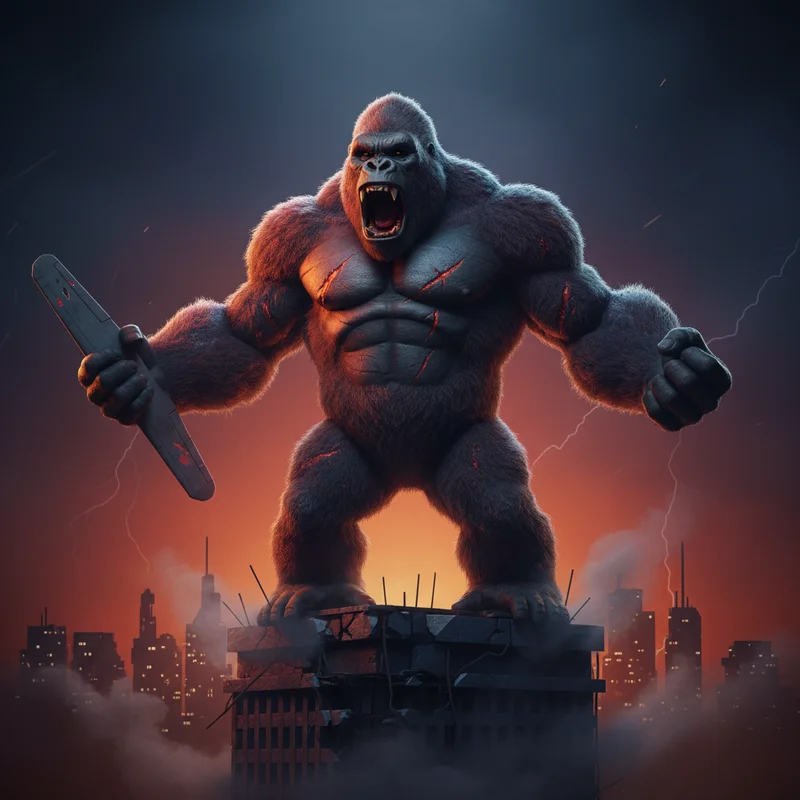

King Kong
King Kong's appearances are decidedly not inevitable; they require specific conditions including film studios willing to invest considerable budgets, audiences willing to purchase tickets, and technological capabilities sufficient to render giant apes convincingly. Between his 1933 debut and 1976 remake, Kong remained dormant for forty-three years, demonstrating significant periods of complete absence.
Even when Kong does appear, his fate follows predictable tragic patterns: capture, display, escape, rampage, and ultimately fatal encounter with military hardware. This inevitability of outcome differs fundamentally from inevitability of occurrence. One can, technically, avoid King Kong by simply not watching films featuring King Kong. This represents a rather significant limitation.
Time
Time demonstrates absolute inevitability in ways that philosophical contemplation struggles to fully articulate. One cannot postpone Time, negotiate with Time, or purchase exemption from Time's dominion. Every attempt to outrun Time merely occurs within Time's framework, rendering such efforts rather philosophically futile.
The heat death of the universe, projected in approximately 10^100 years, represents Time's ultimate victory over all organised matter and energy. Stars will die, galaxies will disperse, and even black holes will eventually evaporate through Hawking radiation. Time will continue, utterly indifferent, into an eternity of cold darkness. King Kong, by contrast, falls off buildings when shot at.