
Topic Battle

Where Everything Fights Everything

Lego

Lego

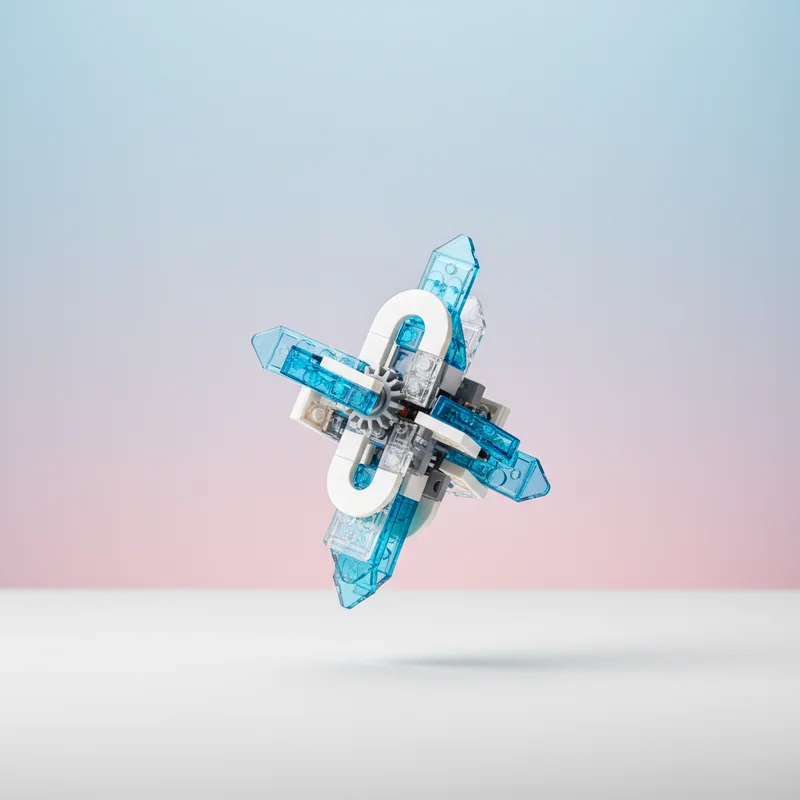
Interlocking plastic bricks and barefoot landmines.

VS
Rocket

Rocket

Spacecraft propulsion system reaching for the stars.

Battle Analysis

Accessibility lego Wins
70%
30%
Lego Rocket

Lego

Lego achieves near-universal accessibility. Basic sets retail from $10, placing engineering education within reach of most families in developed economies. The system requires no prior knowledge, no specialised facilities, and tolerates failure with remarkable grace. A collapsed Lego tower produces no casualties beyond parental frustration at stepping on errant bricks.

The instruction booklets have evolved into masterpieces of wordless international communication. A child in Tokyo follows identical building sequences as a child in Toronto. Over 600 billion Lego bricks have been manufactured, ensuring supply chains reach even modest corner shops.

Rocket

Rocket access remains restricted to approximately 70 nations possessing some form of space capability, with genuine launch capabilities held by fewer than a dozen. Individual rocket construction requires facilities, materials, and expertise concentrated in perhaps several hundred organisations globally.

The financial barriers prove equally formidable. A Falcon 9 launch costs approximately $67 million. Historical government programmes invested tens of billions before achieving orbital capability. The rocket remains humanity's most exclusive construction category.

VERDICT

Universal accessibility at $10 versus $67 million minimum investments reserved for nations and billionaires.
Cultural influence rocket Wins
30%
70%
Lego Rocket

Lego

Lego has shaped the cognitive development of over 400 million children since its inception. The Lego Foundation estimates that approximately 75 billion hours have been spent in Lego play, representing one of the largest collaborative construction projects in human history, albeit one conducted primarily on bedroom floors.

The brand has transcended its origins as a Danish toy manufacturer to become a cultural institution. Legoland theme parks span four continents. The Lego Movie franchise generated $1.1 billion in box office receipts. Universities offer courses in Lego Serious Play methodology for corporate problem-solving.

Rocket

The rocket transformed humanity's relationship with its planet and position in the cosmos. The Apollo missions produced the most reproduced photograph in history: Earthrise, showing humanity's home as a fragile marble suspended in void. This single image catalysed the environmental movement and altered philosophical discourse permanently.

Space programmes have inspired generations to pursue science and engineering. The Challenger disaster and Columbia tragedy became shared cultural traumas that united nations in grief. Rocket launches remain among the few events capable of gathering millions in simultaneous witness.

VERDICT

Reshaping humanity's cosmic self-perception outweighs even 75 billion hours of childhood construction play.
Innovation potential rocket Wins
30%
70%
Lego Rocket

Lego

The Lego system's modular design enables infinite recombination. Six standard 2x4 bricks can be combined in over 915 million distinct configurations. This combinatorial explosion provides creative possibilities exceeding human lifetimes to explore. The system grows through addition rather than obsolescence.

Lego Mindstorms and Technic ranges introduced programmable motors and sensors, enabling construction of functional robots, vehicles, and automated systems. Universities employ Lego for prototyping. NASA has used Lego models for mission planning. The toy has become a serious engineering tool.

Rocket

Rocket innovation drives advancements across multiple scientific frontiers. The demands of spaceflight have yielded memory foam, scratch-resistant lenses, water purification systems, and cordless power tools. The catalogue of NASA spinoff technologies exceeds 2,000 documented innovations.

Current rocket development pushes boundaries in reusability, methane propulsion, and in-space manufacturing. SpaceX's successful landing of orbital boosters represented an engineering achievement previously considered economically impossible. The rocket industry generates innovation under extreme constraint, producing solutions applicable far beyond aerospace.

VERDICT

Generating 2,000 documented spinoff technologies whilst expanding human presence in space exceeds modular toy applications.
Structural integrity rocket Wins
30%
70%
Lego Rocket

Lego

The Lego brick represents one of the most precisely manufactured consumer products in human history. Each brick maintains tolerances of two microns, tighter than Swiss watch components. This precision enables any brick manufactured since 1958 to connect with any brick produced today with identical satisfying click.

The clutch power of interlocking Lego studs creates assemblies capable of supporting 375,000 times their own weight before structural failure. Engineers at the Technical University of Denmark determined that a theoretical tower of Lego bricks would reach 3.5 kilometres before the bottom brick succumbed to compressive forces.

Rocket

Rocket structural engineering operates within margins that would cause bridge builders to weep. The external tank of the Space Shuttle maintained structural integrity whilst containing 2 million litres of cryogenic propellants at temperatures approaching negative 253 degrees Celsius. Simultaneously, the same structure withstood combustion temperatures exceeding 3,300 degrees Celsius mere metres away.

Modern rockets employ materials science at the frontier of human knowledge. Carbon fibre composites, Inconel superalloys, and ablative heat shields must perform flawlessly whilst experiencing accelerations, vibrations, and thermal gradients that would instantly destroy lesser structures.

VERDICT

Withstanding cryogenic temperatures and combustion simultaneously demands structural engineering beyond plastic brick achievements.
Environmental sustainability lego Wins
70%
30%
Lego Rocket

Lego

Lego confronts significant environmental challenges. Annual production consumes approximately 100,000 tonnes of petroleum-based plastics. The durability that enables intergenerational play simultaneously ensures discarded bricks persist for up to 1,300 years in marine environments.

The company has committed $400 million to sustainability research. Prototype bricks from recycled PET bottles entered testing in 2023. However, achieving identical clutch power with sustainable materials has proven technically formidable. Lego's environmental legacy remains an active area of corporate concern.

Rocket

Rocket launches produce localised environmental impacts of spectacular intensity. A single Space Shuttle launch released approximately 230 tonnes of hydrochloric acid into the stratosphere. Modern rockets increasingly employ cleaner propellants, with methane and liquid oxygen producing primarily water vapour and carbon dioxide.

Paradoxically, rockets enable environmental monitoring essential for planetary stewardship. Climate satellites provide data impossible to gather terrestrially. The environmental cost of launch must be weighed against the environmental knowledge gained from orbit.

VERDICT

Plastic persistence for 1,300 years proves less immediately catastrophic than stratospheric hydrochloric acid release.
👑

The Winner Is

Rocket

45 - 55

The final accounting reveals a considered victory for the rocket, prevailing 55-45 in this examination of human construction capabilities. The rocket claims decisive margins in Structural Integrity, Cultural Influence, and Innovation Potential, domains where the constraints of physics and the scope of ambition demand engineering at civilisation-defining scales.

Lego, however, demonstrates superior achievement in Accessibility and Environmental Sustainability. The democratic distribution of engineering principles to children worldwide represents an educational contribution rockets cannot replicate. Any child can build with Lego; vanishingly few humans will ever construct a rocket.

Both entities embody humanity's irrepressible urge to assemble components into something greater than their sum. The rocket reaches for distant worlds. Lego builds worlds within reach.

Lego
45%
Rocket
55%

Share this battle

More Comparisons