
Topic Battle

Where Everything Fights Everything

Lego

Lego

Interlocking plastic bricks and barefoot landmines.

VS
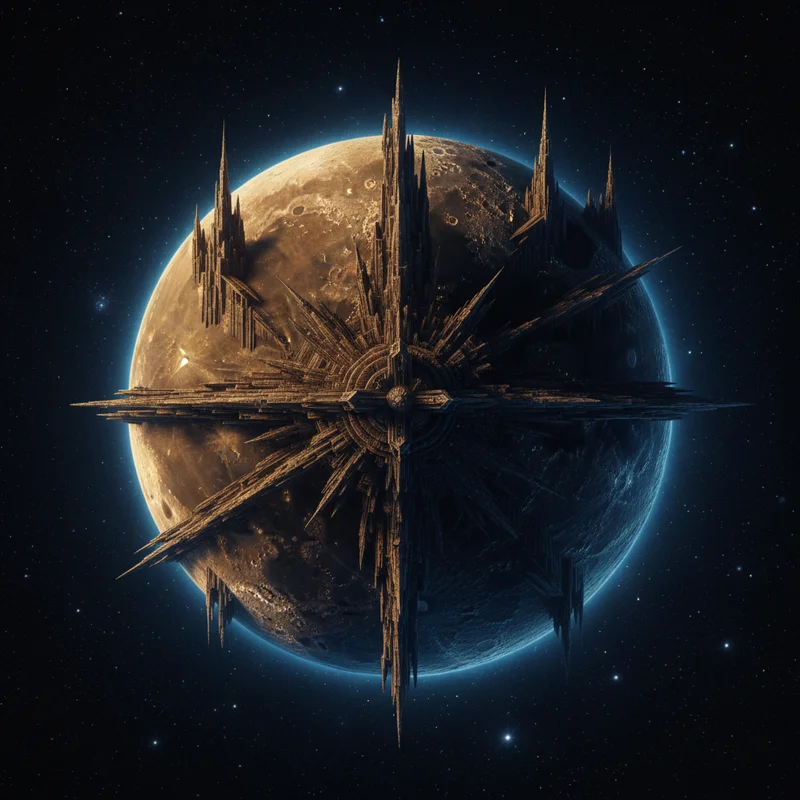
The Moon

The Moon

Earth's natural satellite and space race destination.

Battle Analysis

Global reach The Moon Wins
30%
70%
Lego The Moon

Lego

Lego operates in 140 countries, with manufacturing facilities in Denmark, Hungary, Mexico, China, and the Czech Republic. The company claims that seven Lego sets are sold every second globally, and that the average person on Earth owns approximately 80 Lego bricks. This distribution network ensures that plastic bricks have infiltrated every continent, including research stations in Antarctica.

The company's licensing partnerships with Disney, Warner Bros, and other entertainment conglomerates have extended brand reach to demographics previously untouched by construction toys. Legoland theme parks across four continents welcome over 15 million visitors annually, cementing global cultural penetration.

The Moon

The Moon is visible from every location on Earth's surface without optical assistance, presenting identical features to observers in Tokyo, Toronto, and Timbuktu. Its gravitational influence extends to every oceanic body, generating tides that shape coastlines on all continents. No human civilisation has existed without lunar awareness.

The Moon maintains constant presence in Earth's sky, completing its orbital cycle every 27.3 days and remaining visible for approximately half of each 24-hour period. Unlike commercial products requiring distribution networks, the Moon's reach is inherent to its existence. One cannot opt out of the Moon.

VERDICT

Visibility from every point on Earth's surface without distribution infrastructure represents unmatched global reach.
Accessibility Lego Wins
70%
30%
Lego The Moon

Lego

Lego sets are available at price points ranging from under 10 USD for small sets to over 800 USD for large collector editions. The company has strategically positioned products to serve virtually every budget demographic. Free play with loose bricks requires no instruction whatsoever, welcoming builders of all ages, abilities, and educational backgrounds.

The tactile simplicity of the system permits engagement without literacy, numeracy, or prior knowledge. A child can begin building within seconds of opening a box. This immediacy of access distinguishes Lego from virtually all competitors in the construction toy market.

The Moon

The Moon requires no purchase, subscription, or membership fee. It presents itself freely to all observers roughly half of all hours in perpetuity. Basic observation requires only functional eyesight; detailed examination needs merely modest optical equipment available for under 50 USD. The Moon maintains this accessibility regardless of political borders, economic systems, or social status.

However, physical access remains extraordinarily limited. Only twelve humans have walked upon its surface, and return journeys are not expected before the late 2020s. The Moon is universally visible yet practically unreachable, a paradox of cosmic accessibility.

VERDICT

Physical interaction possible for anyone with modest funds versus 12 people in history grants Lego decisive accessibility advantage.
Economic impact The Moon Wins
30%
70%
Lego The Moon

Lego

The Lego Group generates annual revenues exceeding 65 billion Danish kroner (approximately 9 billion USD), making it the world's largest toy company by revenue. The secondary market for rare and vintage sets adds billions more, with certain sets appreciating at rates exceeding fine art and gold. A sealed Millennium Falcon set from 2007 now commands prices above 15,000 USD.

The broader Lego economy encompasses films (generating over 1.1 billion USD at box office), video games, clothing, and educational products. Employment extends to over 24,000 direct employees plus countless contractors, retailers, and content creators whose livelihoods depend upon the brick.

The Moon

The Moon has driven economic activity worth trillions of dollars across human history. The Apollo programme alone cost 280 billion USD in inflation-adjusted terms, whilst contemporary lunar programmes from NASA, SpaceX, China, and others represent investments of hundreds of billions more. The emerging cislunar economy is projected to exceed 1 trillion USD by 2040.

Historical lunar influence on agriculture, fishing, and navigation established the economic foundations of maritime commerce. Tidal power generation, a direct product of lunar gravitational influence, currently produces approximately 500 megawatts globally, with potential for significant expansion as technology advances.

VERDICT

Trillions in space programme investment and civilisation-shaping agricultural influence exceeds 9 billion USD in annual toy sales.
Inspirational value The Moon Wins
30%
70%
Lego The Moon

Lego

Lego has inspired generations of engineers, architects, and designers who credit childhood brick-building with sparking their creative careers. The system's fundamental philosophy, that complex structures emerge from simple, standardised components, has influenced fields ranging from software architecture to modular housing design. The term Lego-like has entered common parlance to describe any modular, interchangeable system.

The educational impact proves measurable: studies from Cambridge University indicate that children who engage with construction toys demonstrate enhanced spatial reasoning and problem-solving abilities. Lego Education programmes now operate in over 85 countries, explicitly connecting brick-building to STEM career preparation.

The Moon

The Moon has inspired human aspiration since the first Homo sapiens gazed upward and wondered. It has driven millennia of astronomical observation, calendar development, and navigational advancement. The Apollo programme, motivated primarily by the goal of lunar landing, generated over 1,800 spinoff technologies still in use today, from memory foam to water purification systems.

The phrase moonshot has become synonymous with audacious human ambition. Every rocket launched, every space programme funded, every child who dreams of becoming an astronaut traces their inspiration to that luminous presence in the night sky. The Moon does not merely inspire builders; it inspires civilisations.

VERDICT

Inspiring the entire space race and millennia of human aspiration exceeds inspiring individual architects and engineers.
Structural integrity The Moon Wins
30%
70%
Lego The Moon

Lego

Lego bricks achieve their legendary clutch power through extraordinarily precise manufacturing. The stud-and-tube coupling system, patented in 1958, creates an interference fit that can support impressive loads. A single 2x2 Lego brick can withstand approximately 4,240 Newtons of compressive force before failing, equivalent to 432 kilograms of weight. This means a tower of Lego bricks could theoretically reach 3.5 kilometres before the bottom brick would collapse.

The material, acrylonitrile butadiene styrene (ABS), provides remarkable consistency across decades of production. A brick manufactured in 1963 connects seamlessly with one produced yesterday. This backwards compatibility represents engineering achievement of the highest order, ensuring structural coherence across generational timescales of toy production.

The Moon

The Moon's structural integrity has been tested by 4.5 billion years of cosmic bombardment, gravitational stress, and thermal cycling between -173 degrees Celsius and 127 degrees Celsius. Its composition ranges from the iron-rich core through the mantle to the fractured crust, which bears the scars of countless asteroid impacts whilst remaining fundamentally intact.

The lunar maria, vast basaltic plains formed by ancient volcanic eruptions, demonstrate remarkable geological stability. The highlands, composed primarily of anorthosite, have remained largely unchanged for over 4 billion years. No force yet encountered, including the impact that created the 2,500-kilometre South Pole-Aitken Basin, has compromised the Moon's essential structural wholeness.

VERDICT

Surviving 4.5 billion years of cosmic bombardment surpasses even the most robust ABS polymer engineering.
👑

The Winner Is

The Moon

45 - 55

The confrontation between Lego and the Moon illuminates fundamental truths about human ambition and its relationship to scale. Lego, that masterpiece of Danish engineering, has democratised construction and sparked the creative potential of billions. It asks merely for modest expenditure and a flat surface to begin building worlds.

The Moon, ancient beyond human comprehension, has shaped tides, calendars, and civilisations. It inspired humanity to develop rocketry, traverse the vacuum of space, and plant footprints upon another world. Every Lego space set, from the classic Galaxy Explorer to the detailed NASA Saturn V, exists because the Moon first taught humanity to look upward and dream.

By a margin of 55 to 45, the Moon emerges victorious. Its billions of years of gravitational service, its role in enabling complex life, and its enduring position as the symbol of human aspiration cannot be matched by even the most beloved toy. Yet Lego's solitary criterion victory, in accessibility, points to something profound: humanity has created something that, in one measurable dimension, surpasses a celestial body.

Lego
45%
The Moon
55%

Share this battle

More Comparisons