
Topic Battle

Where Everything Fights Everything

Lego

Lego

Interlocking plastic bricks and barefoot landmines.

VS
Volcano

Volcano

Mountain that occasionally reminds us Earth is angry.

Battle Analysis

Raw power Volcano Wins
30%
70%
Lego Volcano

Lego

The Lego brick's power resides not in individual capacity but in collective potential. A single 2x4 brick can withstand 432 kilograms of compression before failing, a remarkable feat for eight grams of acrylonitrile butadiene styrene. The cumulative power of Lego lies in its 400 billion bricks currently in circulation, representing enough material to circle the Earth five times. When stepped upon in darkness, a single brick can generate screams audible from adjacent rooms. Yet this power operates within decidedly domestic parameters.

Volcano

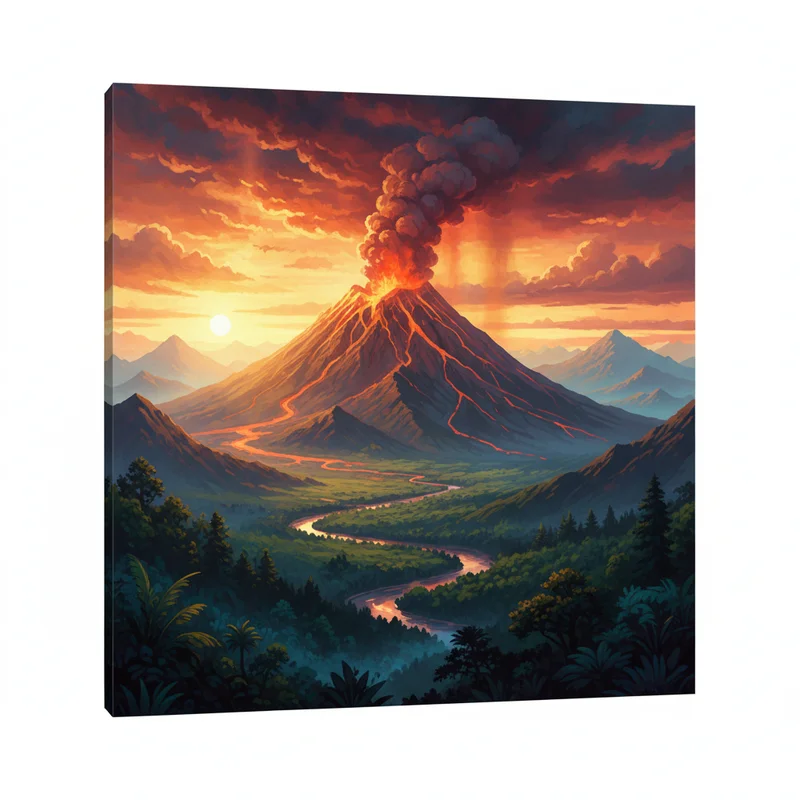
The volcano represents the Earth's primary mechanism for releasing internal pressure, and it does so with spectacular violence. The 1883 eruption of Krakatoa released energy equivalent to 13,000 Hiroshima bombs, generated tsunamis that killed 36,000 people, and lowered global temperatures by 1.2 degrees Celsius for five years. Volcanic eruptions have triggered mass extinctions, created islands, and rewritten the evolutionary trajectory of entire phyla. Mount Tambora's 1815 eruption produced the infamous 'Year Without a Summer,' causing widespread famine across the Northern Hemisphere. This is power that reshapes civilisations.

VERDICT

Krakatoa's 13,000 Hiroshima bombs equivalent rather exceeds compression resistance of plastic.
Durability Volcano Wins
30%
70%
Lego Volcano

Lego

The Lego brick represents a triumph over entropy. Research from the University of Plymouth estimates that a Lego brick could survive 1,300 years in marine environments before complete degradation. Bricks manufactured in 1958 remain compatible with those produced today, a testament to engineering consistency. ABS plastic resists moisture, chemicals, and most household hazards with admirable stoicism. The archaeological implications trouble environmentalists: future civilisations will excavate plastic brick strata millennia hence.

Volcano

Volcanoes operate on geological timescales that make plastic persistence seem rather quaint. Mount Etna has erupted continuously for 500,000 years. The Hawaiian hotspot has been building islands for 70 million years, creating and eroding a chain stretching 6,000 kilometres. Volcanic rock forms the foundation of oceanic crust worldwide. The Earth's internal heat that powers volcanism will persist for billions of years yet, long after every Lego brick has finally succumbed to photodegradation. Volcanoes were here before multicellular life; they will outlast humanity's plastic legacy.

VERDICT

500,000 years of continuous eruption renders 1,300-year plastic persistence rather modest.
Accessibility Lego Wins
70%
30%
Lego Volcano

Lego

Lego has democratised the building experience with remarkable success. Sets range from the modest Collectible Minifigure at a few pounds to the 11,695-piece World Map at several hundred. The brick requires no special equipment, no safety protocols, no prior experience. A child of three can begin; an adult of eighty can continue. Lego stores occupy prime retail space in shopping centres worldwide. The barrier to entry is merely economic, and the second-hand market provides affordable alternatives. Building begins the moment the box opens.

Volcano

Volcano accessibility presents certain logistical challenges. Approaching an active volcano requires permits, protective equipment, and frequently helicopters. The world's most accessible volcanic experiences, such as viewing Kilauea in Hawaii, require international travel for most enthusiasts. Volcanologists train for years before conducting fieldwork. The volcano offers no casual participation: one either observes from safe distance or risks incineration. Mount Nyiragongo's lava lake in the Democratic Republic of Congo, among the world's most spectacular volcanic features, lies in an active conflict zone.

VERDICT

Available in 130 countries' toy shops rather than requiring helicopters and hazmat gear.
Global influence Volcano Wins
30%
70%
Lego Volcano

Lego

Lego has achieved cultural penetration that borders on the comprehensive. The brick is sold in 130 countries, with the company producing approximately 75 billion elements annually. Legoland theme parks operate on four continents. The Lego Movie franchise has generated over one billion dollars, whilst Lego video games number in the hundreds. The brick has become a universal language of construction, transcending cultural boundaries with its standardised geometry. Children from Tokyo to Toronto share the common experience of the satisfying snap.

Volcano

Volcanoes have shaped human civilisation in ways both catastrophic and subtle. The eruption of Mount Vesuvius in 79 AD preserved Pompeii as history's most complete snapshot of Roman daily life. Volcanic soils produce some of the world's most fertile agricultural land, explaining why 500 million people live within striking distance of active volcanoes. Iceland's geothermal bounty provides nearly 90 percent of its home heating. The Ring of Fire, a horseshoe of volcanic activity encircling the Pacific, defines the geography of a dozen nations. Volcanoes created Hawaii, Iceland, and arguably Japan.

VERDICT

Creating entire nations and supporting 500 million people surpasses even 130 markets.
Creative potential Lego Wins
70%
30%
Lego Volcano

Lego

Here the brick demonstrates its fundamental genius. The Lego system enables infinite recombinatory possibility within standardised constraints. Six 2x4 bricks can be combined in over 915 million different configurations. Master builders have constructed full-scale automobiles, functional prosthetic limbs, and reproductions of architectural masterpieces. The creative potential compounds with collection size: larger sets enable greater complexity. The brick democratises construction, allowing children to build the Death Star before mastering long division. This is creativity made tangible, immediate, and reversible.

Volcano

Volcanic creativity operates on an altogether different register. Eruptions create entirely new landmass: the island of Surtsey emerged from the North Atlantic between 1963 and 1967, adding 2.7 square kilometres to Iceland's territory. Volcanic activity builds the spectacular cone structures that define landscapes from Fuji to Kilimanjaro. Obsidian, pumice, and basalt emerge as naturally occurring materials that have served humanity since the Stone Age. Yet this creativity permits no revision: once lava has solidified, the form is permanent. The volcano creates but does not iterate.

VERDICT

915 million combinations from six bricks enables iterative creativity volcanoes cannot match.
👑

The Winner Is

45 - 55

This comparison ultimately illuminates a fundamental distinction between human and geological scales of operation. Lego excels in the domains where humanity has agency: creativity, accessibility, and the transformation of raw materials into meaningful forms. The volcano dominates where terrestrial forces exceed human control: raw power, global influence, and persistence across deep time. With a final score of 55 to 45, the volcano claims victory through sheer magnitude of impact. The brick may conquer living rooms, but magma reshaped the continents those living rooms sit upon. One cannot, after all, build Lego without first having land upon which to build.

Lego
45%
Volcano
55%

Share this battle

More Comparisons