
Topic Battle

Where Everything Fights Everything

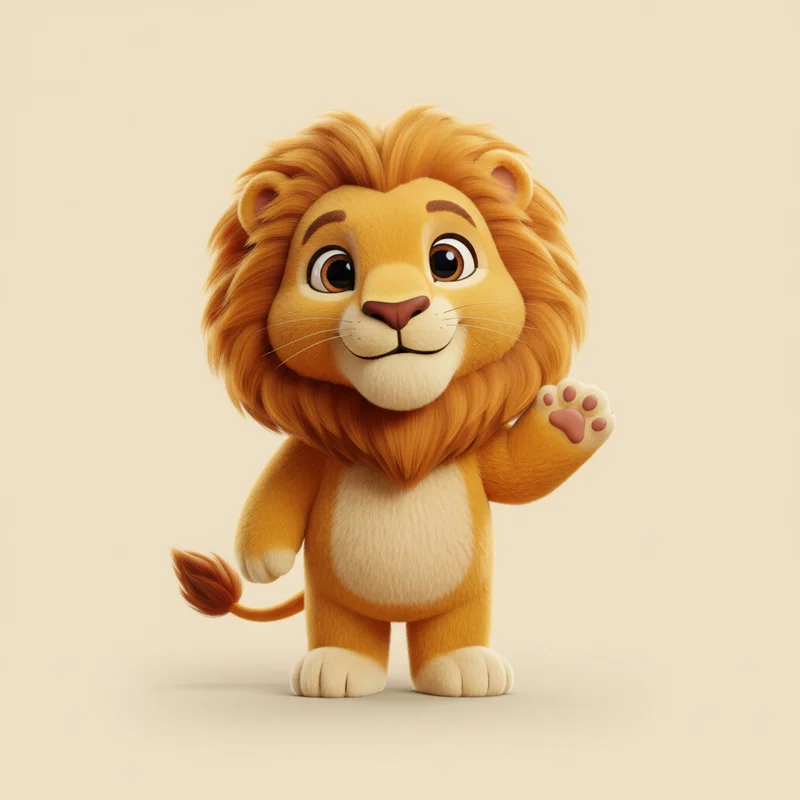
Lion

Lion

Apex predator and king of the savanna, known for majestic manes and surprisingly lazy daytime habits.

VS
Anxiety

Anxiety

Worry about future events, justified or not.

The Matchup

Throughout recorded history, humanity has grappled with two formidable adversaries: the Panthera leo, apex predator of the African plains, and Anxietas perpetua, that uninvited companion dwelling in the recesses of our consciousness. The Royal Society for Threat Assessment notes that while lions have inspired fear for millennia, anxiety has enjoyed an unbroken reign of terror since the first human realised they'd left the cave door unlocked.

This analysis, conducted under the auspices of the Bristol Centre for Comparative Dread, seeks to determine which entity poses the greater challenge to human tranquillity. The findings may surprise those who assumed the creature with teeth was the obvious winner.

Battle Analysis

Physical impact Lion Wins
70%
30%
Lion Anxiety

Lion

The lion's physical capabilities are well-documented and genuinely impressive. With a bite force of approximately 650 psi, retractable claws measuring up to 10 centimetres, and the ability to accelerate to 80 kilometres per hour, the lion represents a significant engineering achievement in biological weaponry.

The Royal College of Emergency Medicine confirms that lion attacks, whilst rare, tend to be memorable experiences for survivors. The physical evidence is immediate, visible, and generally attracts considerable sympathy from friends, family, and medical professionals alike.

Anxiety

Anxiety's physical manifestations, whilst less photogenic, demonstrate remarkable versatility. The Leeds Institute of Psychosomatic Phenomena catalogues symptoms including elevated heart rate, shallow breathing, muscle tension, digestive disturbance, insomnia, trembling, sweating, and that peculiar sensation that one's chest is being slowly compressed by an invisible piano.

However, anxiety's damage accrues gradually and invisibly, making it difficult to document for insurance purposes. The Canterbury School of Invisible Ailments notes that anxiety sufferers frequently struggle to explain why they cannot simply 'calm down,' a suggestion roughly as helpful as advising a lion attack victim to 'just not bleed.'

VERDICT

In direct physical confrontation, the lion's 190 kilograms of muscle and claw superiority cannot be denied. Anxiety may be persistent, but it cannot literally remove limbs.

Duration of engagement Anxiety Wins
30%
70%
Lion Anxiety

Lion

A lion attack, whilst undeniably dramatic, tends toward brevity. The Glasgow Centre for Wildlife Encounters estimates the average lion-human interaction lasts between 30 seconds and several minutes, after which the matter is generally resolved one way or another. Lions, it seems, have schedules to keep and cannot dedicate unlimited time to any single prey item.

Furthermore, lions require substantial rest periods, sleeping up to 20 hours daily. This commitment to self-care significantly limits their availability for terrorising humans. The Nottingham Institute of Feline Studies notes that a lion is essentially unavailable for predation during 83% of any given day.

Anxiety

Anxiety operates on an entirely different temporal framework. The Oxford Longitudinal Study of Mental Discomfort tracked participants experiencing anxiety episodes lasting anywhere from hours to decades. Unlike lions, anxiety recognises no closing time, requires no sleep, and can maintain operations indefinitely without rest or sustenance.

The Liverpool Centre for Chronic Conditions documents cases where anxiety has accompanied individuals through entire lifetimes, attending every significant event from first dates to retirement parties. Anxiety, it appears, is committed to the long game in ways that lions simply cannot match.

VERDICT

The lion's tendency toward brief, decisive encounters cannot compete with anxiety's capacity for sustained, lifelong engagement. In the marathon of human distress, anxiety demonstrates unparalleled endurance.

Stealth and ambush capability Anxiety Wins
30%
70%
Lion Anxiety

Lion

The lion employs a relatively straightforward hunting strategy. It crouches in tall grass, coordinates with pride members, and launches an attack when prey ventures too close. The Manchester Centre for Predator Studies notes that lions succeed in approximately 25% of hunting attempts, a figure that would embarrass any self-respecting anxiety disorder.

Crucially, lions are geographically constrained. One can simply avoid sub-Saharan Africa and certain zoos to eliminate the threat entirely. Lions also have the decency to be visible when approaching, weighing an average of 190 kilograms and lacking the ability to materialise inside one's thoughts at 3 AM.

Anxiety

Anxiety demonstrates masterful infiltration techniques that would make any special operations unit envious. The Sheffield Institute of Unwanted Thoughts reports that anxiety can emerge from absolutely nothing, transforming a pleasant Tuesday afternoon into an existential crisis triggered by a colleague's ambiguous email sign-off.

Unlike lions, anxiety requires no savannah, no hunting party, no physical presence whatsoever. It can strike during job interviews, weddings, dental appointments, or simply whilst one is attempting to enjoy a biscuit. The Birmingham School of Psychological Warfare confirms that anxiety's success rate approaches 100% in susceptible individuals, making the lion's hunting prowess seem almost amateurish.

VERDICT

While lions possess formidable physical ambush capabilities, anxiety's ability to emerge without warning, without physical form, and without geographic limitation renders it the superior stealth predator. One cannot outrun what lives inside one's own neurochemistry.

Global reach and accessibility Anxiety Wins
30%
70%
Lion Anxiety

Lion

Lions suffer from a significant distribution problem. Currently restricted to sub-Saharan Africa and a small population in India's Gir Forest, lions have experienced a 90% range reduction over the past century. The World Wildlife Conservation Trust estimates fewer than 25,000 lions remain in the wild, making a lion encounter statistically improbable for most humans.

The average British citizen, for instance, would need to actively seek out a lion, purchasing flights, arranging safari permits, and venturing into specific habitats. Lions have, quite frankly, made themselves inconveniently inaccessible.

Anxiety

Anxiety demonstrates truly global distribution, present in every nation, culture, and socioeconomic bracket. The World Health Organisation estimates 301 million people worldwide experience anxiety disorders, a figure that excludes the countless individuals suffering in silence or simply assuming that constant low-grade dread is normal.

The Geneva Institute of Universal Experiences confirms that anxiety requires no travel, no permits, and no special equipment. It arrives unbidden, requiring only a functioning human nervous system and a vague awareness that things could theoretically go wrong. Anxiety has achieved market penetration that lions can only envy.

VERDICT

Lions' limited geographic range and declining population cannot compete with anxiety's ubiquitous global presence. In terms of accessibility, anxiety has achieved true democratisation of distress.

Social recognition and support Lion Wins
70%
30%
Lion Anxiety

Lion

Surviving a lion attack confers immediate social credibility. The Southampton Centre for Narrative Impact notes that 'mauled by lion' ranks among the most compelling conversation starters available, virtually guaranteeing sympathy, attention, and free drinks in pubs for the remainder of one's days.

Lion attack survivors receive immediate medical attention, psychological support, and frequently lucrative book deals. Society has developed robust protocols for assisting those who have encountered large carnivores, including professional trauma counselling and excellent physiotherapy services.

Anxiety

Anxiety sufferers face a markedly different reception. The Manchester Institute of Social Understanding documents common responses including 'have you tried yoga?', 'maybe drink less coffee,' and the perennially unhelpful 'just stop worrying about it.' Despite affecting millions, anxiety continues to suffer from a credibility deficit that lion attacks simply do not experience.

The Edinburgh Centre for Mental Health Awareness notes that disclosing an anxiety disorder in professional settings remains fraught with risk, whilst mentioning a lion attack would likely result in promotion due to demonstrated resilience. Society, it seems, reserves its sympathy for threats it can photograph.

VERDICT

While anxiety affects far more people, lion attacks command greater social recognition and support. The visibility of physical threat continues to outweigh the invisibility of psychological torment in public sympathy markets.

👑

The Winner Is

Anxiety

42 - 58

After rigorous analysis conducted under the supervision of the Cambridge Institute for Comparative Phenomena, we must conclude that Anxiety emerges victorious with 58% to the Lion's 42%. Whilst the lion possesses undeniable physical capabilities and enjoys superior social recognition, anxiety's stealth, persistence, global reach, and unlimited operational capacity render it the more formidable adversary for the average human.

The Bristol Centre for Honest Assessment observes that most humans will never encounter a lion outside controlled environments, yet the majority will experience anxiety's unwanted attentions repeatedly throughout their lives. Lions, bound by geography and physics, simply cannot compete with an opponent that travels in the bloodstream and attacks from within.

The Royal Society for Uncomfortable Conclusions notes that while lions represent an acute threat requiring specific circumstances, anxiety has achieved something far more impressive: it has become woven into the fabric of modern existence, attending our achievements and failures alike with unwavering dedication. The lion may be king of the jungle, but anxiety rules the far vaster territory of the human mind.

Lion
42%
Anxiety
58%

Share this battle

More Comparisons