Where Everything Fights Everything

Lion vs Chess

😜 Just for fun — a tongue-in-cheek, gloriously unscientific showdown.

Lion

Lion

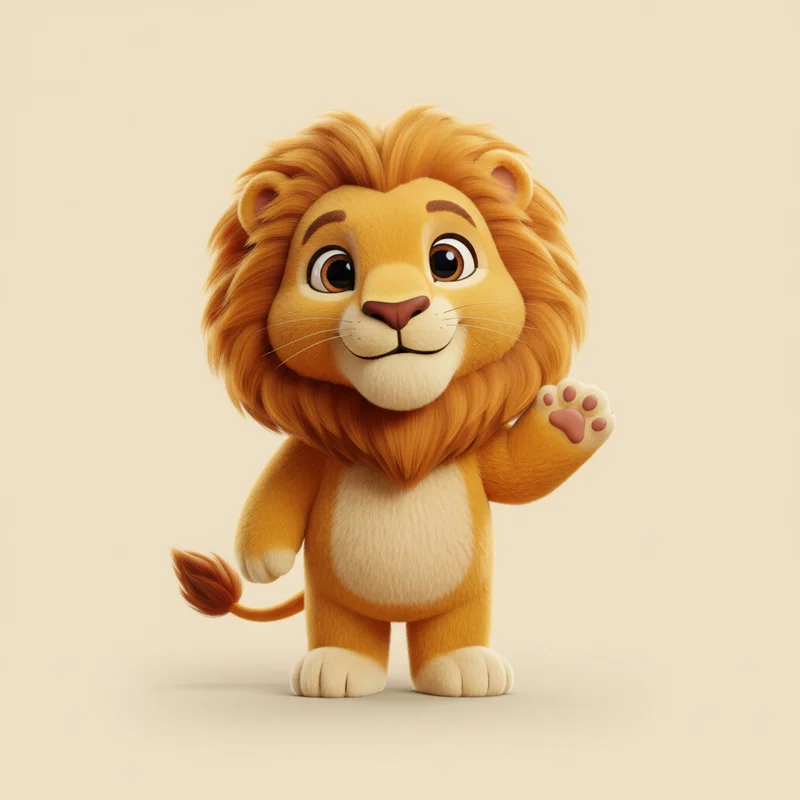
Apex predator and king of the savanna, known for majestic manes and surprisingly lazy daytime habits.

VS
Chess

Chess

Strategic board game of kings and pawns.

The Matchup

In the grand theatre of existence, few matchups seem quite as improbable as this one. Panthera leo, the magnificent apex predator whose very name has become synonymous with courage and royalty, stands opposite a 64-square battlefield that has humbled emperors and sharpened minds for over 1,500 years. One rules through raw physical supremacy; the other through pure intellectual dominance. Both, remarkably, feature kings as their most crucial pieces.

What emerges from this analysis is a fascinating study in the nature of power itself. Does true dominance flow from muscle and fang, or from the quiet contemplation of possibilities stretching infinitely into the future?

Battle Analysis

Strategic depth Chess Wins
🏆 Chess takes this round

Lion

The lion's strategic repertoire, whilst undeniably effective, operates within relatively predictable parameters. Ambush, chase, overwhelm. The playbook has remained essentially unchanged for 3.5 million years. Pride dynamics introduce some complexity, with coalition formations and territorial negotiations requiring a modicum of social calculation. Yet a lion has never once paused mid-hunt to consider the implications of a sacrifice gambit.

Chess

Chess presents an almost incomprehensible depth of possibility. After just three moves each, there exist over 9 million potential board positions. The Shannon number estimates the total possible chess games at 10^120, a figure exceeding the number of atoms in the observable universe. Grandmasters routinely calculate 15-20 moves ahead, navigating invisible forests of possibility. The game rewards foresight, sacrifice, and the ability to perceive patterns invisible to lesser minds.

VERDICT

The lion hunts with instinct refined over millennia. Chess, by contrast, offers infinite strategic complexity that continues to challenge the most powerful supercomputers ever built. In the realm of pure strategy, the 64-square battlefield reigns supreme.

Intimidation factor Lion Wins
🏆 Lion takes this round

Lion

A male lion's roar reaches 114 decibels, audible from 8 kilometres away. The creature weighs up to 250 kilograms, runs at 80 kilometres per hour in short bursts, and possesses jaws capable of generating 650 PSI of bite force. The lion kills approximately 250 humans annually in Africa. Standing before an alert lion triggers autonomic fear responses evolved over hundreds of thousands of years of primate history.

Chess

Chess intimidates through intellectual exposure rather than physical threat. Facing a grandmaster, one's cognitive limitations become painfully apparent within moves. The game has driven competitors to psychological breakdowns, including Wilhelm Steinitz, the first world champion, who died in a mental institution. Yet no chess piece has ever drawn blood.

VERDICT

One scenario triggers ancient survival mechanisms hardwired into human neurology. The other merely bruises the ego. The lion claims this category with undisputed authority, for no chess piece has ever prompted a grown man to climb a tree.

Longevity and legacy Chess Wins
🏆 Chess takes this round

Lion

Lions have prowled Earth for approximately 3.5 million years, an impressive tenure by any measure. Yet the species currently faces a vulnerable conservation status, with populations declining 43% over the past two decades. Without significant intervention, wild lions may vanish within a century. Individual lions live 10-14 years in the wild, leaving genetic rather than intellectual legacies.

Chess

Chess in its modern form dates to 15th-century Spain, though precursor games stretch back 1,500 years to the Indian subcontinent. The game's future appears secure, with competitive chess enjoying unprecedented popularity. Recorded games from centuries past remain playable and relevant today. Magnus Carlsen analyses Paul Morphy's 1858 games with genuine admiration. Chess creates immortal legacies; a brilliant combination preserves its creator's genius forever.

VERDICT

The lion's biological tenure impresses, yet the species faces an uncertain future. Chess, conversely, appears immortal, its popularity growing with each technological advance. In the long game of history, the strategic pursuit demonstrates superior staying power.

Global cultural impact Lion Wins
🏆 Lion takes this round

Lion

Few creatures have so thoroughly colonised human symbolism. The lion appears on national emblems, corporate logos, and religious iconography across six continents. From the Lion of Judah to the three lions of England, from Simba to Aslan, from the Sphinx to Singapore, the great cat's image conveys courage, nobility, and power. An estimated 2 billion people live in countries featuring lions on their national symbols.

Chess

Chess has shaped minds across every inhabited continent for centuries. The game influenced military strategy, computer science, artificial intelligence, and philosophy. 605 million adults play regularly worldwide. The 1972 Fischer-Spassky match became a Cold War proxy battle watched by billions. Chess terminology, checkmate, gambit, stalemate, has infiltrated everyday language across dozens of tongues.

VERDICT

Whilst chess boasts impressive global participation, the lion's symbolic presence proves more pervasive and primal. One cannot walk through any major city without encountering leonine imagery. The king of beasts claims this category by a whisker.

Adaptability and versatility Chess Wins
🏆 Chess takes this round

Lion

The lion, once ranging across Africa, Europe, and Asia, now clings to fragmented habitats comprising barely 8% of its historical range. Climate change, habitat loss, and human encroachment have reduced wild populations to approximately 20,000 individuals. The species demonstrates limited adaptability to environmental pressures, requiring vast territories and large prey populations to survive.

Chess

Chess has proven remarkably adaptable across centuries and technologies. From carved ivory pieces in medieval Persia to smartphone applications serving millions, the game transitions seamlessly between mediums. Blitz chess, bullet chess, correspondence chess, and countless variants demonstrate the format's flexibility. Online platforms recorded 100 million daily games during 2020, proving the game thrives in any era.

VERDICT

The lion requires savannah and wildebeest. Chess requires merely two willing minds and 64 squares of any material. In the category of adaptability, the ancient game demonstrates a versatility the apex predator simply cannot match.

👑

The Winner Is

Chess

Takes 3 of 5 rounds

This encounter between fang and forethought concludes with a score of Chess 53, Lion 47. The margin proves slender, befitting a matchup between two undisputed champions of their respective domains. The lion commands primal respect and cultural ubiquity that no board game can replicate. Its roar echoes through human mythology with a resonance chess pawns shall never achieve.

Yet chess ultimately prevails through sheer immortality of concept. The game adapts where the lion cannot, challenges minds across millennia, and creates legacies that transcend individual lifespans. In the final analysis, the game of kings narrowly defeats the king of beasts, proving that the mightiest kingdom is the one conquered between the ears.

Share this battle

More Comparisons