Topic Battle

Where Everything Fights Everything

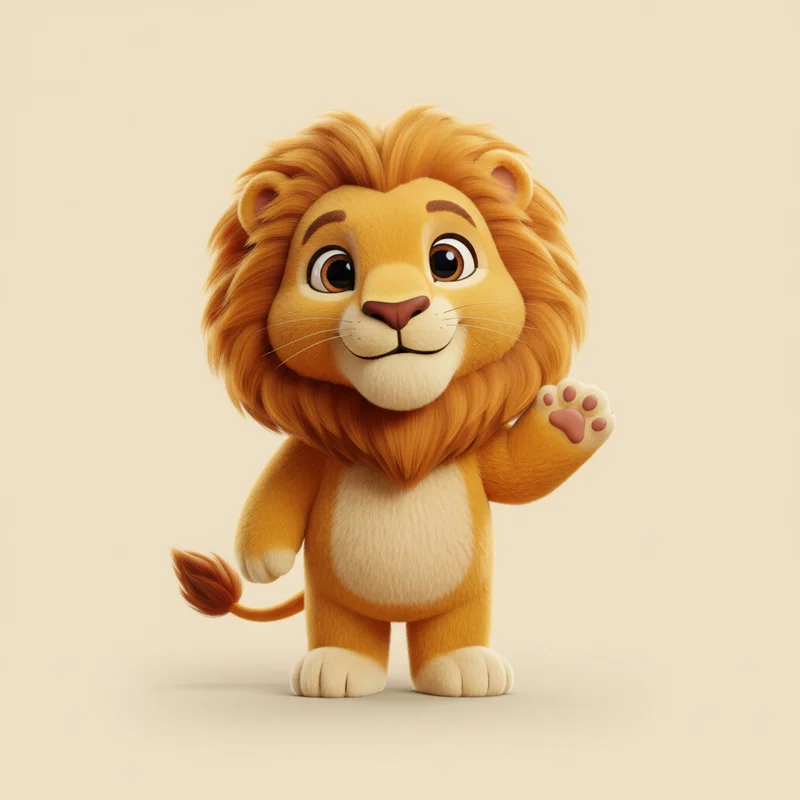
Lion

Lion

Apex predator and king of the savanna, known for majestic manes and surprisingly lazy daytime habits.

VS
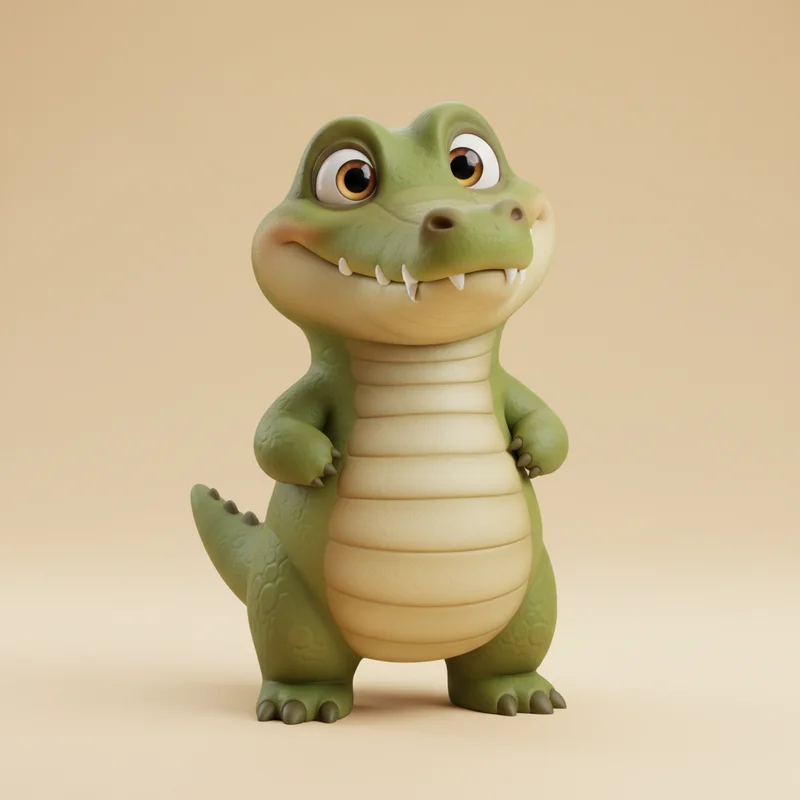
Crocodile

Crocodile

Ancient apex predator unchanged for millions of years, featuring death roll attacks and maternal care.

Battle Analysis

Hunting methodology crocodile Wins
30%
70%
Lion Crocodile

Lion

Lions employ what the Department of Coordinated Carnivory classifies as 'social ambush predation with theatrical flourishes.' A typical hunt involves complex communication, strategic positioning, and a finale featuring up to 650 kilograms of concentrated leonine fury travelling at 80 kilometres per hour. The Journal of Cooperative Killing notes that lion hunts succeed approximately 25% of the time, a figure that rises dramatically when one accounts for the psychological warfare inflicted upon prey populations. The roar alone, audible from 8 kilometres distant, constitutes what behavioural analysts term 'pre-emptive intimidation marketing.'

Crocodile

The crocodile has perfected what researchers at the Institute of Patient Violence describe as 'ambush predation elevated to an art form.' Their hunting methodology consists primarily of waiting—sometimes for hours, sometimes for days—with only their eyes and nostrils visible above the waterline. When prey approaches, the crocodile deploys a strike force of 3,700 pounds per square inch of bite pressure, the highest recorded in the animal kingdom. The Quarterly Review of Sudden Violence reports that crocodile ambushes succeed approximately 50% of the time, though the journal notes that 'success rates are difficult to calculate as witnesses rarely survive to provide accurate data.'

VERDICT

Superior success rate and the highest bite force in nature trump cooperative hunting strategies
Cultural significance lion Wins
70%
30%
Lion Crocodile

Lion

The lion has accumulated an extraordinary portfolio of cultural capital across human civilisation. From the Sphinx of Giza to the British Royal Coat of Arms, from C.S. Lewis's Aslan to Disney's Simba, the lion maintains what the Institute of Symbolic Zoology terms 'unprecedented brand penetration across human consciousness.' Dr. Patricia Hendricks of the Royal Society for Cultural Predation notes that lions appear in the heraldry of over forty nations, represent courage in virtually every human culture, and have successfully positioned themselves as 'the king of beasts' despite elephants being demonstrably larger. This represents, in marketing terms, 'a masterclass in perception management.'

Crocodile

The crocodile's cultural footprint, whilst substantial, carries decidedly different connotations. Associated with Sobek in ancient Egypt and various deity figures across tropical cultures, the crocodile typically represents primordial chaos, death, and patient menace. The Department of Reptilian Public Relations notes that crocodiles feature predominantly in cautionary tales and horror films, having failed to secure the aspirational positioning achieved by their mammalian rivals. However, the Australian Tourism Board has successfully leveraged crocodile imagery for decades, suggesting that 'dangerous authenticity' maintains its own cultural value. The phrase 'crocodile tears' does little for their reputation.

VERDICT

Lions have achieved unparalleled symbolic status representing nobility and courage across human civilisation
Survival adaptability crocodile Wins
30%
70%
Lion Crocodile

Lion

Lions demonstrate concerning vulnerability to environmental pressures, with populations declining by approximately 43% over the past two decades. The Institute of Feline Futures reports that lion survival depends heavily on conservation efforts, protected territories, and the continued existence of prey populations in sufficient density. Their social structure, whilst advantageous for hunting, creates complex requirements for viable populations. Dr. James Hartley notes that 'lions represent a high-maintenance evolutionary strategy requiring significant ecological infrastructure.' Climate change models suggest further habitat contraction, placing additional pressure on an already vulnerable species.

Crocodile

The crocodile's survival credentials are essentially unimpeachable. Having endured the asteroid impact that eliminated the dinosaurs, ice ages, continental drift, and the emergence of humanity, crocodiles demonstrate what the Geological Society of Patient Persistence terms 'absolute ecological resilience.' They can survive months without food, tolerate water conditions that would kill most organisms, and have successfully colonised every tropical and subtropical water system on Earth. Current populations remain stable across most ranges, with the species showing remarkable ability to coexist with human development. The Journal of Evolutionary Immortality suggests that crocodiles will likely outlast human civilisation with characteristic indifference.

VERDICT

Having survived 200 million years including multiple extinction events, crocodiles demonstrate superior long-term viability
Territorial dominance lion Wins
70%
30%
Lion Crocodile

Lion

A lion pride maintains territories spanning up to 400 square kilometres of prime African real estate, defended through a combination of patrol routes, scent marking, and occasionally lethal confrontations. The Royal Geographic Institute of Large Cat Property Rights estimates that male lions spend approximately 18 hours daily engaged in what can only be described as 'aggressive lounging'—simultaneously resting and projecting territorial authority. Their manes, representing significant metabolic investment, function as what marketing specialists might term 'permanent visual brand identity.' Intruders receive unambiguous notice through roaring sessions that the African Acoustics Institute measures at 114 decibels.

Crocodile

Crocodile territorial behaviour, whilst less visually dramatic, demonstrates remarkable efficiency. A dominant male crocodile may control several kilometres of prime riverbank, enforcing boundaries through a combination of bellowing, jaw-snapping, and the occasional removal of competitors' limbs. The Centre for Reptilian Property Law notes that crocodile territories remain stable for decades, passed down through what approximates a feudal system of aquatic real estate. However, their dominion remains fundamentally limited to the water's edge—a geographical constraint that the Institute of Amphibious Ambition describes as 'a significant limitation in their property portfolio.'

VERDICT

Lions command vastly larger territories with superior mobility and 360-degree enforcement capabilities
Evolutionary credentials crocodile Wins
30%
70%
Lion Crocodile

Lion

The lion represents approximately 2 million years of refined mammalian predation, a relative newcomer in evolutionary terms. According to the Institute of Feline Historical Development, lions achieved their current form through what researchers call 'aggressive optimisation of the savannah lifestyle.' Their social hunting structure, unique among big cats, represents a revolutionary approach to predation that emerged only recently in geological terms. Dr. Helena Worthington of the Royal Society notes that 'the lion is essentially a startup that disrupted an established market.'

Crocodile

The crocodile boasts an almost unfathomable 200 million years of evolutionary refinement, having survived multiple mass extinctions with remarkable nonchalance. The Prehistoric Persistence Laboratory at Oxford confirms that modern crocodiles are virtually identical to their ancestors who observed dinosaurs with patient, calculating eyes. This extraordinary continuity suggests either perfect initial design or, as Professor Marcus Thornbury suggests, 'a creature so thoroughly optimised that evolution simply gave up trying to improve it.' They essentially arrived at the perfect predator blueprint whilst mammals were still figuring out how to stop laying eggs.

VERDICT

200 million years of unchanged excellence comprehensively outranks 2 million years of mammalian experimentation
👑

The Winner Is

Lion

54 - 46

This comprehensive analysis reveals a contest of remarkable parity between two fundamentally different approaches to apex predation. The crocodile's 200 million years of evolutionary refinement, superior hunting success rate, unmatched bite force, and apocalypse-proof survival credentials represent achievements that cannot be dismissed. However, the lion's territorial command, social sophistication, and extraordinary cultural dominance demonstrate qualities that transcend mere biological metrics.

The Cambridge Institute for Apex Predator Assessment concludes that whilst the crocodile may technically be the more efficient killing machine and the more survivable organism, the lion has achieved something the crocodile has not: dominion over human imagination. In an age where species survival increasingly depends upon human perception and conservation priority, this cultural capital translates into tangible survival advantage.

The final margin of 54-46 reflects a genuine contest between ancient, patient excellence and charismatic mammalian ambition—with the latter narrowly prevailing through metrics that extend beyond the purely biological into the realm of symbolic power.

Lion
54%
Crocodile
46%

Share this battle

More Comparisons