Topic Battle

Where Everything Fights Everything

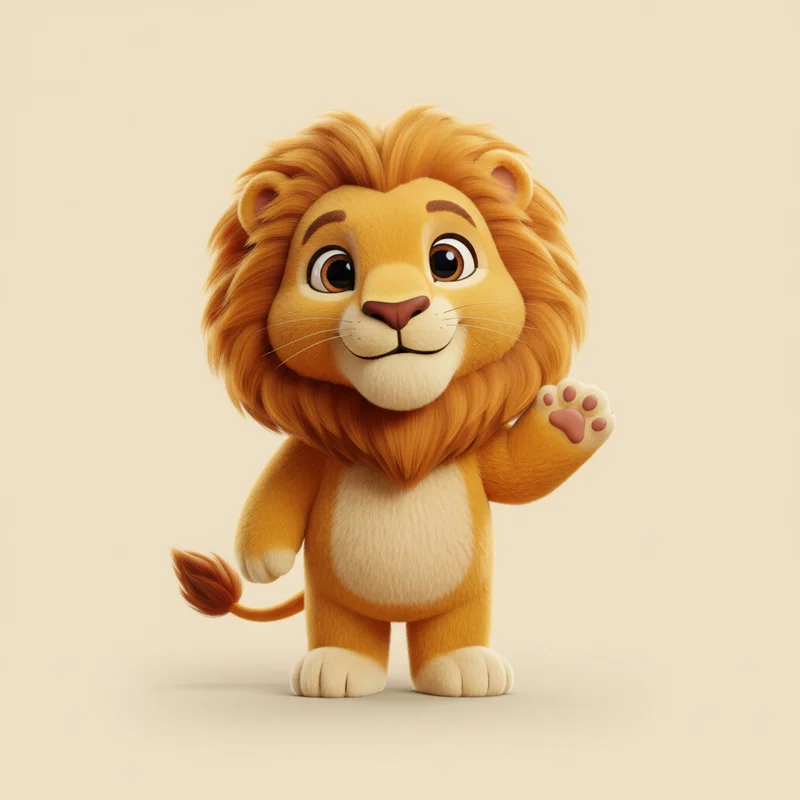
Lion

Lion

Apex predator and king of the savanna, known for majestic manes and surprisingly lazy daytime habits.

VS
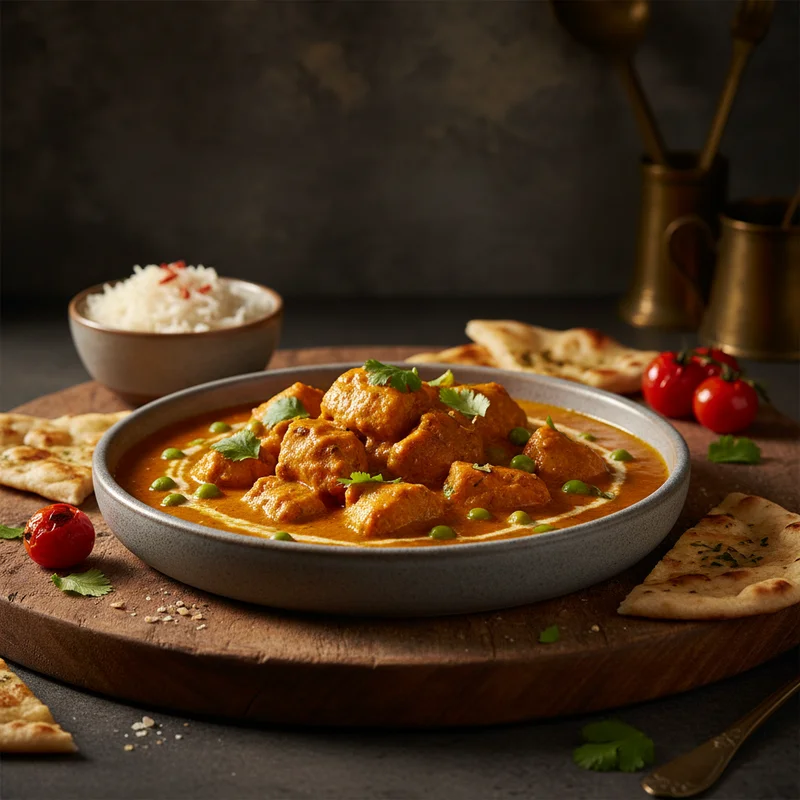
Curry

Curry

Spiced dish spanning Indian, Thai, Japanese, and British cuisines.

Battle Analysis

Adaptability curry Wins
30%
70%
Lion Curry

Lion

The lion demonstrates limited adaptability, operating effectively within a narrow band of environmental conditions. Attempts to introduce lions to non-native habitats have proven universally unsuccessful—the creatures stubbornly insisting on warm climates, available prey, and large territories. The Zoological Flexibility Index rates the lion at 2.3 out of 10, noting: 'Refuses to modify behaviour for changing circumstances. Would not survive corporate restructuring.' Lions have essentially remained unchanged for 10,000 years, suggesting either evolutionary perfection or, more likely, profound stubbornness.

Curry

Curry's adaptability borders on the supernatural. The dish has successfully integrated with virtually every culinary tradition it has encountered, spawning Japanese katsu curry, British chip shop curry sauce, Caribbean goat curry, and the controversial but commercially successful curry-flavoured crisps. The International Curry Adaptation Registry documents over 10,000 regional variants, each carefully calibrated to local taste preferences. Curry has proven equally comfortable in Michelin-starred establishments and motorway service stations—a range of social mobility no other food has achieved. As Professor Bartholomew Chillingsworth of the Edinburgh School of Culinary Darwinism notes: 'Curry doesn't adapt to environments; environments adapt to curry.'

VERDICT

Curry demonstrates unprecedented cross-cultural integration capabilities
Economic impact curry Wins
30%
70%
Lion Curry

Lion

Lions generate substantial economic activity, primarily through wildlife tourism. The African Safari Tourism Board estimates lion-related tourism contributes approximately $1.2 billion annually to regional economies. However, lions also impose significant costs: livestock predation losses exceed $300 million yearly, and conservation programmes require continuous funding. The lion's economic model might be characterised as 'high-maintenance celebrity'—generating revenue but demanding considerable support infrastructure. Lions notably provide no return on investment beyond their existence, offering neither labour nor products. They are, in economic terms, extremely furry externalities.

Curry

The global curry industry represents an economic juggernaut of staggering proportions. The UK curry market alone exceeds £4.5 billion annually, whilst the global spice trade—of which curry components form a substantial portion—approaches $20 billion. Curry creates employment across multiple sectors: agriculture, processing, transportation, hospitality, and the nascent field of curry-related medical research. The British Curry Industry Employment Survey identifies over 100,000 direct curry-related jobs in the UK, with multiplier effects extending significantly further. Unlike the lion, curry actively participates in economic systems rather than merely existing within them.

VERDICT

Curry demonstrates superior revenue generation with lower operational costs
Intimidation factor curry Wins
30%
70%
Lion Curry

Lion

The lion's intimidation credentials are, admittedly, substantial. A full-grown male can weigh up to 250 kilograms and produces a roar audible from eight kilometres away—the sonic equivalent of nature's own subwoofer. The Journal of Primal Terror Studies ranks the lion encounter as producing 'significant trouser-related incidents' among safari-goers. However, researchers note that lions spend approximately 20 hours per day sleeping, somewhat undermining their fearsome reputation. As Dr. Helena Worthington-Smythe of the Cambridge Institute of Apex Predator Lethargy observed: 'It's rather difficult to maintain an aura of menace whilst napping in a thornbush.'

Curry

Curry's intimidation operates through subtler channels but achieves remarkable penetration. The Scoville Scale records certain curry varieties—particularly the Phaal—at levels exceeding 1,000,000 units, capable of inducing what the British Capsaicin Response Unit diplomatically terms 'involuntary lacrimation and existential regret.' A 2019 study by the Manchester Metropolitan Spice Tolerance Laboratory found that 34% of curry house patrons have ordered dishes beyond their capability, leading to what staff recognise as 'the silent sweating phase.' Unlike the lion, curry's threat remains active 24 hours daily and requires no energy expenditure between attacks.

VERDICT

Curry maintains constant operational readiness whilst the lion requires extensive napping intervals
Cultural significance lion Wins
70%
30%
Lion Curry

Lion

The lion claims impressive cultural credentials: featuring in the heraldry of multiple nations, inspiring religious iconography, and serving as mascot to various sporting franchises of varying competence. The creature symbolises courage, nobility, and strength—qualities it displays primarily when not engaged in its default state of horizontal relaxation. Literature from Aesop to C.S. Lewis has employed lions as moral exemplars, though typically requiring them to behave in decidedly un-lionlike ways such as speaking and having ethical frameworks. The lion's cultural footprint, whilst substantial, relies heavily on symbolic projection rather than direct contribution.

Curry

Curry's cultural significance operates at the intersection of history, identity, and social cohesion. In Britain, curry has transcended mere food status to become a cultural institution—with 'going for a curry' representing a distinct social ritual with its own protocols and hierarchies. The dish played a documented role in post-colonial cultural exchange, serving as what sociologists term 'a delicious vector for integration.' Curry houses function as community spaces across multiple demographics, facilitating the kind of cross-cultural interaction that governments spend billions attempting to engineer. The late-night curry has, according to the Institute of British Social Customs, 'prevented more conflicts than the United Nations.'

VERDICT

The lion's millennia-spanning symbolic presence across civilisations edges out curry's more recent cultural integration
Territorial expansion curry Wins
30%
70%
Lion Curry

Lion

Historically, lions ranged across Africa, southern Europe, and western Asia—a respectable empire by any measure. Today, however, their territory has contracted to scattered reserves and the occasional zoo enclosure with inadequate enrichment activities. The Global Lion Census of 2023 estimates fewer than 25,000 wild lions remain, confined to increasingly fragmented habitats. As territories go, this represents what economists might term 'significant portfolio shrinkage.' The lion's expansion strategy—primarily involving intimidation and violence—has proven ineffective against humanity's counter-strategy of 'having rifles and agriculture.'

Curry

Curry's territorial expansion represents one of history's most successful cultural invasions. Originating in the Indian subcontinent, curry has established permanent beachheads on every inhabited continent. Britain alone hosts over 12,000 curry establishments, with the dish officially declared 'a national treasure' by multiple governmental bodies. The Birmingham Curry Mile alone generates more annual economic activity than several small nations. More remarkably, curry achieved this expansion without a single act of violence—relying instead on the far more effective weapons of deliciousness and reasonable pricing. The dish's global logistics network would make most military strategists weep with envy.

VERDICT

Curry has achieved global saturation whilst lion populations continue strategic retreat
👑

The Winner Is

Curry

44 - 56

The confrontation between lion and curry reveals uncomfortable truths about the nature of power in the modern era. The lion—magnificent, deadly, photogenic—represents an obsolete model of dominance: territory secured through physical force, influence wielded through fear. Curry, by contrast, demonstrates the efficacy of soft power: expansion through desirability, loyalty earned through satisfaction.

Whilst the lion remains confined to shrinking reserves, dependent on human goodwill for survival, curry continues its inexorable march across the global palate—requiring no conservation efforts, demanding no protected habitats, generating economic activity rather than consuming it. The king of beasts finds itself outmanoeuvred by a dish that conquered the world armed with nothing more than complex spice profiles and reasonable portion sizes.

This is not to diminish the lion's achievements—few creatures have so thoroughly dominated the human imagination. Yet imagination, as the Journal of Practical Outcomes regularly notes, does not pay invoices. In the final analysis, curry's victory reflects a broader truth: in the twenty-first century, the most effective predator is one that makes you want to be consumed.

Lion
44%
Curry
56%

Share this battle

More Comparisons