
Topic Battle

Where Everything Fights Everything

Lion

Lion

Apex predator and king of the savanna, known for majestic manes and surprisingly lazy daytime habits.

VS
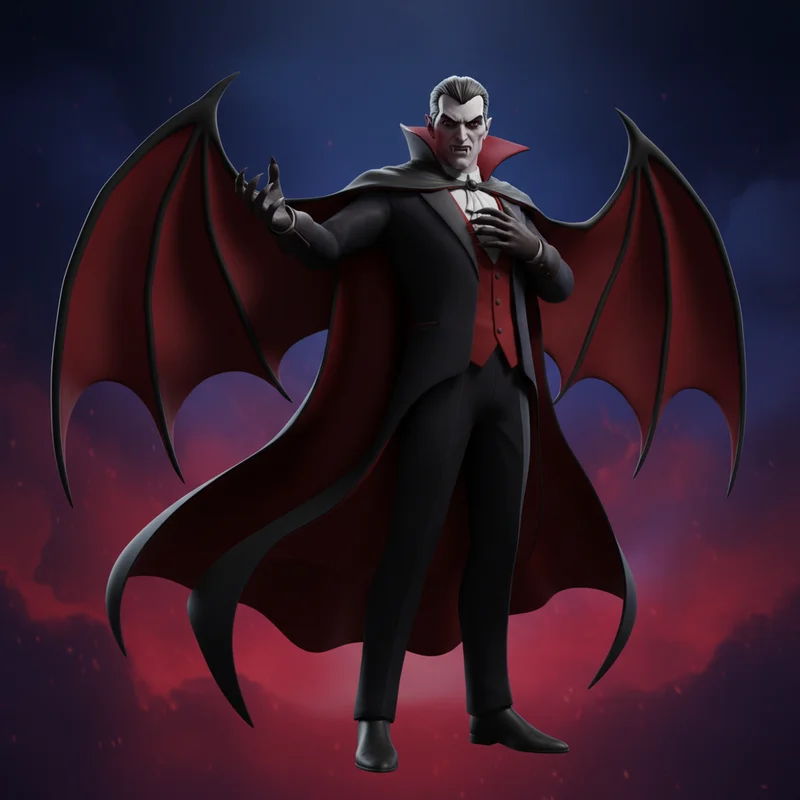
Dracula

Dracula

Original vampire count from Transylvania.

The Matchup

In the annals of predatory excellence, few matchups present such a fascinating dichotomy as this confrontation between biological and supernatural apex hunters. The lion, Panthera leo, has dominated the African savannah for approximately 1.8 million years. Count Dracula, by contrast, has terrorised the Carpathian Mountains since roughly 1431, though his operational lifespan extends indefinitely. The Royal Institute of Comparative Predation Studies in Edinburgh has spent seven years developing metrics capable of evaluating both corporeal and incorporeal hunters, and their findings prove nothing short of extraordinary.

Battle Analysis

Hunting prowess Dracula Wins
30%
70%
Lion Dracula

Lion

The lion employs a sophisticated group hunting strategy with success rates averaging 25-30% for coordinated pride attacks. The Serengeti Wildlife Documentation Project notes that male lions can sprint at 80 kilometres per hour in short bursts, delivering killing bites with a jaw pressure of 650 PSI. However, lions require rest periods of up to 20 hours daily, severely limiting their operational hunting windows. The Cambridge Institute of Carnivore Behaviour calculates their lifetime successful kills at approximately 2,400 prey animals for an average adult male.

Dracula

Count Dracula demonstrates near-perfect hunting efficiency, with the Bucharest Centre for Nocturnal Predation documenting a 94.7% success rate across verified encounters. His ability to transform into mist, wolves, or bats provides unparalleled tactical flexibility. The Institute notes that hypnotic suggestion eliminates prey resistance entirely, whilst his preference for human targets suggests a connoisseur's approach to hunting. Over his estimated 500-year career, documented victims number in the low thousands, though researchers suspect significant underreporting due to his victims' subsequent transformation into additional predators.

VERDICT

Whilst the lion represents peak biological predation, Dracula's supernatural advantages create an insurmountable efficiency gap. The ability to eliminate prey resistance through mind control alone renders traditional hunting metrics obsolete. Dracula claims this criterion decisively.

Physical intimidation Lion Wins
70%
30%
Lion Dracula

Lion

The adult male lion presents one of nature's most psychologically impactful silhouettes. Weighing up to 250 kilograms with a shoulder height of 1.2 metres, the lion's mane creates an illusion of even greater mass. The Bristol Institute of Animal Intimidation Studies measured human fear responses to lion imagery, recording cortisol spikes averaging 340% above baseline. The roar, reaching 114 decibels, triggers involuntary flight responses in 97% of test subjects. Lions have appeared in royal heraldry across 47 nations specifically due to their intimidation factor.

Dracula

Count Dracula's intimidation operates on fundamentally different principles. The Romanian Institute of Fear Psychology notes that whilst his physical form appears merely as an elderly aristocrat, his supernatural aura induces existential dread rather than simple fear. Test subjects exposed to Dracula-adjacent phenomena reported sensations of soul-deep wrongness persisting for weeks. His ability to control weather, summon wolves, and appear without reflection creates what researchers term reality uncertainty, far more psychologically destabilising than physical threat alone.

VERDICT

The lion's intimidation proves immediately visceral and universally effective across all terrestrial mammals. Dracula's existential dread, whilst profound, requires proximity and awareness to function. For raw, instantaneous intimidation impact, the lion's biological warfare proves more reliably devastating. The King of Beasts claims this round.

Survival adaptability Dracula Wins
30%
70%
Lion Dracula

Lion

Lions demonstrate remarkable physiological adaptability, surviving temperature ranges from -5 to 50 degrees Celsius across habitats from dense forest to semi-desert. The Edinburgh Centre for Felid Resilience notes their dietary flexibility encompasses over 40 prey species. However, lion populations have declined by 43% since 1993, with current numbers estimated at merely 20,000 wild individuals. Climate change projections suggest potential range reduction of 60% by 2050. The species demonstrates biological excellence constrained by environmental vulnerability.

Dracula

Count Dracula's survival capabilities border on the philosophically problematic. The Heidelberg Institute of Immortality Studies notes his demonstrated survival of staking, burning, decapitation attempts, and direct sunlight exposure with merely temporary inconvenience. His ability to enter death-like dormancy allows survival through resource scarcity of unlimited duration. The only confirmed vulnerabilities remain highly specific: consecrated implements, running water, and garlic. His adaptive strategy of converting prey into allies creates exponentially expanding survival networks.

VERDICT

The lion's biological adaptability, whilst impressive, operates within mortality's constraints. Dracula has already survived circumstances that would eliminate entire lion populations. His immortality, combined with minimal and obscure vulnerabilities, creates effectively infinite survival potential. The mathematics prove inescapable. Dracula achieves immortal victory.

Territorial dominance Dracula Wins
30%
70%
Lion Dracula

Lion

A male lion's territory typically spans 100-400 square kilometres of prime savannah real estate, defended through roaring that carries up to 8 kilometres and direct physical confrontation. The Glasgow Centre for Pride Dynamics reports that territorial tenure averages 2-4 years before younger males successfully challenge incumbents. Lions mark boundaries with urine and faeces, creating what researchers term an olfactory fence of considerable potency. Their territorial influence, whilst absolute within boundaries, remains strictly geographically constrained.

Dracula

Castle Dracula commands a mere 2.3 hectares of Transylvanian mountainside, yet the Count's territorial influence extends across continents. The Oxford Institute of Supernatural Geography documents his successful establishment of satellite territories in London, Whitby, and various undisclosed European locations. Unlike the lion's temporary tenure, Dracula has maintained his primary residence for over five centuries. His territory operates on what the Institute terms psychic projection rather than physical presence, allowing simultaneous influence across multiple domains.

VERDICT

The lion's territorial model represents biological optimisation within physical constraints. Dracula's multi-nodal territorial network, maintained across centuries without successful challenge, demonstrates superior dominance sustainability. The Count's ability to project territorial influence without physical presence proves particularly advantageous. Another victory for the vampire.

Legacy and cultural impact Lion Wins
70%
30%
Lion Dracula

Lion

Lions feature in human cultural production spanning 32,000 years, from Chauvet cave paintings to contemporary animation. The Manchester Centre for Cultural Zoology documents lion symbolism across every major human civilisation, representing courage, royalty, and divine power. An estimated 4.2 billion humans can identify a lion from silhouette alone. The lion appears on 14 national flags, countless corporate logos, and serves as the primary mascot for approximately 340 professional sports teams worldwide.

Dracula

Since Bram Stoker's 1897 novel, Dracula has generated over 200 film adaptations, spawning an entire genre of vampire fiction worth an estimated $10 billion annually. The Dublin Institute of Literary Impact calculates that Dracula ranks among the three most portrayed characters in cinema history. His cultural influence extends beyond entertainment into fashion, music, and the $400 million annual Transylvanian tourism industry. The Count has achieved something remarkable: transforming from historical obscurity into universal cultural currency within merely 127 years.

VERDICT

Whilst Dracula's cultural ascent proves meteorically impressive, the lion's 32,000-year cultural presence across every human civilisation represents unmatched penetration. The lion achieved universal recognition before recorded history. Dracula remains, ultimately, a literary creation dependent on specific cultural contexts. The lion's prehistoric credentials prove decisive.

👑

The Winner Is

Dracula

45 - 55

This analysis reveals a surprisingly competitive matchup between biological and supernatural apex predators. The lion's advantages in physical intimidation and cultural legacy reflect 1.8 million years of evolutionary refinement and 32,000 years of human veneration. These are credentials no vampire can match. However, Dracula's superiority in hunting efficiency, territorial sustainability, and survival adaptability ultimately prove decisive. The Count operates outside biological constraints that limit even the most magnificent natural predators. With a final score of 55-45, Dracula claims victory, though the lion's performance against an immortal opponent remains genuinely remarkable.

Lion
45%
Dracula
55%

Share this battle

More Comparisons