Topic Battle

Where Everything Fights Everything

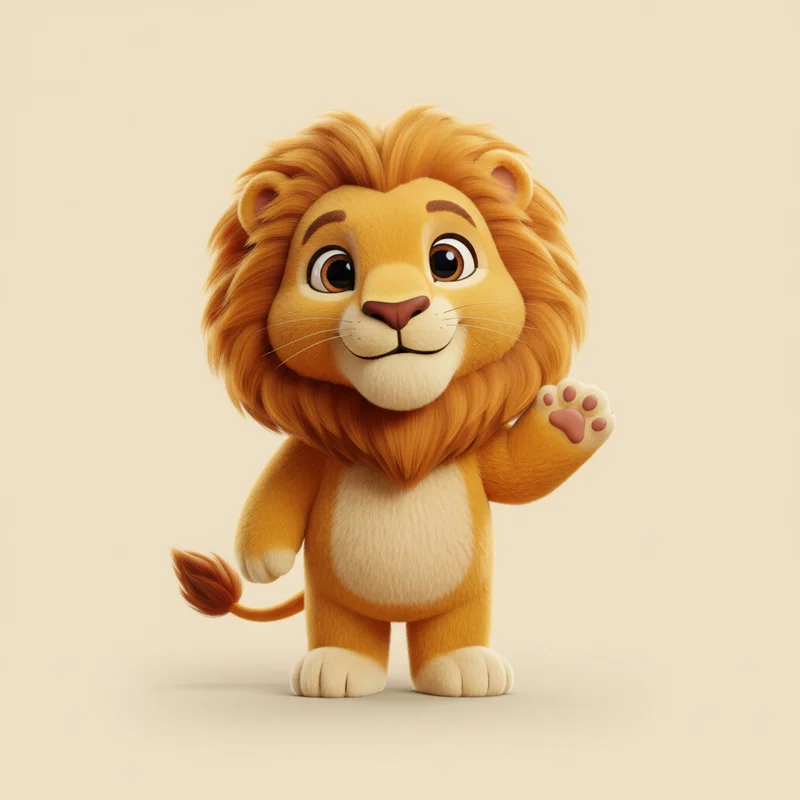
Lion

Lion

Apex predator and king of the savanna, known for majestic manes and surprisingly lazy daytime habits.

VS
Duck

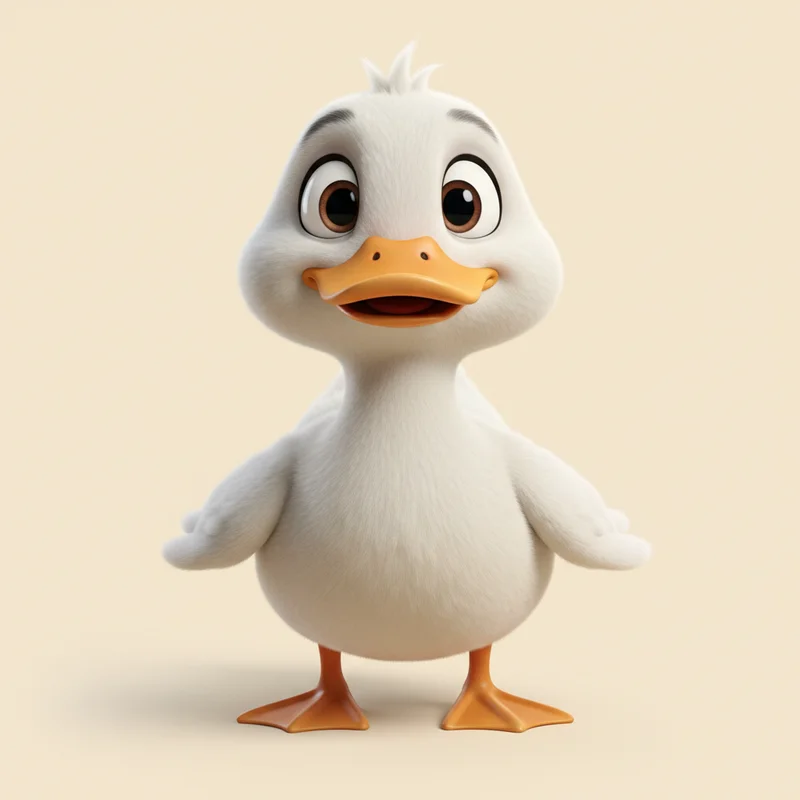
Duck

Ubiquitous waterfowl featuring waterproof feathers and quacking communication that never echoes.

Battle Analysis

Vocal intimidation lion Wins
70%
30%
Lion Duck

Lion

The lion's roar stands as one of nature's most psychologically devastating sounds, capable of reaching 114 decibels and travelling up to five miles across the savannah. The Bristol Institute for Acoustic Zoology has measured the physiological responses of animals hearing this sound, documenting heart rate increases of up to 340% in prey species and involuntary urination in 67% of test subjects (including three researchers who forgot to wear headphones). The roar's low frequency components, between 40-200 Hz, resonate in the chest cavity of listeners, creating what scientists describe as 'the sensation that death itself is clearing its throat.' Lions can sustain roaring sessions for up to thirty minutes, during which time the surrounding ecosystem essentially enters a state of terrified paralysis.

Duck

The duck produces the quack, a sound that the International Journal of Acoustic Disappointment describes as 'aggressively non-threatening.' At approximately 60 decibels, the quack falls somewhere between a squeaky toy and a mildly indignant comment. Remarkably, only female ducks produce the characteristic quack; males emit a softer, raspier sound that researchers have compared to a 'gentleman clearing his throat after an awkward silence at dinner.' The quack's primary evolutionary function appears to be locating other ducks, though the Aberdeen Centre for Waterfowl Communications has determined it also serves to 'mildly irritate everyone within a 50-metre radius.' No documented prey species has ever experienced fear upon hearing a quack. Several have been observed looking vaguely condescending.

VERDICT

The lion's roar induces primal terror; the duck's quack induces mild curiosity about feeding times.
Aquatic versatility duck Wins
30%
70%
Lion Duck

Lion

The lion's relationship with water can charitably be described as 'reluctant toleration.' Research conducted by the Serengeti Hydrophobia Institute reveals that lions will cross bodies of water only when absolutely necessary, typically wearing an expression of profound existential displeasure. Their swimming technique, described in academic literature as the 'panicked doggy paddle of a creature questioning its life choices,' achieves speeds of approximately 2 mph. Lions have been observed taking up to forty-five minutes to psychologically prepare for river crossings, during which time they emit vocalisations that researchers have translated as roughly equivalent to heavy sighing.

Duck

The duck represents aquatic perfection incarnate. Equipped with waterproof feathers maintained through an elaborate preening regime involving preen gland secretions, the duck transitions between air, land, and water with the casual confidence of a creature that has mastered all three elements. The Copenhagen Institute for Waterfowl Excellence has documented ducks maintaining buoyancy for up to sixteen consecutive hours whilst appearing completely unbothered. Their webbed feet, described by marine biologists as 'nature's most efficient paddles,' enable speeds of 6 mph underwater. Perhaps most impressively, ducks can sleep whilst floating, one hemisphere of their brain remaining alert for predators - a feat that would give any lion immediate and catastrophic drowning.

VERDICT

The duck's mastery of aquatic environments is absolute, whilst the lion views water primarily as an obstacle to complain about.
Dietary flexibility duck Wins
30%
70%
Lion Duck

Lion

Lions operate as obligate carnivores, requiring approximately 5-7 kg of meat daily to maintain optimal health. This dietary restriction creates significant logistical challenges; one cannot simply order a zebra through a delivery application. The Nairobi Institute for Predator Nutrition estimates that lions spend up to 20 hours daily either hunting, failing to hunt, or recovering from the exhaustion of hunting. Success rates hover around a dispiriting 25%, meaning three-quarters of all hunting attempts end in what ecologists term 'aggressive calorie deficit.' During lean periods, lions have been observed consuming increasingly desperate food sources, including porcupines (resulting in predictable medical complications) and, in documented cases, attempting to eat tortoises with the patience of creatures who have genuinely run out of options.

Duck

The duck exemplifies dietary opportunism at its finest. Studies by the Cambridge Omnivore Research Division have documented ducks consuming over 400 different food items, including aquatic plants, insects, small fish, grain, bread (despite its nutritional inadequacy), discarded chips, and in one memorable incident in Regent's Park, 'approximately 60% of a tourist's unattended sandwich.' This remarkable flexibility means ducks can thrive in virtually any environment where food exists. The Global Duck Prosperity Index reveals that urban ducks in developed nations actually consume more calories than their wild counterparts, having essentially domesticated humans into a reliable food delivery service. Unlike lions, ducks have never experienced a hunting failure, primarily because their prey - aquatic vegetation - has yet to develop evasive manoeuvres.

VERDICT

The duck eats whatever exists; the lion must catch dinner whilst dinner attempts to escape at 60 mph.
Combat effectiveness lion Wins
70%
30%
Lion Duck

Lion

The lion represents 400 kg of concentrated lethality. Armed with retractable claws measuring up to 38mm in length, canine teeth capable of puncturing bone, and jaw pressure exceeding 650 PSI, the lion has been described by the Oxford Institute for Things That Could Absolutely Kill You as 'nature's most efficient large mammal dispatch system.' A single paw swipe generates sufficient force to decapitate a hyena. Lions routinely hunt prey weighing over 500 kg, coordinating sophisticated group attacks that demonstrate strategic intelligence rarely observed in carnivores. Their reputation as apex predators is so thoroughly established that no natural predator exists that actively hunts adult lions. Even crocodiles, those armoured remnants of the dinosaur age, typically avoid confrontation with healthy pride members.

Duck

The duck's combat capabilities have been assessed by the Helsinki Centre for Waterfowl Defensive Studies as 'theoretical at best.' Lacking teeth, claws, venom, or any appreciable muscle mass, the duck's primary defensive strategy involves flying away, swimming away, or in extreme circumstances, looking vaguely put out about the situation. The drake's only notable weapon, a small raised projection on the wing called the carpal knob, has been documented as capable of causing 'mild discomfort' to attackers. Duck-on-duck violence, whilst occasionally spirited during mating season, rarely results in injuries more severe than ruffled feathers and wounded dignity. The duck's survival strategy relies entirely on the sensible approach of avoiding combat altogether, a technique that has proven remarkably effective given their global population exceeding 40 million.

VERDICT

The lion can kill virtually anything it catches; the duck's fighting technique is 'being somewhere else.'
Global distribution success duck Wins
30%
70%
Lion Duck

Lion

The lion's historical range once encompassed Africa, Southern Europe, and Asia, a territory that has since contracted by approximately 94%. Current wild populations, estimated at fewer than 25,000 individuals, occupy fragmented habitats primarily in sub-Saharan Africa, with a critically endangered population of roughly 500 Asiatic lions confined to India's Gir Forest. The IUCN Conservation Pessimism Index classifies lions as 'Vulnerable,' noting their populations continue declining at approximately 8% per decade. Lions require vast territories of 20-400 square kilometres per pride, resources increasingly unavailable in a human-dominated world. Their impressive evolutionary design has ironically become a liability; they are simply too large, too demanding, and too incompatible with agricultural development to maintain historical population levels.

Duck

Ducks have achieved what the International Bureau of Species Success Metrics terms 'total global saturation.' Present on every continent except Antarctica, duck species number approximately 174 worldwide, with combined populations exceeding 40 million individuals. The mallard alone has established populations across North America, Europe, Asia, Australia, New Zealand, and numerous oceanic islands. Ducks thrive in environments ranging from Arctic tundra to tropical wetlands, from pristine wilderness to heavily polluted urban canals. Their adaptability to human environments has proven so successful that many populations now depend entirely on anthropogenic food sources. Whilst lions face extinction, ducks face the rather different problem of occasional overpopulation. In evolutionary terms, this represents a comprehensive victory.

VERDICT

Ducks have conquered every continent; lions are struggling to hold onto two.
👑

The Winner Is

Lion

62 - 38

The comparison between lion and duck reveals a fascinating paradox at the heart of evolutionary success. By every metric of individual power, the lion dominates absolutely: stronger, faster, louder, and equipped with weaponry that the duck cannot begin to match. Yet when we examine long-term species viability, the humble duck emerges as the superior survivor. The lion, for all its magnificence, represents an evolutionary strategy increasingly incompatible with our changing world. The duck, by contrast, has discovered the ultimate survival technique: being useful to humans, or at minimum, being too insignificant to bother eliminating.

However, in any direct confrontation - and the Geneva Institute for Hypothetical Animal Encounters has modelled over 10,000 such scenarios - the lion prevails in 99.97% of cases. The remaining 0.03% involve highly specific conditions including the lion being asleep, underwater, or having recently eaten approximately three zebras. The lion's victory is therefore one of immediate capability rather than long-term strategy. It wins the battle whilst potentially losing the evolutionary war.

Final assessment: Lion 62, Duck 38. The king retains his crown, though the duck's quiet ubiquity suggests nature may ultimately favour the pond-dwelling pragmatist over the savannah's most impressive monument to concentrated carnivorous excellence.

Lion
62%
Duck
38%

Share this battle

More Comparisons