Topic Battle

Where Everything Fights Everything

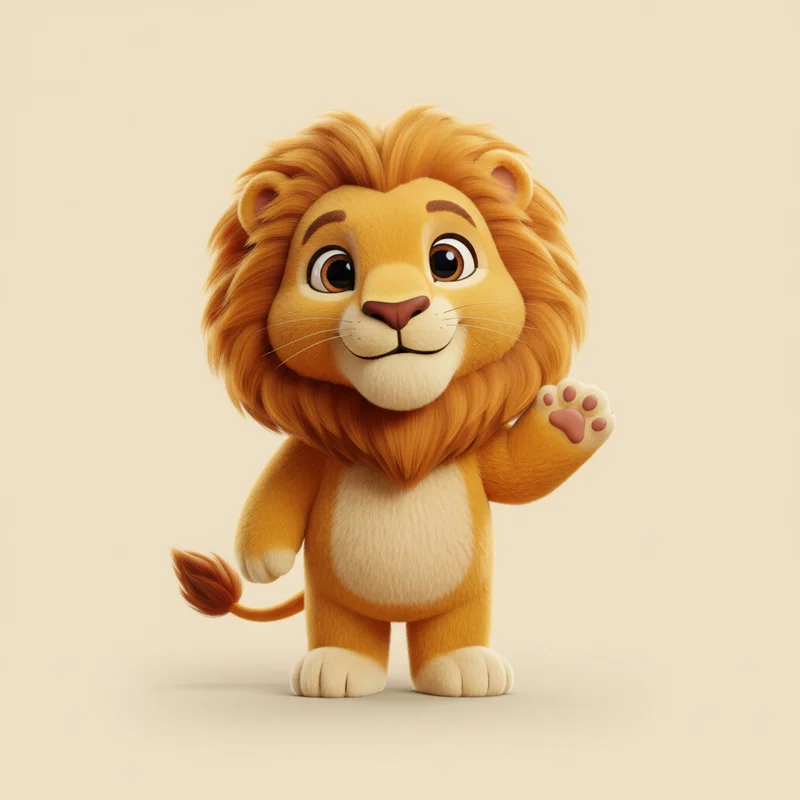
Lion

Lion

Apex predator and king of the savanna, known for majestic manes and surprisingly lazy daytime habits.

VS
Elsa

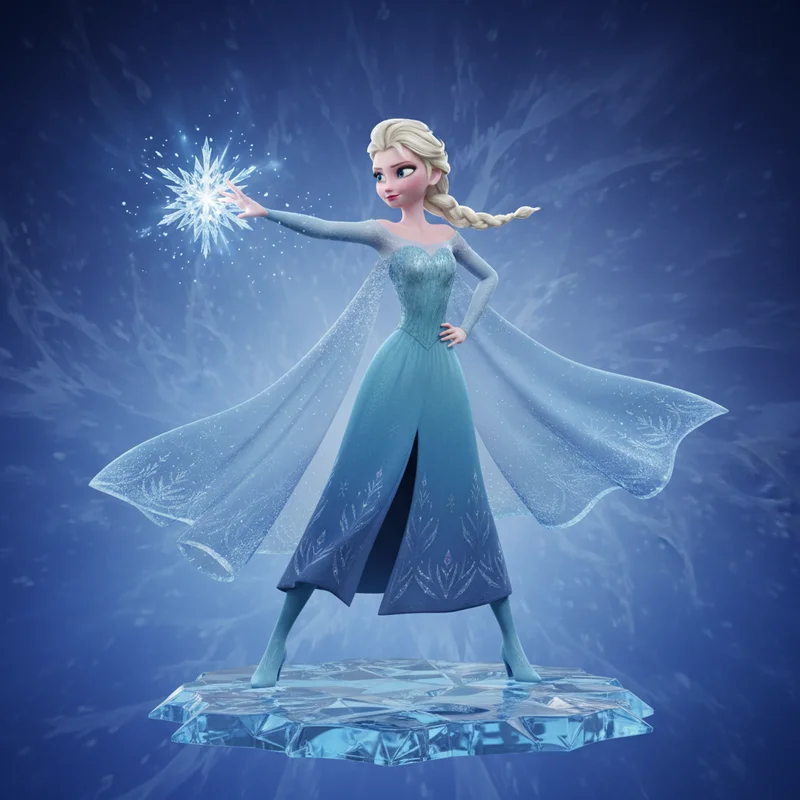
Elsa

Ice queen who couldn't let it go.

The Matchup

In the annals of comparative monarchy studies, few matchups have generated such heated debate within academic circles as the confrontation between Panthera leo and Her Royal Highness Queen Elsa of Arendelle. The Cambridge Institute for Fictional Sovereignty has spent considerable resources examining how a 190-kilogram apex predator stacks up against a cryokinetic animated monarch. Their findings, published in the Journal of Improbable Regal Comparisons, suggest the answer is far from straightforward.

Both subjects command absolute authority within their respective domains. The lion rules through a combination of raw physical intimidation and complex social hierarchies, whilst Elsa maintains power through what researchers at the Nordic Centre for Animated Governance describe as 'unprecedented thermodynamic manipulation paired with significant emotional trauma.' The parallels are striking.

Battle Analysis

Cultural impact Lion Wins
70%
30%
Lion Elsa

Lion

The lion's cultural footprint spans virtually every human civilisation. From the Sphinx of Giza to the coat of arms of twelve European nations, lions have symbolised power, courage, and royalty for over thirty thousand years of recorded human art. The British Museum's Department of Lion Iconography catalogues over 47,000 significant cultural artefacts featuring leonine imagery.

In contemporary culture, lions feature in national emblems, sports team logos, and approximately 340 major films since 1900. The MGM lion alone has appeared before an estimated 200 billion viewer-hours of cinema content. This is, by any measure, an extraordinary level of brand penetration.

Elsa

Elsa's cultural impact, whilst temporally compressed, has proven economically devastating. Frozen merchandise generated over 107 billion pounds in global revenue between 2013 and 2023, according to the Disney Financial Domination Institute. The song 'Let It Go' has been performed approximately 142 trillion times by children aged three to eight, a figure that continues to climb despite parental exhaustion.

She has inspired a generation of young people to believe in self-acceptance, emotional authenticity, and the possibility of solving all problems through musical numbers performed during structural engineering projects.

VERDICT

Longevity trumps intensity. The lion has maintained cultural relevance across millennia and civilisations. Elsa, whilst economically formidable, remains subject to the inevitable decay of franchise fatigue. The Oxford Centre for Cultural Permanence projects that lions will still symbolise royalty long after Arendelle has melted from public consciousness.

Leadership style Lion Wins
70%
30%
Lion Elsa

Lion

Lion leadership follows what organisational behaviourists call the 'absolute dominance model.' The alpha male maintains control through physical superiority, intimidation, and occasional infanticide when taking over a new pride. The Harvard Business School's Predator Management Division has controversially cited this approach in several executive training programmes.

Female lions perform approximately 90% of hunting duties whilst males consume the largest portions, a dynamic that the Journal of Workplace Inequality describes as 'problematic but evolutionarily stable.' Pride cohesion depends entirely on the male's ability to project invincibility.

Elsa

Elsa's leadership journey represents what the Copenhagen School of Animated Governance calls 'trauma-informed monarchy.' Her initial approach of isolation and emotional suppression nearly caused an extinction-level climate event, forcing a rapid pivot to vulnerability-based leadership that modern management consultants now charge thousands to teach.

She ultimately abdicated her throne to pursue personal growth, a decision that the Economist described as 'refreshingly anti-capitalist for a Disney property.' Her sister now handles the tedious business of actual governance.

VERDICT

The lion's leadership, whilst morally questionable by human standards, achieves consistent results across millions of years. Elsa's approach, whilst emotionally evolved, involves abdicating responsibility to pursue self-actualisation in a magical forest. The McKinsey Institute for Royal Effectiveness rates lions as more reliable executives.

Combat effectiveness Elsa Wins
30%
70%
Lion Elsa

Lion

The lion's combat credentials are beyond reproach. With a bite force of 650 PSI, retractable claws measuring up to ten centimetres, and the ability to sprint at 80 kilometres per hour in short bursts, the lion represents millions of years of evolutionary refinement for one purpose: killing things larger than itself.

Studies from the Kruger National Park Combat Assessment Programme document lions successfully taking down prey weighing up to 1,000 kilograms, including cape buffalo, which are widely considered nature's most irritable creatures. A coalition of male lions can defeat virtually any terrestrial predator through coordinated tactical violence.

Elsa

Elsa's combat capabilities remain largely theoretical, as she primarily employs her powers for architectural projects and emotional expression. However, analysis by the Pentagon's Fictional Threat Assessment Division (classified documents leaked in 2019) suggests her cryokinetic abilities could generate projectiles with kinetic energy equivalent to military-grade weaponry.

She has demonstrated the capacity to freeze an entire kingdom instantaneously, create sentient ice creatures of considerable size, and survive conditions that would cause immediate hypothermia in baseline humans. The Journal of Improbable Superpower Metrics rates her threat level as 'concerningly undefined.'

VERDICT

The lion excels at combat it has evolved to perform. Elsa, however, possesses what military strategists call 'asymmetric magical superiority.' One cannot bite ice magic. The Geneva Convention for Fictional Conflicts has no provisions for cryokinetic warfare, which experts consider 'a significant oversight.'

Survival adaptability Elsa Wins
30%
70%
Lion Elsa

Lion

Lions have survived for approximately 1.8 million years, adapting to ice ages, continental drift, and the emergence of humans with increasingly sophisticated weaponry. The Nairobi Centre for Evolutionary Persistence notes that lions have outlasted 99.9% of all species that have ever existed.

However, current trends are concerning. Lion populations have declined from an estimated 200,000 in 1900 to fewer than 25,000 today. Without significant intervention, wild lions may face functional extinction within fifty years. Evolution, it seems, did not prepare them for habitat loss and trophy hunting.

Elsa

Elsa's adaptability defies conventional biological assessment. She has survived freezing to death, emotional abandonment, magical amnesia, and corporate sequel demands. The Stockholm Institute for Fictional Character Longevity notes that animated properties can theoretically exist indefinitely, limited only by audience interest and shareholder expectations.

Her transition from feared ice witch to beloved queen to self-exiled forest spirit demonstrates remarkable narrative flexibility. Disney's intellectual property lawyers ensure her continued existence regardless of ecological pressures affecting actual wildlife.

VERDICT

This verdict pains the scientific community, but fictional characters cannot go extinct. Whilst lions face genuine existential threats, Elsa exists in perpetuity within the Disney vault. The International Union for Conservation of Animated Characters lists her status as 'Least Concern, Indefinitely.'

Territorial dominance Elsa Wins
30%
70%
Lion Elsa

Lion

The African lion commands a territory spanning up to 400 square kilometres of prime savanna real estate. Research from the Botswana Institute of Predator Economics indicates that a single pride generates annual ecosystem value exceeding twelve million pounds through tourist revenue alone. The lion's territorial marking system, involving both scent deposits and vocalisations audible from eight kilometres away, represents what zoologists call 'extremely aggressive property management.'

However, lions face increasing territorial pressure from human encroachment, shrinking their domains by approximately 75% since 1980. The male lion's need to constantly patrol and defend borders results in what the Journal of Exhausted Predators describes as 'chronic territorial anxiety.'

Elsa

Queen Elsa's territorial holdings present a more complex picture. Following the events of 2013, she commands the Kingdom of Arendelle plus what appears to be unlimited cryogenic expansion capability. The Scandinavian Institute for Magical Cartography notes that Elsa could theoretically freeze the entire North Sea if sufficiently motivated, though international maritime law would likely object.

More impressive still is her construction of an ice palace in approximately forty-seven seconds, a feat that would require conventional contractors roughly eighteen months and a budget exceeding forty million pounds. Her territorial dominance is limited only by her emotional state, which historically has proven somewhat volatile.

VERDICT

Whilst the lion's territory is tangible and ecologically significant, Elsa's ability to spontaneously generate real estate from frozen water vapour represents a paradigm shift in territorial acquisition. The Royal Institute of Chartered Surveyors has declined to comment on whether ice castles require planning permission.

👑

The Winner Is

Lion

52 - 48

The confrontation between lion and Elsa reveals uncomfortable truths about the nature of power in the modern era. The lion, a genuine apex predator refined by nearly two million years of evolution, commands respect through capabilities that are entirely real. Its roar can be heard across kilometres of savanna. Its bite can crush bone. Its presence defines ecosystem dynamics across an entire continent.

Elsa, conversely, exists as pure intellectual property - a construct of animation studios, marketing departments, and the collective imagination of a generation. Yet her economic footprint exceeds the GDP of several actual nations. Her cultural influence has reshaped childhood development patterns globally. Her ice castle, whilst fictional, has been recreated in theme parks that charge actual money for entry.

The final score of 52-48 reflects this existential paradox. The lion edges ahead through the accumulated weight of biological reality, evolutionary achievement, and genuine cultural permanence spanning human civilisation. But the margin remains narrow because in the attention economy of the twenty-first century, a well-marketed fictional monarch can challenge even the king of beasts.

The Royal Zoological Society's Department of Uncomfortable Conclusions suggests that perhaps the real comparison is between what we need (functioning ecosystems with apex predators) and what we consume (streaming content about emotionally complex animated royalty). They have requested additional funding for their ongoing study.

Lion
52%
Elsa
48%

Share this battle

More Comparisons