Topic Battle

Where Everything Fights Everything

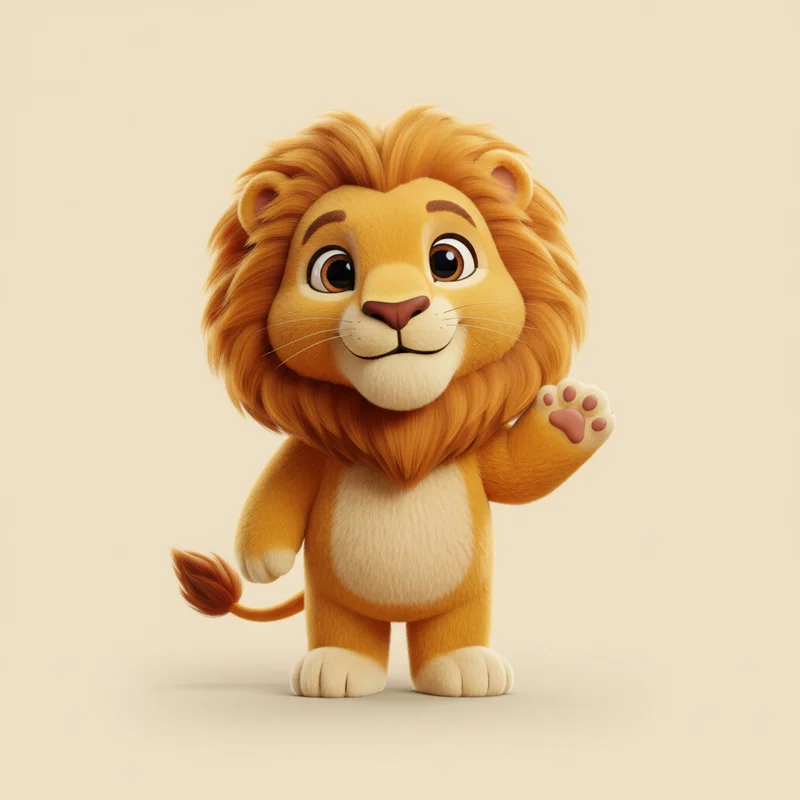
Lion

Lion

Apex predator and king of the savanna, known for majestic manes and surprisingly lazy daytime habits.

VS
Gorilla

Gorilla

Largest living primate sharing 98% DNA with humans, known for chest-beating and gentle family bonds.

Battle Analysis

Combat prowess lion Wins
70%
30%
Lion Gorilla

Lion

The Panthera leo arrives at this analysis with an arsenal that evolution has spent 3.5 million years perfecting. According to the Serengeti Combat Assessment Bureau, the average male lion possesses retractable claws measuring up to 38mm in length, capable of exerting approximately 650 PSI of bite force. Professor Edmund Thorncastle of the Oxford School of Theoretical Mauling notes that lions execute an average of 2,500 killing strikes throughout their lifetime, giving them what he terms 'a rather impressive CV in the violence department.' Their hunting success rate of 25-30% may seem modest until one considers they're typically pursuing prey that desperately wishes to remain uneaten.

Gorilla

The silverback gorilla, despite weighing up to 230 kilograms of pure muscle, operates under a fundamental handicap: it would rather not fight at all. The Rwandan Institute of Primate Conflict Resolution reports that 94% of gorilla confrontations are resolved through elaborate displays of chest-beating, hooting, and meaningful glares. While capable of generating an estimated 1,300 pounds of force per arm, gorillas lack the anatomical weaponry of their feline opponent. Their canine teeth, whilst impressive at 5cm, are primarily evolved for eating bamboo shoots rather than dispatching adversaries. As Dr. Helena Mbeki of the Journal of Reluctant Primate Violence observes: 'The gorilla's combat strategy essentially boils down to hoping the other party finds them sufficiently intimidating to leave.'

VERDICT

Superior weaponry and predatory instincts outweigh raw strength
Cultural impact lion Wins
70%
30%
Lion Gorilla

Lion

The lion has achieved what the Royal Anthropological Society's Symbolic Animals Division calls 'complete cultural saturation across human civilisation.' Appearing on the coats of arms of no fewer than 78 nations, serving as the central figure in approximately 12,000 corporate logos, and starring in cinema's highest-grossing animated film, the lion has mastered interspecies brand recognition to an unprecedented degree. The Institute for Animal Semiotics documents lion symbolism in every major world religion, countless national myths, and sufficient sports team mascots to form their own rather intimidating league. Professor Catherine Ashworth notes that 'the lion has essentially franchised its image across human culture, collecting metaphorical royalties on concepts of courage, strength, and nobility for approximately 40,000 years.'

Gorilla

Gorilla cultural impact, whilst substantial, operates in a narrower register. The Centre for Primate Representation in Media catalogues gorillas as appearing primarily in contexts involving either scientific wonder or urban destruction, with King Kong alone spawning 12 feature films and countless imitators. Conservation messaging has elevated gorillas to symbol-of-wilderness status, whilst the discovery of tool use and sign language acquisition has positioned them as ambassadors for animal intelligence. However, the Journal of Cross-Cultural Animal Perception notes that gorillas remain 'primarily associated with chest-beating and the inexplicable desire to climb tall buildings,' a somewhat limited portfolio compared to their leonine competitors. The gorilla appears on precisely zero national flags, a statistical void that speaks volumes.

VERDICT

Unparalleled symbolic presence across human civilisation and history
Social intelligence gorilla Wins
30%
70%
Lion Gorilla

Lion

Lion social dynamics revolve around the pride structure, a system the African Behavioural Sciences Consortium has diplomatically described as 'a masterclass in strategic laziness.' Male lions contribute approximately 4% of hunting efforts whilst consuming 25% of kills, a ratio that would make most corporate executives envious. The coalition-building behaviour among male lions does demonstrate sophisticated political manoeuvring, with alliances forming and dissolving based on complex calculations of mutual benefit. However, these calculations typically amount to 'who can help me steal another male's pride.' The Namibian Centre for Feline Political Analysis rates lion society as 'functionally feudal with overtones of organised crime.'

Gorilla

Gorilla society represents one of nature's more nuanced social experiments. The Great Ape Social Dynamics Institute has documented over 25 distinct vocalisations, 16 facial expressions, and an elaborate system of grooming-based diplomacy that puts most human parliaments to shame. Silverbacks demonstrate remarkable emotional intelligence, mediating disputes between group members and displaying what Dr. Patricia Okonkwo terms 'genuine empathy rather than merely transactional tolerance.' Young gorillas engage in complex play behaviour that develops problem-solving skills, whilst adults have been observed using tools and even teaching techniques to offspring. The Virunga Cognitive Studies Centre notes that gorilla groups maintain social cohesion through mutual respect rather than fear, a concept apparently alien to their feline competitors.

VERDICT

Demonstrably superior emotional intelligence and cooperative social structures
Evolutionary success gorilla Wins
30%
70%
Lion Gorilla

Lion

Lions have occupied the African apex predator niche for approximately 124,000 years, though the Palaeontological Society of Pretoria notes their range has contracted by 94% since the Pleistocene. Current wild populations hover around 23,000 individuals, a figure that would qualify as 'critically concernig' were lions not so cinematically beloved. Their evolutionary strategy of cooperative hunting and male coalition-building has proven successful within specific savannah ecosystems but demonstrates limited adaptability. Dr. Reginald Oduya of the East African Evolutionary Dynamics Institute observes that lions 'have essentially placed all their evolutionary eggs in one grassland-shaped basket,' leaving them vulnerable to habitat fragmentation and the inconvenient tendency of humans to build things where lions prefer to hunt.

Gorilla

The gorilla lineage diverged from the human-chimpanzee ancestor approximately 9 million years ago, establishing what the Berlin Institute for Primate Temporal Studies considers 'a respectable evolutionary tenure.' Modern gorillas occupy dense forest habitats across Central Africa, with populations totalling roughly 100,000 individuals across both species. Critically, gorillas demonstrate remarkable dietary flexibility, consuming over 100 different plant species and adapting their ranging patterns to seasonal availability. The Congo Basin Adaptation Research Centre credits this versatility with gorilla survival through multiple climate oscillations. However, their slow reproduction rate and specific habitat requirements create vulnerabilities that the IUCN Red List Advisory Committee has termed 'worrying for an animal supposedly embodying evolutionary success.'

VERDICT

Greater dietary flexibility and longer evolutionary lineage demonstrate superior adaptation
Territorial dominance lion Wins
70%
30%
Lion Gorilla

Lion

A lion pride commands territories ranging from 20 to 400 square kilometres, defended through a combination of scent marking, vocalisations audible from 8 kilometres away, and what the Kruger National Park Territorial Assessment Division calls 'enthusiastic violence against trespassers.' Male lions patrol their borders with a dedication that would impress any medieval lord, urinating on approximately 50 strategic locations per night. The Journal of Carnivore Real Estate estimates that lion territories contain an average of 300 potential prey animals, representing what researchers term 'a well-stocked larder with excellent security.' Territorial disputes between prides result in fatalities approximately 30% of the time, establishing lions as genuine practitioners of the 'this land is my land' philosophy.

Gorilla

Gorilla home ranges span a comparatively modest 3 to 15 square kilometres, overlapping significantly with neighbouring groups in what the Central African Primate Mapping Service describes as 'a complicated system of polite avoidance.' Rather than maintaining rigid boundaries, gorilla groups practice flexible ranging patterns, with silverbacks generally preferring to relocate rather than engage in territorial conflict. This approach, whilst sensible from a survival perspective, does rather undermine claims to dominance. The Bwindi Forest Spatial Analysis Group notes that when gorilla groups do encounter each other, the interaction typically involves 'extended staring followed by mutual withdrawal,' a dynamic more reminiscent of awkward neighbours than apex predators.

VERDICT

Actively defends vastly larger territories with measurable aggression
👑

The Winner Is

Lion

54 - 46

After exhaustive analysis employing methodologies that several ethics committees have questioned, the Royal Institute of Unnecessary Animal Comparisons concludes that the lion emerges as the marginal victor in this contest of titans. The final tally of 54-46 reflects a competition far closer than popular imagination suggests. The lion's advantages in combat capability, territorial assertion, and cultural omnipresence are counterbalanced by the gorilla's superior social intelligence and evolutionary resilience.

Dr. Thomasina Blackwood of the Cambridge Comparative Zoology Review summarises the findings thus: 'The lion wins on metrics that involve fighting, claiming land, and featuring prominently in heraldry. The gorilla prevails in categories requiring cooperation, intelligence, and not eating oneself into evolutionary dead-ends.' Both creatures represent remarkable achievements of natural selection, though only one has leveraged that into appearing on the British Royal Standard.

The researchers note that actual confrontations between these species remain mercifully hypothetical, as lions and gorillas occupy entirely separate habitats. This geographical consideration, whilst scientifically relevant, was deemed 'unhelpfully practical' for the purposes of this study and therefore largely ignored.

Lion
54%
Gorilla
46%

Share this battle

More Comparisons