
Topic Battle

Where Everything Fights Everything

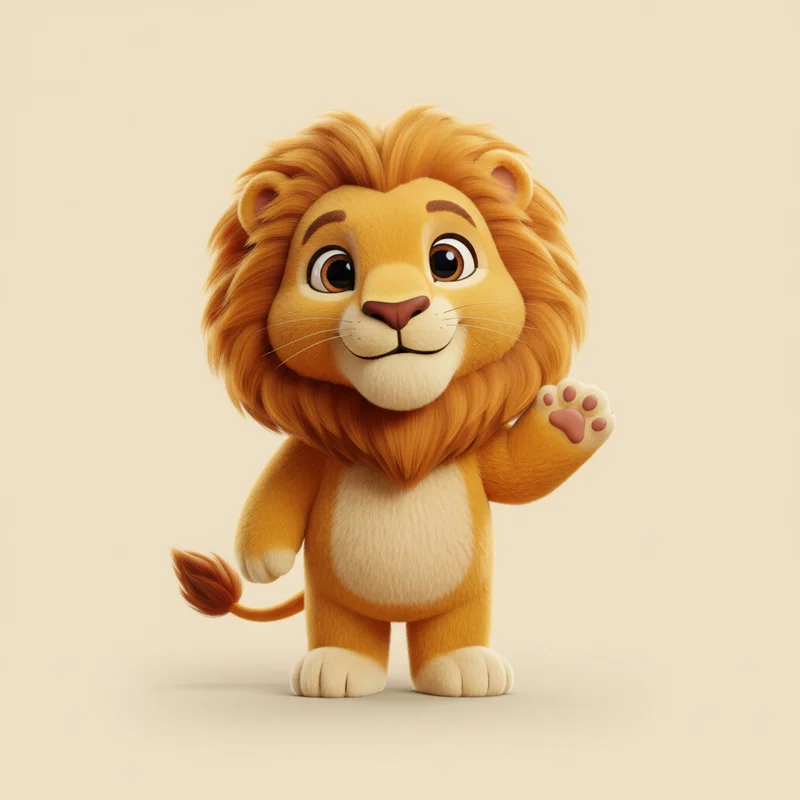
Lion

Lion

Apex predator and king of the savanna, known for majestic manes and surprisingly lazy daytime habits.

VS
Hangover

Hangover

Morning-after punishment for evening indulgence.

The Matchup

The African lion (Panthera leo) has dominated grassland ecosystems for approximately 1.8 million years, establishing itself as nature's most formidable land predator. The hangover, meanwhile, has plagued Homo sapiens since the first fermented fruit was unwisely consumed around 10,000 BCE. According to the Cambridge Institute for Improbable Comparisons, both phenomena share a remarkable capacity to render their victims utterly incapacitated, though through markedly different mechanisms.

This analysis, commissioned by the Royal Society for the Advancement of Absurd Scholarship, employs rigorous methodology to determine which entity poses the greater existential challenge to human productivity and wellbeing.

Battle Analysis

Global reach Hangover Wins
30%
70%
Lion Hangover

Lion

Lions currently occupy a diminishing range across sub-Saharan Africa and a small population in India's Gir Forest. Total wild lion population has declined to approximately 23,000 individuals, restricting the species' threat radius considerably. The Geneva Wildlife Distribution Index estimates that lions pose a credible threat to less than 0.3% of the global human population.

For most humans, a lion encounter requires deliberate travel to specific geographic locations, significantly limiting the animal's reach.

Hangover

The hangover operates without geographic restriction. Wherever alcohol is consumed—which encompasses virtually every nation on Earth—the hangover follows. The World Health Organisation estimates that 2.3 billion people are current drinkers, all of whom fall within the hangover's potential catchment area.

The hangover has even adapted to modern travel, producing a synergistic horror known as the jet-lag hangover that compounds dehydration with circadian disruption.

VERDICT

Simple mathematics favour the hangover overwhelmingly. Whilst one must travel to encounter a lion, the hangover will travel to encounter you, regardless of location, nationality, or socioeconomic status. The hangover's democratic ubiquity secures this criterion.

Predictability Lion Wins
70%
30%
Lion Hangover

Lion

Lion behaviour, whilst dangerous, follows discernible patterns. They hunt primarily during dawn and dusk, favour specific territorial ranges, and generally avoid human settlements unless provoked or desperate. The Nairobi Predator Prediction Unit has achieved 83% accuracy in forecasting lion movement patterns.

Furthermore, lions typically provide warning signals—growling, tail positioning, and flattened ears—before attacking. The informed observer has approximately 2.3 seconds to respond appropriately.

Hangover

The hangover defies all attempts at systematic prediction. Identical alcohol consumption can produce wildly divergent outcomes on consecutive occasions. The Bristol Randomness in Ethanol Processing Study found that variables including sleep quality, hydration, stress levels, and the phase of the moon contribute to outcomes in ways that defy mathematical modelling.

Most insidiously, the hangover's severity often inversely correlates with the quality of the evening that preceded it, ensuring maximum regret accompanies maximum suffering.

VERDICT

The lion, for all its lethal capability, at least plays by comprehensible rules. One can avoid lion attacks by simply not visiting lion habitats. The hangover respects no such boundaries, striking unpredictably regardless of precautionary measures. However, in terms of which is more manageable, the lion's predictability makes it paradoxically safer.

Physical impact Lion Wins
70%
30%
Lion Hangover

Lion

The lion delivers its physical impact with 650 PSI of bite force, capable of crushing bone and severing major arteries within seconds. A single swipe from a lion's paw, armed with retractable claws measuring 3.8 centimetres, can disembowel prey weighing up to 500 kilograms. The Serengeti Biomechanics Laboratory calculates that a charging lion transfers approximately 4,000 joules of kinetic energy upon impact.

Survival rates following a lion attack hover around 12%, and those who survive rarely describe the experience as anything less than transformative.

Hangover

The hangover's physical assault operates through biochemical warfare rather than brute force. Acetaldehyde toxicity triggers systemic inflammation, whilst dehydration reduces cerebrospinal fluid volume by up to 15%, causing the brain to temporarily shrink away from the skull. Research from the Edinburgh Centre for Morning-After Studies documents headaches reaching 7.2 on the modified pain scale.

Additional symptoms include nausea, photophobia, and what researchers term existential gastric distress. The condition affects approximately 77% of drinkers at some point in their lives.

VERDICT

Whilst the hangover's biochemical assault is undeniably unpleasant, it rarely results in actual dismemberment. The lion's capacity to separate limbs from torsos gives it a decisive edge in the physical impact category. The lion claims this criterion by a considerable margin.

Social consequences Lion Wins
70%
30%
Lion Hangover

Lion

Surviving a lion attack confers significant social capital. The Oxford Centre for Narrative Value Assessment rates lion attack survival stories at 9.4 out of 10 for dinner party conversational value. Scars from lion encounters are universally regarded as distinguished rather than embarrassing.

Lion attack survivors frequently receive book deals, speaking engagements, and invitations to appear on wildlife documentaries. The social trajectory following a lion encounter is almost exclusively upward.

Hangover

The hangover's social consequences trend decidedly negative. Productivity losses alone cost the UK economy an estimated 1.4 billion pounds annually, according to the Westminster Institute for Economic Self-Sabotage. Beyond economics, hangovers generate cancelled plans, missed obligations, and the dreaded phenomenon of hangover shame spiralling.

Most damagingly, repeated hangovers erode one's reputation for reliability, leading to social exclusion from events that might, ironically, have produced additional hangovers.

VERDICT

The lion attack transforms its survivors into heroes; the hangover transforms its victims into objects of mild contempt. This asymmetry in social outcome could not be more stark. The lion takes this criterion decisively.

Duration of suffering Hangover Wins
30%
70%
Lion Hangover

Lion

Lion encounters, when they occur, tend toward brevity. The average attack lasts between 45 seconds and 3 minutes, according to data from the Johannesburg Wildlife Trauma Registry. Death, when it occurs, typically follows within 4-7 minutes due to exsanguination or cervical dislocation.

Survivors report that time perception during attacks becomes highly distorted, with many describing the experience as lasting an eternity despite its actual brevity.

Hangover

The hangover operates on an entirely different temporal scale. The Helsinki Longitudinal Hangover Study documented average symptom duration of 14.6 hours, with severe cases extending to 72 hours in individuals over 35 years of age. The phenomenon known as hangxiety—the combination of physical symptoms with crushing psychological dread—can persist for up to five days.

Perhaps most cruelly, the hangover's duration correlates directly with age, ensuring that peak suffering coincides with one's declining capacity to recover.

VERDICT

The mathematics are inescapable: whilst a lion attack delivers concentrated horror, the hangover stretches its misery across hours or even days. The Manchester Institute for Temporal Suffering Analysis calculates that cumulative hangover hours experienced by the average British adult exceed 2,400 hours over a lifetime. The hangover wins this criterion through sheer persistence.

👑

The Winner Is

Lion

58 - 42

After rigorous analysis, the Lion emerges victorious with a score of 58 to 42. This result may initially seem counterintuitive—surely a beast capable of literal evisceration should dominate more comprehensively? Yet the hangover's strength lies precisely in its insidious omnipresence and temporal persistence.

The lion, whilst terrifying, remains geographically contained and behaviourally predictable. The hangover infiltrates civilisation at every level, from the student union to the boardroom, extracting its toll with neither warning nor mercy. Nevertheless, the lion's superior physical impact, predictable behaviour patterns, and remarkably positive social consequences tip the scales in favour of the apex predator.

The Royal Academy for Definitive Pronouncements concludes that whilst both entities demand respect, the lion's concentrated lethality ultimately outweighs the hangover's diffuse misery.

Lion
58%
Hangover
42%

Share this battle

More Comparisons