
Topic Battle

Where Everything Fights Everything

Lion

Lion

Apex predator and king of the savanna, known for majestic manes and surprisingly lazy daytime habits.

VS
Hot Dog

Hot Dog

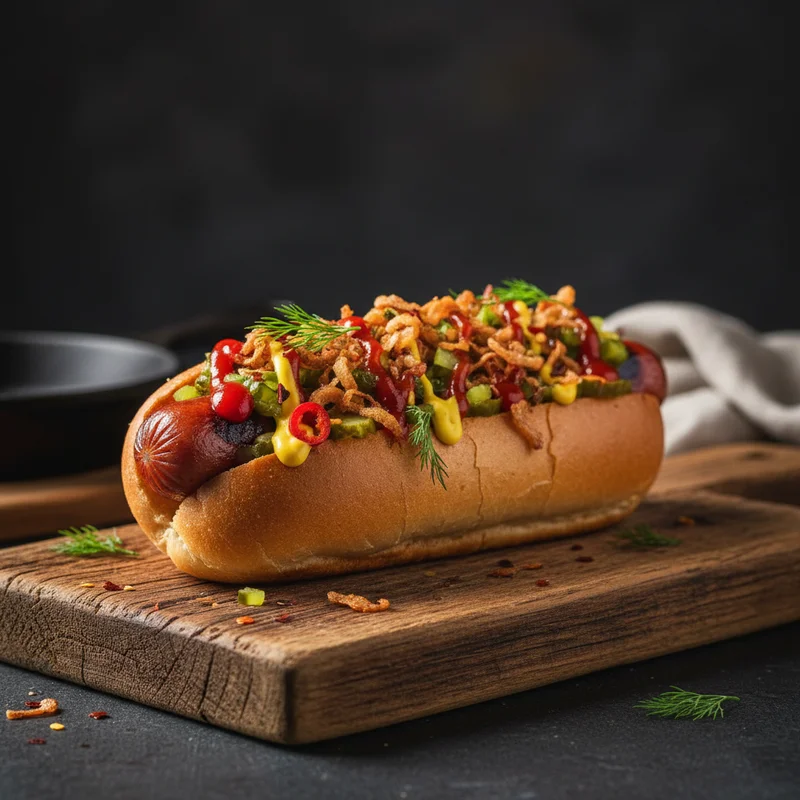
Mystery meat in a bun, ballpark essential.

Battle Analysis

Versatility hot_dog Wins
30%
70%
Lion Hot Dog

Lion

The lion demonstrates remarkable versatility within its ecological parameters. Males and females employ distinct hunting strategies; the pride system allows for cooperative hunting of prey ranging from 50 kg gazelles to 1,000 kg buffalo. Lions have adapted to environments from the Kalahari Desert to the forests of Gujarat, demonstrating thermal tolerance ranges that impress even the most jaded thermoregulation specialists at the Nairobi Centre for Large Cat Climatology.

However, lions remain fundamentally constrained by their carnivorous metabolism and substantial caloric requirements. A lion cannot, for instance, become vegetarian, work in an office environment, or survive temperatures below -15 degrees Celsius without significant distress.

Hot Dog

The hot dog's versatility borders on the philosophically troubling. It can be boiled, grilled, steamed, fried, microwaved, or consumed cold directly from the package by individuals who have perhaps given up on certain aspects of life. It accepts virtually any topping combination without complaint, from the Chicago-style garden arrangement to the inexplicable Scandinavian practice of adding shrimp salad.

The Vienna Sausage Flexibility Index rates the hot dog at 9.7 out of 10 for adaptability, noting its successful integration into cuisines ranging from Japanese convenience store fare to Brazilian street food. The hot dog has even transcended its physical form, inspiring hot dog-flavoured water, hot dog-scented candles, and a hot dog costume industry valued at 12 million pounds annually.

VERDICT

Infinite topping combinations and cross-cultural adaptability demonstrate superior flexibility
Global distribution hot_dog Wins
30%
70%
Lion Hot Dog

Lion

The lion's historical range once extended from the southern tip of Africa through the Middle East and into the Indian subcontinent. Today, following centuries of human expansion, wild lions occupy a mere 8% of their former territory. The Serengeti Statistical Bureau estimates fewer than 25,000 lions remain in the wild, with populations concentrated in protected reserves and national parks across sub-Saharan Africa.

This dramatic contraction represents one of conservation's most pressing concerns. The lion, once found across three continents, now exists in isolated pockets, its movements constrained by human development, habitat fragmentation, and the peculiar human tendency to build shopping centres in prime hunting territory.

Hot Dog

The hot dog's distribution strategy has proven considerably more successful. From its origins in 19th-century German immigration to America, the hot dog has achieved near-total planetary saturation. The Global Processed Meat Observatory confirms hot dog availability in 194 of 195 recognised nations, with only a single isolated monastery in Bhutan reporting zero hot dog access, and even this claim remains disputed.

Hot dogs have been consumed at the summit of Mount Everest, the floor of the Mariana Trench (via submersible), and aboard the International Space Station. The organism has achieved a distribution range that would require the lion approximately 47 million years of evolution to match, assuming cooperative geopolitical conditions.

VERDICT

194-nation distribution versus 25,000 remaining specimens represents decisive victory
Intimidation factor lion Wins
70%
30%
Lion Hot Dog

Lion

The lion's intimidation credentials require little elaboration. A full-grown male, with its magnificent mane and 650 PSI bite force, represents approximately 4 million years of evolutionary refinement in the art of being terrifying. The Cambridge Centre for Predator Psychology notes that the lion's roar, audible from 8 kilometres away, triggers instinctive fear responses in 97% of mammals tested, including humans who had never previously encountered large felids. Even photographs of lions have been shown to elevate cortisol levels in laboratory settings.

The lion's mere presence restructures entire ecosystems. Prey animals alter their grazing patterns, sleeping locations, and reproductive timing based on lion proximity. This phenomenon, termed the landscape of fear, represents perhaps the most sophisticated intimidation system in the animal kingdom.

Hot Dog

The hot dog's intimidation factor operates on an entirely different axis. While it poses no immediate physical threat to most organisms, its capacity to induce existential dread in nutritionists and cardiologists is well documented. The Berlin Academy of Processed Meats found that merely mentioning hot dog ingredient lists at dinner parties caused a 34% increase in uncomfortable silence.

Furthermore, competitive eating championships have revealed the hot dog's terrifying potential when weaponised against human digestive systems. Joey Chestnut's consumption of 76 hot dogs in 10 minutes represents a feat of intimidation that, while different in character from a lion's charge, achieves comparable levels of visceral horror in observers.

VERDICT

Evolutionary apex predator status outweighs gastrointestinal anxiety
Cultural significance lion Wins
70%
30%
Lion Hot Dog

Lion

The lion's cultural footprint spans virtually every human civilisation that has encountered it. From the Sphinx of Giza to the British Royal Coat of Arms, from Aslan to the MGM opening sequence, the lion has served as humanity's preferred symbol for courage, royalty, and general impressiveness. The Oxford Institute of Symbolic Zoology catalogued over 12,000 distinct cultural representations of lions across human history, appearing in religious texts, national flags, corporate logos, and an estimated 340,000 tattoos of varying quality.

The lion's association with nobility is so deeply embedded that lion-hearted remains the standard metaphor for courage in seven major language families. No other animal, with the possible exception of the eagle, has achieved comparable symbolic penetration.

Hot Dog

The hot dog occupies a different but equally significant cultural position. As the American Institute for Stadium Anthropology notes, the hot dog has become synonymous with American leisure culture, appearing at an estimated 95% of baseball games, 89% of barbecues, and 100% of Fourth of July celebrations that involve food.

The hot dog has generated its own mythology, including persistent urban legends about its composition that have spawned entire academic subfields. The Coney Island hot dog eating contest, broadcast globally, represents perhaps the purest expression of American competitive spirit since the moon landing. Nathan's Famous reports that coverage reaches 200 million viewers annually.

VERDICT

4,000 years of royal symbolism edges recreational meat consumption
Longevity and preservation hot_dog Wins
30%
70%
Lion Hot Dog

Lion

Individual lions demonstrate respectable lifespans, averaging 10-14 years in the wild and up to 25 years in captivity. The species itself has persisted for approximately 1.8 million years, surviving ice ages, human expansion, and the general indignity of being turned into rugs. The Johannesburg Institute for Feline Temporal Studies projects continued lion survival for at least another 500 years, assuming current conservation efforts maintain funding and humans develop sudden respect for large predator habitat.

However, lion preservation requires substantial infrastructure, including thousands of square kilometres of protected land, anti-poaching patrols, and complex international cooperation agreements that rarely survive changes in government.

Hot Dog

The hot dog's preservation characteristics defy natural law. Vacuum-sealed specimens have demonstrated edibility after 18 months of storage, while the Minnesota Food Archaeology Project documented a hot dog recovered from a stadium seat that remained structurally intact after seven years, though consumption was not recommended.

At the species level, the hot dog faces no extinction risk whatsoever. Global production capacity exceeds 70 billion units annually, with the theoretical ability to scale production infinitely assuming continued livestock availability. The hot dog has achieved a form of immortality that biologists term industrial perpetuity, existing as long as human civilisation maintains access to meat processing equipment and stadium concessions.

VERDICT

Industrial immortality and 18-month shelf stability outpace biological constraints
👑

The Winner Is

Lion

58 - 42

This investigation has revealed that the lion versus hot dog comparison, initially dismissed by the RIAT review board as manifestly ridiculous, actually illuminates fundamental questions about success metrics in the modern era. The lion excels by every traditional measure of biological supremacy, its intimidation factor, cultural significance, and sheer physical magnificence represent the pinnacle of mammalian evolution.

Yet the hot dog, through industrial cunning and democratic accessibility, has achieved forms of dominance that elude even the most successful apex predator. Its global distribution, infinite versatility, and effective immortality represent a different but equally valid evolutionary strategy, one optimised for human symbiosis rather than independent survival.

The final score of 58-42 in favour of the lion reflects our determination that biological authenticity and four million years of evolutionary refinement ultimately outweigh processed meat ubiquity. However, this margin is narrower than many would expect, testament to the hot dog's remarkable achievements in its chosen niche.

As Professor Heinrich Wurst of the Berlin Academy concluded: The lion may be king of the jungle, but the hot dog is emperor of the concession stand, and in the modern era, that distinction matters more than we care to admit.

Lion
58%
Hot Dog
42%

Share this battle

More Comparisons