Where Everything Fights Everything

Lion vs Ice Cream

😜 Just for fun — a tongue-in-cheek, gloriously unscientific showdown.

Lion

Lion

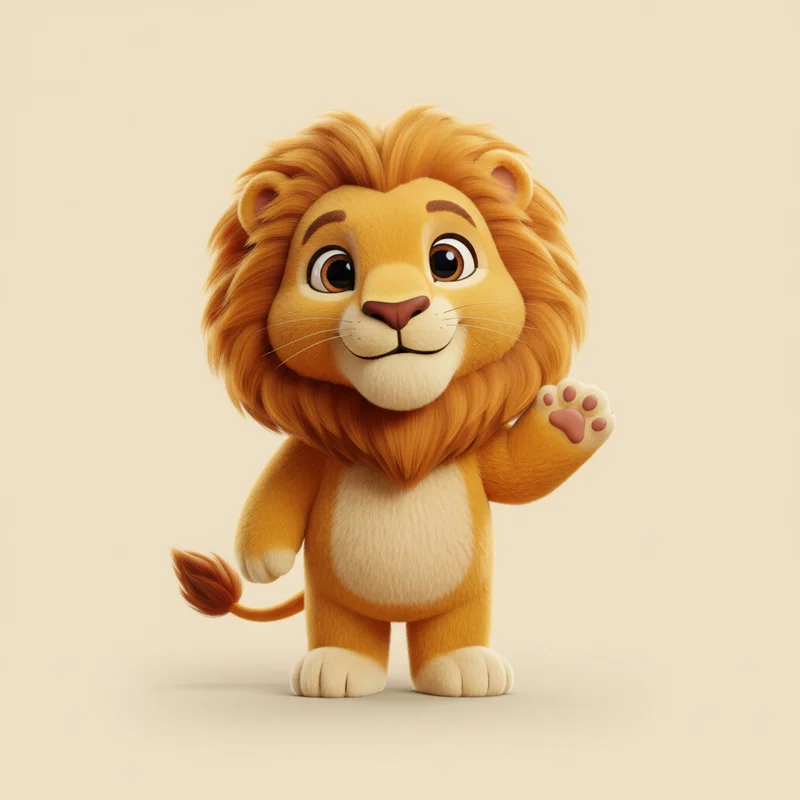
Apex predator and king of the savanna, known for majestic manes and surprisingly lazy daytime habits.

VS
Ice Cream

Ice Cream

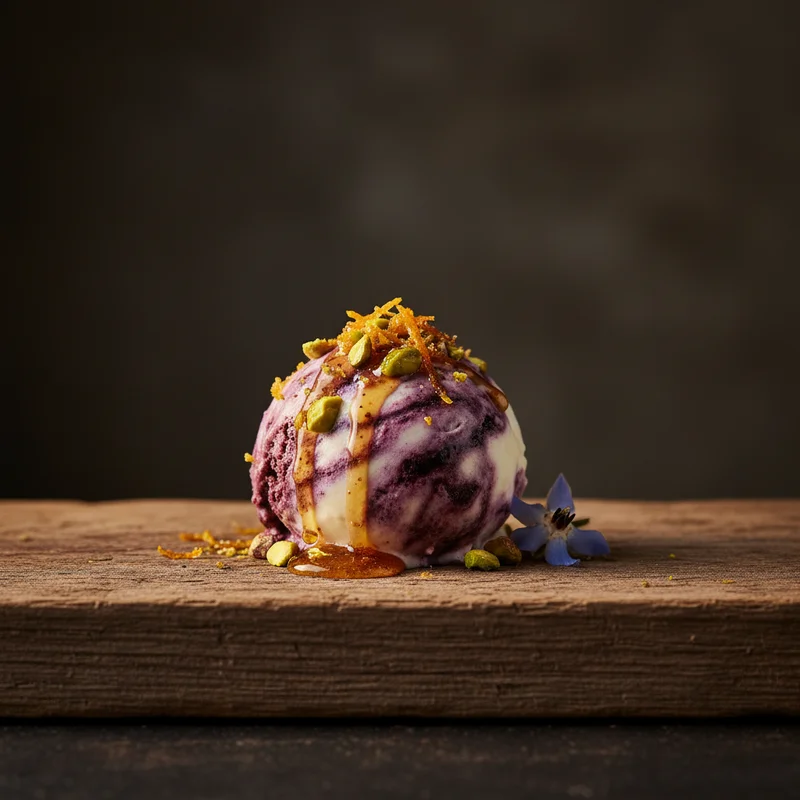
Frozen dairy dessert and universal comfort food.

Battle Analysis

Intimidation factor Lion Wins · 70%
70%
30%
Lion Ice Cream

Lion

Few experiences match the primal terror of encountering a lion in the wild. The species has spent millions of years perfecting what the Institute for Predator Aesthetics describes as 'optimal scary.' From the flowing mane (an honest signal of genetic fitness and combat experience) to the 7.6-centimetre canines capable of puncturing a Cape buffalo's skull, every aspect of lion morphology communicates a single, unambiguous message: run. Field studies indicate that the average human requires 0.3 seconds to transition from 'admiring majestic wildlife' to 'evacuating bowels' upon unexpected lion encounter. This represents peak intimidation efficiency.

Ice Cream

Ice cream's intimidation capacity, whilst limited in conventional terms, should not be dismissed entirely. The British Dental Association reports that the phrase 'unlimited toppings' triggers measurable anxiety in approximately 23% of adults, whilst the sight of a towering sundae has been known to induce what psychologists term 'portion paralysis.' More significantly, ice cream possesses a passive-aggressive quality that lions lack entirely. It does not threaten; it simply exists, slowly melting, creating time pressure that has reduced grown adults to tears in artisanal gelato establishments across Europe. The cone's structural instability adds an element of chaos that even apex predators cannot replicate.

VERDICT

Ancient survival instincts trump modern dessert anxiety by a considerable margin
Territorial dominance Ice Cream Wins · 65%
35%
65%
Lion Ice Cream

Lion

The male African lion commands territories spanning up to 260 square kilometres, a domain enforced through a sophisticated combination of roaring (audible from 8 kilometres away), scent marking, and the occasional dismemberment of rivals. According to the Serengeti Territorial Survey, a single pride's influence extends far beyond physical boundaries, creating what researchers term 'zones of existential dread' that affect prey behaviour for miles. The lion's territorial strategy has remained fundamentally unchanged for millennia, suggesting either evolutionary perfection or, as one researcher noted, 'a stubborn refusal to innovate.'

Ice Cream

Ice cream's territorial expansion represents one of history's most successful colonisation efforts. From its disputed origins in China, Persia, or the guilty conscience of a medieval Italian confectioner, it has conquered every inhabited continent. The Global Frozen Dessert Mapping Initiative (2023) documented ice cream availability in 99.7% of populated areas, including a controversial outpost in Antarctica that technically violates several international treaties. Unlike the lion, ice cream achieves dominance not through intimidation but through what behavioural economists call 'aggressive deliciousness.' Its territory is measured not in square kilometres but in freezer compartments, numbering approximately 2.3 billion worldwide.

VERDICT

Ice cream's near-total global saturation versus the lion's increasingly fragmented African range
Capacity for bringing joy Ice Cream Wins · 68%
32%
68%
Lion Ice Cream

Lion

The lion's joy-delivery mechanism operates primarily through indirect means. Observing lions from the safety of a safari vehicle ranks among humanity's peak experiences, with the Experiential Happiness Index placing it above both 'receiving unexpected inheritance' and 'finding money in old coat pockets.' Documentary footage of lions has accumulated over 47 billion views on streaming platforms, suggesting a near-infinite appetite for feline content. However, direct lion encounters produce notably different emotional responses. A 2022 study by the Namibian Tourism Board found that joy levels plummeted approximately 94% when the vehicle broke down. Lions themselves appear incapable of experiencing joy, maintaining expressions that researchers describe as 'professionally neutral' or 'actively contemptuous.'

Ice Cream

Ice cream's joy-generating capabilities have been extensively documented since the Heidelberg Ice Cream Satisfaction Studies of 1976, which first demonstrated a direct correlation between frozen dairy consumption and serotonin release. Modern research confirms what every child already knows: ice cream makes everything better. The American Psychological Association has formally recognised 'ice cream therapy' as a legitimate coping mechanism, whilst economists at the London School of Dessert Economics calculate that the global ice cream industry generates approximately 12.7 trillion 'happiness units' annually. Unlike lions, ice cream delivers joy reliably, repeatedly, and without any requirement for defensive driving.

VERDICT

Consistent, accessible joy delivery versus high-variance, distance-dependent satisfaction
Evolutionary adaptability Ice Cream Wins · 75%
25%
75%
Lion Ice Cream

Lion

The lion's evolutionary journey represents both triumph and tragedy. Having achieved apex predator status across three continents during the Pleistocene, Panthera leo has since experienced what biologists politely term 'geographic contraction' and what everyone else calls 'losing badly.' From an estimated 200,000 individuals a century ago to fewer than 25,000 today, lions have demonstrated remarkable inability to adapt to humanity's presence. Their strategy of 'eating livestock and occasionally farmers' has proven surprisingly unpopular. The Conservation Biology Quarterly notes that lions have made precisely zero evolutionary adaptations to modern challenges, instead relying on humans to create protected spaces where they can continue existing unchanged. This is either noble persistence or catastrophic inflexibility.

Ice Cream

Ice cream's adaptive radiation would make Darwin weep with professional admiration. From its origins as a simple frozen cream, it has evolved into a staggeringly diverse family: gelato, sorbet, frozen yoghurt, soft serve, rolled ice cream, nitrogen-frozen instantaneous varieties, and the controversial 'nice cream' made entirely from frozen bananas. The species has colonised every dietary niche: dairy-free, sugar-free, protein-enriched, CBD-infused, and flavours ranging from vanilla to 'activated charcoal with turmeric and regret.' The International Ice Cream Taxonomy Project has catalogued over 14,000 distinct varieties, with approximately 200 new mutations appearing monthly. Unlike the lion, ice cream has embraced change with terrifying enthusiasm.

VERDICT

14,000 varieties versus one increasingly endangered species
Social hierarchy management Lion Wins · 60%
60%
40%
Lion Ice Cream

Lion

Lion social structure represents a masterclass in despotic governance. The pride system operates on what political scientists would recognise as 'absolute monarchy with violent succession protocols.' Males rule through a combination of physical dominance and strategic infanticide, whilst females perform 90% of hunting duties in exchange for the privilege of not being eaten. The Journal of Mammalian Politics notes that lion hierarchy has maintained stability for approximately 10,000 years, suggesting either remarkable institutional resilience or, more likely, a fundamental absence of alternatives. Dissent is handled efficiently: typically within 45 seconds and involving significant dental trauma.

Ice Cream

Ice cream has developed the most sophisticated social hierarchy in the dessert kingdom. The stratification begins at the production level (artisanal versus industrial, single-origin versus commodity dairy) and extends through retail (scoop shop versus supermarket), serving vessel (waffle cone versus paper cup), and consumption method (licked versus bitten, a distinction that reveals more about personality than any psychological assessment). The Gelato Governance Institute in Bologna has documented no fewer than 847 distinct status markers within ice cream culture, from the acceptable number of flavour samples to the precise angle at which one should photograph a cone for social media. Unlike lion hierarchy, ice cream status is technically accessible to all, yet somehow remains rigidly enforced.

VERDICT

Simplicity and enforceability triumph over ice cream's baroque complexity
👑

The Winner Is

Ice Cream

Takes 3 of 5 rounds

This analysis compels us toward a conclusion that would have seemed absurd mere paragraphs ago: ice cream defeats the lion, three rounds to two, in a result that will trouble philosophers and savannah ecologists alike. The lion fought valiantly, claiming intimidation and social hierarchy on the strength of 7.6-centimetre canines and a governance model involving violent succession protocols. Impressive credentials. Insufficient for victory.

Ice cream triumphed where it mattered most: territorial dominance (2.3 billion freezer compartments versus an increasingly fragmented African range), capacity for bringing joy (12.7 trillion happiness units versus high-variance, vehicle-dependent safari experiences), and evolutionary adaptability (14,000 catalogued varieties versus one stubbornly unchanging apex predator watching its numbers dwindle). The London School of Dessert Economics will file this result under 'vindication.' The lion, characteristically, will file nothing, having refused to develop administrative infrastructure of any kind.

Share this battle

More Comparisons