Where Everything Fights Everything

Lion vs Rubber Duck

😜 Just for fun — a tongue-in-cheek, gloriously unscientific showdown.

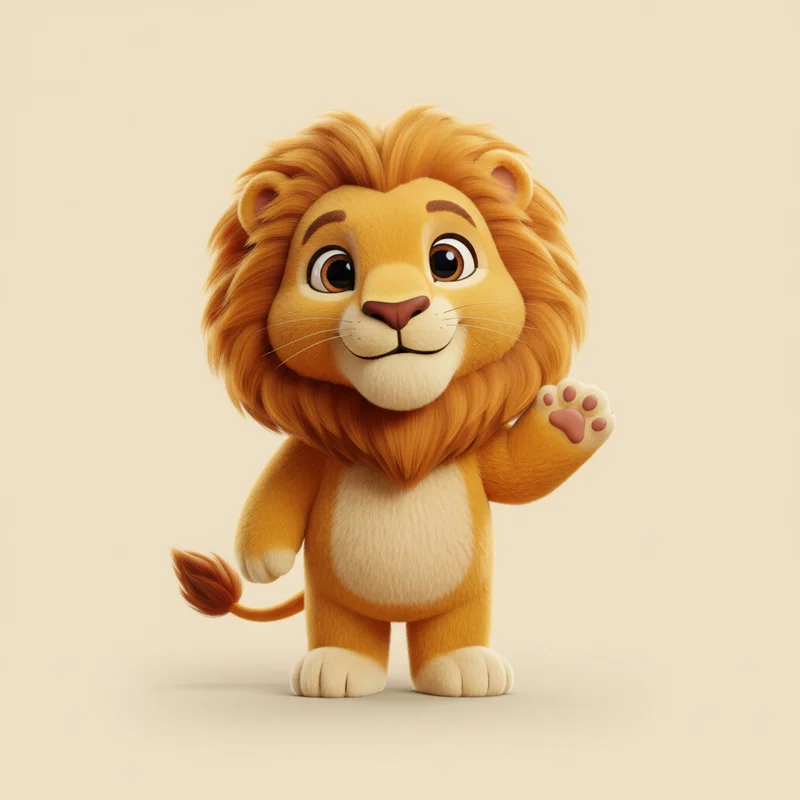
Lion

Lion

Apex predator and king of the savanna, known for majestic manes and surprisingly lazy daytime habits.

VS
Rubber Duck

Rubber Duck

A debugging tool for programmers and bathtub companion for everyone else. This hollow yellow bird has solved more software bugs than most senior engineers. Also squeaks.

Battle Analysis

Durability Rubber Duck Wins
🏆 Rubber Duck takes this round

Lion

The lion's durability, while impressive by biological standards, remains constrained by the limitations of organic matter. A lion in peak condition may live 10 to 14 years in the wild, though captive specimens occasionally reach 20 years. During this time, the creature requires constant caloric intake, is vulnerable to disease, parasites, and territorial conflicts with competing males.

The lion's organic construction, whilst magnificently engineered by natural selection, ultimately succumbs to entropy. Teeth wear down, muscles atrophy, and the once-mighty predator becomes prey itself. No lion has survived longer than three decades, a rather modest timespan in the grand scheme of material persistence.

Rubber Duck

The rubber duck's relationship with durability enters philosophical territory. Crafted from polyvinyl chloride or natural rubber, a well-maintained specimen can theoretically persist for decades. Museum collections contain rubber ducks from the 1940s that remain structurally sound, their painted smiles undimmed by the passage of time.

More significantly, the rubber duck has achieved a form of distributed immortality. As individual ducks degrade, new specimens emerge from factories in their millions. The concept of the rubber duck, unlike any individual lion, cannot meaningfully die. It has transcended biological vulnerability through industrial reproduction.

VERDICT

Industrial reproduction grants the rubber duck a form of species immortality beyond organic reach.
Comfort level Rubber Duck Wins
🏆 Rubber Duck takes this round

Lion

The lion's capacity to provide comfort remains highly contextual and, for most humans, entirely theoretical. While certain wildlife researchers describe profound experiences of connection with observed lion prides, proximity to wild lions typically produces cortisol spikes rather than relaxation. The lion is magnificent to observe, but distinctly uncomfortable to encounter.

Even in symbolic form, the lion represents struggle, conquest, and dominance, qualities that inspire awe rather than serenity. One does not cuddle with lion imagery; one is challenged by it.

Rubber Duck

The rubber duck was purpose-built for comfort. Its rounded form, deliberately absent of threatening features, triggers what developmental psychologists term the baby schema response. The human brain, upon encountering the rubber duck's proportions, releases small quantities of oxytocin and dopamine, neurochemicals associated with bonding and pleasure.

In the warm waters of a bath, accompanied by its yellow companion, even the most stressed executive experiences a momentary return to childhood security. The rubber duck has achieved something the lion never could: it makes humans feel genuinely, physically safe. In an anxiety-ridden modern world, this represents power of a most underestimated sort.

VERDICT

The rubber duck's engineered harmlessness provides measurable psychological comfort the lion cannot.
Global recognition Rubber Duck Wins
🏆 Rubber Duck takes this round

Lion

The lion enjoys substantial global recognition, appearing on the coats of arms of numerous nations, sports team logos, and corporate branding. Its symbolic association with courage, royalty, and strength transcends cultural boundaries, though actual lion populations are now confined to sub-Saharan Africa and a small population in India's Gir Forest.

Despite this symbolic ubiquity, the average urban dweller may live their entire life without encountering a real lion. The creature exists primarily as an abstract concept, a photograph, or an exhibit behind reinforced glass. Its recognisability, while high, operates largely in the realm of the theoretical.

Rubber Duck

The rubber duck has achieved something far more remarkable: physical omnipresence. From Tokyo to Toronto, Moscow to Melbourne, the yellow bath companion has established beachheads in bathrooms across every continent save Antarctica. Even there, research stations have been documented containing specimen examples.

The rubber duck's global recognition extends beyond mere familiarity. It has become a universal symbol of childhood, cleanliness, and the peculiar comfort humans derive from anthropomorphised objects. Its image requires no explanation in virtually any culture. The lion may roar across the savanna, but the rubber duck squeaks across civilisations.

VERDICT

Mere symbol status cannot compete with physical presence in billions of homes worldwide.
Intimidation factor Lion Wins
🏆 Lion takes this round

Lion

The lion's intimidation credentials require little elaboration. Weighing up to 250 kilograms and capable of reaching speeds of 80 kilometres per hour in short bursts, the male lion possesses a mane that serves primarily as a visual display of dominance. Its roar, audible from eight kilometres away, has been triggering fight-or-flight responses in prey animals since the Pleistocene epoch.

Field observations confirm that most creatures, including humans, experience immediate physiological stress responses when confronted with a lion. The creature's very presence in an ecosystem reshapes the behaviour patterns of dozens of species, a phenomenon ecologists term the landscape of fear.

Rubber Duck

The rubber duck's approach to intimidation operates through fundamentally different mechanisms. Rather than inspiring terror, it projects an unsettling cheerfulness that some psychologists have described as aggressively benign. Its fixed smile remains unchanged regardless of circumstances, a quality that becomes increasingly disturbing upon extended contemplation.

In bathroom settings, the rubber duck assumes a position of quiet surveillance, its painted eyes maintaining perpetual watch over human vulnerability. One cannot help but note that while lions inspire momentary panic, the rubber duck's presence during one's most private moments represents a more sustained psychological intrusion into daily life.

VERDICT

The lion's capacity to trigger genuine survival instincts remains unmatched by synthetic waterfowl.
Environmental impact Lion Wins
🏆 Lion takes this round

Lion

As an apex predator, the lion plays a crucial role in ecosystem regulation. By controlling herbivore populations, lions prevent overgrazing and maintain the delicate balance of savanna ecosystems. Their kills provide sustenance for dozens of scavenger species, from hyenas to vultures to beetles. The lion's presence ripples through food webs in ways scientists are still mapping.

Ecologically, the lion represents a keystone species. Remove the lion, and entire ecosystems begin to unravel. The creature's environmental significance extends far beyond its physical footprint, making it indispensable to the African landscapes it inhabits.

Rubber Duck

The rubber duck's environmental impact tells a rather different story. Composed primarily of petroleum-derived plastics, each rubber duck represents a small but measurable contribution to microplastic pollution. When disposed of improperly, these cheerful yellow vessels join the estimated 8 million tonnes of plastic entering Earth's oceans annually.

The famous Friendly Floatees incident of 1992, in which a shipping container spilled 28,000 bath toys into the Pacific, demonstrated the rubber duck's remarkable persistence in marine environments. Scientists tracked these ducks for over 15 years as they circumnavigated the globe, providing valuable data on ocean currents whilst simultaneously highlighting synthetic material pollution.

VERDICT

Ecosystem stewardship outweighs the rubber duck's problematic contribution to plastic pollution.
👑

The Winner Is

Rubber Duck

Takes 3 of 5 rounds

When the final tallies are examined, an unexpected pattern emerges. The lion, for all its evolutionary magnificence, remains constrained by biology. It requires food, territory, and the cooperation of pride members. It ages, weakens, and ultimately expires. Its habitat shrinks yearly as human development encroaches upon wild spaces. The African lion population has declined by approximately 43% over the past two decades.

The rubber duck faces no such limitations. It requires no sustenance, claims territory in every bathroom regardless of climate or geography, and reproduces through the inexorable processes of global manufacturing. While conservationists struggle to maintain lion populations above 20,000 individuals, rubber duck production exceeds 50 million units annually. By any metric of species success, the rubber duck demonstrates superior adaptive fitness for the Anthropocene epoch.

This analysis does not diminish the lion's grandeur. It merely acknowledges that grandeur alone does not determine dominance in the modern world. The rubber duck has conquered the most intimate spaces of human civilisation, achieved global distribution that would represent an ecological miracle for any organic species, and done so whilst projecting unwavering cheerfulness. In the quiet sovereignty of the bathroom, the rubber duck reigns supreme.

Share this battle

More Comparisons