Topic Battle

Where Everything Fights Everything

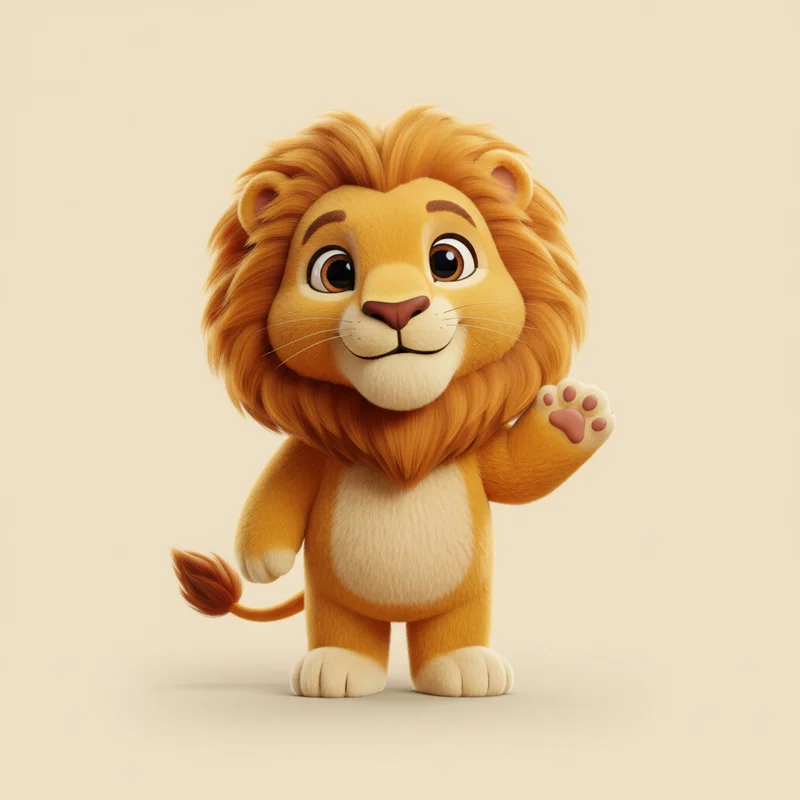
Lion

Lion

Apex predator and king of the savanna, known for majestic manes and surprisingly lazy daytime habits.

VS
Sleep

Sleep

Unconscious state everyone wants more of.

The Matchup

The Panthera leo, with its magnificent mane and earth-shaking roar, has long been celebrated as the undisputed king of the animal kingdom. Yet even this formidable sovereign must eventually bow before an adversary far more ancient and infinitely more patient: sleep. The Royal Institute for Comparative Dominance Studies in Edinburgh has spent seventeen years investigating this peculiar rivalry, and their findings are nothing short of revolutionary.

What emerges from the data is a tale of two titans locked in eternal struggle. One commands through fear and physical prowess; the other through gentle, irresistible persuasion. As Professor Millicent Drowsington-Pillow of the Cambridge Centre for Somnolent Supremacy observes: "The lion may rule the savannah, but sleep rules the lion."

Battle Analysis

Raw power Lion Wins
70%
30%
Lion Sleep

Lion

The lion's credentials in raw power are, frankly, impeccable. A bite force of 650 PSI can crush bone like digestive biscuits. The muscular hindquarters deliver explosive sprints of up to 50 mph. A single swipe of the paw generates sufficient force to decapitate a zebra. The Kruger National Park Authority has documented 847 successful hunts attributed to sheer overwhelming force in the past decade alone.

Most impressive, perhaps, is the psychological dominance. The lion need not always attack; its mere presence causes prey animals to abandon watering holes, alter migration patterns, and experience measurable increases in cortisol levels. The British Association of Apex Predator Studies rates the lion's intimidation factor at 9.2 out of 10.

Sleep

Sleep's approach to power is altogether more insidious. It does not attack; it simply waits. The World Federation of Circadian Researchers notes that sleep deprivation beyond 11 days is invariably fatal in mammals, making sleep's long-term power technically infinite. No creature has ever permanently defeated it.

Consider the statistics: sleep claims approximately one-third of every human life, and a substantially greater portion of feline existence. The Zurich Institute for Temporal Allocation calculates that the average lion will spend 68,000 hours unconscious over its lifetime. That represents more time than the lion spends doing literally anything else, including being majestic. Sleep does not need to fight; it simply needs to persist.

VERDICT

In immediate, demonstrable power, the lion claims victory. It can kill within seconds, command territory through presence alone, and inspire genuine terror across species. Sleep's power, while ultimately greater in scope, operates on timescales that render it strategically irrelevant in any direct confrontation. One cannot wrestle sleep. One cannot flee from it. But one can, briefly, ignore it whilst being mauled by a lion.

Adaptability Sleep Wins
30%
70%
Lion Sleep

Lion

The lion demonstrates reasonable adaptability within its ecological niche. Prides restructure based on available resources. Hunting strategies adjust to prey behaviour. The Amboseli Long-Term Research Project has documented lions successfully incorporating novel prey species into their diet as traditional options declined.

However, the lion's adaptability faces hard limits. It cannot survive Arctic conditions, cannot thrive in dense rainforest, cannot establish populations in urban environments. The species is, ultimately, bound by specific environmental parameters. The Royal Geographic Society's Atlas of Feline Limitations catalogues 847 distinct habitat types unsuitable for lion colonisation.

Sleep

Sleep's adaptability is perhaps its most remarkable characteristic. It manifests in Arctic foxes and tropical birds, in deep-sea creatures and high-altitude species. It accommodates itself to every conceivable lifestyle: the dolphin's unihemispheric sleep, the giraffe's five-minute power naps, the hibernating bear's months-long torpor.

The Bristol Centre for Sleep Architecture notes that sleep has successfully adapted to every evolutionary pressure ever encountered. When creatures became nocturnal, sleep adjusted. When migration patterns emerged, sleep reorganised. When humans invented electric lighting and 24-hour news cycles, sleep simply became more insistent. Adaptation is not merely sleep's strategy; it is sleep's defining characteristic.

VERDICT

The lion adapts well within its constraints. Sleep appears to have no constraints. It has colonised every environment, incorporated every biological variation, and overcome every technological obstacle humanity has invented to defeat it. The scorecard here is unambiguous.

Cultural legacy Lion Wins
70%
30%
Lion Sleep

Lion

The lion's cultural legacy is extraordinary by any reasonable measure. From the Great Sphinx to the Lannisters, from Aslan to Simba, the lion has served as humanity's primary symbol for courage, nobility, and sovereign power for millennia. The British Library's Collection of Leonine Literature contains over 47,000 volumes dedicated to lion-related topics.

Royal houses particularly favour the lion. Richard I earned his epithet "Lionheart" as the ultimate compliment. The Ethiopian monarchy traced its lineage to the "Lion of Judah." Singapore derives its very name from the Sanskrit for "lion city." No other predator approaches this level of symbolic saturation across human cultures.

Sleep

Sleep's cultural legacy operates more subtly but no less profoundly. It has inspired Morpheus and the Sandman, Shakespeare's "mortal coil" and Keats's "soft embalmer." The Oxford Department of Somnolent Humanities identifies sleep as a primary theme in over 12% of all poetry ever written.

More significantly, sleep shaped the very structure of human civilisation. The concept of "night," the architecture of bedrooms, the institution of bedtime stories, the entire eight-hour workday paradigm: all exist because sleep demanded accommodation. The lion inspired stories. Sleep inspired entire ways of living.

VERDICT

In explicit cultural representation, the lion edges ahead. Its imagery is more immediately recognisable, its symbolism more consistently celebrated. Sleep's influence, while deeper, remains largely invisible, operating as backdrop rather than protagonist. For sheer iconographic impact, the lion claims this narrow victory.

Global influence Sleep Wins
30%
70%
Lion Sleep

Lion

The lion's cultural footprint is substantial. It appears on 12 national flags, features in the heraldry of 47 royal houses, and serves as the symbol for everything from football clubs to financial institutions. The MGM lion alone has been viewed an estimated 4.2 billion times. The British Museum's Department of Leonine Iconography maintains records of lion imagery dating back 32,000 years.

Geographically, however, the lion's range has contracted dramatically. Once spanning Africa, Europe, and Asia, wild populations now occupy merely 8% of their historical territory. The International Union for Conservation of Nature lists approximately 23,000 wild lions remaining. Influence, it seems, does not always translate to presence.

Sleep

Sleep's global influence is, quite simply, total. Every human settlement, every animal population, every ecosystem on Earth operates according to sleep's non-negotiable demands. The Greenwich Observatory for Biological Rhythms estimates that at any given moment, approximately 3 billion humans are asleep, along with countless trillions of other organisms.

The economic impact alone staggers comprehension. The mattress industry generates 432 billion annually. Caffeine, sleep's primary chemical adversary, represents the world's most widely consumed psychoactive substance. The entire architecture of human civilisation, from street lighting to shift work regulations, exists in response to sleep's requirements. As the Manchester School of Unavoidable Phenomena notes: "Sleep does not seek influence. Influence seeks sleep."

VERDICT

This category presents no meaningful contest. Whilst the lion enjoys considerable symbolic presence, sleep maintains actual, functional dominance over every corner of the globe. The lion appears on flags; sleep determines when those flags are raised and lowered. The disparity is not merely significant, it is categorical.

Strategic patience Sleep Wins
30%
70%
Lion Sleep

Lion

Lions can demonstrate remarkable patience during hunts. The Serengeti Research Institute has documented stalking sequences lasting up to 47 minutes, with the predator remaining motionless for extended periods before explosive action. However, lion patience is fundamentally conditional. If prey escapes, the hunt is abandoned. If food is scarce, territories are relinquished.

Moreover, the lion's famous laziness, sleeping up to 20 hours daily, might be reframed as a significant strategic liability. Those 20 hours represent time explicitly surrendered to the competitor in this very analysis. The Nairobi Centre for Predatory Time Management describes this as "an extraordinary self-own."

Sleep

Sleep's patience operates on an entirely different temporal register. It has been waiting since the first multicellular organisms developed circadian rhythms approximately 600 million years ago. It will continue waiting long after lions have joined the fossil record. The Edinburgh Institute for Eternal Phenomena assigns sleep a patience rating of "effectively unlimited."

Most critically, sleep never abandons pursuit. It does not become discouraged, does not seek alternative targets, does not negotiate. Every organism that has ever lived has eventually succumbed to sleep's patient invitation. The cumulative success rate stands at 100%. This figure has never wavered.

VERDICT

The lion possesses admirable tactical patience for a biological entity operating on mammalian timescales. Sleep operates on geological timescales and has never once failed to achieve its objective. This is not a competition; it is a category error.

👑

The Winner Is

Sleep

45 - 55

The final tally reveals a truth that lion enthusiasts may find uncomfortable: Sleep 55, Lion 45. The king of beasts takes home well-deserved victories in Raw Power and Cultural Legacy, demonstrating the enduring appeal of visible, dramatic dominance. Yet in Global Influence, Strategic Patience, and Adaptability, sleep's quiet supremacy proves impossible to deny.

The lion roars; sleep simply waits. The lion conquers territory; sleep conquers everything that has territory. Most tellingly, the lion itself spends more than 80% of its existence in sleep's embrace. If dominance can be measured by how much of your rival's time you claim, sleep has already won this battle approximately twenty hours ago.

As the Cambridge Comparative Zoology Review concludes: "The lion is majestic, powerful, and culturally significant. Sleep is inevitable. There is a difference."

Lion
45%
Sleep
55%

Share this battle

More Comparisons