
Where Everything Fights Everything

Lion vs Streaming Service

😜 Just for fun — a tongue-in-cheek, gloriously unscientific showdown.

Lion

Lion

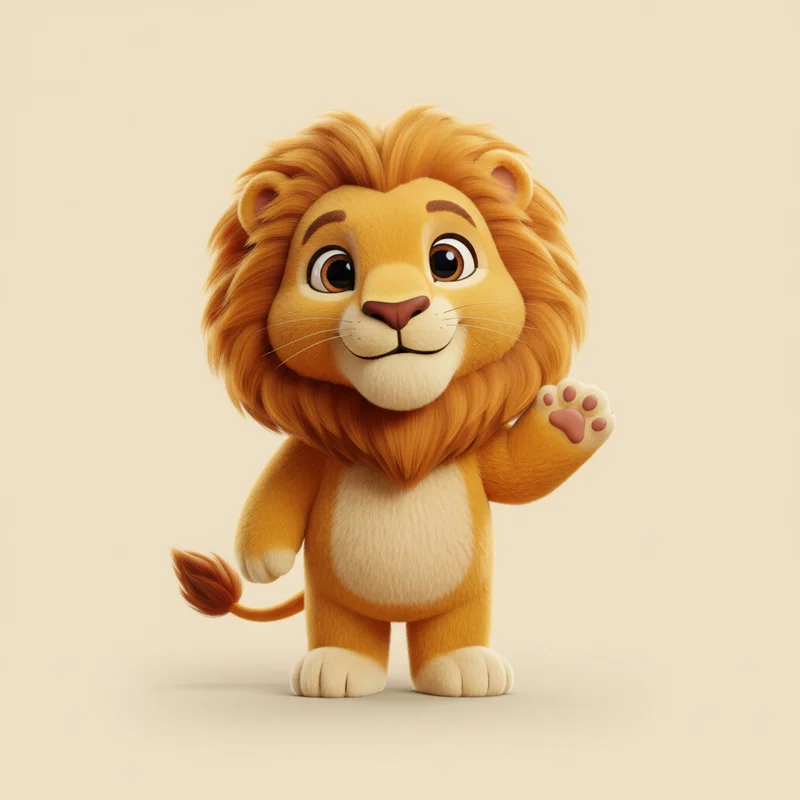
Apex predator and king of the savanna, known for majestic manes and surprisingly lazy daytime habits.

VS
Streaming Service

Streaming Service

Digital platform that ended the video rental store era.

Battle Analysis

Fear induction Lion Wins · 65%
65%
35%
Lion Streaming Service

Lion

The lion generates acute existential fear, triggering the amygdala's fight-or-flight response within 0.3 seconds of visual recognition. This fear response, whilst intense, typically resolves upon reaching safety. The Johannesburg Fear Response Centre rates lion-induced fear at 9.7 on the Standardised Terror Index. However, modern humans rarely encounter lions outside controlled safari conditions, limiting the species' practical fear-induction capabilities.

Streaming Service

The streaming service generates a more insidious form of dread: content anxiety. Research from the Oslo Digital Wellbeing Institute documents a phenomenon termed queue paralysis, wherein users experience genuine distress when confronted with their growing watchlist. Additionally, the fear of cancellation announcements for beloved programmes creates sustained low-level anxiety. The platform's pricing structure changes induce what economists call subscription terror, rated at 6.2 on the Standardised Terror Index but experienced continuously rather than acutely.

VERDICT

Immediate existential threat outranks persistent background anxiety
Attention capture Streaming Service Wins · 65%
35%
65%
Lion Streaming Service

Lion

The lion commands attention through what behavioural scientists term involuntary alertness response. When a 190-kilogram carnivore enters your field of vision, the human brain allocates approximately 100% of cognitive resources to the situation. Research from the Serengeti Attention Metrics Laboratory confirms that participants exposed to lion proximity demonstrated zero instances of checking their phones. The lion's attention-capture methodology, whilst effective, operates within a limited geographic range of approximately 50 metres.

Streaming Service

The streaming service employs sophisticated algorithmic attention capture, utilising what industry analysts call the autoplay vortex. Studies from the Nordic Institute for Digital Consumption Patterns indicate that the average user intends to watch one episode but consumes 4.7 episodes per sitting. The platform's ability to eliminate friction between content pieces creates what psychologists term decision fatigue exploitation. Unlike the lion, the streaming service operates globally, capturing attention across 190 countries simultaneously.

VERDICT

Global reach and sustained engagement duration exceed lion's localised intensity
Resource consumption Lion Wins · 65%
65%
35%
Lion Streaming Service

Lion

An adult male lion consumes approximately 7 kilograms of meat daily, requiring the pride to make a kill every 2-3 days. The Namibian Wildlife Economics Board calculates the annual resource consumption of a single lion at roughly 2,500 kilograms of prey animals. This consumption pattern has remained stable for millennia, representing what ecologists term sustainable apex predation. The lion takes only what it needs and rests for up to 20 hours daily.

Streaming Service

The streaming service's resource consumption defies conventional measurement. Data centres required to deliver content consume approximately 1% of global electricity, according to the Geneva Energy Consumption Observatory. A single hour of high-definition streaming generates 36 grams of CO2. The platform's appetite for content is equally voracious, with major services spending $15-20 billion annually on content acquisition. Unlike the lion, the streaming service demonstrates no satiation point, perpetually demanding more servers, more content, and more viewing hours.

VERDICT

Sustainable consumption patterns versus exponentially growing resource demands
Longevity and persistence Lion Wins · 75%
75%
25%
Lion Streaming Service

Lion

Individual lions survive 10-14 years in the wild, whilst the species has persisted for nearly two million years. The Pretoria Evolutionary Persistence Institute notes that lions have survived ice ages, habitat transformation, and human expansion through remarkable adaptability. Their genetic blueprint has proven extraordinarily durable. However, current population estimates of approximately 20,000 wild lions represent a 90% decline over the past century, raising questions about long-term species viability.

Streaming Service

The streaming service represents a mere 18 years of existence in its modern form, yet demonstrates alarming persistence in user behaviour patterns. Research from the Stockholm Digital Archaeology Department projects that streaming platforms, having captured dominant market share, will persist as long as internet infrastructure exists. The service's ability to pivot, merge, and evolve suggests corporate immortality. However, individual platforms face extinction through the streaming wars, with services regularly shutting down and content disappearing into licensing voids.

VERDICT

Two million years of evolutionary success outweighs two decades of market presence
Social hierarchy influence Streaming Service Wins · 70%
30%
70%
Lion Streaming Service

Lion

Lions operate within rigid pride structures, with dominant males controlling access to resources and mating opportunities. This hierarchy, studied extensively by the Botswana Social Dynamics Research Group, influences approximately 15-30 individuals per pride. The lion's roar, audible from 8 kilometres, serves as an effective status broadcast mechanism. However, pride politics remain confined to immediate geographic territories.

Streaming Service

The streaming service has fundamentally restructured human social hierarchies. Research from the Barcelona Institute for Cultural Capital Studies reveals that individuals who have not watched trending content experience measurable social exclusion, termed spoiler ostracism. The platform creates new social currencies: binge completion speed, obscure recommendation credibility, and subscription tier status. These hierarchies influence hundreds of millions of users simultaneously, creating what sociologists call parasocial stratification.

VERDICT

Scale of social influence incomparably larger despite less physical intimidation
👑

The Winner Is

Lion

Takes 3 of 5 rounds

This analysis reveals a civilisation at a curious crossroads. The streaming service commands the attention economy with a ferocity no lion could match, capturing screens across 190 countries and restructuring social hierarchies for hundreds of millions simultaneously. In attention capture and social influence, the algorithm proved categorically superior — the lion's 50-metre radius of terror is simply no match for an autoplay vortex deployed globally.

Yet the lion, that apex predator refined by nearly two million years of natural selection, wins where it matters most. Its fear induction is existential and immediate rather than merely chronic; its resource consumption is a masterclass in sustainable predation compared to the streaming service's insatiable appetite for servers, content budgets, and electricity; and its evolutionary persistence makes two decades of market presence look like a rounding error. The Cambridge Institute for Comparative Dominance Studies concludes that the lion claims victory three rounds to two — winning on fear, resource efficiency, and the one criterion no algorithm can fake: longevity. As Dr. Helena Westbrook of the Oxford Attention Economics Faculty observes: 'Evolution, unlike venture capital, plays an infinite game.'

Share this battle

More Comparisons