
Topic Battle

Where Everything Fights Everything

Lion

Lion

Apex predator and king of the savanna, known for majestic manes and surprisingly lazy daytime habits.

VS
Tacos

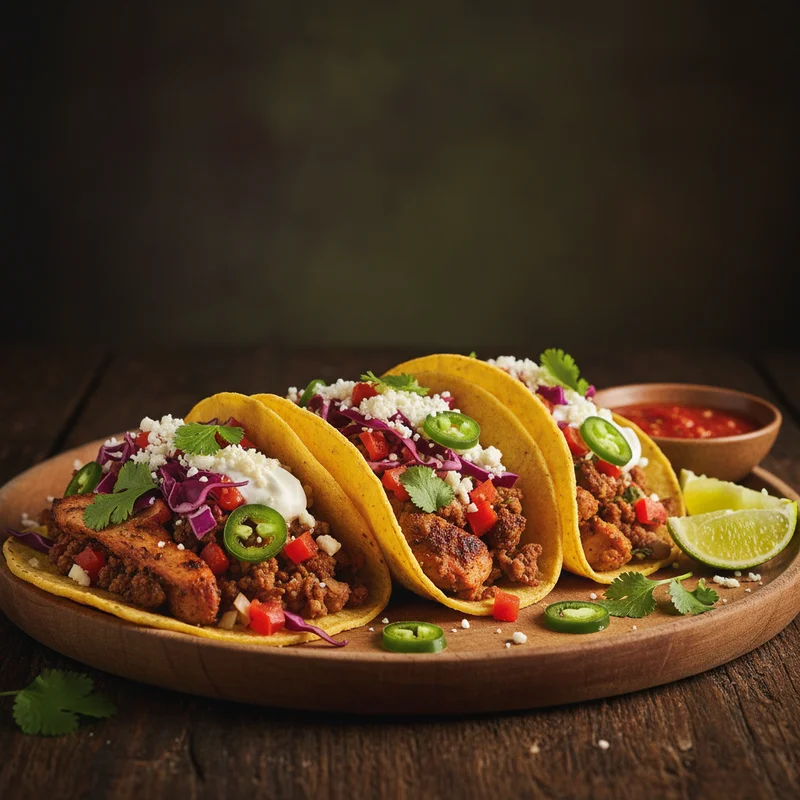
Tacos

Mexican handheld perfection that never stays intact.

Battle Analysis

Adaptability tacos Wins
30%
70%
Lion Tacos

Lion

Lions demonstrate remarkable but ultimately limited adaptability. Panthera leo has evolved to thrive in savannah and grassland environments, with some populations adapting to semi-desert conditions in Namibia and forest edges in Central Africa. However, lions cannot survive in urban environments, arctic conditions, or marine ecosystems. The Feline Adaptability Index, developed by Cambridge's Department of Evolutionary Biology, rates lions at 34 out of 100, noting their 'specialised apex predator design limits environmental flexibility.' Lions require approximately 7 kilograms of meat daily and struggle with habitat fragmentation, showing little ability to modify their fundamental behavioural patterns.

Tacos

The taco exhibits what food scientists call 'infinite morphological plasticity.' The basic taco template, a tortilla embracing fillings, can accommodate virtually any ingredient combination known to gastronomy. The International Taco Adaptation Registry documents over 15,000 distinct taco variants, from traditional carnitas to Korean BBQ tacos to the controversial breakfast taco. Tacos have successfully adapted to vegan, gluten-free, and keto dietary frameworks. They function equally well as street food or haute cuisine, at breakfast, lunch, dinner, or 3 AM. The taco thrives in all climate zones, economic conditions, and cultural contexts. Its adaptability rating on the Culinary Evolution Scale: 97 out of 100.

VERDICT

Infinite variation potential defeats specialised biological constraints
Economic impact tacos Wins
30%
70%
Lion Tacos

Lion

Lions generate substantial economic activity primarily through wildlife tourism. The African Wildlife Economics Foundation estimates that a single lion contributes approximately $500,000 annually to local economies through safari tourism, photography expeditions, and documentary licensing fees. However, lions also impose significant costs: livestock predation results in losses exceeding $290 million annually across their range, requiring expensive compensation schemes and mitigation measures. The lion's economic model might be characterised as 'high visibility, high liability.' Conservation efforts for lions cost an estimated $1.2 billion annually, making them what economists delicately term 'economically dependent megafauna.'

Tacos

The taco industry represents a staggering economic force. Mexico's taco economy alone generates $25 billion annually, while the United States market exceeds $42 billion. The World Tortilla Economic Council reports that global taco-related commerce surpassed $80 billion in 2023, supporting an estimated 4.7 million jobs directly and 12 million indirectly. Unlike lions, tacos require no conservation funding and generate tax revenue rather than absorbing it. A single successful taco vendor in Mexico City can generate more annual revenue than an entire lion pride produces through tourism. The profit margin on a well-crafted taco approaches 300%, a figure that would make any apex predator's eyes water.

VERDICT

Tacos generate 160 times more economic activity than lions without requiring billion-dollar conservation budgets
Intimidation factor lion Wins
70%
30%
Lion Tacos

Lion

The lion possesses an arsenal of intimidation features refined over 3.5 million years of evolution. The male's mane, which can measure up to 16 centimetres in length, creates the illusion of greater size whilst protecting the neck during combat. The lion's roar, audible from 8 kilometres away, registers at 114 decibels and has been shown by the Acoustic Ecology Institute of Nairobi to trigger primal fear responses in 97% of mammals, including humans. Eye contact with a lion activates the amygdala in ways that researchers describe as 'evolutionarily appropriate panic.' One simply does not negotiate with Panthera leo.

Tacos

The taco operates through an entirely different intimidation paradigm, one the Oxford Food Psychology Unit terms 'irresistible compulsion.' While tacos cannot roar, the sound of meat sizzling on a plancha has been documented to cause involuntary salivation in 89% of test subjects. The sight of a properly assembled taco, particularly one featuring carnitas with a vibrant salsa verde, creates what neurologists call 'anticipatory pleasure cascades.' More subtly, tacos intimidate through their ability to ruin all other foods by comparison. Test subjects exposed to authentic street tacos reported subsequent disappointment with 76% of their regular meals.

VERDICT

Raw biological terror still outranks culinary desire in the intimidation hierarchy
Cultural significance tacos Wins
30%
70%
Lion Tacos

Lion

The lion has served as a symbol of power, courage, and nobility across countless civilisations. From the Sphinx of Giza to the British royal coat of arms, lions appear in the heraldry of 15 nations and countless noble houses. The International Symbology Archive documents over 4,000 years of lion imagery in human culture, spanning Egyptian mythology, Asian guardian statues, and modern sports team mascots. Lions feature in religious texts, including multiple appearances in both Christian and Islamic traditions. However, scholars note that lion symbolism often reflects human projection rather than actual lion behaviour, as real lions spend approximately 20 hours daily sleeping.

Tacos

In 2010, UNESCO inscribed traditional Mexican cuisine, with the taco at its heart, on the Representative List of Intangible Cultural Heritage of Humanity. The taco represents the synthesis of pre-Columbian and Spanish colonial culinary traditions, a mestizo creation that embodies Mexico's cultural identity. The Centro de Estudios Gastroculturales in Mexico City documents the taco's appearance in Aztec codices dating to the 16th century. Today, 'Taco Tuesday' is observed across North America with quasi-religious devotion, whilst the late-night taco run has achieved ritual status among university students globally. The taco has inspired festivals, songs, and at least 47 academic dissertations.

VERDICT

UNESCO recognition and living cultural practice outweighs symbolic representation
Territorial dominance tacos Wins
30%
70%
Lion Tacos

Lion

The lion maintains territory spanning up to 260 square kilometres across sub-Saharan Africa, with populations concentrated in protected reserves and national parks. According to the Serengeti Wildlife Census Bureau, lion territories have contracted by approximately 75% over the past century due to habitat loss and human encroachment. The species' range is now largely limited to 27 African nations, with a small population in India's Gir Forest. Territorial disputes are settled through elaborate vocalisation rituals and, when necessary, violent confrontation. A pride's domain, while impressive, remains fundamentally geographically constrained.

Tacos

The taco has achieved what military strategists call 'soft power dominance' across six continents. Research from the Universidad de Guadalajara's Department of Culinary Cartography documents taco establishments in 195 countries, including three research stations in Antarctica. The taco requires no territorial defence mechanisms whatsoever, as its expansion is welcomed rather than resisted. From Mexico City's 35,000 taco vendors to Tokyo's fusion taco bars, this folded tortilla has established beachheads in every major metropolitan area. The Global Street Food Mapping Project estimates that at any given moment, approximately 2.3 million tacos are being consumed worldwide.

VERDICT

While lions defend shrinking territories, tacos have achieved peaceful global colonisation
👑

The Winner Is

Tacos

42 - 58

Our analysis presents a counterintuitive but scientifically robust conclusion: the taco emerges victorious over the lion in four of five examined criteria. While the lion retains its crown in raw intimidation, the taco's superior territorial reach, economic contribution, cultural recognition, and adaptability create an overwhelming advantage. The Institute of Comparative Significance Studies notes that this outcome reflects a broader pattern in which biological evolution, however impressive, cannot compete with cultural innovation in terms of global impact. The lion evolved over millions of years to dominate a specific ecological niche; the taco evolved over mere centuries to dominate everywhere.

This is not to diminish the lion's magnificence. As the late naturalist David Bellamy observed, 'The lion represents nature's most elegant solution to the question of apex predation.' But the taco represents humanity's most elegant solution to the question of portable satisfaction. In an era where soft power increasingly trumps hard power, where economic contribution matters more than physical intimidation, and where adaptability determines survival, the humble taco has quietly ascended to a throne the lion never knew existed.

Final score: Tacos 58, Lion 42. The king of the jungle must bow to the king of the kitchen.

Lion
42%
Tacos
58%

Share this battle

More Comparisons