Topic Battle

Where Everything Fights Everything

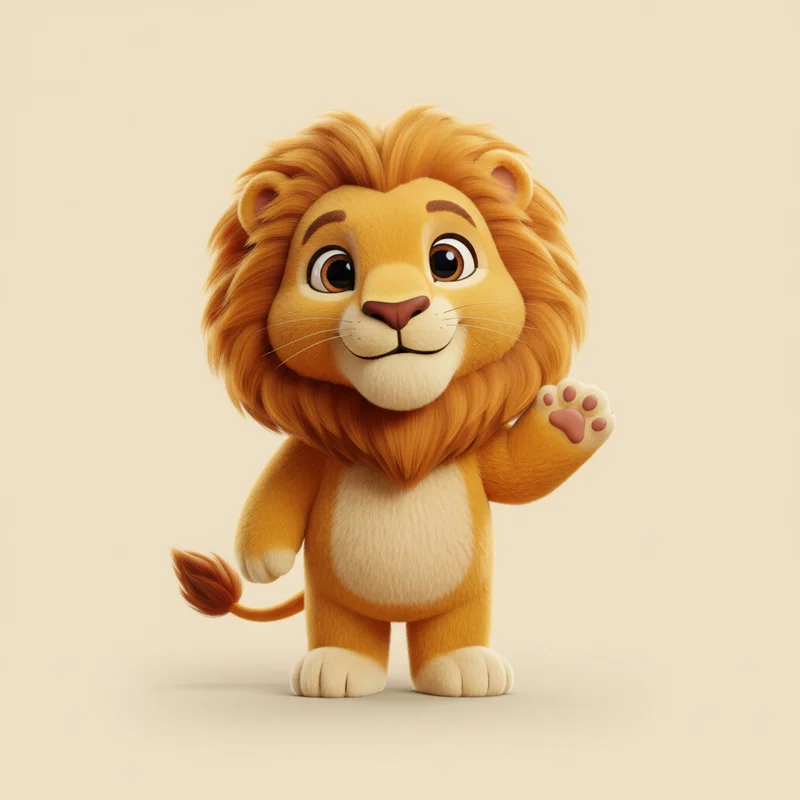
Lion

Lion

Apex predator and king of the savanna, known for majestic manes and surprisingly lazy daytime habits.

VS
Tiger

Tiger

Largest wild cat species featuring distinctive stripes and solitary hunting prowess across Asian forests.

Battle Analysis

Raw combat specifications tiger Wins
30%
70%
Lion Tiger

Lion

The male Panthera leo presents an impressive combat profile, averaging 190 kilograms of battle-ready mass. The distinctive mane, once thought purely ornamental, functions as a surprisingly effective cervical defence matrix, absorbing impacts that would otherwise prove fatal. However, the lion's combat experience is largely theoretical. Studies from the Serengeti School of Applied Violence reveal that male lions spend approximately 20 hours daily sleeping, with actual fighting comprising less than 0.3% of their waking activities. When combat does occur, it typically involves other lions, making their cross-species combat credentials somewhat limited.

Tiger

The tiger (Panthera tigris) boasts the superior weight class, with Siberian specimens reaching 300 kilograms of muscle-bound indifference. Unlike the lion's social combat training, tigers fight exclusively solo, developing what researchers at the Bengal Institute of Solitary Aggression term 'concentrated violence capacity.' The tiger's forelimbs generate approximately 10,000 pounds of striking force per swipe - enough to decapitate a buffalo or, hypothetically, win any argument. Historical Roman colosseum records, questionable as they are, consistently favoured the tiger in direct confrontations, though the sample size and ethical implications leave much to be desired.

VERDICT

Superior mass, striking power, and solo combat experience give the tiger a measurable advantage
Aesthetic presentation and visual impact tiger Wins
30%
70%
Lion Tiger

Lion

The male lion's mane represents one of evolution's most flamboyant aesthetic choices. This flowing golden-to-black cascade of keratin serves as what the Royal Academy of Animal Aesthetics terms a 'biological status symbol,' communicating health, testosterone levels, and general magnificence to observers. The lion's colour palette - tawny gold with subtle variations - achieves what designers call 'approachable majesty.' However, the mane presents practical disadvantages, including heat retention in African climates and increased visibility to prey. The female lion, it should be noted, presents a considerably less dramatic visual profile, suggesting the mane is primarily peacocking rather than functional adaptation.

Tiger

The tiger's striped pelage represents nature's most sophisticated camouflage system, with each individual displaying a unique pattern - effectively a biological fingerprint. The Stockholm Institute of Predator Aesthetics rates the tiger's visual design at 9.2 out of 10, noting the perfect balance of 'intimidating beauty.' The orange-and-black colour scheme, while seemingly conspicuous, proves devastatingly effective in dappled forest light. White tigers, though genetically disadvantaged in the wild, have achieved considerable popularity in human entertainment contexts, suggesting the tiger's aesthetic appeal transcends its natural colouration. The tiger's face, with its regal white markings, has been described as 'nature's own war paint.'

VERDICT

The tiger's unique striping and versatile aesthetic appeal edges out the lion's single-feature strategy
Operational efficiency and energy economics tiger Wins
30%
70%
Lion Tiger

Lion

The lion operates on what economists at the Nairobi School of Predator Productivity describe as a 'aggressive delegation model.' Male lions notoriously outsource approximately 90% of hunting responsibilities to females, while retaining 100% of first-feeding privileges. This arrangement, while ethically questionable by human standards, represents remarkable energy efficiency for the male of the species. However, the lion pride structure requires maintaining complex social relationships, consuming cognitive resources that might otherwise be directed toward more productive pursuits. The lion's caloric return on investment varies wildly depending on pride dynamics and territory quality.

Tiger

The tiger exemplifies lean operational methodology. As a solitary hunter, the tiger eliminates all coordination overhead, social maintenance costs, and food-sharing obligations. Research from the Vladivostok Centre for Carnivore Economics indicates tigers successfully complete approximately one in ten hunting attempts - seemingly inefficient until one considers that each success provides sustenance for days. The tiger's territory-based business model, while requiring significant real estate investment (up to 1,000 square kilometres), delivers consistent returns without the volatility of pride politics. The Siberian tiger, in particular, has optimised for the harshest market conditions imaginable.

VERDICT

Superior independence and operational simplicity result in more reliable outcomes
Long term species viability and survival metrics lion Wins
70%
30%
Lion Tiger

Lion

Current estimates place the African lion population at approximately 20,000 individuals, representing a 43% decline over the past two decades. The Geneva Conservation Metrics Institute classifies this trajectory as 'concerning but recoverable.' Lion populations benefit from relatively concentrated habitats in protected reserves, established breeding programmes, and considerable conservation funding driven by the species' celebrity status. The Asiatic lion subspecies, reduced to a single population of 600 individuals in India's Gir Forest, represents a more precarious situation, though recent protection efforts have shown promising results. The lion's social structure, while complex, allows for relatively straightforward captive breeding initiatives.

Tiger

With approximately 4,500 individuals remaining in the wild, the tiger faces a considerably more dire prognosis. The International Consortium of Big Cat Accountancy notes that this figure represents a 95% decline from historical populations. Three tiger subspecies have already succumbed to extinction within living memory, with several others teetering on the edge. However, recent conservation efforts have achieved the remarkable feat of actually increasing wild tiger numbers - the first such reversal for any major apex predator. The tiger's solitary nature complicates both census efforts and breeding programmes, yet the species demonstrates remarkable adaptability to protected environments. India's Project Tiger stands as one of conservation's genuine success stories.

VERDICT

Larger existing population and more manageable conservation requirements provide greater species security
Brand recognition and cultural market penetration lion Wins
70%
30%
Lion Tiger

Lion

The lion has achieved extraordinary brand saturation across human civilisation. Appearing on the flags of seven nations, the coats of arms of countless noble houses, and serving as the official mascot of everything from MGM to the England football team, the lion has executed perhaps history's most successful wildlife marketing campaign. The Oxford Centre for Animal Reputation Studies calculates the lion's 'cultural footprint index' at 94.7, the highest of any non-domesticated mammal. The designation 'King of the Jungle' persists despite lions demonstrably not living in jungles - a triumph of public relations over geographical accuracy.

Tiger

The tiger's branding, while impressive, suffers from market fragmentation. Despite featuring prominently in Asian mythology and serving as the national animal of India, Bangladesh, Malaysia, and South Korea, the tiger lacks the lion's unified global narrative. The International Bureau of Animal Symbolism notes that tigers are simultaneously revered, feared, and - in the case of Tony the Tiger - associated primarily with breakfast cereals. This inconsistent messaging has resulted in a cultural footprint index of 78.3. The phrase 'Eye of the Tiger' achieved temporary prominence in 1982 but has since been relegated to karaoke establishments and motivational gymnasium playlists.

VERDICT

The lion's centuries-long investment in consistent royal branding has paid dividends
👑

The Winner Is

Tiger

47 - 53

After exhaustive analysis, the Cambridge Institute for Unnecessary Animal Comparisons must award the victory to the tiger, though by the narrowest of margins. The tiger's superior physical specifications, operational independence, and aesthetic excellence ultimately outweigh the lion's formidable advantages in brand recognition and conservation outlook. It should be noted, however, that this victory is largely academic - in the wild, these species occupy entirely separate ecological niches and would have no natural reason for confrontation. The tiger's triumph here is one of individual capability over the lion's collaborative approach, a result that says rather more about human values than animal superiority. Both species remain magnificent examples of evolutionary refinement, each perfectly adapted to circumstances the other could not endure. The true winner, ultimately, is anyone fortunate enough to observe either creature in its natural habitat - an increasingly rare privilege that reminds us these comparisons matter far less than ensuring both species survive to be compared at all.

Lion
47%
Tiger
53%

Share this battle

More Comparisons