Topic Battle

Where Everything Fights Everything

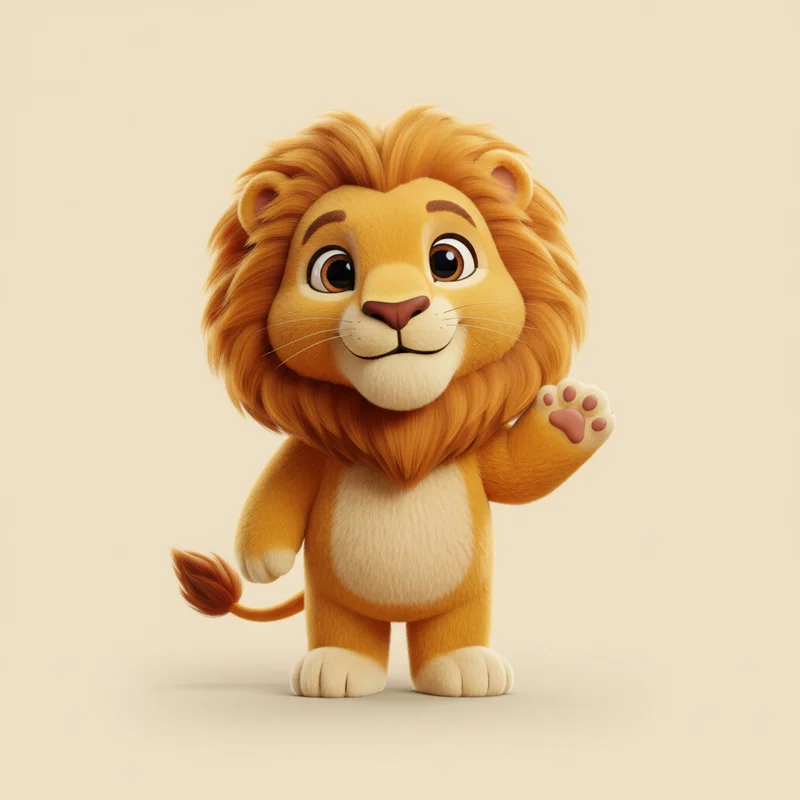
Lion

Lion

Apex predator and king of the savanna, known for majestic manes and surprisingly lazy daytime habits.

VS
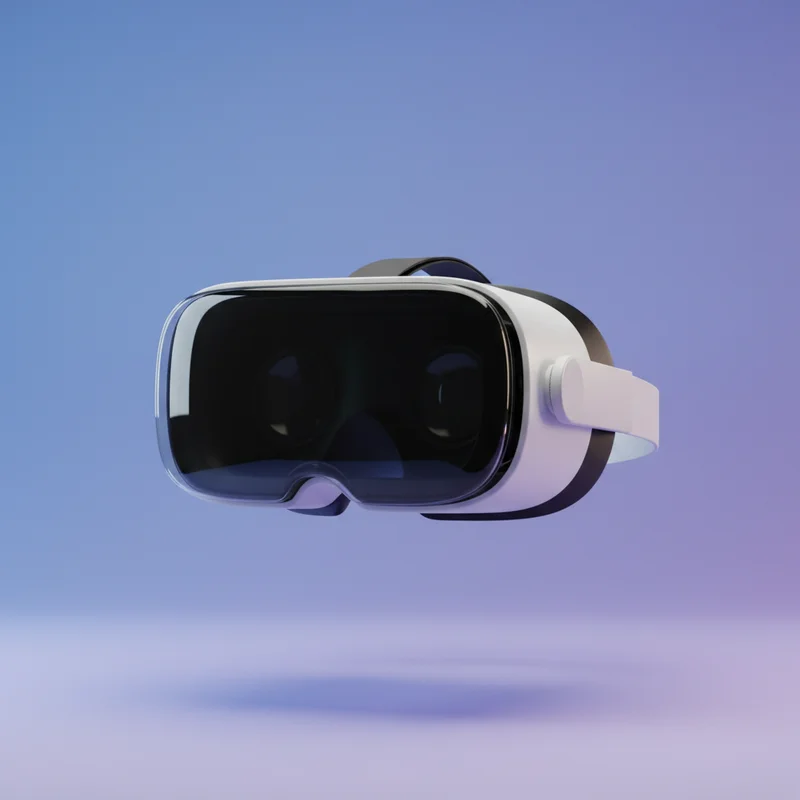
Virtual Reality

Virtual Reality

Immersive technology transporting users to digital worlds.

Battle Analysis

Intimidation factor lion Wins
70%
30%
Lion Virtual Reality

Lion

The lion's intimidation capabilities have been refined through millennia of evolutionary pressure. A male lion's roar can reach 114 decibels and travel up to 8 kilometres across open savannah, a distance that, according to the Serengeti Acoustic Research Station, gives potential prey approximately 4.7 minutes to contemplate their mortality before visual confirmation of doom. The mane alone, which can weigh up to 250 grams, serves as a visual amplification system that increases perceived head size by 40%, a marketing technique that predates human advertising by several million years.

Field observations from the Maasai Mara indicate that the mere presence of a lion causes a measurable cortisol spike in animals within a 500-metre radius, including vehicles containing tourists who presumably know they are inside metal boxes.

Virtual Reality

Virtual reality's approach to intimidation relies on what the Institute of Synthetic Emotions terms 'consequence-free terror.' Modern VR horror experiences can elevate heart rates to 150 beats per minute whilst the user remains in the objective safety of their living room, typically surrounded by crisp packets and charging cables. The technology exploits the brain's inability to distinguish between simulated and actual threats, a design flaw in human cognition that VR developers have weaponised with considerable enthusiasm.

However, a 2024 study by the Stockholm Reality Perception Laboratory found that VR intimidation suffers from what researchers term 'headset removal syndrome,' wherein users can eliminate 100% of perceived threat by simply lifting a piece of plastic from their face. Lions offer no comparable escape mechanism.

VERDICT

The inability to remove a lion by adjusting one's headgear represents a significant competitive advantage in the intimidation sector.
Immersive experience virtual_reality Wins
30%
70%
Lion Virtual Reality

Lion

Encountering a lion provides what the Journal of Involuntary Safari Experiences describes as 'total environmental immersion.' The experience engages all senses simultaneously: the visual impact of 3-inch canines, the olfactory notes of carnivore musk (described by researchers as 'concentrated consequence'), the auditory rumble that vibrates through one's skeleton, and the tactile sensation of one's own sweat. This 360-degree sensory engagement requires no external hardware, batteries, or software updates.

The lion experience also includes authentic environmental rendering, featuring actual African sunsets, genuine acacia trees, and real-time dust particle physics that no graphics card has yet replicated. Frame rate is locked at reality's native refresh rate, eliminating motion sickness entirely, though other forms of sickness may apply.

Virtual Reality

Virtual reality's immersive capabilities have advanced remarkably since the headache-inducing prototypes of the 1990s. Modern headsets offer 4K resolution per eye, 120Hz refresh rates, and haptic feedback systems that can simulate everything from gentle breezes to the sensation of being punched by a gorilla (available in 'Primate Pugilism VR,' rated 4.2 stars). The Meta Quest Pro and similar devices create experiences impossible in baseline reality, including flying, time travel, and successfully assembling IKEA furniture.

VR's immersion advantage lies in its infinite possibility space. One can experience being a lion, being chased by a lion, or being a lion chasing oneself, all without leaving the safety of what the industry optimistically calls 'guardian boundaries.' The Virtual Experiences Council reports that 73% of users forget they are wearing a headset within the first six minutes, though 100% remember when they walk into a wall.

VERDICT

VR offers infinite experiential possibilities, including simulating lion encounters without the associated mortality risk.
Operational maintenance virtual_reality Wins
30%
70%
Lion Virtual Reality

Lion

Maintaining a lion requires approximately 5 to 7 kilograms of meat daily, veterinary care capable of sedating an animal that could theoretically sedate you permanently, and enclosures meeting international standards that essentially require building a small fortress. The Association of Zoological Husbandry estimates the annual cost of lion maintenance at between 15,000 and 25,000 pounds, excluding the insurance premiums that actuaries describe as 'substantial.'

Lions also require social enrichment, as they are prone to what behavioural scientists term 'apex predator ennui,' a condition characterised by listless surveying of one's domain and occasional displays of power to maintain psychological wellbeing. This is, coincidentally, also how researchers describe senior faculty behaviour at most universities.

Virtual Reality

Virtual reality maintenance requirements appear modest by comparison: occasional firmware updates, lens cleaning with appropriate microfibre cloths, and the periodic untangling of cables that somehow knot themselves during storage despite remaining stationary. The Consumer Electronics Longevity Institute reports that the average VR headset has a functional lifespan of 3 to 5 years before becoming obsolete, a timeline that compares unfavourably with the lion's 15-year lifespan but favourably with the lion's requirement to not be eaten yourself during that period.

However, VR's true maintenance burden lies in its ecosystem dependency. The technology requires functioning electricity, compatible software platforms, adequate play space, and the continued solvency of technology companies, several of which have demonstrated concerning instability. Lions, by contrast, remain operational regardless of Mark Zuckerberg's strategic decisions.

VERDICT

Despite technological dependencies, VR's maintenance costs remain approximately 99.7% lower than lion husbandry.
Social status enhancement lion Wins
70%
30%
Lion Virtual Reality

Lion

Lions have served as symbols of power, courage, and nobility for approximately 32,000 years, appearing in cave paintings, royal heraldry, national flags, and the opening credits of major Hollywood studios. Ownership or association with lions historically indicated such elevated status that Roman emperors collected them specifically to demonstrate that they could. The Society of Heraldic Studies notes that lions appear on more coats of arms than any other animal, beating the eagle by a margin of approximately 15%.

In contemporary contexts, encountering a lion on safari generates social media content of significantly higher engagement than average. Research by the Digital Anthropology Institute indicates that photographs featuring lions receive 340% more interactions than standard holiday content, placing them in the same engagement tier as wedding announcements and pictures of unusually large vegetables.

Virtual Reality

Virtual reality's social status implications remain curiously ambivalent. Early adopters are perceived as technologically sophisticated, yet the image of an adult wearing a headset and gesturing at invisible objects carries, according to the Social Perception Laboratory at Oxford, 'a non-trivial stigma coefficient.' The technology occupies an uncomfortable space between impressive and embarrassing, particularly when household members enter rooms unexpectedly during immersive experiences.

VR does offer status enhancement within specific communities. Ownership of high-end equipment signals disposable income and technical literacy, whilst proficiency in VR applications demonstrates adaptability. However, the Journal of Technological Status Markers notes that VR enthusiasm correlates with decreased in-person social interaction, creating what researchers term 'the isolation paradox of virtual connection.'

VERDICT

Thirty-two millennia of symbolic authority outweigh four decades of uncertain social signalling.
Long term survival prospects lion Wins
70%
30%
Lion Virtual Reality

Lion

Lions face what conservation biologists diplomatically term 'significant existential headwinds.' Wild populations have declined by approximately 43% over the past two decades, with the IUCN listing the species as vulnerable. Habitat loss, human-wildlife conflict, and the unfortunate fact that lions occasionally view livestock as convenient protein delivery systems have created challenging survival conditions. The Panthera Conservation Organisation estimates that without intervention, wild lions could face functional extinction within 20 to 30 years.

This timeline, whilst concerning from a biodiversity perspective, does mean that lions possess multi-million-year evolutionary resilience currently confronting their first serious existential threat. The species has survived ice ages, continental drift, and the extinction event that eliminated competitors, demonstrating adaptability that technology simply cannot match.

Virtual Reality

Virtual reality's survival prospects depend entirely on continued human technological development and capitalism's capacity to sustain consumer electronics manufacturing. The technology has already experienced one 'extinction event' in the 1990s, when initial enthusiasm collapsed into what industry analysts call 'the VR winter.' Current predictions suggest the technology will either become ubiquitous within a decade or face another period of hibernation if consumer adoption fails to meet investor expectations.

The Technology Futures Institute assigns VR a 78% probability of mainstream adoption by 2035, but notes that the technology's survival depends on factors including semiconductor availability, energy costs, and the continued willingness of humans to strap screens to their faces. Unlike lions, VR has no capacity for independent survival; it exists only through continuous human intervention and manufacturing infrastructure.

VERDICT

Despite conservation challenges, 3.5 million years of evolutionary investment outweighs technology dependent on quarterly earnings reports.
👑

The Winner Is

Lion

54 - 46

This analysis reveals a fundamental tension between authentic evolutionary achievement and synthetic experiential possibility. The lion represents nature's most refined approach to apex predation, a biological system optimised over millions of years for a singular purpose: being extremely good at being a lion. Virtual reality represents humanity's attempt to escape the constraints of being extremely mediocre at being human.

With a final score of 54-46, the lion claims victory through sheer ontological weight. Whilst VR can simulate infinite experiences, it cannot replicate the fundamental reality of 190 kilograms of muscle, claw, and fang existing in the same physical space as yourself. The Royal Institute of Comparative Phenomenology concludes that 'simulated magnificence, however sophisticated, cannot substitute for authentic apex predation.'

However, the margin reflects virtual reality's genuine achievements in democratising experience. Not everyone can afford a Kenyan safari, but anyone with 300 pounds and adequate floor space can explore the Serengeti from their living room. VR loses this comparison not through failure but through competing against an opponent that has had a 3.5-million-year head start in the business of being impressive.

Lion
54%
Virtual Reality
46%

Share this battle

More Comparisons