
Lion
The male lion possesses what zoologists at the Edinburgh Wildlife Observatory describe as 'the most efficient killing apparatus in terrestrial mammalian history.' With a bite force of 650 PSI and retractable claws measuring up to 3.8 centimetres, the lion dispatches prey with surgical brutality. Studies from the Botswana Institute of Large Cat Mechanics confirm that a single paw swipe generates sufficient force to shatter a zebra's spine.
Yet the lion's combat strategy relies fundamentally on surprise and overwhelming initial force. The Glasgow School of Predatory Economics notes that lions 'invest heavily in the opening gambit, with diminishing returns thereafter.' Extended engagements favour opponents with superior stamina—a critical vulnerability.
Wolverine
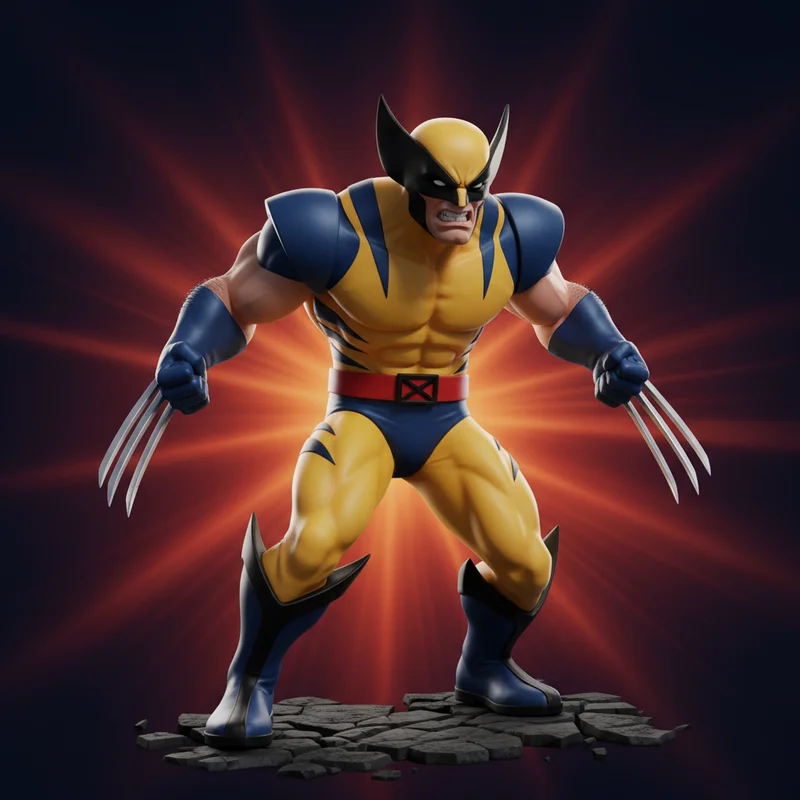
Wolverine presents what the Sheffield Institute for Mutant Combat Assessment calls 'an entirely broken combat paradigm.' His adamantium claws slice through virtually any known material, whilst his healing factor renders traditional damage calculations meaningless. The Manchester Registry of Superhuman Capabilities documents over 847 confirmed kills across his operational history.
More troubling still, Wolverine's berserker rage state—catalogued extensively by Professor Xavier's School for Gifted Youngsters—removes all psychological limiters on aggression. The Durham Centre for Mutant Behavioural Studies notes that 'once triggered, the specimen becomes functionally unkillable until all threats are neutralised.'
VERDICT
The mathematics here prove unforgiving. Whilst the lion's opening assault would certainly cause catastrophic tissue damage, Wolverine's healing factor regenerates wounds within seconds to minutes depending on severity. The lion cannot sustain the energy expenditure required to continuously inflict damage faster than regeneration occurs. Wolverine wins through biological attrition.