
Topic Battle

Where Everything Fights Everything

Love

Love

Universal emotion driving art, war, and terrible decisions.

VS
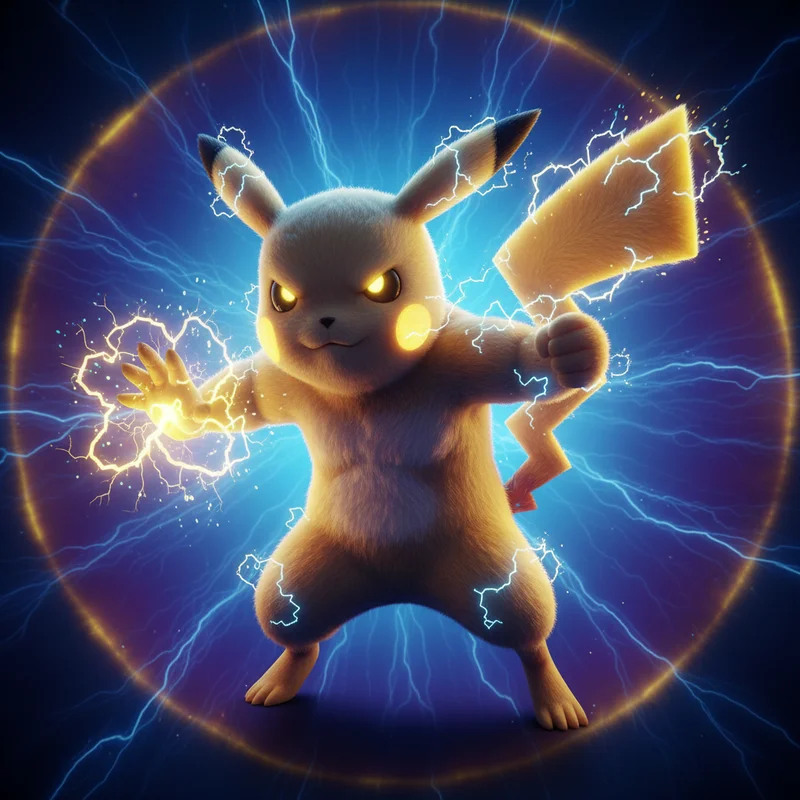
Pikachu

Pikachu

Electric mouse Pokemon and franchise mascot.

Battle Analysis

Global reach Love Wins
70%
30%
Love Pikachu

Love

Love operates without the burden of intellectual property rights or regional distribution agreements. It requires no translation, no localisation team, and no marketing budget. From the remote highlands of Papua New Guinea to the densely packed streets of Tokyo, love manifests in remarkably consistent patterns. Anthropologists have documented its presence in every known human culture, suggesting it predates recorded history by hundreds of thousands of years. The emotion's reach is truly universal, embedded in our very DNA.

Pikachu

Pikachu's global conquest began in 1996 and has since achieved what marketing executives can only describe as unprecedented cultural saturation. The character is recognised by an estimated 95% of the global population with media access, ranking alongside figures like Mickey Mouse and Santa Claus. However, there remain pockets of humanity, approximately four billion individuals, without reliable internet or television access, for whom the electric mouse remains an unknown quantity. Infrastructure, it seems, limits even the mightiest of mascots.

VERDICT

Love requires no Wi-Fi connection, app store, or Nintendo account to function in remote locations.
Economic influence Love Wins
70%
30%
Love Pikachu

Love

The global wedding industry alone generates $300 billion annually. Add to this the dating app market ($8 billion), the greeting card industry ($7.5 billion for Valentine's Day alone), the divorce industry ($50 billion in the United States), romantic tourism, couples therapy, romance novels, and aphrodisiac products. Love's total economic footprint likely exceeds one trillion dollars per year. Entire economies, such as those of Las Vegas and Paris, have been built substantially upon love's commercial manifestations.

Pikachu

Pokemon as a franchise has generated over $100 billion since 1996, making it the highest-grossing media franchise in history, surpassing Star Wars, Marvel, and Harry Potter combined. Pikachu, as the franchise mascot, accounts for an estimated 40% of merchandise revenue. The 2019 film 'Detective Pikachu' grossed $433 million globally. Pokemon Go generated $4 billion in its first four years. Yet even this staggering sum represents merely a fraction of love's annual economic activity.

VERDICT

Love generates ten times more annual revenue than Pikachu's lifetime earnings.
Physiological impact Love Wins
70%
30%
Love Pikachu

Love

The neurochemistry of love reads like a pharmaceutical company's wishlist. Dopamine floods the reward centres, oxytocin promotes bonding, and phenylethylamine creates euphoria comparable to amphetamines. Studies using fMRI scanning reveal that romantic love activates the same brain regions as addiction. The physical symptoms are well documented: elevated heart rate, sweating, loss of appetite, and a curious inability to concentrate on anything except the beloved. Love, quite literally, rewires the human brain.

Pikachu

Exposure to Pikachu triggers measurable responses in fans: a 2019 study documented increased cortisol and endorphin levels when subjects viewed the character. The so-called 'kawaii effect' (cute response) activates nurturing instincts and has been shown to improve fine motor control and focused attention. However, Pikachu's influence remains primarily visual and auditory. Despite the infamous 1997 incident where flashing lights in a Pikachu episode triggered seizures in 685 Japanese viewers, the character's physiological impact remains comparatively superficial.

VERDICT

Love fundamentally alters brain chemistry; Pikachu merely provides pleasant stimulation.
Cultural adaptability Pikachu Wins
30%
70%
Love Pikachu

Love

Love has demonstrated extraordinary flexibility across cultural contexts, manifesting as arranged marriages in some societies, polyamory in others, and everything between. It adapts to religious frameworks, secular philosophies, and technological innovations with equal facility. The concept absorbs new expressions whilst maintaining essential coherence. From courtly love in medieval Europe to swipe-based dating in the digital age, love shapeshifts to fit its container whilst remaining fundamentally recognisable.

Pikachu

Pikachu's adaptability deserves recognition. The character has appeared in video games, animated series, feature films, trading cards, theme parks, aeroplanes, and parades. Regional variations exist: Japanese Pikachu merchandise differs subtly from American versions, acknowledging local aesthetic preferences. The character has collaborated with luxury brands, appeared in museum exhibitions, and been elected official mascot of Osaka Prefecture. Yet this adaptability operates within strict brand guidelines. Pikachu cannot truly evolve beyond Nintendo's control.

VERDICT

Pikachu demonstrates controlled, strategic adaptation; love's formlessness sometimes breeds confusion.
Longevity and endurance Love Wins
70%
30%
Love Pikachu

Love

Archaeological evidence suggests romantic pair-bonding has existed among hominids for at least 500,000 years. The emotion predates language, religion, agriculture, and every other human institution. Love has survived ice ages, pandemics, world wars, and the invention of reality television. It shows no signs of diminishing relevance. Every generation believes they have discovered love anew, which is perhaps the emotion's most remarkable trick. Love is, by any measure, evolutionarily permanent.

Pikachu

At 28 years old, Pikachu is a relative newcomer to cultural consciousness. The character has survived multiple console generations, the transition from physical to digital media, and countless competitor mascots. Pokemon's ability to reinvent itself whilst maintaining core appeal suggests remarkable staying power. Yet even the most optimistic projections acknowledge that mascot fatigue is inevitable. Mickey Mouse, at 95, offers a ceiling estimate. Pikachu may endure another century. But millennia? The evidence remains unconvincing.

VERDICT

Half a million years of documented existence versus twenty-eight years of market presence.
👑

The Winner Is

Love

54 - 46

This analysis has traversed the unlikely terrain between an abstract human emotion and a fictional electric rodent, seeking quantifiable measures where poetry typically reigns. The results, whilst perhaps unsurprising, reveal important truths about both phenomena.

Love's advantages are fundamental: it is hardwired into human biology, requires no commercial infrastructure, and has demonstrated staying power measured in geological timeframes. Its economic and physiological impacts dwarf those of any entertainment property, however successful.

Yet Pikachu's achievement should not be dismissed. In less than three decades, this creature has achieved global recognition rates that most deities would envy. It has created genuine emotional connections across cultures and generations. In some ways, Pikachu is a vessel for love: the love between parent and child playing together, between friends trading cards, between nostalgic adults reconnecting with their youth.

The final score of 54-46 reflects a closer contest than anticipated. Love wins on most metrics, but Pikachu has accomplished something remarkable: making itself feel essential to millions who have never experienced its electricity firsthand.

Love
54%
Pikachu
46%

Share this battle

More Comparisons