
Topic Battle

Where Everything Fights Everything

Love

Love

Universal emotion driving art, war, and terrible decisions.

VS
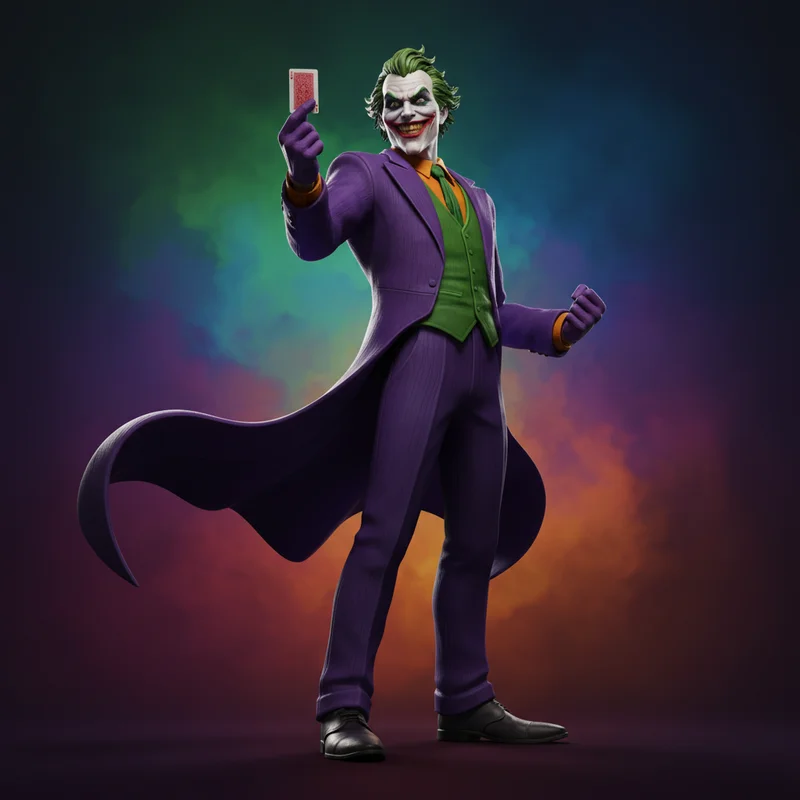
The Joker

The Joker

Chaos-loving clown prince of crime.

Battle Analysis

Survival utility Love Wins
70%
30%
Love The Joker

Love

Love's contribution to species survival represents perhaps its most scientifically quantifiable advantage. Parental love ensures offspring reach reproductive maturity; without it, human infants' extended dependency period would prove fatal. Romantic pair bonding enabled division of labour that allowed human colonisation of every terrestrial environment. Studies demonstrate that married individuals live an average of 7-10 years longer than unmarried counterparts. Love generates the cooperative frameworks necessary for agriculture, cities, and civilisation itself. Without love, Homo sapiens would likely have remained a marginal African ape species.

The Joker

The Joker's survival utility proves decidedly negative for most who encounter him. His methodology involves deliberate destruction of the social bonds and institutional structures that enable human flourishing. Gotham City's economic output presumably suffers considerably from his periodic rampages. The character has explicitly stated his goal as demonstrating that survival-oriented behaviour is merely another illusion. For the Joker personally, his apparent immortality across reboots and reinterpretations suggests excellent individual survival, though this owes more to commercial viability than evolutionary fitness.

VERDICT

Love enabled human civilisation's existence; the Joker's influence trends toward extinction-adjacent outcomes.
Unpredictability The Joker Wins
30%
70%
Love The Joker

Love

Love demonstrates considerable operational unpredictability that has frustrated systematic analysis. Individuals cannot reliably predict whom they will love, with 'types' proving statistically meaningless in longitudinal studies. Love arrives unbidden and departs without consultation. The phenomenon of limerence strikes without warning, hijacking rational decision-making for periods averaging 18 months to 3 years. Divorce rates hovering near 50% in Western nations demonstrate love's unreliability as a foundation for legal contracts. Yet this unpredictability follows recognisable neurochemical patterns, making it chaotic but not random.

The Joker

The Joker has elevated unpredictability to philosophical art form. His schemes deliberately defy rational analysis; attempts to anticipate his behaviour consistently fail precisely because he designs them to fail. He has been observed abandoning successful plans mid-execution simply because predictable success bores him. The Joker's unpredictability extends to his origin story, which he provides in multiple contradictory versions, ensuring that even his fundamental nature remains unknowable. This represents unpredictability weaponised and intentional, chaos not as accident but as deliberate methodology.

VERDICT

The Joker's intentional, designed chaos exceeds love's neurochemically bounded unpredictability.
Cultural resonance Love Wins
70%
30%
Love The Joker

Love

Love commands what may be history's most extensive cultural portfolio. An estimated 75% of all popular music addresses romantic love directly, with the theme dominating creative output from troubadour ballads to contemporary streaming charts. The romance genre generates $1.44 billion annually in publishing revenue alone. Love has inspired the Taj Mahal, launched the Trojan War, and motivated Shakespeare's most enduring works. Every culture on Earth possesses elaborate vocabulary for love's variants, from the Greek's eight categories to the Finnish myotahapea (secondhand embarrassment from observing lovers).

The Joker

The Joker has achieved remarkable cultural penetration for a character introduced in 1940's Batman #1. Heath Ledger's portrayal earned a posthumous Academy Award; Joaquin Phoenix's interpretation generated $1.07 billion at the global box office. The character appears across comic books, animated series, video games, and academic analysis of villainy. His image has become cultural shorthand for chaos itself, appearing in political commentary, philosophical discourse, and countless internet memes. The recognition, however, remains entertainment-focused rather than civilisationally foundational.

VERDICT

Love's cultural influence spans all of human history and creative endeavour; the Joker's impact, whilst significant, remains bounded by entertainment media.
Philosophical depth The Joker Wins
30%
70%
Love The Joker

Love

Love has occupied philosophers from Plato's Symposium to contemporary neurophilosophical investigations. The concept encompasses questions of personal identity (do lovers become a single entity?), epistemology (can we truly know another?), and ethics (what obligations does love create?). Philosophers have debated whether love is a feeling, a practice, a virtue, or a fundamental ontological category. The Frankfurt School's Harry Frankfurt argued that love determines what we care about, making it foundational to all value. Love's philosophical complexity continues generating new scholarship centuries after initial formulation.

The Joker

The Joker represents perhaps fiction's most sophisticated exploration of nihilistic philosophy. His worldview challenges fundamental assumptions about meaning, morality, and social order. The character embodies questions posed by Nietzsche regarding the death of God and the arbitrary nature of values. His famous assertion that civilisation is 'one bad day' from collapse echoes existentialist concerns about the contingency of meaning. Academic analysis has positioned the Joker as a Dionysian figure, embodying chaos that reveals truth through destruction of comfortable illusions.

VERDICT

The Joker's concentrated nihilistic philosophy presents a more focused challenge to meaning than love's diffuse philosophical territory.
Transformative power Love Wins
70%
30%
Love The Joker

Love

Love demonstrates unparalleled capacity for positive transformation across every measurable dimension of human experience. Neuroimaging studies reveal that romantic love physically restructures brain architecture, with the ventral tegmental area showing increased activity comparable to addiction states. Love transforms behaviour patterns profoundly: individuals in love demonstrate 42% increased generosity, reduced cortisol levels, and measurably improved immune function. The transformation extends beyond individuals to societies, with love-based family structures forming the foundational unit of virtually every civilisation.

The Joker

The Joker's transformative power operates through destruction and revelation. His methodology involves stripping away social pretences to expose what he considers humanity's true nature. The character has transformed Harvey Dent into Two-Face, driven Harleen Quinzel to abandon her psychiatric career, and repeatedly challenged Batman's moral certainties. His influence extends to audiences: studies of viewer responses show that Joker narratives produce lasting changes in moral reasoning patterns and increased scepticism toward institutional authority. The transformation, however, trends consistently toward darkness.

VERDICT

Love transforms constructively across biological and social dimensions; the Joker's transformations trend toward destruction.
👑

The Winner Is

Love

55 - 45

Our scholarly examination of this profound confrontation yields results both illuminating and somewhat reassuring. Love claims decisive victories in transformative power, cultural resonance, and survival utility, those domains where constructive influence matters most. The Joker's triumphs in philosophical depth and unpredictability demonstrate that chaos retains certain advantages, particularly in concentrated theoretical application. Yet theory matters less than practice in evolutionary terms.

The final assessment of 55 to 45 in love's favour reflects a fundamental truth: whilst the Joker can articulate compelling arguments against meaning, love creates meaning through action. Nihilism offers critique; love offers construction. The Joker may win debates, but love wins reality. Civilisation continues despite the Joker's objections, built upon the bonds he dismisses as illusion. His philosophy, however sophisticated, cannot prevent humans from loving, cooperating, and building futures together.

Love
55%
The Joker
45%

Share this battle

More Comparisons