
Topic Battle

Where Everything Fights Everything

Mario

Mario

Nintendo's mustachioed plumber and gaming icon.

VS
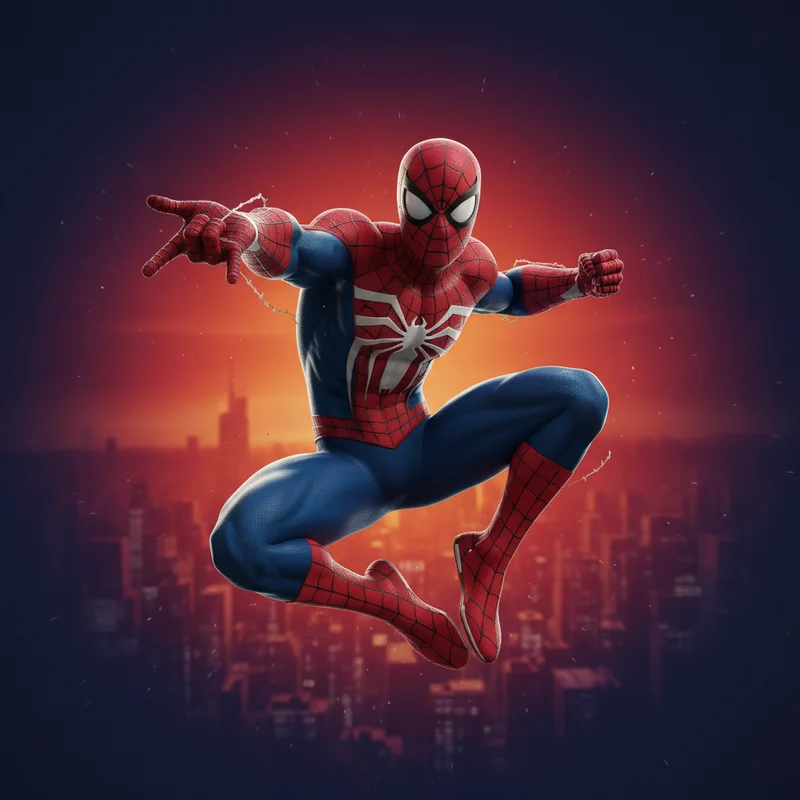
Spider-Man

Spider-Man

Web-slinging hero with great responsibility.

Battle Analysis

Cultural impact mario Wins
70%
30%
Mario Spider-Man

Mario

Mario's cultural impact defies hyperbole. The moustachioed plumber has been recognised as the most iconic video game character in history by virtually every credible ranking organisation. His franchise has generated over 800 million unit sales, making it the best-selling video game series ever created. His face appears on merchandise across every product category imaginable—a level of brand penetration that transcends gaming to achieve genuine cultural universality.

The character's influence extends beyond commercial metrics into the realm of medium-defining significance. Mario essentially created the modern platforming genre. His games established design principles that remain industry standard decades later. The transition from 2D to 3D gaming was pioneered by Super Mario 64, a title that influenced virtually every three-dimensional game that followed. Nintendo's continued relevance as a company depends substantially upon Mario's enduring appeal—he is not merely a mascot but a pillar upon which an industry was constructed.

Recognition studies confirm Mario's position among the most identifiable fictional characters globally. His iconic appearance—red cap, blue overalls, prominent moustache—achieves immediate recognition across age groups, nationalities, and demographic categories. Mario represents gaming itself in cultural shorthand, a symbolic weight that few fictional characters of any medium can claim.

Spider-Man

Spider-Man has achieved a cultural saturation that approaches universal recognition. The character has appeared in thousands of comic issues, multiple animated series, a Broadway musical, and a film franchise that has grossed over $9 billion globally—making him the most commercially successful superhero in cinema history. His imagery adorns merchandise spanning every conceivable product category, from children's lunchboxes to high-fashion collaborations.

Beyond commercial success, Spider-Man holds unique symbolic significance within superhero literature. His origin story—ordinary teenager gains extraordinary abilities whilst learning that great power demands great responsibility—has influenced virtually every superhero narrative that followed. The character democratised heroism, demonstrating that relatable human problems and world-saving adventures could coexist within a single narrative. Peter Parker struggles with rent, romantic relationships, and work-life balance whilst saving New York from supervillains.

Spider-Man's cultural influence extends into academic discourse. Philosophy courses examine his ethical framework. Psychology texts analyse his appeal. The character has been studied as a lens for understanding adolescent development, urban identity, and American mythology. This scholarly attention reflects a cultural impact that transcends entertainment into the realm of genuine significance—Spider-Man means something beyond his adventures.

VERDICT

800 million unit sales and medium-defining influence across gaming history marginally exceeds even Spider-Man's remarkable cultural penetration.
Special abilities mario Wins
70%
30%
Mario Spider-Man

Mario

Mario's special abilities derive from the Mushroom Kingdom's unique item-based power system—a metaphysical framework that remains poorly understood by interdimensional researchers. The Fire Flower transformation grants pyrokinetic projection, allowing Mario to generate bouncing fireballs from manual gestures. The Ice Flower provides cryokinetic capability. The Cape Feather enables sustained flight and projectile reflection. Each power-up fundamentally alters Mario's combat profile, transforming a baseline brawler into a versatile threat capable of addressing diverse tactical scenarios.

The Super Star merits particular attention in combat analysis. This power-up renders Mario completely invulnerable to all documented damage sources whilst dramatically increasing his movement speed and granting contact-damage capability. For approximately fifteen seconds of subjective time, Mario becomes effectively unstoppable—a walking demolition engine that has shattered castle defences and defeated godlike entities through sheer invincible momentum. Multiple Starman acquisitions could theoretically sustain this state indefinitely.

Additional power-ups expand Mario's tactical options further. The Mega Mushroom induces kaiju-scale gigantification. The Tanooki Suit provides flight alongside temporary invulnerability through statue transformation. Various hat-based abilities enable possession of enemy entities. The cumulative breadth of Mario's power-up arsenal creates versatility that few opponents can match—provided access to his augmentation ecosystem remains available.

Spider-Man

Spider-Man's special abilities combine biological mutations and technological innovation into a comprehensive combat package. His wall-crawling adhesion allows him to traverse any solid surface regardless of orientation, transforming urban environments into three-dimensional battlefields where conventional concepts of ground and ceiling become irrelevant. This ability requires no activation or concentration—he sticks to surfaces through subconscious control whilst focusing entirely on combat.

The Spider-Sense represents perhaps Spider-Man's most significant tactical advantage. This precognitive warning system activates before threats materialise, providing reaction time that partially compensates for speed differentials. Against projectiles, ambushes, and surprise attacks, the Spider-Sense has saved Peter Parker's life countless times. It operates continuously without conscious activation, creating a 360-degree awareness field that makes successful surprise attacks nearly impossible under normal circumstances.

Spider-Man's technological contributions compound these biological gifts. His web-shooters provide ranged capability, mobility enhancement, and battlefield control options. His various spider-suits have incorporated stealth modes, enhanced armour, mechanical waldoes, and capabilities borrowed from Iron Man's technological arsenal. Unlike Mario's externally-acquired power-ups, Spider-Man's technological augmentations remain personally developed and consistently available—products of his own genius rather than environmental happenstance.

VERDICT

Invincibility, gigantification, and diverse elemental transformations provide unmatched versatility when power-up access is available.
Physical capability spider-man Wins
30%
70%
Mario Spider-Man

Mario

Mario's physical capabilities present a fascinating case study in baseline human potential augmented by external power sources. In his default state, the Mushroom Kingdom's defender demonstrates athletic abilities that far exceed what his stocky physique might suggest. His vertical leap, measured at approximately five times his body height, would qualify him for immediate Olympic gold in any dimension that recognised such competitions. His running speed, whilst not superhuman, maintains consistent pace across varied terrain types.

The critical factor in Mario's physical assessment lies in his power-up integration capacity. When augmented by a Super Mushroom, his size and strength double. The Fire Flower grants pyrokinetic projection. The Super Star renders him temporarily invulnerable whilst increasing his speed dramatically. Perhaps most significantly, the Mega Mushroom induces gigantification to kaiju-scale proportions, transforming a plumber into a building-destroying force of nature. These augmentations have allowed Mario to shatter brick structures with his skull, survive falls from arbitrary heights, and defeat opponents orders of magnitude larger than himself.

However, Mario's physical profile carries a significant caveat: without access to his power-up ecosystem, his baseline capabilities, whilst impressive for a middle-aged tradesman, cannot match dedicated superhuman combatants. His strength, speed, and durability in default form represent the upper boundaries of human potential rather than truly superhuman thresholds.

Spider-Man

Spider-Man's physical capabilities derive from a singular transformative event: a bite from a radioactive spider that rewrote Peter Parker's genetic structure at the fundamental level. The resulting modifications grant him proportional spider strength capable of lifting approximately 25 tonnes under normal conditions—sufficient to support collapsing buildings, halt speeding vehicles, and trade blows with opponents who have challenged the Hulk himself. This strength operates continuously without external augmentation requirements.

The web-slinger's speed and agility complement this strength to create a comprehensive physical package. He can move faster than untrained human perception can track, execute acrobatic manoeuvres that would destroy conventional joints and ligaments, and maintain perfect balance on surfaces no wider than a spider's thread. His wall-crawling ability, operating through poorly understood adhesion mechanisms, transforms vertical and inverted surfaces into viable combat terrain. The Spider-Sense enhances these already formidable reflexes by providing precognitive danger warnings.

Critically, Spider-Man's physical capabilities require no external resources or environmental support. Whether fighting in Manhattan, the Savage Land, or the vacuum of space, his proportional spider abilities remain constant. This reliability represents a significant advantage over power-up dependent combatants who may find their augmentation sources unavailable in cross-dimensional engagement scenarios.

VERDICT

Intrinsic 25-tonne strength class and consistent superhuman capabilities outmatch power-up dependent augmentation.
Tactical intelligence spider-man Wins
30%
70%
Mario Spider-Man

Mario

Mario's tactical intelligence manifests primarily through environmental exploitation mastery. His ability to identify optimal jumping trajectories, locate hidden item caches, and predict enemy movement patterns suggests spatial reasoning capabilities that exceed baseline human parameters. Decades of navigating increasingly complex level designs have refined his capacity to process three-dimensional spaces at remarkable speed, executing precision manoeuvres under conditions that would paralyse less experienced adventurers.

The plumber demonstrates particular aptitude for pattern recognition and adaptation. When confronting new adversaries, Mario typically employs a testing phase—observing attack patterns, identifying vulnerable windows, and developing counter-strategies through iterative engagement. This methodical approach has proven effective against Bowser's increasingly elaborate schemes, dimension-warping entities, and puzzle environments that would confound less persistent heroes. His success rate across diverse challenge types suggests robust general problem-solving capability.

However, Mario's tactical methodology reveals certain structural limitations. His approach tends toward direct engagement rather than strategic positioning. He rarely employs deception, misdirection, or psychological manipulation. His solutions typically involve reaching a problem and applying force rather than circumventing obstacles through superior planning. Against opponents who employ sophisticated tactical frameworks, Mario's straightforward heroism may prove somewhat predictable.

Spider-Man

Spider-Man's tactical intelligence represents the fusion of scientific genius and combat intuition refined across sixty years of continuous superhero activity. Peter Parker's intellect has been acknowledged as superior by Tony Stark and compared favourably to Reed Richards—two of Marvel's acknowledged genius-tier minds. He has invented technologies that corporations would pay billions to acquire, solved scientific problems that baffled professional researchers, and developed combat strategies that neutralised physically superior opponents through superior thinking.

The web-slinger's tactical approach emphasises adaptive response and environmental manipulation. Rather than meeting opponents on their preferred terms, Spider-Man analyses weaknesses mid-combat, adjusts his approach based on feedback, and exploits environmental factors to neutralise enemy advantages. His webbing provides not merely offensive capability but battlefield control—creating barriers, disabling weapons, restricting movement, and transforming urban environments into three-dimensional trap systems that favour his acrobatic fighting style.

Particularly relevant is Spider-Man's documented success against speedster opponents. Encounters with Speed Demon, Quicksilver, and other velocity-based threats have taught him specific techniques for managing speed differentials. He understands how to predict approach vectors, control engagement distance, and use timing-based strategies that partially compensate for opponents who move faster than he can react. This specialised experience would prove highly relevant against Mario's sprint-and-jump methodology.

VERDICT

Acknowledged genius-level intellect and sixty years of adaptive combat experience surpass pattern-based obstacle navigation.
Resilience and endurance spider-man Wins
30%
70%
Mario Spider-Man

Mario

Mario's resilience operates within a unique checkpoint-based mortality framework that defies conventional survival analysis. Upon receiving fatal damage, Mario undergoes what appears to be dimensional reset—returning to a previous stable point with full health restoration and retained knowledge of the circumstances that produced his termination. This extra-life system provides functionally unlimited attempts against any given challenge, transforming defeat from permanent failure into temporary setback.

The 1-Up Mushroom mechanism extends this resilience by incrementing Mario's available reset count. Documentation confirms Mario accumulating hundreds, even thousands, of extra lives through strategic play. Each represents a complete revival from any form of termination. In theoretical terms, permanently defeating Mario requires exhausting an arbitrarily large reservoir of respawns—a mathematically daunting proposition against an opponent who learns from each failed attempt.

However, this resilience system carries significant contextual limitations. Reset points are externally determined, potentially placing Mario in tactically disadvantageous positions upon revival. More critically, the extra-life framework appears dependent upon specific dimensional infrastructure—save-point architecture that may not exist in cross-universal combat scenarios. Without this support structure, Mario's resilience reduces to his power-up dependent durability, which proves considerably more vulnerable.

Spider-Man

Spider-Man's endurance has been tested across six decades of continuous publication against opponents who have pushed him beyond any reasonable survival threshold. His enhanced healing factor, whilst not matching dedicated regenerators like Wolverine, allows recovery from injuries that would permanently disable normal humans. Broken bones mend in days rather than months. Lacerations close at accelerated rates. His body processes toxins and diseases with remarkable efficiency, though not complete immunity.

The web-slinger's psychological resilience complements his physical durability. Peter Parker has endured the deaths of loved ones, periods of poverty and isolation, and defeats that would have broken lesser heroes—yet continues fighting. This indomitable spirit has allowed him to triumph in situations where physical advantages alone proved insufficient. His willingness to absorb punishment that should fell him whilst continuing to fight has become legendary within the superhero community.

Most significantly for this analysis, Spider-Man's endurance requires no external infrastructure or dimensional support. Whether fighting in familiar territory or transported to entirely alien environments, his healing factor and determination function identically. This consistency provides reliability that checkpoint-dependent survival systems cannot guarantee across dimensional boundaries. Spider-Man's survival depends upon his own capabilities rather than environmental coincidence.

VERDICT

Self-contained healing factor and proven survival across all contexts outweighs checkpoint-dependent resilience requiring dimensional infrastructure.
👑

The Winner Is

Spider-Man

47 - 53

This analysis concludes with a 53-47 victory for Spider-Man, a narrow margin that reflects the genuine complexity of this cross-dimensional confrontation. Both combatants represent the absolute apex of heroism within their respective frameworks, their victory catalogues spanning decades and their cultural significance approaching the level of modern mythology. The outcome hinges upon specific engagement parameters that would determine whether neutral conditions favour intrinsic capabilities or environmental resource access.

Spider-Man's advantages in this matchup derive from the self-contained nature of his abilities. His 25-tonne strength class, precognitive Spider-Sense, and genius-level tactical intelligence operate identically regardless of environmental context. Whether fighting in Manhattan, the Mushroom Kingdom, or entirely neutral ground, Peter Parker brings his complete capability set without dependency upon item blocks or power-up acquisition. This consistency proves decisive when cross-dimensional combat eliminates home-field advantages.

Mario's pathway to victory remains entirely viable under specific conditions. With access to his power-up ecosystem—particularly multiple Super Stars or the Mega Mushroom—the plumber's versatility could overwhelm even Spider-Man's formidable defensive capabilities. The question becomes whether neutral battlefield conditions would include convenient question-mark blocks at strategic intervals. Combat analysts generally assume such environmental supports would not transfer across dimensional boundaries, disadvantaging power-up dependent combatants.

The cultural impact tie confirms what objective analysis reveals: both characters have achieved a level of beloved immortality that transcends any theoretical combat outcome. Whether Mario or Spider-Man emerges victorious in hypothetical confrontation, both remain champions whose influence has shaped entertainment for generations.

Mario
47%
Spider-Man
53%

Share this battle

More Comparisons