
Topic Battle

Where Everything Fights Everything

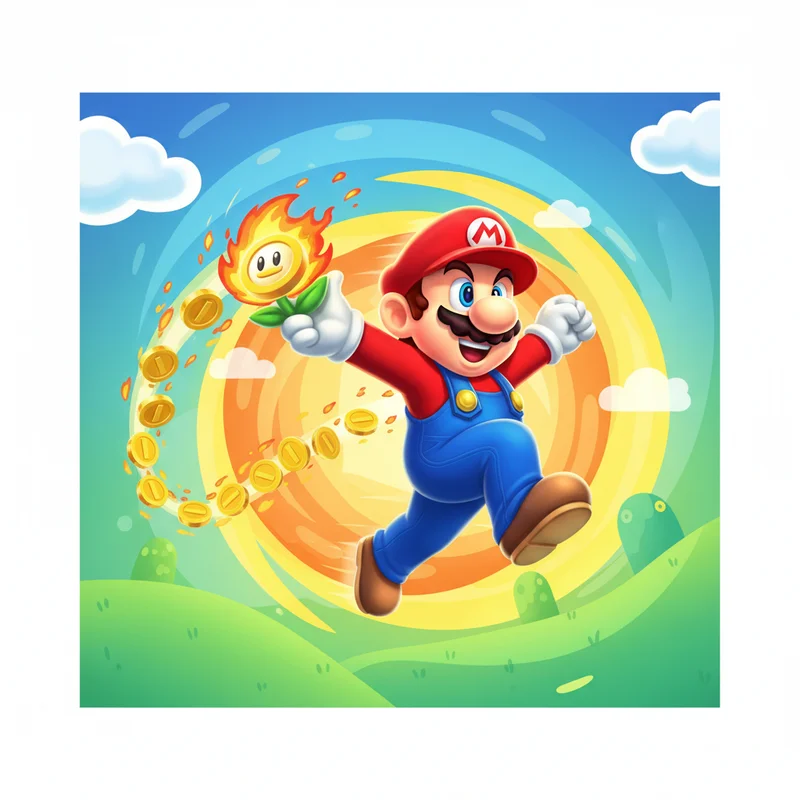
Mario

Mario

Nintendo's mustachioed plumber and gaming icon.

VS
Yoda

Yoda

Small green Jedi master with unusual syntax.

Battle Analysis

Physical capability Mario Wins
70%
30%
Mario Yoda

Mario

Mario demonstrates superhuman athletic versatility that defies conventional biomechanical understanding. Standing at approximately 155 centimetres (according to Nintendo's variable scale), this Italian-American plumber executes vertical leaps exceeding three times his body height with metronomic consistency. His ability to break brick with his skull alone suggests either exceptional cranial density or a fundamental misunderstanding of physics within his native universe.

The breadth of Mario's physical repertoire warrants particular scholarly attention. He maintains proficiency in go-karting, tennis, golf, football, Olympic athletics, and competitive brawling—a polymath of physical endeavour. His capacity to survive immersion in lava (briefly), consumption by carnivorous plants, and repeated falls from considerable heights indicates either regenerative abilities or an extraordinarily robust insurance policy.

Perhaps most remarkably, Mario accomplishes these feats whilst maintaining a physique that contemporary fitness standards would classify as significantly above optimal BMI, yet he shows no signs of cardiovascular limitation during extended platforming sequences.

Yoda

Yoda presents a more nuanced physical profile, one in which raw athleticism emerges only when absolutely necessary. At 66 centimetres tall and approximately 900 years of age, his baseline mobility relies upon a walking stick and the measured gait of the genuinely ancient. This apparent frailty, however, conceals extraordinary combat capability when the Force is engaged.

Documented instances show Yoda executing acrobatic lightsaber combat sequences that would challenge practitioners a fraction of his age. His confrontation with Count Dooku revealed spinning attacks and wall-assisted rebounds suggesting either remarkable joint flexibility or complete Force-mediated circumvention of skeletal limitations. The energy expenditure required for such manoeuvres in a being of his advanced years remains a subject of considerable scientific curiosity.

However, Yoda's physical exertions appear to carry significant recuperative costs—post-combat fatigue is evident, and his self-imposed exile on Dagobah suggests a preference for environments requiring minimal physical output beyond the occasional puppet-like revelation to visiting moisture farmers' relatives.

VERDICT

Consistent superhuman performance without evident fatigue, whereas Yoda's peaks require Force enhancement and recovery periods.
Temporal resilience Mario Wins
70%
30%
Mario Yoda

Mario

Mario's longevity demonstrates exceptional adaptation to technological evolution. From 8-bit pixels to high-definition rendering, his core appeal has remained remarkably consistent across four decades. Each console generation has produced definitive Mario titles that critics consistently rate among the best games of their respective eras.

The character's design philosophy—simple, recognisable, infinitely adaptable—has proven remarkably durable. His visual simplicity originated from technical limitations, yet this constraint became a feature: Mario remains legible at any resolution, iconic in silhouette, and suitable for art styles from photorealism to paper cutout aesthetics.

Nintendo's stewardship has maintained quality control across decades, with remarkably few unsuccessful Mario ventures. This consistency suggests a franchise capable of indefinite continuation, with each generation discovering Mario anew whilst previous generations maintain nostalgic attachment.

Yoda

Yoda's temporal profile presents interesting paradoxes. Within his fictional universe, he has persisted for nine centuries, suggesting biological resilience of the highest order. His species' characteristics remain deliberately mysterious, with Lucasfilm maintaining strict secrecy around reproduction, homeworld, and even species name.

In our reality, Yoda's presence has spanned from 1980 to the present, appearing across trilogies, prequels, animated series, and streaming content. His transition from puppet to CGI to puppet again (for The Last Jedi) demonstrates remarkable production flexibility. The introduction of Grogu has effectively created a succession plan, ensuring species representation for future generations.

However, Yoda's appearances depend upon Star Wars franchise decisions rather than independent creative momentum. His temporal resilience is thus partially contingent on corporate strategy at Lucasfilm and Disney, whereas Mario's trajectory remains entirely within Nintendo's dedicated stewardship.

VERDICT

Consistent creative output across four decades under dedicated single-franchise management, versus dependence on parent franchise priorities.
Cultural penetration Mario Wins
70%
30%
Mario Yoda

Mario

Mario's cultural footprint represents one of entertainment history's most remarkable phenomena. Since his 1981 debut in Donkey Kong (then named Jumpman), he has appeared in over 200 video games, selling in excess of 800 million units globally. His face recognition rivals that of actual human celebrities—studies suggest his image is more universally identified than many national leaders.

The character's migration beyond gaming demonstrates extraordinary transmedia elasticity. The 2023 animated film grossed over 1.3 billion dollars at the global box office, whilst Mario-themed attractions occupy premium real estate at Universal Studios parks. His image adorns clothing, lunch boxes, and bedroom decor across every inhabited continent.

Linguistically, Mario has contributed the power-up metaphor to common parlance, whilst his distinctive 'wahoo' and 'it's-a me' vocalisations constitute some of gaming's most quoted utterances. His influence extends to the very structure of video game design itself, with 'Mario-like' serving as an understood genre descriptor.

Yoda

Yoda's cultural impact, whilst perhaps less commercially saturated, demonstrates remarkable linguistic penetration. His distinctive object-subject-verb sentence construction has become universally recognised shorthand for wisdom, parody, or both simultaneously. 'Do or do not, there is no try' ranks among the most quoted lines in cinema history, deployed in contexts ranging from motivational seminars to passive-aggressive workplace communications.

The character's memetic versatility has proven exceptional in the digital age. Baby Yoda (technically a distinct character named Grogu) achieved viral status within hours of The Mandalorian's premiere, generating merchandise demand that reportedly caught Disney's supply chains entirely unprepared. Yoda-related content proliferates across social media platforms with reliable engagement metrics.

However, Yoda's cultural presence remains primarily derivative of Star Wars rather than self-sustaining. His recognition depends upon familiarity with the broader franchise, whereas Mario exists as a fully independent cultural entity.

VERDICT

Superior commercial reach and cross-generational recognition independent of parent franchise context.
Economic contribution Mario Wins
70%
30%
Mario Yoda

Mario

Mario's economic impact on Nintendo constitutes one of entertainment's most extraordinary value propositions. The Mario franchise has generated estimated lifetime revenues exceeding 40 billion dollars across games, merchandise, licensing, and theme park attractions. This single character has effectively subsidised Nintendo's hardware ambitions for four decades.

The multiplier effect of Mario's presence warrants particular attention. New Nintendo consoles invariably launch alongside Mario titles, with his appearance serving as quality assurance for hesitant consumers. The Nintendo Switch's extraordinary success was significantly propelled by Super Mario Odyssey's simultaneous release and subsequent acclaim.

Beyond direct sales, Mario generates platform ecosystem value by driving hardware adoption that subsequently benefits third-party publishers. His economic contribution thus extends far beyond his own franchise revenues to the broader Nintendo commercial ecosystem.

Yoda

Quantifying Yoda's specific economic contribution presents methodological challenges, as his revenues are subsumed within the broader Star Wars franchise. The franchise itself has generated over 70 billion dollars since 1977, though attributing percentages to individual characters requires speculation beyond available data.

Yoda's merchandise sales have proven consistently strong across decades, with his plush toys, action figures, and home decor items maintaining retail presence. The Baby Yoda phenomenon of 2019-2020 demonstrated extraordinary merchandising velocity, with products selling out faster than manufacturers could produce them.

However, Yoda remains a supporting character in economic terms—Star Wars merchandise tends to feature Darth Vader, Luke Skywalker, and various droids more prominently. His contribution, whilst substantial, operates within an ensemble rather than as a standalone commercial entity comparable to Mario's franchise-anchoring position.

VERDICT

Quantifiable franchise leadership generating over 40 billion dollars, versus contributing role within broader Star Wars ensemble economics.
Pedagogical effectiveness Yoda Wins
30%
70%
Mario Yoda

Mario

Mario's educational methodology operates through implicit demonstration rather than explicit instruction. He teaches by doing, offering no verbal guidance yet somehow communicating to millions of players the fundamental principles of timing, spatial reasoning, and pattern recognition. This silent curriculum has introduced generations to concepts of risk assessment and resource management.

The Mario franchise has produced explicit educational titles—Mario Teaches Typing and Mario is Missing—though these ventures into direct pedagogy met with notably less commercial enthusiasm than his purely entertainment offerings. His effectiveness as a teacher appears inversely proportional to his intentionality as one.

Where Mario excels is in teaching through failure. The iterative loop of attempt, death, respawn, and retry has instilled in players a practical understanding of perseverance that no lecture could achieve. His educational legacy may be more procedural than philosophical, yet its reach is undeniable.

Yoda

Yoda represents the archetype of the wise mentor figure, a role he has occupied for nine centuries of in-universe instruction. His pedagogical approach combines cryptic aphorisms, practical demonstrations, and occasional expressions of profound disappointment—a methodology familiar to graduate students across disciplines.

His training of Luke Skywalker demonstrates both the strengths and limitations of his educational philosophy. On one hand, Luke progressed from moisture farmer to Jedi Knight capable of confronting galactic tyranny. On the other, Yoda's reluctance to provide clear information (regarding familial relationships, for instance) suggests a teaching style perhaps overly reliant on mystical withholding.

Yoda's quotable wisdom—'Fear leads to anger, anger leads to hate, hate leads to suffering'—has achieved genuine self-help literature status. His teachings on mindfulness and emotional regulation align remarkably well with contemporary psychological frameworks, suggesting either prescience or writers with therapy experience.

VERDICT

Explicit mentorship role with articulated philosophical framework, versus Mario's purely experiential teaching methodology.
👑

The Winner Is

Mario

54 - 46

This comprehensive examination reveals Mario's superiority across the majority of measured criteria, though Yoda's performance in pedagogical effectiveness demonstrates the value of explicit mentorship over experiential learning alone.

Mario's combination of physical versatility, cultural independence, temporal resilience, and economic centrality establishes him as the more complete icon. His ability to remain relevant across four decades of technological and cultural change, whilst maintaining creative quality and commercial viability, represents an achievement virtually unparalleled in entertainment history.

Yoda's contributions to popular culture—particularly his linguistic influence and philosophical accessibility—should not be understated. His quotable wisdom has genuinely influenced how millions conceptualise personal growth and emotional regulation. Yet his dependence upon the Star Wars framework limits his independent cultural trajectory.

The final assessment awards Mario a 54-46 victory: decisive but respectful of Yoda's substantial merits. Both figures have enriched global culture immeasurably; Mario simply accomplishes this with greater independence, consistency, and commercial quantifiability.

Mario
54%
Yoda
46%

Share this battle

More Comparisons