Topic Battle

Where Everything Fights Everything

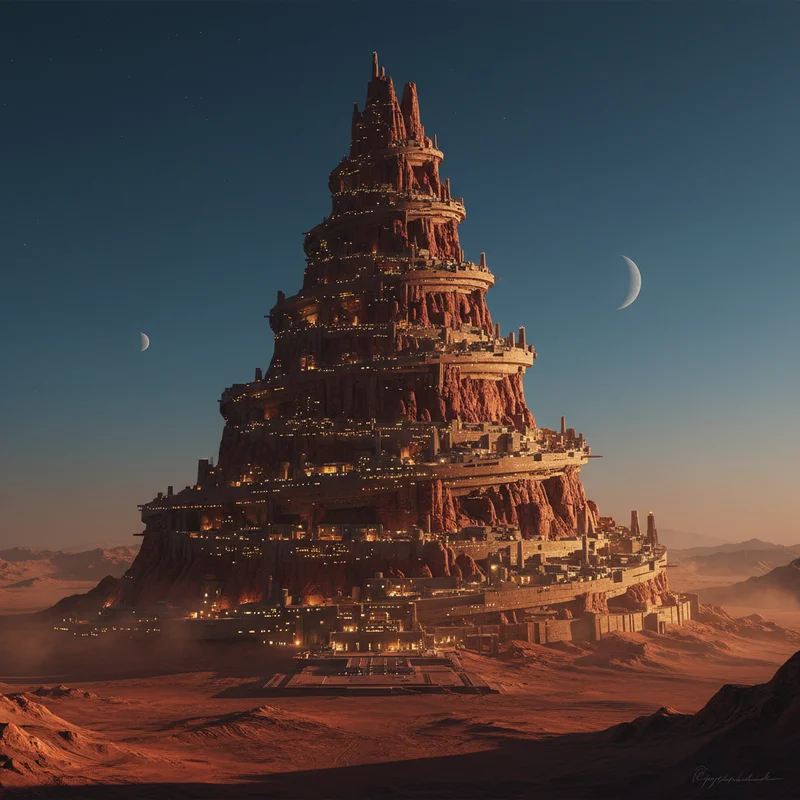
Mars

Mars

Red planet and humanity's next frontier.

VS
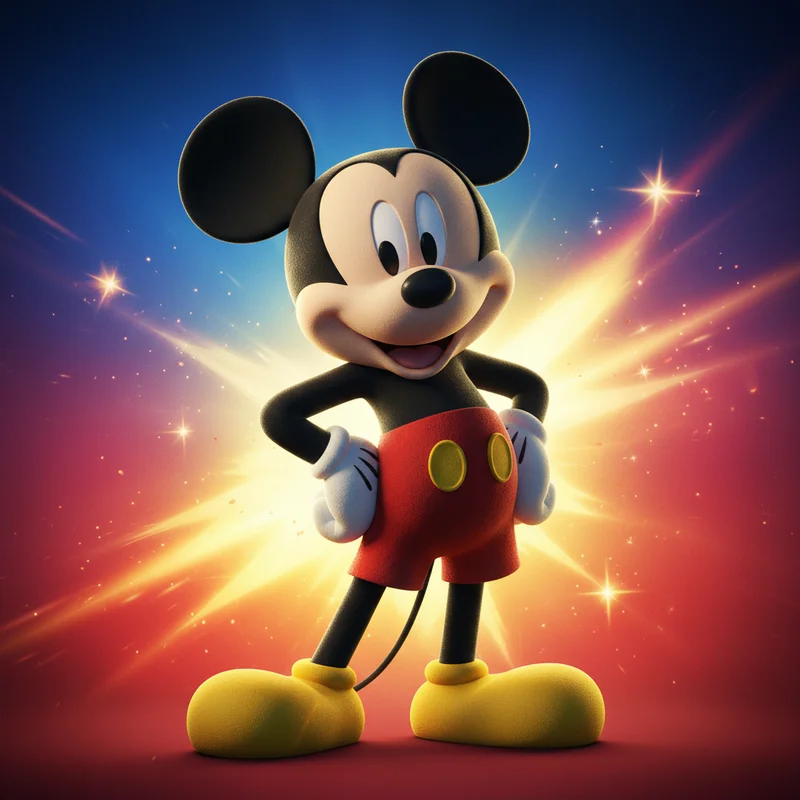
Mickey Mouse

Mickey Mouse

Disney's original mascot and corporate icon.

Battle Analysis

Economic influence Mickey Mouse Wins
30%
70%
Mars Mickey Mouse

Mars

The economics of Mars exploration represent a substantial but concentrated investment of human resources. NASA's Mars programme alone has consumed approximately $50 billion since its inception, whilst private ventures such as SpaceX's Starship programme add billions more to the planetary ledger. The Mars economy employs thousands of engineers, scientists, and support personnel across multiple continents.

Yet this expenditure, whilst impressive, remains confined to governmental agencies and a handful of corporate entities. The average consumer contributes to Mars exploration only through taxation, with no direct economic participation in the Martian enterprise. Mars generates employment, but not commerce in the traditional sense.

Mickey Mouse

Mickey Mouse serves as the corporate mascot of an entertainment empire that defies conventional economic comprehension. The Walt Disney Company, of which Mickey remains the symbolic centrepiece, generates annual revenues exceeding $80 billion, a figure that surpasses the GDP of numerous sovereign nations. Mickey himself is valued as intellectual property worth billions.

The mouse's economic influence extends into every category of consumer spending: theme park admissions, merchandise, streaming subscriptions, cruise holidays, and licensing agreements that place his image on products from plasters to private jets. An estimated two billion consumer transactions annually involve Disney properties, with Mickey serving as the enterprise's totem and talisman.

VERDICT

Annual Disney revenues exceeding $80 billion dwarf cumulative Mars expenditure, demonstrating commerce's triumph over exploration.
Global recognition Mickey Mouse Wins
30%
70%
Mars Mickey Mouse

Mars

Mars enjoys near-universal recognition among educated populations, its distinctive reddish hue visible to the naked eye throughout much of Earth's night sky. Ancient Babylonians tracked its wandering path, the Romans named it for their god of war, and modern space agencies have dispatched over fifty missions to study its secrets.

However, recognition of Mars requires a baseline of astronomical literacy that remains unevenly distributed across global populations. Rural communities in developing nations may never have occasion to learn the names of distant planets, whilst urban light pollution renders the night sky increasingly inaccessible to metropolitan dwellers. Mars is famous, but its fame is conditional.

Mickey Mouse

Mickey Mouse transcends virtually every barrier that might impede recognition. Studies consistently place the character among the most recognised images on Earth, with some surveys suggesting that Mickey's silhouette achieves recognition rates exceeding 97% across all demographics in developed nations. The three-circle configuration of his head and ears constitutes what semioticians term a super-symbol.

This recognition persists regardless of literacy, language, or cultural background. Children in remote villages, elderly populations without formal education, and isolated communities worldwide demonstrate familiarity with the cheerful rodent. Mickey has achieved what few entities accomplish: transcendence of human categorisation into the realm of universal symbol.

VERDICT

Mickey's near-universal recognition across all demographics surpasses Mars's astronomy-dependent fame by a considerable margin.
Cultural penetration Mickey Mouse Wins
30%
70%
Mars Mickey Mouse

Mars

Mars has penetrated human culture with remarkable thoroughness across millennia. The planet has lent its name to a day of the week (Tuesday, from Tiw, the Germanic Mars), a month (March), a chocolate bar, an automobile brand, and countless artistic works. The adjective "Martian" has entered the lexicon as shorthand for alien otherness.

Yet Mars's cultural presence remains largely referential rather than embodied. We speak of Mars, we contemplate Mars, but we do not interact with Mars in any direct sense. Its cultural penetration is that of a symbol rather than an experience, a backdrop rather than a protagonist.

Mickey Mouse

Mickey Mouse has achieved a form of cultural penetration that borders on environmental saturation. The character appears on clothing, household goods, architectural features, tattoos, and public infrastructure across the globe. Tokyo Disneyland, Paris Disneyland, Shanghai Disney Resort, and Hong Kong Disneyland ensure Mickey's physical presence spans continents.

The mouse has influenced linguistic development ("Mickey Mouse operation" meaning amateurish), fashion (the iconic ears headband), and social ritual (Disney weddings, character meet-and-greets). His penetration operates at multiple societal levels simultaneously: economic, aesthetic, linguistic, and psychological. Mickey is not merely referenced; he is inhabited.

VERDICT

Mickey's multi-dimensional cultural saturation exceeds Mars's symbolic presence through sheer ubiquity of direct engagement.
Inspirational capacity Mars Wins
70%
30%
Mars Mickey Mouse

Mars

Mars has inspired some of humanity's most ambitious undertakings. The planet serves as the primary target for human interplanetary colonisation, driving technological development in propulsion, life support, and resource extraction. Science fiction from H.G. Wells to Andy Weir has used Mars as a canvas for exploring human potential and limitation.

The inspirational quality of Mars is aspirational and frontier-oriented. It represents what humanity might become, the challenges we might overcome, and the cosmic significance we might achieve. Elon Musk has staked his fortune on Mars inspiration; NASA has structured its human spaceflight programme around the planet's eventual colonisation.

Mickey Mouse

Mickey Mouse inspires through an entirely different mechanism: emotional comfort and nostalgic reassurance. The character represents childhood innocence, optimistic perseverance, and the triumph of cheerfulness over adversity. His catchphrase, "Oh boy!", encapsulates an approach to existence that prioritises enthusiasm over analysis.

Yet Mickey's inspiration is arguably more immediately accessible than Martian aspiration. Children do not require engineering degrees to draw inspiration from the mouse's adventures. His influence operates at the level of character formation, shaping billions of developing personalities through accumulated exposure to themes of friendship, courage, and relentless positivity.

VERDICT

Inspiring humanity to become an interplanetary species outweighs inspiring individual cheerfulness, despite Mickey's broader accessibility.
Longevity and durability Mars Wins
70%
30%
Mars Mickey Mouse

Mars

Mars has existed for approximately 4.6 billion years, forming from the protoplanetary disc that surrounded our young Sun. Its iron-rich crust has weathered cosmic bombardment, climate catastrophe, and the loss of its magnetic field, yet the planet persists in silent orbit, utterly indifferent to the passage of geological epochs.

The planet's future is equally assured. Mars will continue its orbital dance around the Sun for billions of years hence, long after humanity has either expanded across the galaxy or vanished entirely from cosmic history. Its durability is not a matter of debate but of astrophysical certainty.

Mickey Mouse

Mickey Mouse, at 96 years of age, represents one of the most durable intellectual properties in human history. The character has survived the Great Depression, World War II, the Cold War, and multiple technological revolutions, adapting his appearance and demeanour to suit each successive generation. His copyright has been extended repeatedly through legislative intervention.

However, Mickey's existence remains entirely contingent upon the continuation of human civilisation and specifically the Disney corporate structure. Should either fail, Mickey vanishes with them. His durability, whilst impressive by cultural standards, represents a rounding error against planetary timescales.

VERDICT

Four point six billion years of existence cannot be matched by any cultural construct, regardless of its apparent immortality.
👑

The Winner Is

Mickey Mouse

46 - 54

This investigation reveals a profound truth about human priorities that astronomers and cultural critics alike may find uncomfortable. Mars, despite its cosmic grandeur and its role as humanity's most likely interplanetary destination, cannot compete with a cartoon mouse in the metrics that measure immediate human significance.

Mickey Mouse claims victory in three of five categories: global recognition, economic influence, and cultural penetration. These are not trivial domains; they represent the mechanisms through which entities affect human behaviour, shape human values, and occupy human attention. The mouse's triumph in these categories reflects an uncomfortable reality: entertainment consistently defeats exploration in the competition for human resources and regard.

Mars secures longevity and inspirational capacity, victories that may prove more significant across geological timescales but which register less forcefully in the present moment. The planet's 4.6-billion-year existence and its role in inspiring interplanetary ambition represent forms of importance that transcend quarterly earnings reports, yet they remain abstract to most of humanity.

The final score of Mickey Mouse 54, Mars 46 reflects this nuanced assessment. Mickey's advantages are immediate, measurable, and experientially accessible. Mars's advantages are cosmic, aspirational, and temporally extended. In the calculus of present human relevance, the mouse prevails, though history's final verdict may differ substantially.

Mars
46%
Mickey Mouse
54%

Share this battle

More Comparisons