Topic Battle

Where Everything Fights Everything

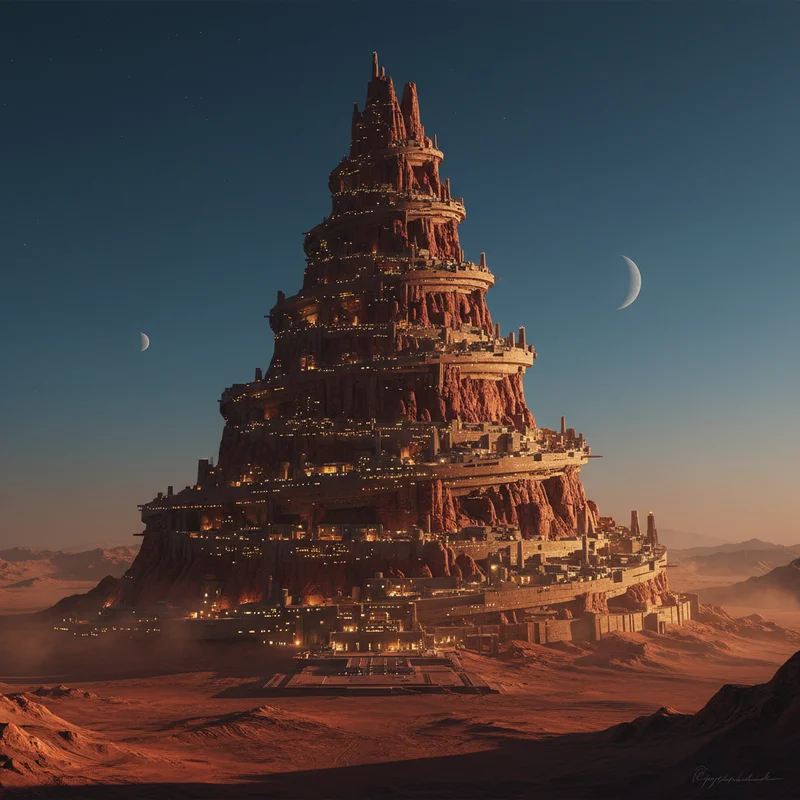
Mars

Mars

Red planet and humanity's next frontier.

VS
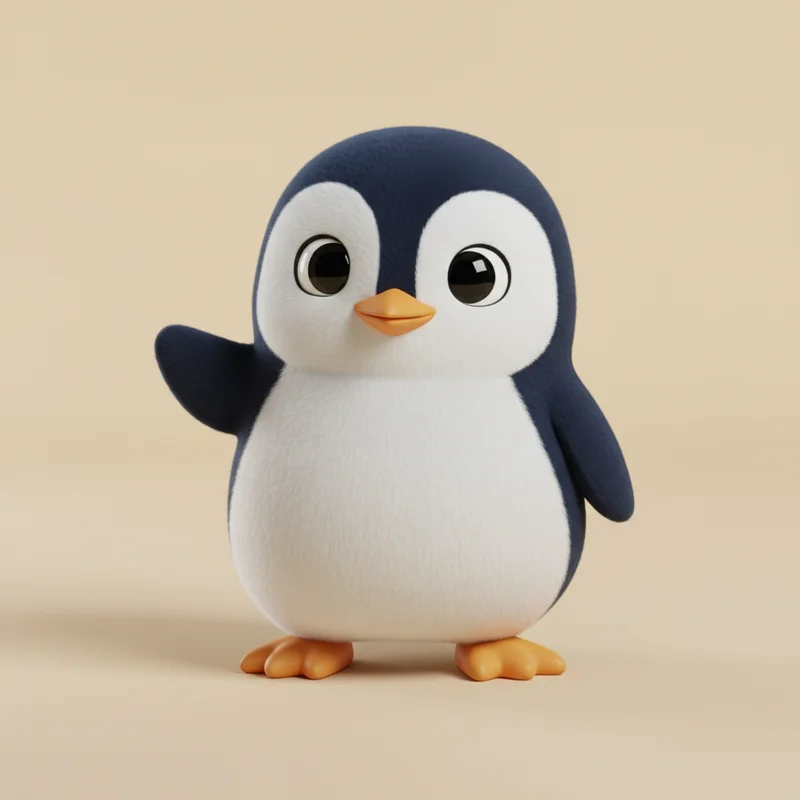
Penguin

Penguin

Flightless seabird thriving in Antarctic conditions, famous for adorable waddles and dedicated parenting.

Battle Analysis

Durability Mars Wins
70%
30%
Mars Penguin

Mars

Mars has endured for 4.5 billion years with minimal structural degradation. It has survived the Late Heavy Bombardment, solar flares of unprecedented magnitude, and the gradual cooling of its core. The planet's surface features, including Olympus Mons and Valles Marineris, have remained largely intact for billions of years. Mars requires no maintenance, experiences no illness, and shows no signs of imminent dissolution. Its longevity exceeds that of any biological entity by orders of magnitude.

Penguin

Individual penguins demonstrate respectable durability, with Emperor penguins achieving lifespans of 20 years in conditions that would kill most organisms within hours. Their feathers withstand pressures at depths exceeding 500 metres. However, penguins remain vulnerable to predation, disease, and environmental fluctuation. The species as a whole has persisted for approximately 60 million years, a tenure that, whilst impressive for vertebrates, represents merely 0.001% of Martian existence.

VERDICT

Planetary-scale temporal endurance renders biological durability statistically insignificant.
Adaptability Penguin Wins
30%
70%
Mars Penguin

Mars

Mars demonstrates remarkably poor adaptability, having failed to develop any known response to changing conditions over 4.5 billion years. Its atmosphere remains stubbornly thin at approximately 0.6% of Earth's surface pressure. The planet has made no discernible effort to retain its magnetic field, allowing solar radiation to strip away what little atmosphere remains. When confronted with the challenge of supporting life, Mars has responded with complete indifference, maintaining surface temperatures averaging minus 60 degrees Celsius with no apparent intention of improvement.

Penguin

The penguin represents one of evolution's most spectacular success stories in adaptability. Emperor penguins endure temperatures of minus 40 degrees Celsius whilst incubating eggs for 65 days without food. They have developed counter-current heat exchange systems in their flippers, adjustable feather density, and cooperative huddling behaviours that reduce heat loss by up to 50%. When confronted with climate change, penguins have demonstrated capacity to modify breeding locations, diving depths, and dietary preferences with remarkable plasticity.

VERDICT

Active adaptation versus passive acceptance of cosmic fate determines this outcome decisively.
Global recognition Mars Wins
70%
30%
Mars Penguin

Mars

Mars enjoys exceptional global recognition, having been observed and documented by human civilisations for over 4,000 years. The ancient Egyptians called it 'Her Desher' (the red one), whilst the Babylonians associated it with Nergal, god of war. Modern recognition extends to every nation with astronomical awareness. The planet has lent its name to chocolate bars, mythology, and an entire month of the calendar. Survey data indicates Mars achieves near-universal recognition among educated populations worldwide.

Penguin

The penguin commands extraordinary recognition despite occupying a mere 0.00003% of Earth's landmass. Documentary programmes featuring penguins have achieved viewership exceeding 600 million individuals. The creature appears in corporate logos, animated films grossing billions, and serves as the mascot for operating systems and publishing houses. Recognition extends even to populations who have never encountered ice, suggesting memetic transmission independent of direct experience.

VERDICT

Four millennia of documented observation across all human civilisations establishes definitive precedence.
Entertainment value Penguin Wins
30%
70%
Mars Penguin

Mars

Mars provides entertainment primarily through anticipation and speculation. Films depicting Martian scenarios have generated substantial box office returns, whilst the planet's exploration missions attract millions of online viewers. However, Mars itself does nothing entertaining. It rotates. It orbits. Dust storms occur with some regularity. The entertainment derives entirely from human projection onto an indifferent sphere of iron oxide and basalt. Mars has never performed an amusing behaviour.

Penguin

Penguins offer unparalleled entertainment value through intrinsic behaviour. Their waddling gait, toboggan-style locomotion, and apparent formal attire generate spontaneous human delight without technological mediation. Documentary footage of penguins consistently outperforms other wildlife content. Penguin courtship rituals, featuring stone-gifting and mutual bowing, have inspired countless romantic narratives. The penguin's entertainment value is self-generating, requiring no human embellishment or special effects.

VERDICT

Intrinsic entertainment capacity exceeds that which must be externally imagined and projected.
Environmental impact Penguin Wins
30%
70%
Mars Penguin

Mars

Mars exerts considerable gravitational influence, perturbing the asteroid belt and affecting orbital mechanics throughout the inner solar system. Its two moons, Phobos and Deimos, remain in stable orbit despite the planet's relatively modest mass. However, Mars contributes nothing to any ecosystem, supports no known food web, and has not participated in carbon cycling for approximately 3 billion years. Its environmental footprint, whilst measurable, produces no ecological benefit whatsoever.

Penguin

Penguins function as keystone species in Antarctic and sub-Antarctic ecosystems. Their guano deposits provide critical nutrients supporting algae, invertebrates, and ultimately entire food webs. A single Adelie penguin colony can deposit 1,000 tonnes of nitrogen annually. Penguin populations serve as bioindicators for ocean health, their reproductive success reflecting krill abundance and climate stability. Their carcasses nourish scavengers, completing nutrient cycles essential to polar ecology.

VERDICT

Active ecological participation versus gravitational existence determines meaningful environmental contribution.
👑

The Winner Is

Penguin

42 - 58
This investigation reveals a fundamental asymmetry between planetary mass and biological agency. Mars possesses undeniable advantages in scale, longevity, and historical recognition, having served as humanity's primary astronomical fascination for millennia. However, the penguin's capacity for adaptive response, ecological contribution, and autonomous entertainment generation suggests a more sophisticated relationship with existence. Mars exists; the penguin thrives. Mars endures; the penguin prevails. With a final tally of 58% to 42%, the penguin claims victory not through cosmic grandeur but through the far more demanding achievement of purposeful survival in Earth's most extreme environments.
Mars
42%
Penguin
58%

Share this battle

More Comparisons