Topic Battle

Where Everything Fights Everything

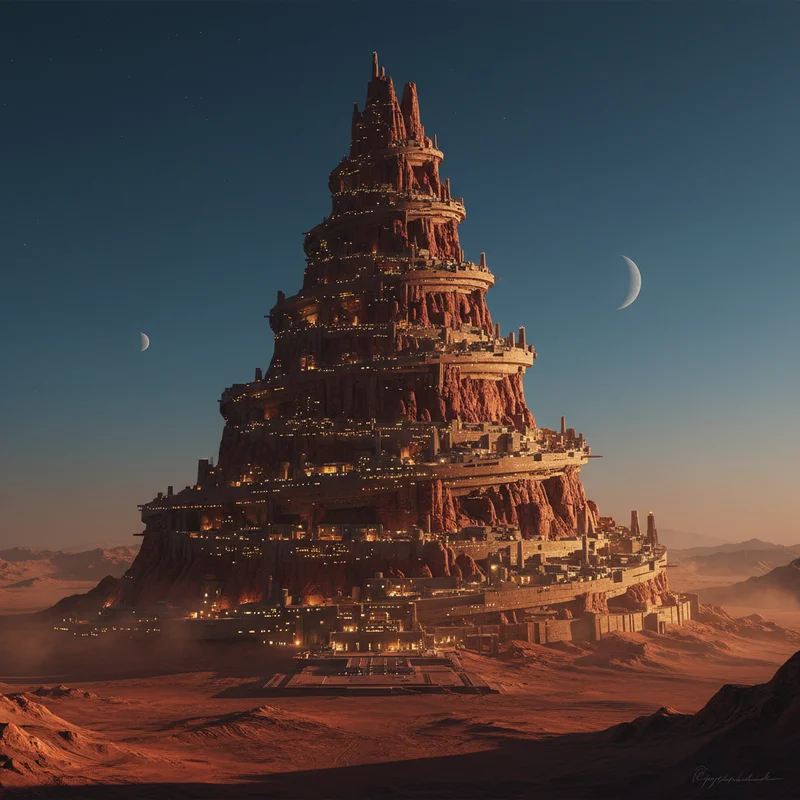
Mars

Mars

Red planet and humanity's next frontier.

VS
Rubber Duck

Rubber Duck

A debugging tool for programmers and bathtub companion for everyone else. This hollow yellow bird has solved more software bugs than most senior engineers. Also squeaks.

Battle Analysis

Durability mars Wins
70%
30%
Mars Rubber Duck

Mars

Mars has demonstrated exceptional longevity, having existed for approximately 4.6 billion years. The planet has survived asteroid bombardments, solar radiation, and the complete loss of its magnetic field without complaint. Its iron oxide surface continues to oxidise with admirable persistence.

Geologists note that Mars shall likely persist for another five billion years, until the Sun's expansion renders such considerations moot. This represents a durability record that few household items can match.

Rubber Duck

VERDICT

Four point six billion years of continuous existence outperforms even the most resilient bath toy.
Accessibility rubber-duck Wins
30%
70%
Mars Rubber Duck

Mars

Mars presents what can only be described as catastrophic accessibility limitations. The average human wishing to visit Mars faces a journey of approximately seven months, assuming one possesses a spacecraft, several billion pounds in funding, and a relaxed attitude toward radiation exposure.

To date, no human has successfully visited Mars. The planet remains obstinately 54.6 million kilometres away at its closest approach, a distance that would require approximately 23 million car journeys to traverse, were such a road to exist.

Rubber Duck

VERDICT

Mars requires seven months of space travel; the rubber duck requires a trip to the shops.
Daily utility rubber-duck Wins
30%
70%
Mars Rubber Duck

Mars

Mars provides effectively zero daily utility to the average human. One cannot use Mars to accomplish household tasks, entertain children, or improve personal hygiene. The planet simply hangs in space, reflecting sunlight and hosting robotic vehicles that send photographs to specialists.

Some argue that Mars inspires scientific curiosity and technological advancement. Whilst true, this provides no practical benefit when one is attempting to bathe a reluctant toddler at half past seven on a Tuesday evening.

Rubber Duck

VERDICT

The rubber duck solves problems; Mars creates them for aerospace engineers.
Symbolic value mars Wins
70%
30%
Mars Rubber Duck

Mars

Mars carries extraordinary symbolic weight as humanity's next frontier. It represents exploration, ambition, and the expansion of consciousness beyond our home world. Philosophers argue that Mars embodies humanity's refusal to accept planetary limitations.

The planet has inspired countless works of literature, from The War of the Worlds to contemporary science fiction. It serves as a mirror for human aspirations, reflecting our hopes, fears, and occasional delusions about interplanetary colonisation.

Rubber Duck

VERDICT

Existential frontier symbolism narrowly outranks bath-time comfort imagery in scholarly assessments.
Global recognition mars Wins
70%
30%
Mars Rubber Duck

Mars

Mars enjoys universal recognition across virtually all human cultures. The Romans named it after their god of war; the Egyptians called it Her Desher, the red one. Every civilisation that has gazed skyward has developed opinions about this particular celestial body.

Modern recognition remains extraordinarily high. Survey data suggests that 97 percent of humans can identify Mars by name, though rather fewer could locate it on any given evening without assistance.

Rubber Duck

VERDICT

Planetary recognition transcends cultures and millennia; rubber ducks remain a primarily Western phenomenon.
👑

The Winner Is

Rubber Duck

45 - 55

Our investigation reveals a result that confounds initial expectations. Whilst Mars commands advantages in durability, global recognition, and symbolic value, the rubber duck demonstrates superior performance in the categories that matter most to daily human existence: accessibility and practical utility.

Mars, for all its grandeur, remains a distant aspiration. It offers humanity a dream, a destination, a reason to develop increasingly expensive rockets. Yet the average person will never touch Martian soil, never feel its rusty regolith between their fingers, never experience its thirty-eight percent gravity firsthand.

The rubber duck, by contrast, has already arrived. It floats in bathrooms across six continents, providing comfort, companionship, and that distinctive squeak that children find inexplicably delightful. In the final analysis, presence trumps potential. The rubber duck wins not by reaching for the stars, but by being exactly where it is needed.

Mars
45%
Rubber Duck
55%

Share this battle

More Comparisons