
Topic Battle

Where Everything Fights Everything

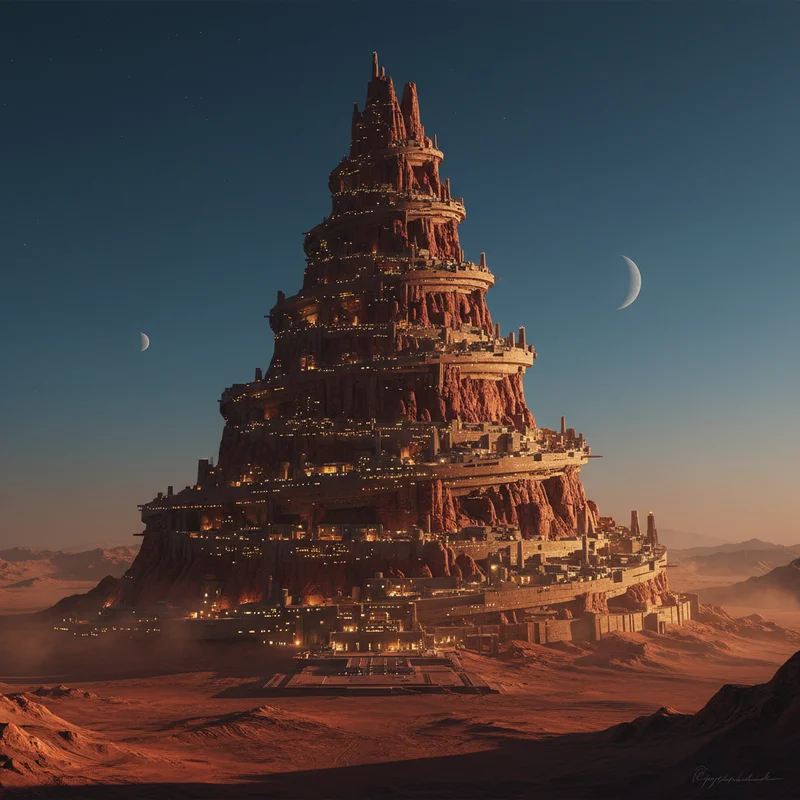
Mars

Mars

Red planet and humanity's next frontier.

VS
Social Media

Social Media

Digital platforms connecting and dividing humanity simultaneously.

Battle Analysis

Longevity Mars Wins
70%
30%
Mars Social Media

Mars

Mars has maintained its current form for approximately 4.5 billion years, a tenure that renders most human institutions embarrassingly ephemeral by comparison. The planet's geological features include impact craters dating back billions of years, preserved by an atmosphere too thin to erode them. Olympus Mons has dominated the Martian skyline for three billion years. Barring unforeseen cosmic catastrophe, Mars will continue its orbital dance around the Sun for another five billion years until solar expansion renders such distinctions moot.

Social Media

The oldest surviving social media platforms date to the early 2000s, granting the sector approximately two decades of operational history. Within this brief span, countless platforms have risen to dominance and collapsed into irrelevance. MySpace, once valued at billions, now exists primarily as a cautionary tale. The average lifespan of a social media trend measures in hours. Platforms that commanded attention in 2015 now struggle for relevance. The sector's foundations rest upon advertising revenue streams of notable instability.

VERDICT

Four and a half billion years of existence versus two decades renders this comparison almost unseemly.
Daily utility Social Media Wins
30%
70%
Mars Social Media

Mars

The practical utility of Mars in everyday human existence remains, it must be acknowledged, somewhat limited. The planet offers neither warmth in winter nor shade in summer. One cannot consult Mars for restaurant recommendations or use it to contact estranged relatives. Its gravitational influence upon terrestrial tides is negligible, and its contribution to agricultural planning ceased when Babylonian astrology fell from scientific favour. Research into Mars does drive technological innovation, and the distant goal of colonisation provides employment for thousands of engineers and scientists worldwide.

Social Media

Social media has insinuated itself into virtually every aspect of contemporary existence with remarkable thoroughness. It serves as the primary communication channel for billions, facilitates commerce on scales previously unimaginable, coordinates political movements, and provides entertainment during commutes. Businesses now consider social media presence essential for survival. Personal relationships increasingly depend upon digital maintenance. Even those who abstain find their data harvested, their images tagged, their existence documented without consent.

VERDICT

Social media touches billions of lives hourly; Mars remains billions of kilometres beyond practical daily influence.
Stress impact Mars Wins
70%
30%
Mars Social Media

Mars

Contemplation of Mars tends to produce emotional states ranging from wonder to existential reflection, neither of which typically registers as acute stress. Astronomical observation has long served as a meditative practice, encouraging perspective upon earthly concerns. The pursuit of Martian colonisation does generate occupational stress for those professionally engaged, and the sixteen-minute communication delay poses unique psychological challenges for mission controllers. For the general population, however, Mars represents aspiration rather than anxiety.

Social Media

Research consistently correlates social media usage with elevated stress levels, anxiety, and depression, particularly among adolescent populations. The platforms' fundamental architecture exploits psychological vulnerabilities, delivering variable rewards optimised for addiction. Comparison with curated presentations of others' lives generates inadequacy. Fear of missing out maintains compulsive checking behaviours. Cyberbullying has emerged as a significant public health concern. The attention economy profits directly from emotional volatility.

VERDICT

Gazing at the Red Planet rarely triggers doom-scrolling behaviour or social comparison anxiety.
Global recognition Mars Wins
70%
30%
Mars Social Media

Mars

Mars enjoys near-universal recognition across human cultures, having featured prominently in mythologies, scientific discourse, and popular entertainment for millennia. Named after the Roman god of war, its distinctive reddish hue has made it instantly identifiable to any observer of the night sky. Space agencies worldwide have devoted enormous resources to its study, whilst fiction writers have populated it with everything from canal-building civilisations to potato-farming astronauts. Survey data suggests that upwards of ninety-five percent of the global population can identify Mars by name, a figure that transcends linguistic and cultural boundaries with remarkable consistency.

Social Media

Social media platforms have achieved recognition levels that rival nation states, with application icons becoming some of the most widely known symbols on Earth. The distinctive bird, camera, and thumbs-up iconography have penetrated markets where traditional literacy remains limited. Approximately sixty percent of the global population now actively uses social media, translating recognition into daily engagement. These platforms have fundamentally altered how recognition itself operates, creating new hierarchies of fame entirely divorced from traditional achievement metrics or geographical constraints.

VERDICT

Mars maintains recognition across generations and cultures without requiring active participation or technological access.
Environmental impact Mars Wins
70%
30%
Mars Social Media

Mars

Mars presents an environmental impact upon Earth that approaches zero with mathematical precision. The planet neither contributes to nor ameliorates climate change. Its thin carbon dioxide atmosphere remains sequestered 225 million kilometres distant. The rockets launched towards Mars do generate emissions, though these represent a fraction of global transport pollution. Mars itself offers potential as a second home for humanity, theoretically reducing long-term pressure on terrestrial ecosystems, though this remains firmly speculative at present.

Social Media

The environmental footprint of social media proves substantially larger than casual users might suppose. Data centres powering these platforms consume approximately one percent of global electricity, a figure projected to triple by 2030. The manufacturing of devices required to access these platforms generates electronic waste at alarming rates. The platforms actively promote consumption through targeted advertising, amplifying environmental pressures. However, social media also enables environmental activism and awareness campaigns at unprecedented scales.

VERDICT

A planet 225 million kilometres away generates less direct environmental harm than server farms in Arizona.
👑

The Winner Is

Social Media

45 - 55
Upon dispassionate analysis, social media emerges with a marginal advantage, though the victory tastes somewhat bitter. Where Mars offers humanity a distant dream, social media delivers immediate, if often problematic, utility. The platforms that now dominate human attention provide genuine connection alongside manufactured outrage, facilitate commerce alongside exploitation, enable democracy alongside authoritarianism. Mars, for all its romantic appeal, remains practically inaccessible to all but the most well-funded governmental programmes. Social media, whatever its pathologies, has democratised communication in ways that reshape societies daily. One suspects future historians will regard both with equal fascination and concern.
Mars
45%
Social Media
55%

Share this battle

More Comparisons