Topic Battle

Where Everything Fights Everything

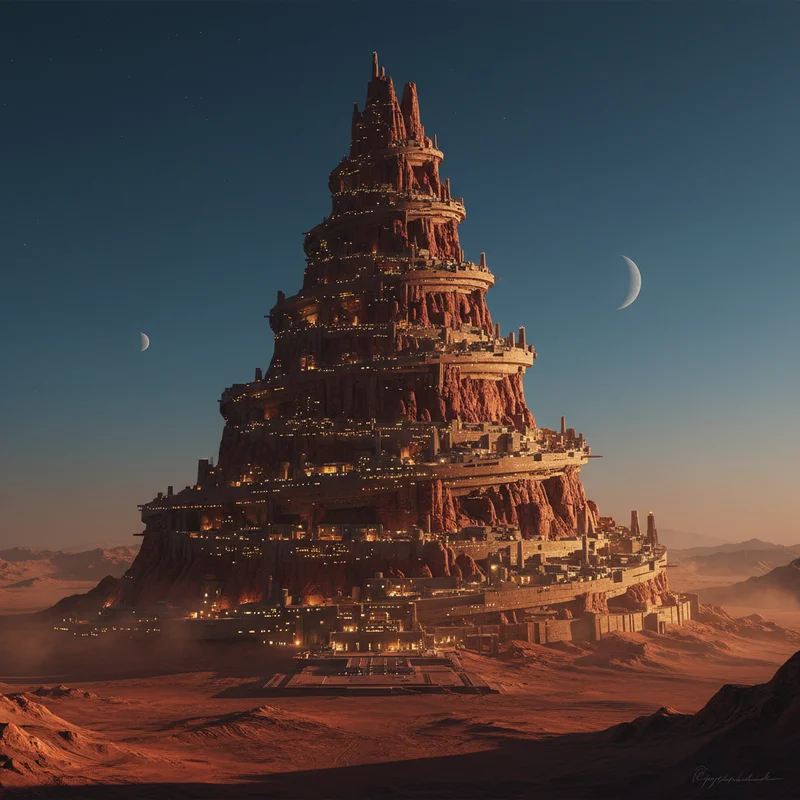
Mars

Mars

Red planet and humanity's next frontier.

VS
The Internet

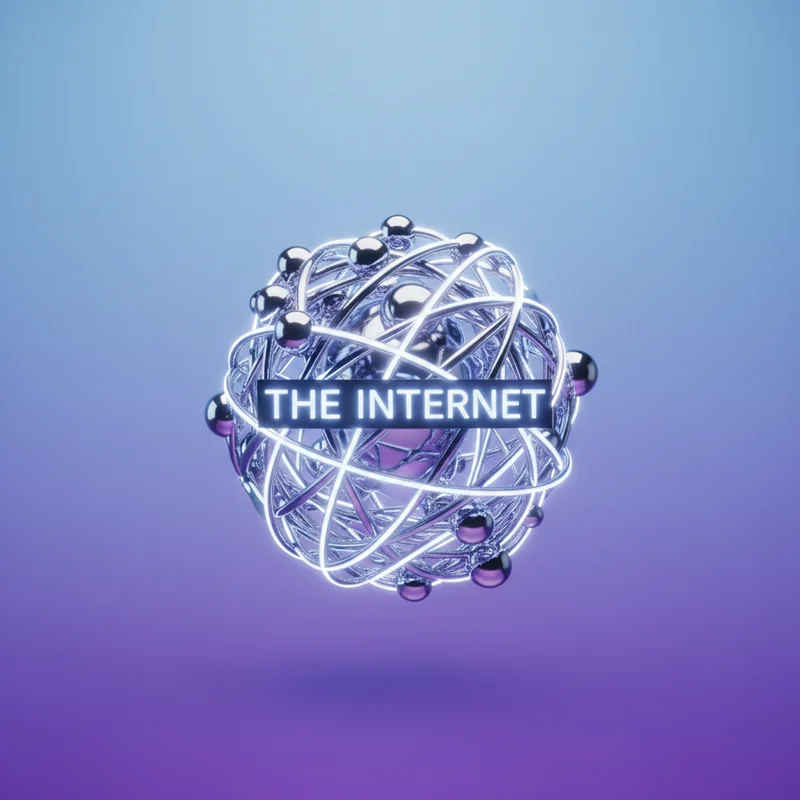
The Internet

Global network of information and cat videos.

Battle Analysis

Longevity mars Wins
70%
30%
Mars The Internet

Mars

Mars has maintained its current form for approximately 4.6 billion years, having survived the Late Heavy Bombardment, the loss of its magnetic field, the evaporation of its ancient oceans, and countless other catastrophes that would have rendered any digital network permanently inoperable. The planet will persist for another five billion years until solar expansion renders such considerations moot.

This durability operates on timescales that reduce human endeavours to statistical noise. Mars was ancient when the first single-celled organisms emerged on Earth. It witnessed the rise and fall of the dinosaurs without registering any particular interest. The planet embodies permanence in a way that no human creation can approach.

The Internet

The Internet's oldest continuously operating components date to approximately 1969, making the network younger than many of its users' parents. Its infrastructure requires constant maintenance, periodic replacement, and the continued functioning of global civilisation to persist. A sufficiently severe solar storm could reduce decades of development to electromagnetic noise.

Individual websites demonstrate even less permanence—the average webpage survives roughly 100 days before modification or deletion. Digital preservation efforts struggle against technological obsolescence, format degradation, and corporate indifference. The Internet exists in a state of perpetual becoming, never achieving the stability that Mars takes for granted.

VERDICT

Billions of years of existence cannot be matched by infrastructure requiring constant electricity.
Accessibility the_internet Wins
30%
70%
Mars The Internet

Mars

Reaching Mars requires a spacecraft, 18 months of travel time, exposure to cosmic radiation exceeding safe limits, and resources that only nation-states and eccentric billionaires can muster. The current human presence on Mars consists of exactly zero individuals, with robotic ambassadors conducting all surface operations on humanity's behalf.

Visual access proves somewhat easier—a modest telescope reveals the planet's rusty disc, and amateur astronomers can observe seasonal changes in polar ice coverage. Yet meaningful interaction with Mars remains restricted to an exclusive club of space agencies, making the planet perhaps the least accessible entity in everyday human experience.

The Internet

Accessing the Internet requires only a device and connectivity—resources available to over 60% of the global population. Public libraries, mobile networks, and satellite coverage have extended this access to remote villages, polar research stations, and ocean-going vessels. The barrier to entry has dropped from substantial to negligible within a single generation.

The Internet actively invites engagement, presenting itself through interfaces designed for maximum accessibility. One can contribute to its archives, modify its structure, or simply consume its offerings with equal ease. This democratic accessibility represents perhaps the network's most revolutionary characteristic—a global resource available to billions without requiring security clearance or spacecraft.

VERDICT

Billions of daily users confirm accessibility that spacecraft cannot match.
Global influence the_internet Wins
30%
70%
Mars The Internet

Mars

Mars exerts influence primarily through gravitational forces and the power of human imagination. Its physical pull affects solar system dynamics in ways that stabilise planetary orbits, while its symbolic pull has launched space programmes, inspired science fiction, and consumed billions in research funding. The planet has influenced human culture since Babylonian astronomers first noted its retrograde motion circa 400 BCE.

However, this influence remains largely aspirational. Mars does not interrupt dinner conversations, does not determine election outcomes, and cannot be blamed for decreased productivity in offices worldwide. Its influence operates on geological timescales and through abstract inspiration rather than direct intervention in daily affairs.

The Internet

The Internet's influence on contemporary civilisation borders on the totalising. With over 5.3 billion users accessing its resources daily, the network has achieved penetration rates that would make any conqueror weep with envy. It has reshaped commerce, demolished traditional media, revolutionised political organisation, and created entirely new categories of human employment and unemployment.

No aspect of modern existence remains untouched by this digital membrane. Relationships form and dissolve through its infrastructure. Revolutions organise across its channels. The global economy pulses through its fibre-optic arteries with transactions exceeding $30 trillion annually. The Internet has become less a tool than an environment, a new medium in which humanity increasingly conducts its existence.

VERDICT

Daily influence over billions of human decisions outweighs gravitational influence over rocks.
Information storage the_internet Wins
30%
70%
Mars The Internet

Mars

Mars stores information in the only truly permanent medium available—physical geology. Its rock strata contain records of volcanic activity, asteroid impacts, and atmospheric evolution spanning billions of years. The Valles Marineris canyon system alone represents a geological archive that could occupy researchers for centuries.

This information storage proves remarkably resilient. No solar flare, no magnetic pulse, no power outage can erase the data encoded in Martian sedimentary layers. The planet's polar ice caps contain climate records stretching back millennia, preserved in frozen strata that require no electricity to maintain. However, accessing this information requires spacecraft costing billions and patience measured in years.

The Internet

The Internet currently stores approximately 120 zettabytes of data—a figure so large it has ceased to convey meaningful information. This repository contains humanity's accumulated knowledge, creative output, personal communications, and an estimated 500 million tweets daily, most of which contribute nothing to the permanent record of civilisation.

Access to this archive proves instantaneous for those with connectivity. Search algorithms can retrieve relevant information from this planetary brain in fractions of seconds. However, this storage exhibits troubling fragility—server farms require constant cooling, data centres consume 1-2% of global electricity, and bit rot silently corrupts digital archives that nobody remembers to maintain.

VERDICT

Accessible knowledge serving billions daily surpasses geological records awaiting excavation.
Cultural significance the_internet Wins
30%
70%
Mars The Internet

Mars

Mars has occupied human imagination since ancient astronomers first noticed its blood-red wandering across the night sky. The planet has inspired war gods across multiple civilisations, launched the science fiction genre with Wells's War of the Worlds, and continues to feature prominently in humanity's vision of its multiplanetary future. Musk built a company around its colonisation; Bradbury wrote its chronicles.

This cultural significance derives from Mars's status as the most reachable elsewhere—close enough to inspire genuine plans, distant enough to represent genuine frontier. The planet symbolises human aspiration toward the cosmic, serving as a concrete focus for abstract dreams of expansion beyond terrestrial constraints.

The Internet

The Internet has generated cultural phenomena at a pace that overwhelms traditional analysis. Memes, influencers, viral moments, and entirely new art forms emerge from its substrate continuously. It has democratised cultural production while simultaneously enabling unprecedented concentration of cultural power among platform owners.

More fundamentally, the Internet has become the medium through which culture itself propagates. Music, literature, visual art, and human discourse increasingly exist first as digital phenomena, with physical manifestations becoming secondary. The network has not merely influenced culture—it has become the primary infrastructure through which culture operates, achieving a significance that transcends mere subject matter.

VERDICT

Being the medium of cultural transmission exceeds being a subject of cultural fascination.
👑

The Winner Is

The Internet

45 - 55

The confrontation between Mars and the Internet ultimately illuminates the distinction between potential and actuality. Mars represents humanity's grandest aspirations—species survival, cosmic expansion, the transcendence of terrestrial limitations. The Internet represents humanity's present reality—instant communication, accessible knowledge, and the democratisation of information that previous generations could scarcely imagine.

What Mars offers in permanence and possibility, it surrenders in accessibility and immediate utility. The planet asks humanity to invest decades and billions before yielding returns. The Internet delivers value instantaneously to anyone with a connection, reshaping civilisation in real-time rather than hypothetical futures. This immediacy carries weight that distant promises cannot match.

Yet the comparison reveals something profound about human priorities. We have built a global nervous system connecting billions while a potential second home awaits, largely unexplored, a mere eighteen months away. The Internet's victory here reflects not Mars's inadequacy but humanity's current focus—the choice to perfect connection before pursuing expansion. Whether this represents wisdom or shortsightedness, only time will determine.

Mars
45%
The Internet
55%

Share this battle

More Comparisons