Topic Battle

Where Everything Fights Everything

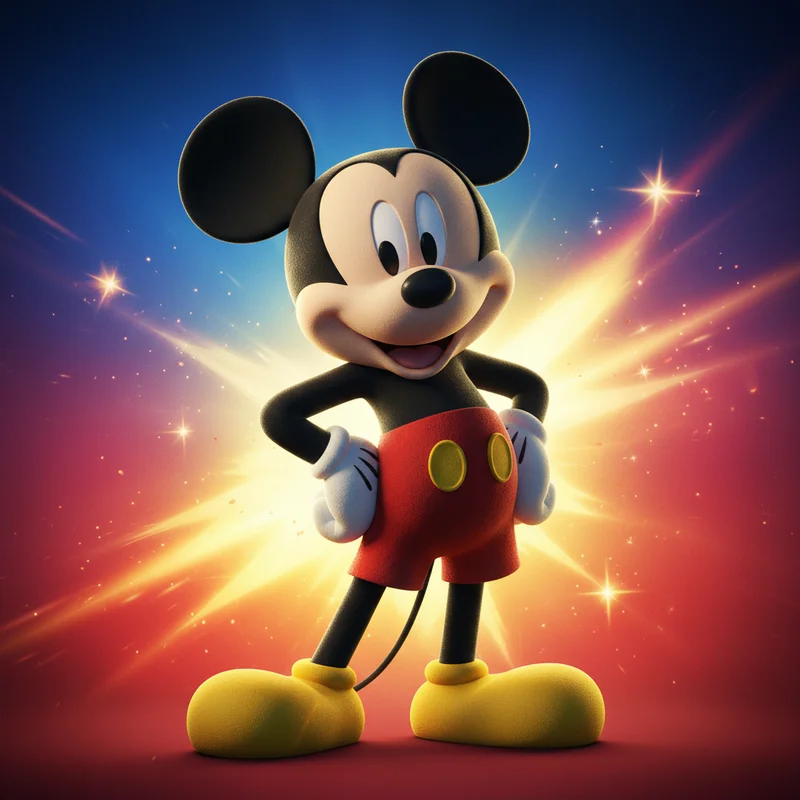
Mickey Mouse

Mickey Mouse

Disney's original mascot and corporate icon.

VS
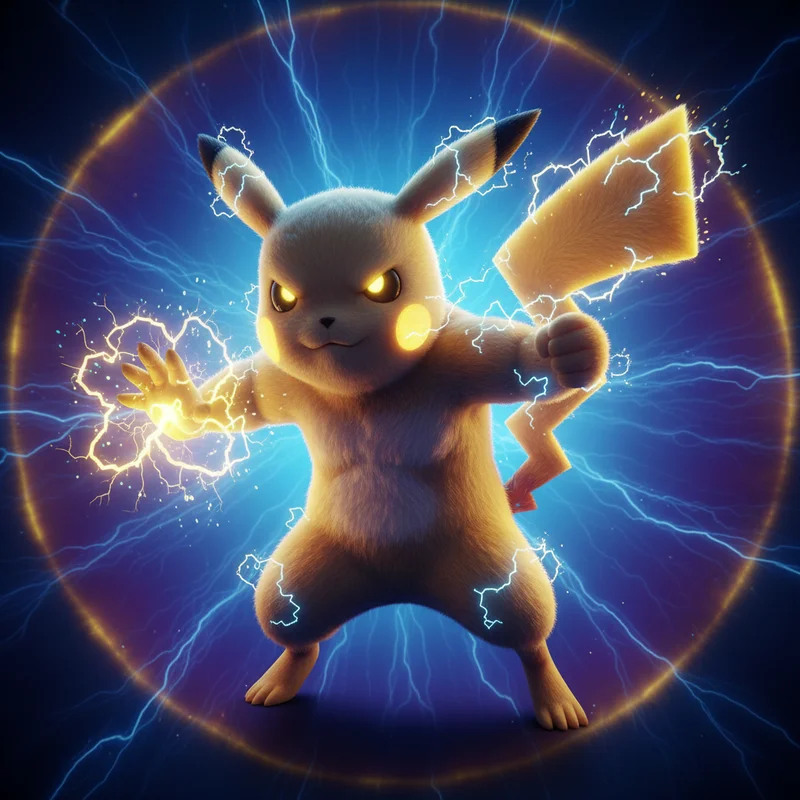
Pikachu

Pikachu

Electric mouse Pokemon and franchise mascot.

Battle Analysis

Emotional range Pikachu Wins
30%
70%
Mickey Mouse Pikachu

Mickey Mouse

Despite nearly a century of screen time, Mickey remains emotionally constrained by corporate necessity. The mouse must embody Disney's brand values: optimism, friendliness, and wholesome entertainment. This leaves little room for the dramatic depths explored by his own supporting cast. Donald Duck rages; Goofy stumbles through existential confusion; Mickey remains pleasant. His emotional ceiling is enthusiasm; his floor is mild concern. This consistency is both his strength and his dramatic limitation, a creature trapped in perpetual professional cheerfulness.

Pikachu

The electric rodent's limited vocabulary paradoxically enables remarkable emotional expression. Through variations of "Pika" and "Chu," the creature conveys joy, determination, sadness, anger, and exhaustion. The Pokemon anime has depicted Pikachu in moments of genuine dramatic weight: near-death experiences, tearful separations, triumphant victories. Episode 39, in which the creature considers remaining with its wild brethren, demonstrated emotional complexity rarely afforded to mascot characters. One word, infinite feelings.

VERDICT

Paradoxically, the creature with one word displays greater emotional range than the fully verbal mouse.
Design efficiency Mickey Mouse Wins
70%
30%
Mickey Mouse Pikachu

Mickey Mouse

Mickey's design represents a masterclass in visual simplicity. Three circles of descending size create instant recognition from any angle, in any medium, at any scale. The genius lies in what animators call read: the silhouette communicates identity before details register. His white gloves solve the practical problem of distinguishing hands from body in black-and-white animation while adding theatrical showmanship. The red shorts provide necessary colour contrast. Every element serves multiple purposes, a design efficiency that approaches mathematical elegance.

Pikachu

Pikachu's design operates on principles of calculated adorability. The body-to-head ratio triggers nurturing instincts hardwired into primate neurology. Red cheek circles suggest health and youth. The lightning-bolt tail provides visual dynamism while communicating electrical powers. Yellow pigmentation ensures visibility against any background. The pointed ears create directional interest. Ken Sugimori's creation represents decades of character design evolution compressed into a single optimised specimen, though it requires more complexity than Mickey's pure geometric approach.

VERDICT

The three-circle silhouette achieves maximum recognition with minimum visual information.
Cultural longevity Mickey Mouse Wins
70%
30%
Mickey Mouse Pikachu

Mickey Mouse

The Mus musculus specimen emerged in 1928 aboard a fictional steamboat, during an era when talking pictures were revolutionary. Nearly a century later, this rodent has survived the Great Depression, World War II, the Cold War, and the invention of the internet without so much as changing his trousers. His white gloves, originally a practical animation choice, have become symbols of corporate optimism recognised across every inhabited continent. The creature has aged with the curious grace of a being that exists outside time itself.

Pikachu

Pikachu materialised in 1996, hatching from a Game Boy cartridge into a world already saturated with animated mascots. Yet within three decades, this electric mouse achieved what most fictional characters cannot: genuine emotional real estate across generational divides. Children who caught their first Pikachu in 1996 now introduce the creature to their own offspring. The yellow rodent has become a 25-year intergenerational handshake, though its relative youth remains notable when compared to its American counterpart.

VERDICT

A 95-year cultural presence versus 25 years represents an insurmountable temporal advantage in the longevity stakes.
Global recognition Mickey Mouse Wins
70%
30%
Mickey Mouse Pikachu

Mickey Mouse

Studies suggest Mickey Mouse achieves 97% recognition rates in developed nations, a figure rivalling religious iconography. The mouse has been displayed in the Louvre, met every American president since Coolidge, and serves as the de facto ambassador for American cultural exports. His face appears on currency in Niue, a Pacific island nation. Disney theme parks on four continents ensure physical presence alongside digital omnipresence. The creature has achieved something approaching visual omniscience in the human experience.

Pikachu

Pikachu's recognition rates approach 95% among those under 40 in developed nations, with particularly dominant awareness in Asian markets. The creature served as Japan's official mascot for the 2014 FIFA World Cup campaign and appeared on commercial aircraft across multiple airlines. However, recognition drops notably among older demographics unfamiliar with video game culture. Pikachu's dominance is generationally concentrated rather than universally distributed, creating pockets of non-recognition that Mickey rarely encounters.

VERDICT

Universal recognition across all age demographics versus generationally concentrated awareness.
Merchandising dominance Pikachu Wins
30%
70%
Mickey Mouse Pikachu

Mickey Mouse

The Disney mouse has transcended merchandising to become merchandise itself. His silhouette appears on an estimated 40,000 products annually, from $3 keychains to $300,000 Rolex watches. The three-circle head formation has achieved the rare distinction of being recognisable in pure geometric abstraction. Disney's consumer products division generates approximately $5 billion annually, with Mickey's ears serving as the primary visual catalyst. The mouse has become so ubiquitous that his absence from a children's product line is now more notable than his presence.

Pikachu

The Pokemon franchise has generated over $100 billion in lifetime revenue, making it the highest-grossing media franchise in human history. Pikachu sits at the centre of this commercial supernova, his yellow visage adorning trading cards worth thousands, plush toys in uncountable millions, and a branded Boeing 747. The creature's merchandising appeal transcends demographics: businessmen collect rare cards while toddlers clutch plush replicas. Japan Airlines painted entire aircraft in his honour. Few fictional beings command such aeronautical respect.

VERDICT

The Pokemon franchise's $100 billion valuation surpasses even Disney's considerable merchandising apparatus.
👑

The Winner Is

Mickey Mouse

53 - 47

The confrontation between these animated economic superpowers reveals fascinating truths about mascot evolution. Mickey Mouse represents the old paradigm: a single company's carefully managed symbol, emotionally restrained by corporate necessity, yet achieving near-universal recognition through sheer temporal dominance. Pikachu embodies the new model: a creature born from interactive media, emotionally complex despite linguistic limitations, commanding greater commercial revenue but with generationally bounded awareness.

In raw financial terms, Pikachu's franchise generates more annual revenue. In cultural penetration across all demographics, Mickey maintains superiority. The mouse has survived longer; the electric rodent connects deeper with those it reaches. This is not a clear victory but a generational handoff observed in real time.

Mickey Mouse
53%
Pikachu
47%

Share this battle

More Comparisons