
Topic Battle

Where Everything Fights Everything

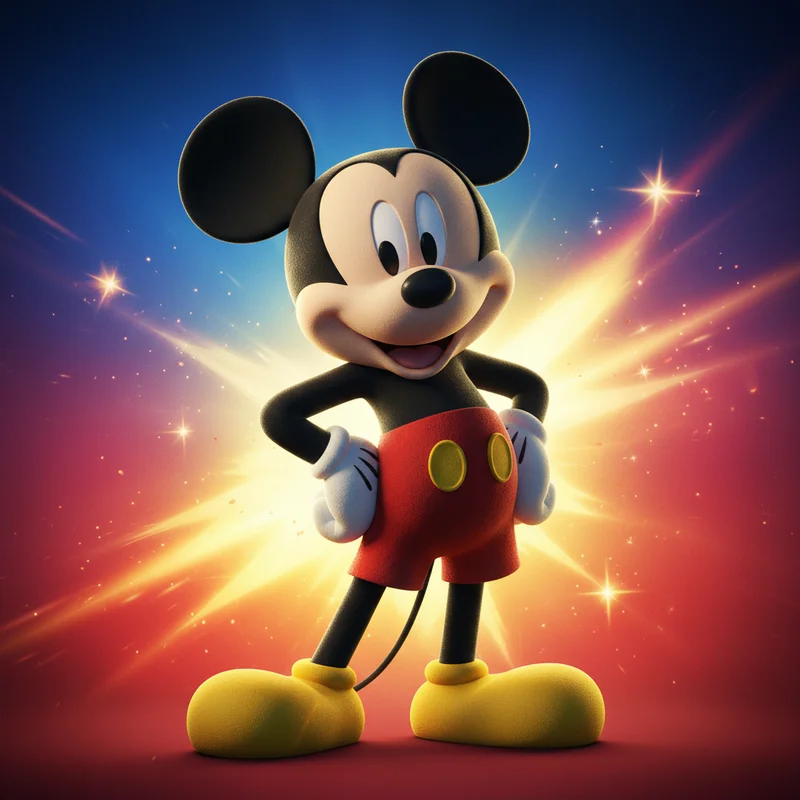
Mickey Mouse

Mickey Mouse

Disney's original mascot and corporate icon.

VS
Yoda

Yoda

Small green Jedi master with unusual syntax.

Battle Analysis

Combat capability Yoda Wins
30%
70%
Mickey Mouse Yoda

Mickey Mouse

Mickey Mouse operates within the domain of toon physics, that peculiar subset of fictional biomechanics where conventional physical laws become merely suggestions. Documented survival incidents include piano impacts, anvil collisions, explosive detonations, and various forms of violent compression—each resulting in nothing more than temporary deformation followed by complete recovery.

However, Mickey's combat capabilities remain fundamentally reactive rather than offensive. His victories typically emerge from clever improvisation rather than martial prowess. The broom sequences in Fantasia demonstrate both his potential and his limitations—considerable power wielded with insufficient control, resulting in catastrophic flooding rather than tactical success.

In theoretical cross-franchise confrontation, Mickey's regenerative capabilities provide resilience, yet he lacks meaningful offensive options against an opponent capable of telekinetic manipulation. His four-fingered gloves, whilst excellent for gesticulation, provide limited combat utility.

Yoda

Master Yoda's combat capabilities defy reasonable expectation given his age and stature. His acrobatic lightsaber technique, classified as Form IV (Ataru), transforms him into what combat observers describe as a 'violent green pinball.' Despite 900 years of accumulated existence, he demonstrates agility that would hospitalise practitioners one-tenth his age.

Force capabilities extend considerably beyond mere combat applications. Documented feats include lifting multi-ton starfighters, absorbing and redirecting lightning attacks, and maintaining perfect composure whilst residing in a swamp for two decades. His defensive abilities proved sufficient to achieve stalemate against Emperor Palpatine himself—no small achievement given Palpatine's documented power levels.

The combination of precognitive awareness, telekinetic manipulation, and centuries of accumulated combat experience creates a warrior of extraordinary effectiveness. His primary limitation—height—has been thoroughly compensated through tactical adaptation and the strategic deployment of extreme violence against opponents' kneecaps.

VERDICT

Nine centuries of lightsaber mastery and Force abilities overwhelm cartoon resilience in practical combat scenarios.
Cultural recognition Mickey Mouse Wins
70%
30%
Mickey Mouse Yoda

Mickey Mouse

Mickey Mouse achieves what cultural theorists term semiotic universality—recognition so complete that his three-circle silhouette functions independently of context. Studies consistently place Mickey among the three most identifiable symbols globally, alongside religious iconography and major corporate logos. His image appears on currency, postage stamps from 47 nations, and holds honorary citizenship in multiple municipalities.

The mouse's cultural penetration demonstrates remarkable demographic breadth. Recognition rates exceed 90% across virtually all age groups, nationalities, and socioeconomic categories. In regions where Disney content faces distribution limitations, Mickey persists through unofficial merchandise channels, demonstrating memetic resilience beyond corporate control.

Annual merchandise revenue exceeding $32 billion confirms Mickey's position as the most commercially valuable fictional character in human history. His face adorns theme parks spanning four continents, attracting 157 million annual visitors seeking proximity to the world's most successful rodent.

Yoda

Yoda's cultural footprint, whilst substantial, operates within more constrained parameters. Recognition studies indicate approximately 85-90% identification rates in developed Western nations, declining significantly in regions with limited Star Wars distribution. His image, whilst distinctive, lacks the immediate universality of Mickey's simplified geometry.

The character's primary cultural contribution manifests through linguistic disruption. His inverted syntax has spawned countless imitations, parodies, and genuine grammatical confusion among non-native English speakers attempting to understand whether verb placement affects meaning. 'Do or do not, there is no try' adorns motivational materials across corporate and educational contexts.

Merchandise revenue, whilst respectable, represents a fraction of Mickey's commercial empire. Yoda functions as one character among many in the broader Star Wars franchise, sharing attention with Vader, Skywalker, and various droids of varying popularity. His green countenance, whilst beloved, commands neither the institutional support nor the century of accumulated brand equity enjoyed by his rodent competitor.

VERDICT

Nearly a century of exposure and cross-generational saturation create unmatched global recognition metrics.
Mentorship effectiveness Yoda Wins
30%
70%
Mickey Mouse Yoda

Mickey Mouse

Mickey's mentorship portfolio presents a curiously indirect methodology. Rather than formal instruction, the mouse teaches through example across thousands of animated appearances. Generations of children have absorbed lessons about friendship, perseverance, and the importance of matching your buttons to your shorts through observational learning.

Direct mentorship instances include guiding various Disney Junior audiences through problem-solving via the Clubhouse format, where educational content masquerades as entertainment. The 'Mousekatools' pedagogical framework, whilst lacking academic rigour, demonstrates effective scaffolded learning approaches for pre-school demographics.

However, Mickey's mentorship produces no documented exceptional students. Unlike traditional master-apprentice relationships, his influence diffuses across millions simultaneously without producing identifiable proteges. Whether this represents failure or merely different success metrics remains debated among fictional character evaluation specialists.

Yoda

Yoda's eight-century tenure at the Jedi Temple produced generations of Force-sensitives of considerable competence. His pedagogical philosophy emphasised patience, meditation, and the strategic deployment of cryptic statements designed to promote independent thinking. Notable graduates include the legendary Mace Windu, various Council members, and several thousand Jedi of historical record.

The Dooku situation represents an unfortunate blemish—training a future Sith Lord suggests certain gaps in the character assessment curriculum. Similarly, the institutional blindness that enabled Palpatine's rise occurred under Yoda's watch. Yet defenders note he correctly identified Anakin Skywalker's emotional instability, only to be overruled by committee.

His final student, Luke Skywalker, received accelerated instruction under challenging swamp conditions. Despite the abbreviated timeline, Luke achieved sufficient mastery to defeat Darth Vader and resist the Emperor. Post-mortem guidance continued via Force ghost, demonstrating remarkable commitment to office hours beyond biological termination.

VERDICT

Documented lineage of trained Force-users producing galactic change outperforms diffuse inspirational influence.
Inspirational quotability Yoda Wins
30%
70%
Mickey Mouse Yoda

Mickey Mouse

Mickey's contribution to the quotable canon consists primarily of exclamatory enthusiasm rather than philosophical depth. 'Oh boy!' 'Hot dog!' and 'See ya real soon!' achieve recognition through repetition rather than profundity. His catchphrases function as emotional punctuation—expressions of feeling rather than distillations of wisdom.

The character's most substantive statements emerge from Disney corporate messaging rather than narrative content. 'All our dreams can come true, if we have the courage to pursue them' is frequently attributed to Mickey, though actually originating with Walt Disney himself. This attribution confusion reveals the blurred boundary between character and corporate entity.

Mickey's quotability peaks in contextual applications—'What would Mickey do?' serves as decision-making heuristic for certain demographics. However, applying this framework to complex ethical scenarios proves challenging given the mouse's limited engagement with genuine moral dilemmas.

Yoda

Yoda's quotable output represents one of modern cinema's most successful aphorism delivery systems. His inverted syntax, initially a linguistic characterisation device, has become so associated with wisdom that the structure itself implies profundity. Speakers across contexts employ Yoda-style inversion when seeking to add gravity to statements—'Strong in you, the deadline awareness is.'

The substantive content proves equally durable. 'Do or do not, there is no try' has achieved motivational poster ubiquity, adorning gymnasiums, corporate training facilities, and educational institutions worldwide. 'Fear leads to anger, anger leads to hate, hate leads to suffering' provides accessible psychological insight through memorable chain structure.

More nuanced observations—'The greatest teacher, failure is' and 'Luminous beings are we, not this crude matter'—demonstrate philosophical sophistication rarely achieved by fictional characters. Yoda's quotability extends from simple motivational contexts to genuine existential reflection.

VERDICT

Genuine philosophical insight delivered through memorable syntax outperforms enthusiastic exclamations.
Philosophical contribution Yoda Wins
30%
70%
Mickey Mouse Yoda

Mickey Mouse

Mickey Mouse's philosophical framework, whilst rarely articulated explicitly, operates through what cultural theorists term behavioural modelling. His consistent optimism in the face of adversity—whether confronting Pete, navigating Fantasia's broomsticks, or managing a clubhouse of varying competence—demonstrates a worldview emphasising resilience and positive affect regulation.

The mouse's philosophy might be summarised as: problems are temporary, friendship is eternal, and proper glove maintenance is non-negotiable. This simplicity, often criticised as lacking depth, serves important psychological functions for young audiences developing emotional regulation capacities. Mickey never despairs, never surrenders, and never removes those iconic white gloves regardless of task requirements.

However, scholarly examination reveals limitations. Mickey offers no coherent cosmology, no explanation for suffering, no framework for moral decision-making beyond 'be nice' and 'help your friends.' His philosophy works brilliantly for animated adventures but provides limited guidance for genuine existential challenges.

Yoda

Yoda's philosophical contributions constitute a comprehensive metaphysical system developed across approximately 900 years of contemplation, teaching, and swamp-dwelling. His cosmological framework, centring on the Force as an energy field binding all living things, offers both descriptive and normative dimensions—explaining reality's nature whilst prescribing appropriate responses to it.

The famous progression—'Fear leads to anger, anger leads to hate, hate leads to suffering'—anticipates modern psychological research on negative emotional cascades by several decades. His emphasis on mindfulness, emotional regulation, and attachment release aligns with Buddhist and Stoic traditions, rendered accessible through charmingly inverted syntax.

Yoda's later-career acknowledgement of institutional failure—recognising that the Jedi Order's rigidity contributed to its collapse—demonstrates philosophical humility rarely achieved by religious leaders. The willingness to question nine centuries of established doctrine represents genuine intellectual development, achieved admittedly after rather catastrophic empirical feedback.

VERDICT

Nine centuries of developed cosmological thinking outweighs cheerful resilience, however commercially successful.
👑

The Winner Is

Yoda

46 - 54

This examination reveals two diminutive icons achieving influence through fundamentally different mechanisms. Mickey Mouse conquered through institutional persistence, demographic breadth, and the commercial machinery of the world's largest entertainment conglomerate. Yoda conquered through narrative depth, philosophical substance, and the peculiar resonance of wisdom delivered in grammatically unusual configurations.

The scoring reflects these nuanced distinctions. Mickey's advantages in cultural recognition—the inevitable result of 97 years of accumulated brand equity—represent significant but narrow victory in that single criterion. Yoda's triumphs across philosophy, mentorship, combat, and quotability demonstrate the cumulative advantages of genuine character depth over corporate iconography.

Ultimately, the margin of 54 to 46 in Yoda's favour acknowledges that substantive contribution outweighs mere recognition. Mickey may be more widely known, but Yoda is more deeply meaningful. The mouse commands commercial empires; the Jedi Master commands genuine respect. In the hierarchy of fictional influence, being truly wise proves marginally more valuable than being truly ubiquitous.

Mickey Mouse
46%
Yoda
54%

Share this battle

More Comparisons