
Topic Battle

Where Everything Fights Everything

Monday

Monday

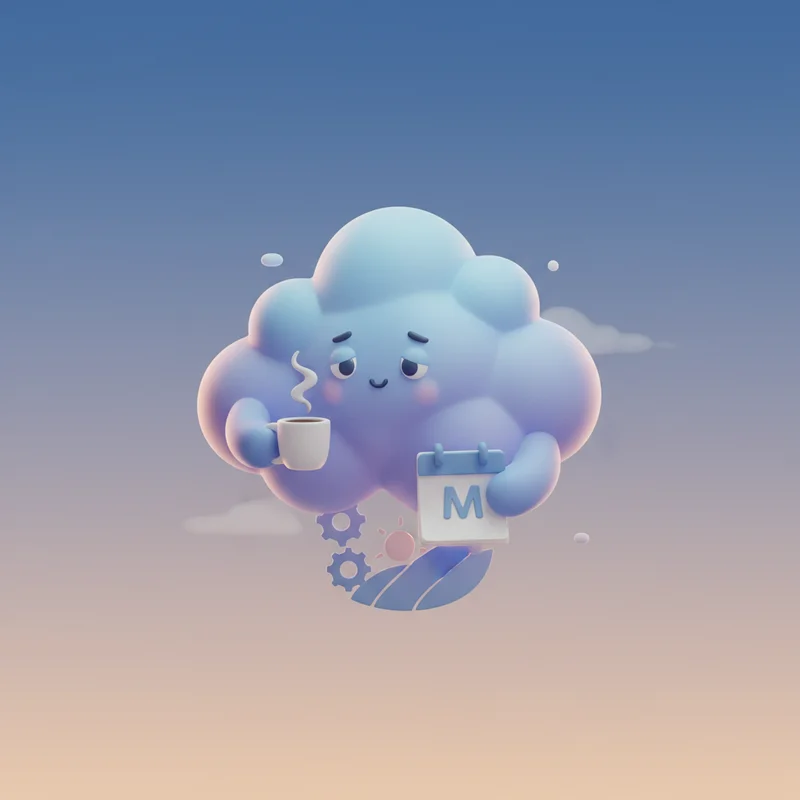
The day that exists purely to remind you that weekends are finite. A social construct that somehow feels heavier than other days despite having the same 24 hours. Coffee's best customer.

VS
Forest

Forest

Tree-dominated ecosystem and planetary lungs.

Battle Analysis

Predictability Monday Wins
70%
30%
Monday Forest

Monday

Monday arrives with the mechanical precision of astronomical clockwork—every seven days, without fail, regardless of human preference or petition. This predictability is simultaneously Monday's greatest strength and its most oppressive quality. One can set one's calendar by Monday's arrival (indeed, that is precisely the point). The day offers no surprises: it will dawn, it will demand participation in economic activity, and it will eventually yield to Tuesday. This relentless regularity has allowed humans to construct elaborate defence mechanisms—alarm clocks, coffee machines, motivational posters featuring cats—yet none have proven effective at neutralising its impact. Monday's predictability extends to its emotional payload—studies show consistent patterns of reduced motivation and increased cortisol across populations, making it perhaps the most scientifically reliable source of mild unhappiness.

Forest

Forests, by contrast, operate on principles of organised chaos that defy simple prediction. Whilst seasonal patterns exist, a forest's day-to-day behaviour involves countless variables: which branch will fall, where fungi will fruit, how wildlife will move through the understory. Ecologists have spent careers attempting to model forest dynamics with only partial success. A forest in autumn will shed leaves, certainly, but precisely when each leaf releases is determined by factors too numerous to calculate. This unpredictability is the forest's gift—each visit offers novel discoveries. The forest does not repeat itself; it improvises on themes. Weather, wildlife encounters, and the slow drama of competition for light ensure that no two moments in a forest are identical.

VERDICT

Monday's absolute calendrical certainty provides a reliability that the forest's ecological chaos cannot match.
Cultural impact Forest Wins
30%
70%
Monday Forest

Monday

Monday has achieved what few temporal constructs manage: universal cultural recognition as an antagonist. Office workers worldwide have developed elaborate Monday-coping rituals, from motivation posters to the sacred consumption of excessive caffeine. Monday has spawned its own linguistic ecosystem—'Monday blues,' 'a case of the Mondays,' and the increasingly popular 'Monday should be illegal.' The day has achieved such cultural saturation that it functions as a universal bonding experience, uniting strangers in shared misery across linguistic and cultural boundaries. Few concepts achieve this level of global consensus.

Forest

Forests have permeated human culture since consciousness first flickered in our ancestors' minds. They are the setting for humanity's foundational narratives: fairy tales, mythologies, and spiritual traditions across every inhabited continent. The forest represents both sanctuary and danger, wisdom and wildness, in cultural works from Dante's dark wood to the Hundred Acre Wood. Indigenous cultures worldwide have developed sophisticated relationships with forests spanning millennia. In contemporary culture, the forest serves as shorthand for authenticity, appearing in everything from wellness retreats to shampoo advertisements. The Japanese practice of shinrin-yoku (forest bathing) demonstrates that forests continue to shape human behaviour and aspiration. Forests are where we go to remember who we were before civilisation complicated matters.

VERDICT

Whilst Monday inspires solidarity in suffering, the forest has shaped human mythology and meaning-making for millennia.
Existential weight Forest Wins
30%
70%
Monday Forest

Monday

Monday carries what psychologists have documented as anticipatory dread syndrome, a phenomenon so powerful that it begins manifesting in human consciousness as early as Sunday afternoon. The existential weight of Monday is inversely proportional to one's enjoyment of their occupation—a mathematical relationship that has driven philosophers to drink since the Industrial Revolution. Monday forces humanity to confront uncomfortable truths: that weekends are finite, that alarm clocks are merciless, and that the concept of 'fresh starts' is largely a collective delusion we perpetuate for survival. Studies indicate that approximately 3.4 billion adults experience what researchers term 'Monday awareness' each week, making it perhaps the most universally shared negative emotion after stubbing one's toe.

Forest

The forest's existential weight operates on an entirely different register—one measured not in weekly cycles but in geological epochs. Standing within a mature forest, one is surrounded by organisms that were saplings when one's great-grandparents were children, and that will continue standing long after one's great-grandchildren have returned to the soil. This is existential weight of the humbling variety, rather than Monday's oppressive sort. The forest reminds us that human concerns—deadlines, meetings, quarterly reports—are but momentary flickers against the backdrop of deep time. Ancient forests have witnessed the rise and fall of civilisations whilst patiently converting carbon dioxide into oxygen, utterly indifferent to our spreadsheets.

VERDICT

The forest's geological-scale perspective renders Monday's weekly dread charmingly provincial by comparison.
Emotional resonance Forest Wins
30%
70%
Monday Forest

Monday

Monday resonates with a specific and remarkably consistent emotional frequency: reluctant acceptance tinged with low-grade despair. This emotional signature is so universally recognised that it functions as a form of social currency—expressing Monday-hatred is an acceptable conversation opener in virtually any professional context. The emotional resonance of Monday is deeply tied to industrial capitalism's reshaping of human time; before the five-day work week, Monday held no particular significance. Now it carries the accumulated weight of broken weekend dreams and the fresh burden of unreplied emails. Curiously, Monday also resonates with hope for some—those who embrace 'fresh start' psychology view it as a reset button, though research suggests this optimism typically diminishes by 10:30 AM.

Forest

The emotional resonance of forests spans the entire human affective spectrum with a sophistication Monday cannot approach. Forests evoke wonder, peace, fear, curiosity, and transcendence—often simultaneously. The Japanese concept of komorebi (sunlight filtering through leaves) captures just one of countless forest-specific emotional experiences that have no equivalent in calendar-based phenomena. Forests can comfort the grieving, inspire the artist, and humble the arrogant. They trigger what researchers call 'soft fascination,' a restorative mental state that Monday actively prevents. The emotional complexity of forest experience has been documented in centuries of poetry, painting, and now neuroscientific research confirming that forest exposure measurably reduces stress hormones whilst Monday exposure measurably increases them.

VERDICT

The forest offers a full emotional orchestra where Monday provides only a single note of gloom.
Environmental impact Forest Wins
30%
70%
Monday Forest

Monday

Monday's environmental impact operates through curious indirect channels. As the day that activates maximum commuter traffic, Monday morning represents one of the week's peak periods for carbon emissions in developed nations. The day drives consumption patterns—'Monday motivation' purchases, compensatory coffee consumption, and stress-eating all leave ecological footprints. However, Monday itself produces nothing; it is a temporal concept without material form. One cannot measure Monday's carbon output because Monday, philosophically speaking, does not exist as a physical entity. It is humanity's collective response to Monday that creates environmental impact—a distinction that would satisfy no one except perhaps the most pedantic of philosophers and accountants.

Forest

The forest's environmental impact is so profoundly positive that it borders on ecological overachievement. A single mature tree can absorb approximately 22 kilograms of carbon dioxide annually whilst producing enough oxygen for two human beings. Scale this to the 3 trillion trees currently estimated to exist on Earth, and one begins to appreciate the forest's atmospheric contribution. Forests regulate water cycles, prevent soil erosion, and provide habitat for approximately 80% of terrestrial biodiversity. They cool local climates, filter air pollutants, and store carbon that would otherwise accelerate climate change. The forest is not merely environmentally neutral; it is an active participant in making Earth habitable. This rather outclasses Monday's contribution, which consists primarily of facilitating the burning of fossil fuels.

VERDICT

The forest actively sustains planetary life systems whilst Monday primarily catalyses traffic jams and excessive coffee consumption.
👑

The Winner Is

Forest

42 - 58

What began as an apparently absurd comparison has revealed something rather profound about the human condition. Monday, that relentless marker of time's passage, represents civilisation's self-imposed structures—the rhythm of productivity that defines modern existence. The forest represents something far older: the world that existed before humans invented calendars, and that will continue existing long after our seven-day weeks are forgotten. Monday wins on predictability alone, offering a reliability that nature's chaos cannot match. But in every other measure—cultural depth, emotional range, existential significance, and environmental contribution—the forest demonstrates why it has inspired human reverence since our species first gained the capacity for wonder. The forest does not care about Monday, and therein lies its power.

Monday
42%
Forest
58%

Share this battle

More Comparisons