Topic Battle

Where Everything Fights Everything

Monday

Monday

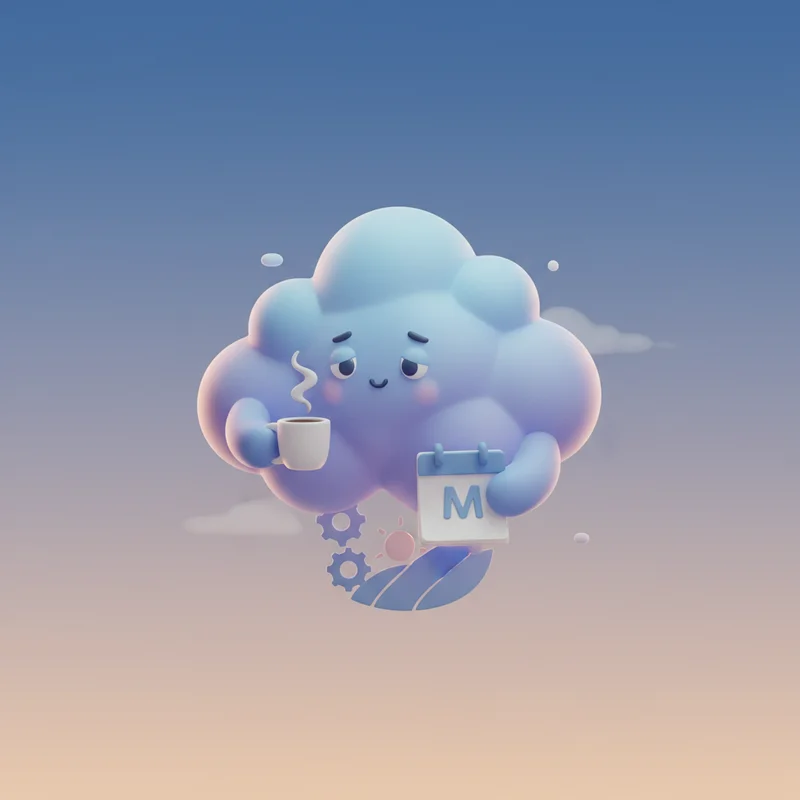
The day that exists purely to remind you that weekends are finite. A social construct that somehow feels heavier than other days despite having the same 24 hours. Coffee's best customer.

VS
Octopus

Octopus

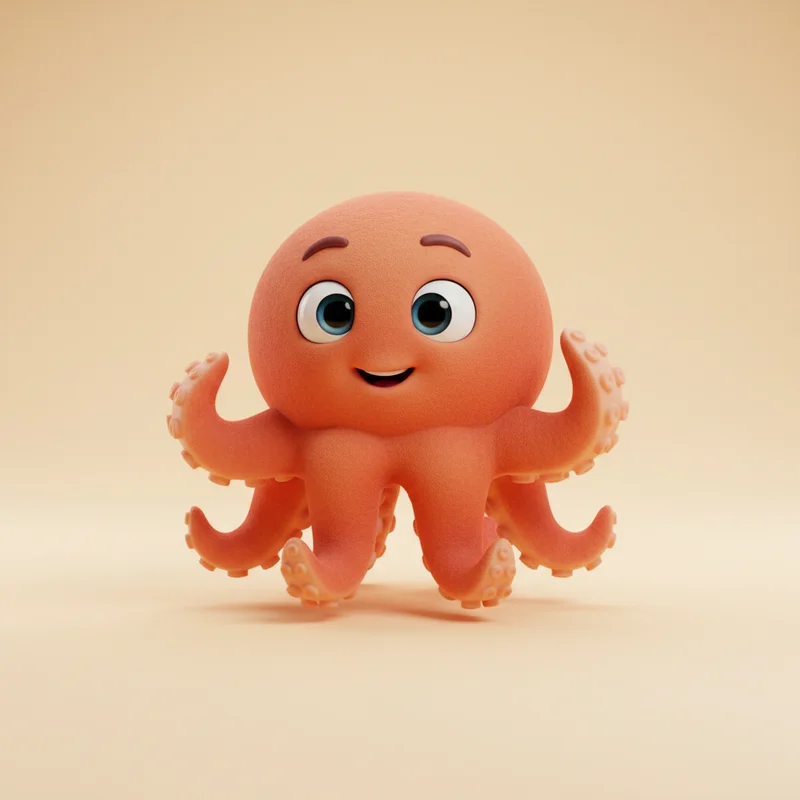
Eight-armed cephalopod demonstrating remarkable intelligence, escape artistry, and camouflage abilities.

Battle Analysis

Adaptability octopus Wins
30%
70%
Monday Octopus

Monday

Monday demonstrates a remarkable rigidity that could be interpreted as anti-adaptability. This calendrical constant has remained fundamentally unchanged since the Roman Empire adopted the planetary week. Monday arrives precisely when expected, with mechanical inevitability, neither accelerating nor decelerating regardless of human preference.

However, one might argue that Monday's cultural adaptability is significant. It has successfully integrated into every society that employs the seven-day week, from Tokyo to Toronto. The concept of 'Monday' has adapted to accommodate shift work, global time zones, and even the International Date Line, where Monday technically exists in two different calendar days simultaneously.

Octopus

The octopus represents perhaps the most extraordinary adaptive organism on Earth. Its capacity for instantaneous camouflage is unparalleled in the animal kingdom, capable of matching not just colour but texture and pattern with surrounding environments in less than 200 milliseconds. This creature can alter its entire body shape, squeeze through openings one-tenth its size, and regenerate lost limbs.

Neurologically, the octopus distributes two-thirds of its neurons across its eight arms, enabling each limb to think and act semi-independently. This decentralised intelligence allows for unprecedented problem-solving capabilities, including tool use, puzzle-solving, and escape artistry that has confounded aquarium staff worldwide. The octopus can adapt to environments ranging from tropical coral reefs to frigid Antarctic waters.

VERDICT

The octopus's biological adaptability across form, colour, and environment is simply unmatched.
Unpredictability octopus Wins
30%
70%
Monday Octopus

Monday

At first glance, Monday appears entirely predictable - arriving every seventh day with clockwork precision. However, the true unpredictability of Monday lies in its varied capacity for catastrophe. No two Mondays are alike in their specific torments. One may bring unexpected traffic, another an emergency meeting, a third a cascade of weekend-accumulated emails.

Monday's unpredictability also manifests in the disproportionate concentration of bad news that organisations strategically release at the week's beginning. Stock market crashes, layoff announcements, and political scandals all favour Monday publication, making each new week a potential ambush of previously unknown disasters.

Octopus

The octopus has elevated unpredictability to an art form. Marine biologists report that these creatures display distinct personalities, with some being bold explorers whilst others prove timid and cautious. More remarkably, individual octopuses demonstrate what can only be described as capriciousness - behaving entirely differently in identical situations on different occasions.

Tales of octopus unpredictability are legendary in marine research facilities. Specimens have been documented unscrewing jar lids, escaping tanks through seemingly impossible routes, and even leaving their enclosures at night to raid neighbouring tanks for fish before returning before dawn. One famous octopus in New Zealand, Inky, escaped to the ocean through a drainage pipe, a route no human predicted he would discover.

VERDICT

The octopus combines genuine randomness with calculated mischief in ways Monday cannot match.
Survival instinct octopus Wins
30%
70%
Monday Octopus

Monday

Monday, as an abstract temporal concept, possesses no survival instinct in the biological sense. However, as a cultural construct, Monday demonstrates remarkable persistence. Despite centuries of human complaints, numerous attempts to restructure the working week, and even brief experiments with alternative calendar systems, Monday endures.

The survival of Monday depends entirely upon human adherence to the seven-day week, a dependency that represents both strength and vulnerability. Monday cannot adapt, cannot flee, cannot camouflage itself against those who would abolish it. Its existence is parasitic upon civilisation itself, surviving only as long as humans collectively agree to acknowledge it.

Octopus

The octopus represents 300 million years of evolutionary refinement in survival strategy. This creature's defensive repertoire reads like a spy thriller: ink deployment for visual confusion, jet propulsion for rapid escape, instantaneous camouflage, autotomy (deliberate limb detachment), and in some species, deadly venom.

The octopus's survival intelligence is equally remarkable. These creatures have been observed carrying coconut shells for portable shelter, stacking rocks to fortify den entrances, and even using discarded bottles as defensive housing. When caught, octopuses demonstrate sophisticated escape behaviours, including feigning death and waiting for handlers to relax their grip. The blue-ringed octopus carries enough venom to kill 26 adult humans - a survival insurance policy of extraordinary magnitude.

VERDICT

Three hundred million years of evolved survival mechanisms versus conceptual dependence on human society.
Global recognition monday Wins
70%
30%
Monday Octopus

Monday

Monday enjoys near-universal recognition across human civilisation. Approximately 5 billion people living in societies using the seven-day week experience Monday with reliable regularity. The concept transcends language barriers - from Lunes to Montag to Yom Sheni, the first day of the working week commands global acknowledgment.

Monday has achieved cultural saturation that few concepts can rival. It features in countless songs, films, and literary works. Corporate language worldwide revolves around Monday - Monday morning meetings, Monday deadlines, Monday start dates. The phrase 'case of the Mondays' has entered the international lexicon, understood from Sydney to Stockholm.

Octopus

The octopus maintains substantial but geographically uneven recognition. In coastal cultures from Japan to Greece, the octopus holds significant culinary and mythological prominence. The creature features in art spanning millennia, from Minoan pottery to contemporary horror fiction.

However, landlocked populations often possess only abstract awareness of octopuses, viewing them primarily through media representations rather than direct experience. The octopus lacks the universal weekly imposition of Monday, existing instead as a fascinating but optional presence in global consciousness. Nevertheless, octopus imagery has achieved remarkable penetration in popular culture, from Paul the Psychic Octopus to countless animated villains.

VERDICT

Monday's weekly global recurrence ensures recognition that the octopus cannot achieve.
Psychological impact monday Wins
70%
30%
Monday Octopus

Monday

The psychological devastation wrought by Monday has been extensively documented in peer-reviewed literature. Studies indicate that heart attack rates increase by 20 percent on Monday mornings, a statistic that speaks volumes about this day's capacity for harm. The phenomenon known as the 'Monday Blues' affects an estimated 80 percent of the working population, manifesting as decreased motivation, impaired cognitive function, and an inexplicable desire to remain horizontal.

Monday's psychological warfare operates on multiple fronts: the anticipatory dread that begins Sunday evening, the jarring transition from weekend autonomy to institutional obligation, and the crushing realisation that four more days of similar torment await. This temporal tyrant has inspired countless works of lamentation, from Garfield's cartoon hatred to The Cure's melancholic anthem.

Octopus

The octopus exerts its psychological influence through an entirely different mechanism: primal terror. This eight-armed creature has haunted human nightmares since ancient mariners first encountered its alien visage in the deep. The Kraken mythology, which terrorised Nordic seafarers for centuries, speaks to the octopus's enduring grip on the collective unconscious.

Modern psychology reveals that cephalopod-related phobias remain remarkably common, with the octopus's boneless flexibility and uncanny intelligence triggering deep-seated fears of the unknown and uncontrollable. The creature's ability to change colour, texture, and shape in milliseconds violates our fundamental expectations of physical constancy, creating cognitive dissonance that registers as visceral unease.

VERDICT

Monday affects billions weekly with documented health impacts; octopus fear remains relatively niche.
👑

The Winner Is

Octopus

45 - 55

After exhaustive analysis, we must declare the octopus the victor in this most unusual confrontation. Whilst Monday certainly dominates in psychological impact and global recognition - affecting billions with its relentless weekly return - the octopus demonstrates superiority across more fundamental metrics.

The cephalopod's extraordinary adaptability, genuine unpredictability, and sophisticated survival mechanisms represent capabilities that Monday, as an abstract temporal concept, simply cannot match. Monday may cause more widespread distress, but it lacks the octopus's capacity for autonomous action, strategic response, and physical transformation.

Furthermore, whilst Monday depends entirely upon human civilisation for its existence, the octopus would continue its remarkable existence regardless of humanity's fate. This ontological independence represents a fundamental advantage that tips the scales conclusively in favour of our eight-armed competitor.

Monday
45%
Octopus
55%

Share this battle

More Comparisons