Topic Battle

Where Everything Fights Everything

Monday

Monday

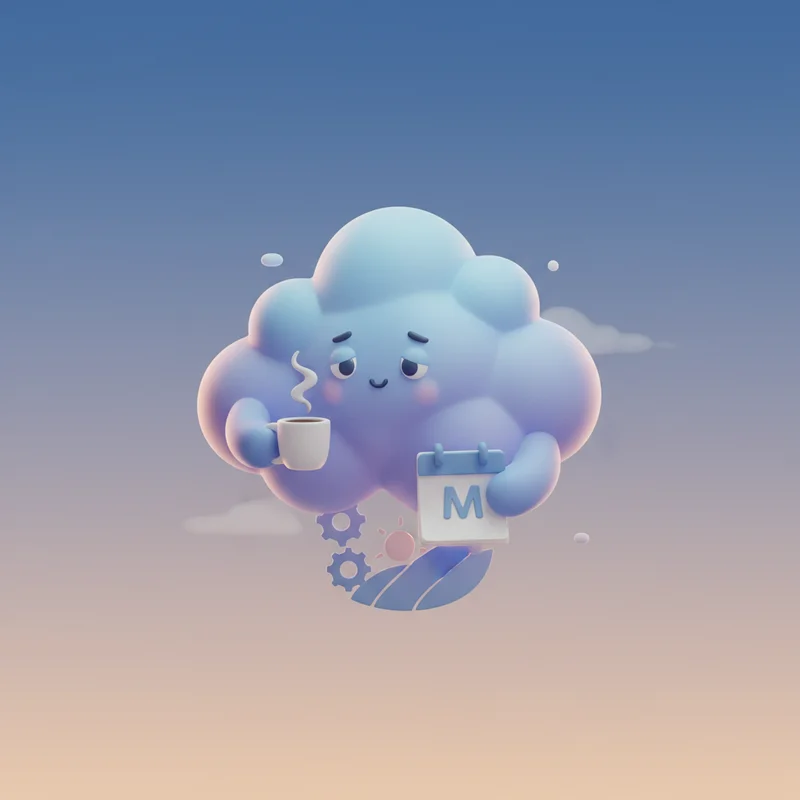
The day that exists purely to remind you that weekends are finite. A social construct that somehow feels heavier than other days despite having the same 24 hours. Coffee's best customer.

VS
Paris

Paris

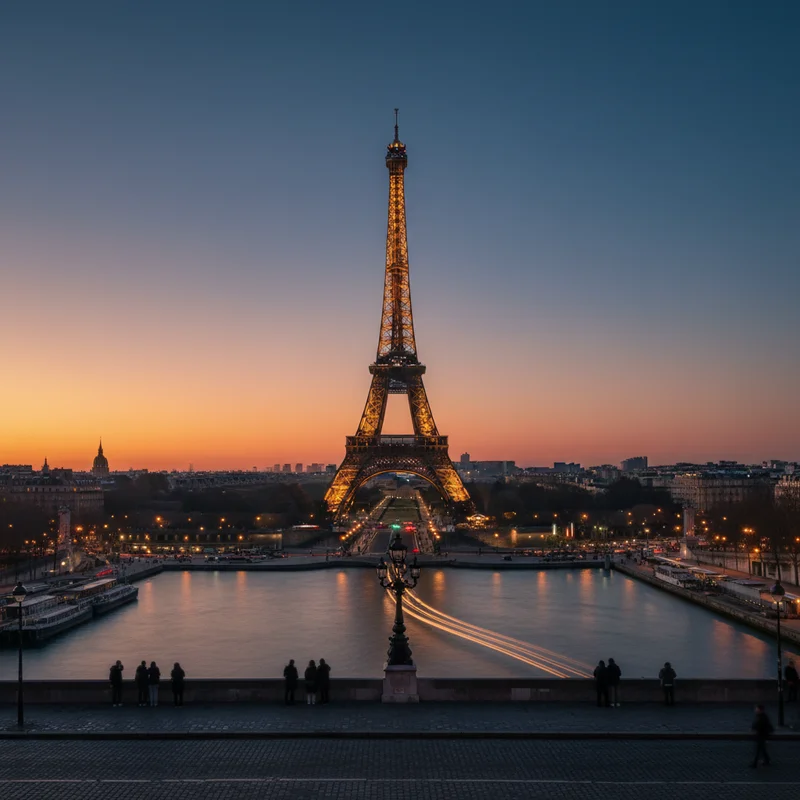
City of lights, love, and tower-shaped souvenirs.

Battle Analysis

Iconic status Paris Wins
30%
70%
Monday Paris

Monday

Monday has achieved the curious distinction of being iconic precisely because it is dreaded. The day has transcended its mere calendrical function to become a symbol—of new beginnings, certainly, but more commonly of the reluctant return to obligation after weekend respite.

Its iconography is sparse but recognisable: alarm clocks, crowded commuter trains, coffee cups clutched like life preservers. Monday needs no monument; its monument is the collective groan of civilisation every seven days.

Paris

Paris's iconic status is frankly embarrassingly well-documented. The Eiffel Tower alone appears in approximately 847 million photographs annually, whilst the phrase we'll always have Paris has become shorthand for bittersweet romantic memory. The city has been painted, photographed, filmed, and written about so extensively that experiencing actual Paris often feels like visiting an already-familiar memory.

The Louvre, Notre-Dame, the Champs-Élysées—Paris accumulates icons the way Monday accumulates sighs.

VERDICT

Paris has accumulated more iconic imagery than Monday could achieve in millennia.
Predictability Monday Wins
70%
30%
Monday Paris

Monday

In an uncertain world, Monday offers absolute reliability. It arrives precisely when expected, every seven days without fail, demonstrating a consistency that borders on the metaphysical. One can plan one's entire existence around Monday's inevitable return—indeed, most people do, whether enthusiastically or otherwise.

This predictability has economic value. Supply chains, broadcast schedules, and therapy appointments all depend on Monday's unwavering commitment to appearing exactly when scheduled. Monday has never cancelled, postponed, or arrived late.

Paris

Paris presents a more mercurial proposition. The city remains geographically stable, certainly, but the Paris one experiences varies wildly based on season, arrondissement, and whether one has remembered to validate one's Métro ticket. The Paris of spring differs substantially from the Paris of August, when actual Parisians flee and tourists inherit a city running on skeleton staffing.

Furthermore, Paris's character shifts based on the neighbourhood, the hour, and whether the waiters have decided you deserve good service today.

VERDICT

Monday is eternally consistent; Paris varies based on innumerable factors.
Cultural influence Paris Wins
30%
70%
Monday Paris

Monday

Monday has shaped human behaviour in ways both subtle and profound. The entire structure of the modern work week pivots around Monday's arrival, with industries devoted to making its burden bearable. Energy drinks, motivational speakers, and the entire concept of Sunday Scaries owe their existence to Monday's gravitational pull on human consciousness.

The day has influenced language itself—that Monday feeling requires no further elaboration in any culture familiar with structured work weeks.

Paris

Paris's cultural influence spans art, literature, philosophy, fashion, cuisine, and revolution—a rather unfair advantage, one might argue. The city incubated Impressionism, Existentialism, and the croissant, each of which has shaped human civilisation in measurable ways.

The Belle Époque, the Lost Generation, the French New Wave—Paris has served as the backdrop for cultural movements that continue to influence how humans create, think, and dress. Monday, for all its ubiquity, has never spawned an artistic movement beyond corporate motivational art.

VERDICT

Paris birthed artistic revolutions; Monday birthed the concept of casual Friday as compensation.
Global recognition Monday Wins
70%
30%
Monday Paris

Monday

Monday enjoys what can only be described as universal brand awareness. Every human society that has adopted the seven-day week has also adopted Monday's particular flavour of temporal melancholy. From Tokyo to Toronto, Lagos to London, the concept of Monday requires no translation—only a weary nod of mutual understanding.

The day appears in countless cultural artifacts: the Boomtown Rats declared they didn't like Mondays, the Bangles struggled with their manic variety, and office workers worldwide have created an entire genre of motivational posters attempting to rehabilitate Monday's image.

Paris

Paris has achieved the rare feat of becoming both a city and a concept. When someone describes an evening as very Paris, no further explanation is required. The city has exported its identity so effectively that imitation Parises exist worldwide—Las Vegas has one, China has several, and Texas inexplicably has a Paris with a cowboy hat atop its Eiffel Tower.

However, Paris requires some geographical knowledge to recognise, whilst Monday requires only the capacity to count to seven and feel vaguely disappointed.

VERDICT

Monday transcends geography; even those who cannot locate Paris on a map know Monday intimately.
Emotional resonance Paris Wins
30%
70%
Monday Paris

Monday

The emotional architecture of Monday is nothing short of extraordinary in its consistency. Across cultures, languages, and time zones, Monday triggers a remarkably uniform response in the human psyche. Studies indicate that approximately 67% of all sighs occur on Monday mornings, a statistic that speaks to this day's unparalleled ability to unite humanity in shared suffering.

Monday possesses what psychologists call anticipatory dread magnitude—the phenomenon whereby Sunday evenings become contaminated by Monday's mere proximity. This emotional reach extends backwards through time, a feat that even quantum physicists find unsettling.

Paris

Paris operates on an entirely different emotional register, one characterised by what the French call je ne sais quoi and what everyone else calls expensive romanticism. The city has perfected the art of making visitors feel simultaneously inadequate and enchanted, a psychological cocktail that has fuelled the perfume industry for generations.

The Paris Syndrome—an actual documented condition where tourists become physically ill when Paris fails to meet their expectations—demonstrates the city's remarkable emotional grip on the global imagination. Few places can disappoint so magnificently.

VERDICT

Paris inspires complex emotions; Monday primarily inspires one very consistent one.
👑

The Winner Is

Paris

42 - 58

After exhaustive analysis, we must conclude that Paris emerges victorious, though not without acknowledging Monday's remarkable competitive showing. Paris triumphs in emotional resonance, cultural influence, and iconic status—categories that favour entities capable of existing in physical space and accumulating centuries of human investment.

Monday, however, demonstrates surprising strength in global recognition and predictability, categories where its temporal omnipresence provides genuine competitive advantage. One need not travel to experience Monday; Monday travels to everyone, uninvited but inevitable.

The philosophical implications remain profound. Paris represents aspiration—the dream of escape, beauty, and croissants consumed without caloric guilt. Monday represents reality—the inescapable structure that organises human existence whether we appreciate it or not. That reality loses to aspiration feels somehow appropriate.

Monday
42%
Paris
58%

Share this battle

More Comparisons