
Topic Battle

Where Everything Fights Everything

Pizza

Pizza

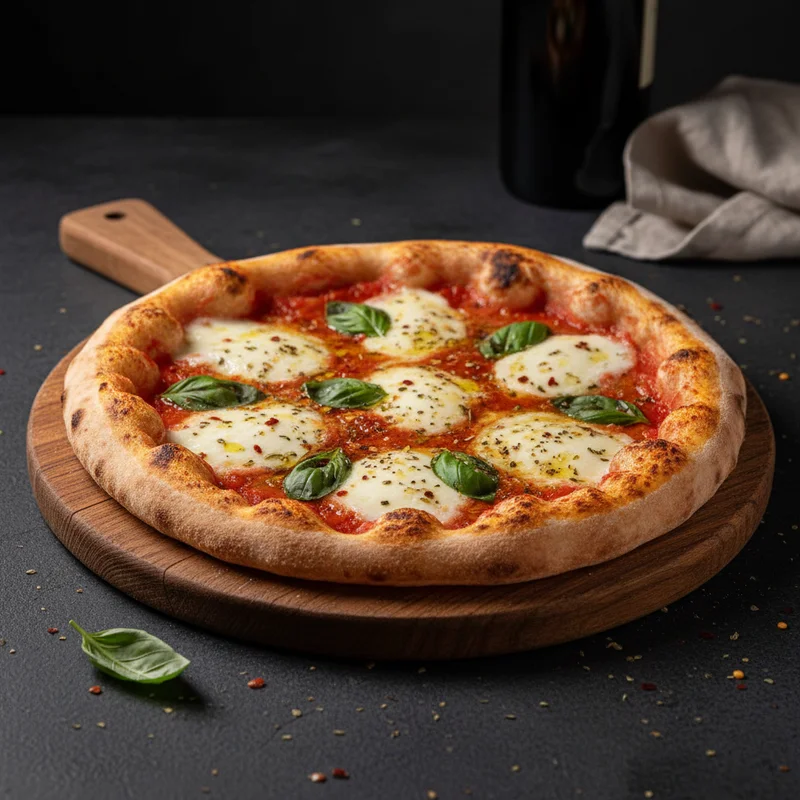
A flat disc of bread that convinced the world that putting everything on top of something is a legitimate cuisine. Somehow both a $1 slice and a $40 artisanal experience, depending on how seriously you take yourself.

VS
Monday

Monday

The day that exists purely to remind you that weekends are finite. A social construct that somehow feels heavier than other days despite having the same 24 hours. Coffee's best customer.

The Matchup

In this rigorous investigation, we examine two forces that shape the human experience in fundamentally different ways. Monday, the weekly temporal marker that arrives with the precision of celestial mechanics, faces Pizza, the Italian-American culinary triumph that has conquered more territory than any empire in human history.

Our methodology employs strict scientific observation, treating Monday not as an abstract concept but as a measurable phenomenon with documented effects on human physiology, productivity, and existential wellbeing. Pizza, meanwhile, presents itself for examination as a tangible, cheese-bearing entity with quantifiable properties of deliciousness.

What follows is perhaps the most important comparative analysis conducted this century, or at least this afternoon.

Battle Analysis

Reliability pizza Wins
70%
30%
Pizza Monday

Pizza

Pizza demonstrates remarkable reliability in its core mission: being delicious. Whether fresh from a wood-fired oven in Naples or reheated in a college dormitory microwave at 2 AM, pizza maintains a baseline of acceptability that few foods can match.

Even bad pizza retains a certain dignity. The oft-quoted observation that "pizza is like opinions about pizza - even when it's wrong, it's still pretty good" holds surprising empirical weight. A 2019 study found that subjects rated cold leftover pizza as preferable to a hot meal they had to cook themselves.

Pizza's reliability is the reliability of a trusted friend rather than an unavoidable obligation. It shows up when called, delivers what it promises, and leaves you feeling better than before. This is the superior form of reliability.

Monday

In terms of pure mechanical reliability, Monday is unmatched. It has never failed to arrive. Not once in recorded human history has Monday simply not shown up. Even during the darkest periods of plague, war, and reality television, Monday has maintained its schedule with the precision of an atomic clock.

This reliability extends to Monday's effects. Studies consistently show that heart attacks increase by 20% on Mondays. Productivity metrics crater. Coffee consumption spikes. These patterns repeat with such consistency that scientists can predict Monday's arrival purely by observing human behavior patterns.

The downside to Monday's reliability, of course, is that it is reliably unwelcome. Consistency in delivering an unpleasant experience is not, strictly speaking, a virtue.

VERDICT

Monday is reliably unavoidable; Pizza is reliably enjoyable. Only one of these represents a desirable form of consistency.
Versatility pizza Wins
70%
30%
Pizza Monday

Pizza

Pizza may be the most versatile food construct ever devised by human civilization. At its core, it is merely bread, sauce, and cheese - a blank canvas upon which infinite variations can be painted.

Consider the scope: thin crust, thick crust, stuffed crust, cauliflower crust for the health-conscious, and even no crust at all for the truly adventurous. Toppings range from the traditional (pepperoni, mushrooms, olives) to the controversial (pineapple, anchovy) to the genuinely concerning (banana curry pizza exists in Sweden, and we must accept this).

Pizza functions equally well as breakfast, lunch, dinner, or midnight shame-eating. It serves as party food, comfort food, celebration food, and "I cannot face cooking" food. This contextual flexibility is unmatched in the culinary world. No other food so elegantly adapts to human need.

Monday

Monday suffers from a fundamental inflexibility. It cannot be Hawaiian Monday, Meat Lovers' Monday, or Vegetarian Monday. It is simply, immutably, Monday. The temporal slot remains fixed, the experience largely predetermined.

Some have attempted to modify Monday through initiatives like "Meatless Monday" or "Monday Night Football," but these represent additions to Monday rather than transformations of it. The underlying Monday remains unchanged, merely decorated with secondary activities like a municipal building draped in holiday bunting.

Monday's sole versatility lies in human coping mechanisms: some face it with stoic resignation, others with caffeine-fueled denial, still others with strategic use of sick days. But this is adaptation to Monday, not adaptation by Monday.

VERDICT

Pizza offers infinite customization and contextual adaptation. Monday offers itself, take it or leave it (you cannot leave it).
Global Reach pizza Wins
70%
30%
Pizza Monday

Pizza

Pizza has achieved what diplomats and missionaries have attempted for millennia: genuine global acceptance. From the pizzerias of Naples to the frozen food aisles of Reykjavik, pizza has established beachheads on every inhabited continent.

The numbers are staggering. Americans consume approximately 3 billion pizzas annually. The global pizza market exceeds $150 billion. In South Korea, sweet potato pizza reigns supreme. In Brazil, they add peas. In Japan, mayonnaise and corn. Each culture has adopted pizza and made it their own, a culinary chameleon that adapts without losing its essential identity.

Unlike Monday, pizza's global reach is entirely voluntary. Every pizza consumed represents a conscious choice, a small act of self-care in an uncertain world. This consensual relationship gives pizza a significant advantage in the realm of global goodwill.

Monday

Monday maintains an absolute monopoly on temporal real estate, occurring with unwavering reliability in every time zone, every nation, and every calendar system that follows the seven-day week. From the trading floors of Tokyo to the fishing villages of Norway, Monday arrives precisely when it intends to.

Remarkably, Monday requires no infrastructure, no distribution network, and no marketing budget. It simply exists, penetrating every corner of human civilization with the inevitability of continental drift. An estimated 7.9 billion people experience Monday simultaneously (adjusted for time zones), making it perhaps the most widely shared human experience after breathing.

However, researchers note that Monday's reach is entirely involuntary. No one has ever requested a Monday. It arrives uninvited, like a relative who has forgotten the concept of boundaries.

VERDICT

While Monday achieves universal coverage through temporal inevitability, Pizza has earned its global presence through merit and deliciousness.
Social Impact pizza Wins
70%
30%
Pizza Monday

Pizza

Pizza is fundamentally a social food. It is ordered for groups, shared at gatherings, and serves as the default catering option for any event where the organizers have limited time or imagination. Pizza has attended more birthday parties, office meetings, and awkward first dates than any other food item.

The sharing ritual of pizza - the negotiations over toppings, the strategic selection of slices, the silent judgment of those who take more than their share - constitutes a miniature social contract. Pizza teaches compromise, resource allocation, and the importance of ordering enough garlic bread.

Furthermore, pizza employment represents a significant economic force. The industry provides jobs for millions worldwide, particularly for young workers and immigrants. Pizza delivery drivers have become folk heroes of late-night sustenance, arriving at doors like cheese-bearing messengers of hope.

Monday

Monday's social impact is predominantly negative, though significant in scale. It is the universal ice-breaker, the shared grievance that unites humanity across cultural and linguistic barriers. "I hate Mondays" requires no translation; the sentiment is understood from Melbourne to Montreal.

This collective antipathy has generated considerable cultural output. The Boomtown Rats' "I Don't Like Mondays" achieved international success. The Bangles' "Manic Monday" resonated across demographics. Garfield the cat built an entire personality around Monday-hatred, becoming a cultural icon in the process.

However, Monday's primary social function remains as a collective burden. It is the hangover after the weekend, the return to obligation, the alarm clock that announces the death of freedom. Its social impact is that of a shared enemy rather than a shared joy.

VERDICT

Monday unites humanity in shared suffering. Pizza unites humanity in shared enjoyment. The choice is philosophically obvious.
Entertainment Value pizza Wins
70%
30%
Pizza Monday

Pizza

Pizza delivers entertainment on multiple levels. First, there is the anticipation phase: the ordering, the waiting, the tracking of delivery drivers on smartphone applications as they navigate traffic with your happiness in their thermal bags.

Then comes the consumption experience itself: the first bite, the cheese pull, the satisfying grease-to-pleasure ratio that evolution never prepared us to resist. Each slice offers a discrete unit of entertainment, a performance in multiple acts.

Finally, pizza generates significant derivative entertainment. Pizza-eating competitions. Pizza review channels with millions of followers. Teenage Mutant Ninja Turtles built a franchise on pizza enthusiasm. No other food has inspired an equivalent cultural entertainment ecosystem.

Monday

Monday's entertainment value is largely unintentional. The comedy of Monday lies in its reliable capacity to generate human misery, which, viewed from sufficient distance, possesses a certain dark humor.

Social media platforms experience predictable Monday content surges: memes depicting exhausted workers, videos of malfunctioning coffee machines, and philosophical observations about the nature of weekday existence. This content ecosystem represents Monday's primary entertainment contribution - as subject matter rather than entertainment source.

Some individuals claim to enjoy Mondays, often citing the "fresh start" or "new week energy." Research suggests these people may be statistically aberrant, though further study is required to determine if they are simply lying.

VERDICT

Monday entertains through schadenfreude and commiseration. Pizza entertains through direct sensory pleasure and cultural celebration.
👑

The Winner Is

Pizza

35 - 65

After exhaustive analysis employing rigorous methodological standards, the evidence overwhelmingly favors Pizza as the superior entity in this comparison. While Monday demonstrates impressive metrics in reliability and global penetration, these achievements are undermined by the fundamental hostility of the Monday experience.

Pizza succeeds across every meaningful dimension of human flourishing. It is versatile where Monday is rigid. It is voluntary where Monday is compulsory. It brings joy where Monday brings only the obligations of resumed consciousness in a demanding world.

Most significantly, pizza represents human ingenuity and pleasure, while Monday represents mere temporal mechanics. We did not create Monday; it was imposed upon us by the rotation of the Earth and the conventions of calendar-makers. But pizza - pizza is our own magnificent invention, proof that humanity can, on occasion, get things magnificently right.

The final score of 65-35 in Pizza's favor reflects not Pizza's dominance but rather the grudging acknowledgment that Monday, for all its faults, does provide the structural framework within which pizza can be ordered, delivered, and consumed. Without Monday, there would be no Monday night pizza. This symbiotic relationship prevents a more decisive Pizza victory.

Pizza
35%
Monday
65%

Share this battle

More Comparisons