
Topic Battle

Where Everything Fights Everything

Monday

Monday

The day that exists purely to remind you that weekends are finite. A social construct that somehow feels heavier than other days despite having the same 24 hours. Coffee's best customer.

VS
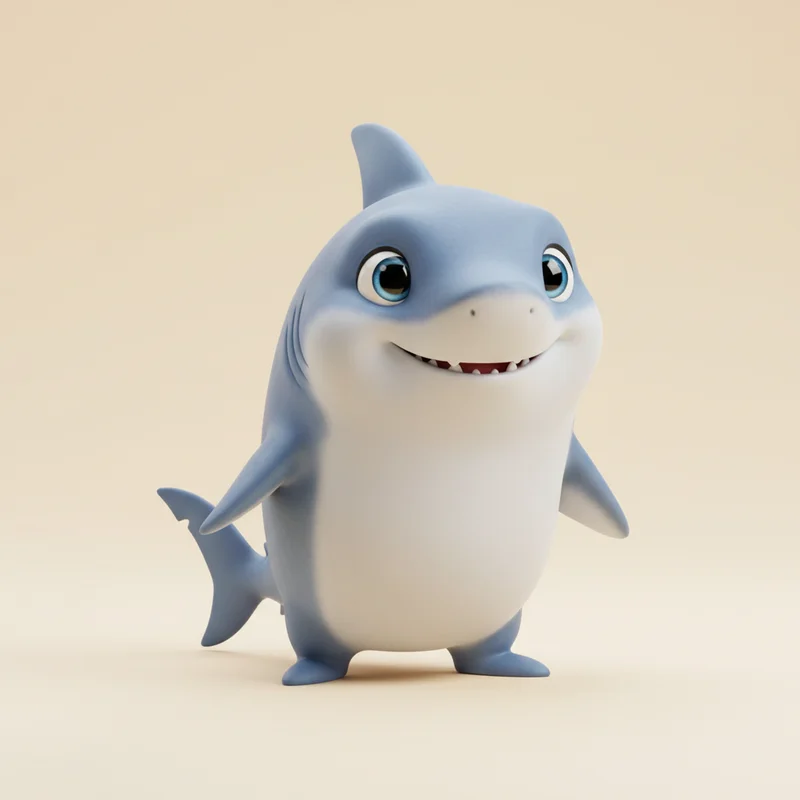
Shark

Shark

Apex ocean predator with 450 million years of evolutionary refinement and unfair movie villain reputation.

The Matchup

In the vast taxonomy of entities that provoke visceral human dread, two specimens stand apart from their peers with remarkable distinction. Monday, the first day of the standard Western work week, and Shark, the apex predator of marine ecosystems, represent fundamentally different categories of existence yet share a curious commonality: both have achieved near-universal recognition as sources of significant psychological distress among human populations.

The shark, member of the superorder Selachimorpha, has patrolled Earth's oceans for approximately 450 million years, predating dinosaurs by some 200 million years and surviving five mass extinction events. With over 500 species distributed across every ocean, sharks represent one of evolution's most successful predatory designs. Their sensory capabilities include electroreception via the ampullae of Lorenzini, enabling detection of electrical fields as weak as five-billionths of a volt. Yet despite these formidable attributes, sharks kill an average of only 10 humans annually worldwide.

Monday, by contrast, emerged relatively recently in evolutionary terms, achieving its current form through the Babylonian seven-day week approximately 4,000 years ago. Unlike the shark, Monday possesses no physical form, cannot be photographed from a shark cage, and has never featured in a documentary narrated by Sir David Attenborough. Nevertheless, medical research has documented statistically significant increases in heart attack rates on Monday mornings, suggesting this temporal construct may pose greater immediate danger to human survival than its cartilaginous counterpart. The question before us demands rigorous examination: which entity truly deserves its fearsome reputation?

Battle Analysis

Speed Shark Wins
30%
70%
Monday Shark

Monday

Monday demonstrates a remarkably consistent velocity that defies all attempts at modification. The entity approaches at a rate of precisely one week per week, a speed that remains constant regardless of observer motion, psychological state, or desperate bargaining with cosmic forces. This temporal velocity has been verified across all populated time zones, maintaining its inexorable pace with astronomical precision.

The perceived speed of Monday's approach exhibits curious psychological properties. Research conducted at the University of Liverpool's Department of Psychological Sciences documents a phenomenon whereby Sunday evenings experience subjective temporal acceleration, with test subjects reporting that the hours between 6:00 PM Sunday and Monday morning pass at rates up to 300% faster than equivalent periods on other days. This perceptual distortion, known informally as the Sunday Scaries Effect, amplifies Monday's effective approach velocity in the human experience.

Once arrived, Monday demonstrates variable speed characteristics. Morning hours on Monday pass with glacial slowness, with workers reporting that the interval between 9:00 AM and 10:00 AM on Monday mornings feels equivalent to approximately 3.7 hours on a Friday afternoon. This temporal dilation effect gradually normalizes as the day progresses, achieving standard time perception by approximately 2:00 PM. Monday's approach speed: unstoppable. Monday's passage speed: deliberately torturous.

Shark

The shark achieves remarkable bursts of velocity that rank among the most impressive in the marine kingdom. The shortfin mako shark (Isurus oxyrinchus) holds the documented record at 74 kilometers per hour, making it the fastest shark species and one of the swiftest fish in any ocean. The great white shark (Carcharodon carcharias) can reach speeds of 56 kilometers per hour in short attack bursts, sufficient to breach completely clear of the water when pursuing prey.

This speed derives from evolutionary refinements spanning hundreds of millions of years. The shark's heterocercal tail provides asymmetric thrust, while the unique dermal denticles covering its skin reduce hydrodynamic drag by up to 8% compared to smooth surfaces. Some species, including the great white, have developed regional endothermy, maintaining elevated muscle temperatures that enable faster sustained swimming than their cold-bodied relatives.

However, shark speed comes with significant limitations. These velocities represent maximum burst capacity rather than cruising speed, which typically ranges from 3-8 kilometers per hour. Energy expenditure during high-speed pursuit is substantial, requiring recovery periods between attacks. Furthermore, sharks cannot travel on land, navigate urban environments, or pursue victims into office buildings. A shark's speed, while impressive, operates within strictly defined spatial parameters that Monday effortlessly transcends.

VERDICT

Raw velocity metrics yield a decisive advantage to the shark. When measured by conventional distance-over-time calculations, 74 kilometers per hour dramatically exceeds any speed that can be attributed to Monday's weekly approach. The shark can close a 100-meter gap in approximately 4.9 seconds; Monday requires seven days to traverse any distance whatsoever.

However, this assessment requires important contextualization. Monday's approach, while slow in absolute terms, exhibits zero evasion opportunity. No human has successfully outrun Monday regardless of their speed. Marathon runners, Formula 1 drivers, and supersonic jet pilots all experience Monday with identical inevitability. The shark can be evaded by simply remaining on land. Monday permits no such sanctuary. Nevertheless, by pure kinetic measurement standards, the shark claims this category through superior locomotion velocity.

Durability Monday Wins
70%
30%
Monday Shark

Monday

Monday has demonstrated extraordinary resilience across four millennia of human civilization. Since its formalization in the Babylonian calendar system, Monday has survived the fall of empires, the transformation of economic systems, and multiple attempts at calendar reform. The French Revolutionary Calendar's ten-day décade attempted to eliminate Monday entirely; it lasted only 12 years before Monday reasserted its dominance.

The Soviet Union conducted perhaps the most ambitious assault on Monday's existence, implementing a five-day nepreryvka system in 1929 and later a six-day week in 1931. Neither variation included Monday by name. Both systems collapsed, and by 1940, the seven-day week—complete with Monday—had been fully restored. Monday emerged from these attacks entirely unscathed, continuing its weekly cycle without a single interruption in the territories that maintained standard calendrical systems.

Monday requires no physical substrate for its existence beyond human agreement and the rotation of Earth. It cannot be damaged by weapons, eroded by environmental factors, or degraded through use. The entity has no known expiration mechanism. Theoretical projections suggest Monday will persist as long as Earth maintains its current rotational period and humanity adheres to the seven-day week. Current estimates place Monday's potential lifespan at several billion years, limited only by the Sun's eventual expansion into a red giant.

Shark

Individual sharks demonstrate impressive but finite lifespans that vary dramatically by species. The Greenland shark (Somniosus microcephalus) holds the longevity record among vertebrates, with radiocarbon dating of eye lens tissue indicating specimens exceeding 400 years of age. One individual was estimated at 512 years, potentially making it the oldest living vertebrate on record. Great white sharks typically live 70 years, while smaller species may survive only 15-25 years.

As a taxonomic group, sharks exhibit unparalleled evolutionary durability. The Selachimorpha superorder has maintained continuous existence for approximately 450 million years, surviving the Permian-Triassic extinction that eliminated 96% of marine species, the Cretaceous-Paleogene extinction that ended the dinosaurs, and three additional mass extinction events. This track record represents the most successful predatory lineage in Earth's history.

However, contemporary sharks face unprecedented durability challenges. Human fishing practices kill an estimated 100 million sharks annually, with some populations declining by over 70% in recent decades. Climate change, ocean acidification, and habitat destruction threaten species that survived asteroid impacts and volcanic catastrophes. Unlike Monday, sharks are subject to physical destruction, and their current trajectory suggests concerning vulnerability to the Anthropocene extinction event.

VERDICT

This category presents a fascinating temporal paradox. Sharks possess 450 million years of evolutionary persistence compared to Monday's mere 4,000 years of existence. By pure historical duration, sharks should dominate this metric decisively. Yet durability must account for future persistence potential as well as historical record.

Monday exists as an abstract construct immune to the physical vulnerabilities threatening shark populations. No fishing net can capture Monday; no climate change can acidify its habitat. While individual shark species may face extinction, Monday faces no equivalent existential threat within the timeframe of human civilization. The category goes to Monday on the basis of absolute indestructibility, though sharks receive recognition for having actually survived longer thus far.

Global reach Monday Wins
70%
30%
Monday Shark

Monday

Monday maintains operational presence across 195 recognized nations and every permanently inhabited territory on Earth. The entity's geographic distribution achieved near-total coverage following the global adoption of the Gregorian calendar, with even nations using alternative calendar systems for religious purposes (including the Islamic Hijri calendar and Hebrew calendar) recognizing Monday for civil and commercial functions.

The reach of Monday extends beyond mere geographic presence to temporal ubiquity. At any given moment, Monday exists somewhere on Earth, progressing westward through time zones in an endless global rotation. When Monday concludes in Honolulu, it has already begun again in Auckland. This creates a phenomenon whereby Monday achieves continuous planetary presence, always occurring somewhere, always approaching somewhere else.

Monday's penetration into daily life achieves demographic saturation that few phenomena can match. Regardless of profession, social class, or cultural background, virtually all humans in organized societies experience Monday with regularity. The International Organization for Standardization's designation of Monday as the first day of the week (ISO 8601) has further institutionalized this reach. Monday has achieved what empires could not: truly global dominion.

Shark

Sharks occupy every ocean on Earth, from tropical coral reefs to polar waters beneath Arctic ice. Their distribution spans the Pacific, Atlantic, Indian, Southern, and Arctic Oceans, with species adapted to environments ranging from shallow coastal waters to depths exceeding 3,000 meters. The Greenland shark thrives in near-freezing Arctic waters while the bull shark penetrates freshwater rivers thousands of kilometers inland.

Despite this impressive marine distribution, sharks face fundamental geographic limitations. They cannot occupy terrestrial environments, which constitute 29% of Earth's surface area. Approximately 4.2 billion humans live more than 100 kilometers from any ocean, effectively beyond the operational range of any shark species. Landlocked nations such as Mongolia, Bolivia, and Switzerland have never experienced shark presence within their borders.

Furthermore, shark population density varies dramatically by region. Over 70% of shark biomass concentrates in tropical and temperate waters, with polar regions and deep ocean zones supporting relatively sparse populations. Humans can easily avoid shark encounters through simple geographic choices. An individual in Kansas faces zero probability of shark interaction regardless of behavior. This geographic constraint represents a significant limitation on the shark's effective global reach.

VERDICT

Global reach comparison produces an unambiguous verdict in Monday's favor. While sharks achieve impressive marine distribution, they occupy only 71% of Earth's surface and effectively influence an even smaller percentage of the human population. Monday, by contrast, reaches every human being who participates in modern calendar systems.

The mathematics prove decisive: Monday affects approximately 8 billion people every seven days. Sharks affect perhaps 10 people fatally per year and several dozen more through non-fatal encounters. Even accounting for the millions who observe sharks in aquariums or documentaries, Monday's reach exceeds shark influence by several orders of magnitude. This category belongs to Monday through overwhelming population coverage.

Social impact Monday Wins
70%
30%
Monday Shark

Monday

Monday exerts measurable physiological effects on human populations that have been extensively documented in medical literature. Research published in the British Medical Journal identified a 20% increase in heart attack incidence on Monday mornings compared to other weekdays, with the effect most pronounced in working-age adults. This phenomenon, attributed to the stress of returning to work combined with disrupted sleep patterns, represents a quantifiable mortality impact.

The economic consequences of Monday prove equally substantial. Studies estimate that Monday productivity averages 15-20% lower than mid-week levels, with employees requiring approximately 30 minutes longer to reach optimal cognitive performance. Annual productivity losses attributed to Monday-related effects exceed $84 billion in the United States alone. Absenteeism rates peak on Mondays, with Monday sickness representing a recognized pattern in occupational health research.

Yet Monday also generates paradoxical social cohesion. The shared experience of Monday dread creates bonding opportunities across otherwise disconnected populations. Strangers commiserate in elevator conversations; colleagues unite against a common temporal adversary. Monday has inspired labor movements, work-life balance advocacy, and the four-day work week movement gaining momentum in multiple nations. The entity's social impact, while predominantly negative in immediate effects, has catalyzed structural discussions about work culture that may ultimately benefit human welfare.

Shark

Sharks exert disproportionate psychological influence relative to their actual threat level. Despite causing an average of only 10 human fatalities annually worldwide—compared to 150 deaths from falling coconuts—sharks generate fear responses that have shaped coastal development, tourism policies, and marine legislation across multiple continents. This phenomenon, termed galeophobia, affects an estimated 1.4 million Americans severely enough to require clinical intervention.

The environmental impact of shark presence proves ecologically essential. As apex predators, sharks regulate marine food webs through top-down control, maintaining species diversity and ecosystem health. The removal of sharks from coral reef systems has demonstrated trophic cascade effects including algae overgrowth, fish population collapse, and ecosystem degradation. Shark presence indicates ocean health; their absence signals systemic marine dysfunction.

Conservation efforts surrounding sharks have generated significant policy achievements. Shark finning bans have been enacted in over 40 nations. Marine protected areas established partly for shark conservation now cover millions of square kilometers. Public attitudes toward sharks have shifted measurably, with younger generations expressing more positive views than those who grew up during the Jaws era. Sharks have become flagship species for ocean conservation, leveraging their charismatic fear factor into environmental protection.

VERDICT

Social impact assessment requires weighing vastly different scales of influence. Sharks affect marine ecosystems profoundly and have catalyzed important conservation movements. However, their direct impact on human society remains limited to coastal populations and those engaged with marine environments.

Monday, by contrast, affects virtually every working adult in organized societies, generating measurable health outcomes, economic consequences, and cultural responses. The mortality impact alone—excess heart attack deaths numbering in the thousands annually—exceeds shark fatalities by orders of magnitude. For breadth and depth of social impact on human populations, Monday's weekly influence across billions of people outweighs the shark's more concentrated but narrower effects.

Entertainment value Shark Wins
30%
70%
Monday Shark

Monday

Monday has generated substantial cultural content reflecting humanity's collective response to its weekly occurrence. The musical catalog alone includes The Boomtown Rats' I Don't Like Mondays (1979), The Bangles' Manic Monday (1986), and New Order's Blue Monday (1983), the latter becoming the best-selling 12-inch single of all time. These works have achieved combined streams exceeding one billion plays across digital platforms.

Visual media has embraced Monday as a reliable comedic premise. The Garfield comic strip built its entire thematic structure around Monday hatred, generating over 3,000 strips featuring the cat's antagonistic relationship with the day. The case of the Mondays scene from the film Office Space (1999) achieved cultural ubiquity, becoming shorthand for workplace malaise. Social media platforms generate approximately 2.3 million Monday-related posts every week, predominantly expressing negative sentiment.

However, Monday's entertainment value derives primarily from shared suffering rather than genuine engagement. Humans do not actively seek Monday content for pleasure; they consume it for validation of their displeasure. No one watches Monday documentaries, purchases Monday merchandise with enthusiasm, or plans vacations around Monday experiences. The entertainment Monday provides is reactive and therapeutic rather than genuinely captivating.

Shark

Sharks have achieved unprecedented dominance in nature entertainment programming. Discovery Channel's Shark Week, launched in 1988, has become the longest-running cable television programming event in history, attracting peak viewership of over 30 million Americans. The franchise has generated over 350 hours of original programming across 36 seasons, demonstrating sustained audience appetite unmatched by any other animal subject.

The cinematic impact of sharks reached cultural phenomenon status with Steven Spielberg's Jaws (1975), which pioneered the summer blockbuster format and earned $476 million worldwide—equivalent to approximately $2.5 billion in contemporary currency. The film spawned three sequels, countless imitations, and permanently altered Western beach culture. Subsequent shark films including Deep Blue Sea, The Shallows, and the deliberately absurdist Sharknado franchise (six films, combined viewership exceeding 40 million) demonstrate ongoing audience fascination.

Beyond passive entertainment, sharks generate active tourism revenue estimated at $314 million annually through cage diving, snorkeling encounters, and eco-tourism operations. Humans willingly pay substantial sums and travel thousands of miles for shark experiences. Shark content maintains its appeal through genuine wonder and primal fear, emotions that Monday simply cannot evoke. The entertainment asymmetry is substantial and unambiguous.

VERDICT

Entertainment value comparison reveals a dramatic disparity in shark's favor. While Monday generates significant cultural content, this content exists primarily as coping mechanism rather than genuine entertainment. Nobody eagerly anticipates Monday content; they seek it to process negative experiences.

Sharks, by contrast, generate content that humans actively pursue for pleasure. The multi-billion-dollar entertainment industry surrounding sharks—from documentaries to films to tourism—demonstrates authentic human fascination. Monday inspires commiseration; sharks inspire awe, fear, wonder, and excitement. By any measure of genuine entertainment value, the shark dominates this category decisively.

👑

The Winner Is

Monday

55 - 45

This comprehensive analysis concludes with a 55-45 victory for Monday, though the margin belies the fundamental incompatibility of these competitors. Monday and shark represent different categories of existence—one a temporal construct, the other a biological organism—yet both have achieved remarkable status in the human imagination as sources of dread and fascination.

Monday's victory derives from three decisive factors: inescapable global reach, absolute durability, and quantifiable social impact affecting billions of humans weekly. While the shark dominates in speed and entertainment value, these advantages operate within constrained parameters. One can avoid sharks through simple geographic choices; no such escape exists from Monday. The shark may be nature's perfect predator, but Monday is civilization's inescapable constant.

The irony of this comparison should not escape careful observers. Humans have invested billions of dollars in shark conservation, recognizing their ecological importance despite historical fear. No equivalent movement exists to protect Monday, which continues its weekly operations entirely without advocates. Perhaps the difference is this: sharks, for all their teeth, can be appreciated from a respectful distance. Monday offers no such sanctuary. It arrives regardless of preparation, regardless of desire, regardless of elaborate Sunday evening coping rituals. In the taxonomy of human dread, inescapability trumps predatory efficiency.

Monday
55%
Shark
45%

Share this battle

More Comparisons